

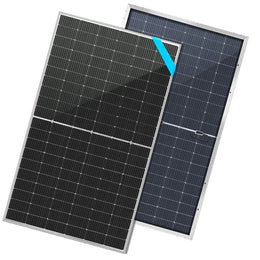
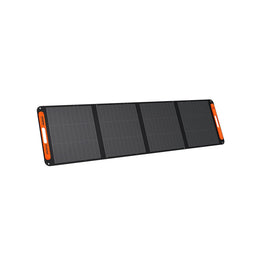
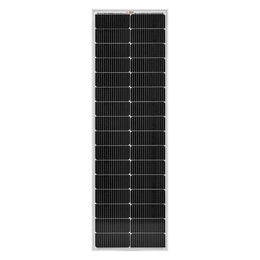
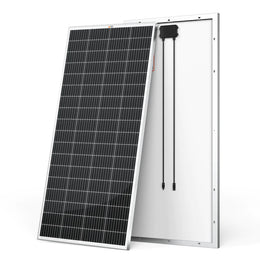
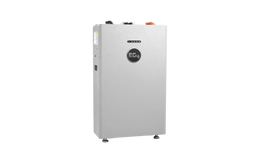
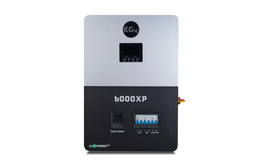
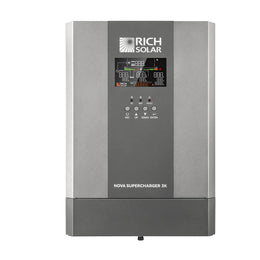

The 6000XP is the smallest inverter in the EG4 lineup and the one most people start with. It is also the one that gets ordered with the wrong battery or the wrong panel count most often, because three numbers on the spec sheet (140 A, 385 V and 480 V) decide what you can connect to it. This guide walks through those numbers with the products we have in stock today, so you can order an inverter, a battery and panels that work together the first time.
If you are still choosing between brands, read EG4 vs Sol-Ark first. If you are not sure 6 kW is enough, start with what size inverter do I need.
EG4 6000XP specs at a glance
All figures below come from the product listing and its spec table, checked on November 14, 2026.
| Spec | EG4 6000XP | What it means for you |
|---|---|---|
| Continuous output | 6,000 W, 120/240 V split-phase | 25 A at 240 V, or 25 A (3,000 W) on each 120 V leg |
| Surge | 12,000 W for 3.5 s, 11,000 W for 5 s | Starts a well pump or compressor that needs 2x its running watts |
| Solar input | 8,000 W, 2 MPPT, 4,000 W each | One string per MPPT, 17 A working current, 25 A short-circuit |
| PV voltage | 100-480 V DC input, MPPT 120-385 V | Sets the panel count per string (see the string section) |
| Battery | 48 V, 46.4-60 V, 140 A discharge, 125 A charge | The bank must supply about 140 A for full output |
| AC input | 120/240 V, 37.5 A (9,000 W), 50 A bypass | Grid or generator in; no export to the utility |
| Transfer time | Under 15 ms single, under 30 ms in parallel | Most computers and routers ride through |
| Enclosure | IP20, indoor only, 32-113F operating | No outdoor walls, no unheated winter garage |
| Size and weight | 25.5 x 18 x 5.25 in, 52.9 lb | One person can hang it on a wall bracket |
| Parallel | Up to 16 units | 12 kW with two, 18 kW with three |
| Certification and warranty | UL 1741, 5 years | Shorter than the 10 years on the EG4 12kPV and 18kPV |
Two details are easy to miss. First, it is a transformer-free (high-frequency) design, which is why it weighs 52.9 lb and not 150 lb; the trade-off is a shorter surge window than a low-frequency unit, a point covered in split-phase inverters explained. Second, the name says 6000 but the listing also calls it 8kPV, which is the solar side: 8,000 W of panels on a 6,000 W inverter is normal, since panels rarely make full nameplate power.
What 6,000 watts runs (and what it does not)
Six kilowatts covers the essentials of most homes and all of a typical cabin. The limit that catches people is not the total but the legs: each 120 V leg carries 25 A, or 3,000 W. A 1,500 W space heater and a 1,100 W microwave on the same leg already use 2,600 W of it.
| Load | Running watts | Start-up watts | Voltage |
|---|---|---|---|
| Refrigerator | 150 | 1,200 | 120 V |
| Chest freezer | 100 | 800 | 120 V |
| 1/2 HP well pump | 1,000 | 3,000 | 240 V |
| 12,000 BTU mini-split | 1,000 | 1,500 | 240 V |
| Microwave | 1,100 | 1,100 | 120 V |
| Washer | 500 | 1,200 | 120 V |
| Lights, router, TV, laptops | 400 | 400 | 120 V |
| All at once | 4,250 | - | - |
Sizing math: 4,250 W x 1.25 safety margin = 5,313 W, which is inside the 6,000 W rating. The worst start-up moment is everything running while the well pump starts: 4,250 - 1,000 + 3,000 = 6,250 W for a second or two, well under the 12,000 W surge figure. Appliance watts are typical values; read the nameplate on yours.
What one 6000XP does not do: run a 4,500 W water heater and a 5,000 W dryer together, feed an electric range (8,000 to 12,000 W), or start a 3 to 5 ton central air conditioner without a soft starter. For those loads, plan two units in parallel or the 12 kW 12000XP system in the picks below.
Battery pairing: how much battery a 6000XP needs
The inverter does not care much about kWh. It cares about amps. At full output it pulls:
6,000 W / 51.2 V / 0.92 efficiency = about 127 A at nominal voltage, rising toward the 140 A limit as the battery voltage sags. So the bank needs a continuous discharge rating of roughly 140 A or more. kWh then decides how long it lasts.
| Battery (all listed as closed-loop partners) | Capacity | Continuous discharge | Full 6 kW? | Where it can live | Price with one 6000XP |
|---|---|---|---|---|---|
| BigBattery ETHOS, 2 modules | 10.24 kWh | 200 A (10.2 kW) per control box | Yes | IP65 / NEMA 4X | $4,279 ($2,780 + $1,499) |
| BigBattery NEXUS (bundle) | 14.3 kWh | 140 A (7.6 kW) | Yes, at its limit | IP54, indoor floor | $4,544 bundle |
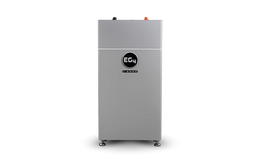
| EG4 PowerPro 280Ah | 14.3 kWh | 140 A (200 A for 30 min) | Yes, at its limit | IP65, self-heating | $4,623 ($3,124 + $1,499) |
| EG4 WallMount 314Ah Indoor | 16 kWh | 200 A (10.2 kW) | Yes | IP20 indoor, self-heating | $5,218.99 ($3,719.99 + $1,499) |
| EG4 WallMount 314Ah All-Weather (bundle) | 16 kWh | 200 A (10.2 kW) | Yes | IP67, self-heating | $5,414.97 bundle |
A single 5.12 kWh server-rack module with a 100 A BMS will run a 6000XP, but only to about 100 A x 51.2 V x 0.92 = 4.7 kW, and it will trip if a pump starts while the microwave is on. Use two or more 100 A modules, or one of the large-format batteries above. Charging works the other way: the inverter can push 125 A (about 6.4 kW) into the bank, which every battery in the table accepts.
For capacity, the rule from how many batteries do I need for solar applies: battery kWh = daily kWh x days of autonomy / 0.85. A home that uses 10 kWh a day through an outage needs about 11.8 kWh for one day, which is why the 14.3 and 16 kWh batteries are the usual partners for this inverter.

Inverter plus battery, no panels. Prices checked November 14, 2026.
Panel strings: how many panels fit a 6000XP
The 6000XP has two MPPT inputs with one string each. Three limits set the string length:
- Under 480 V open-circuit on the coldest morning of the year (cold raises voltage).
- Between 120 V and 385 V working voltage, so the tracker can do its job, including on a hot roof when voltage drops 10 to 15%.
- No more than 4,000 W and 17 A per input (25 A short-circuit).
Worked example with the Sungold 440W N-type panel (Vmp 33.48 V, Voc 39.03 V, Imp 13.15 A, Isc 13.73 A). Cold Voc = 39.03 x 1.14 = 44.5 V per panel, using the NEC 690.7 factor for lows to about 14F.
| Panels per string | Watts | Working voltage (Vmp) | Cold Voc | Fits? |
|---|---|---|---|---|
| 4 | 1,760 | 134 V (118 V on a hot roof) | 178 V | No - drops under 120 V when hot |
| 5 | 2,200 | 167 V | 222 V | Yes - the minimum |
| 6 | 2,640 | 201 V | 267 V | Yes |
| 8 | 3,520 | 268 V | 356 V | Yes |
| 9 | 3,960 | 301 V | 400 V | Yes - best fit for a full input |
| 10 | 4,400 | 335 V | 445 V | Voltage fits, but over 4,000 W per MPPT |
| 11 | 4,840 | 368 V | 489 V | No - over 480 V |

Do not put two of these strings in parallel on one input: 2 x 13.73 A = 27.5 A short-circuit, over the 25 A limit. One string per MPPT is the rule with modern 13 A panels. In places that reach -40F, use a 1.25 factor: nine panels come to 439 V, still under 480 V.
| Array on one 6000XP | Layout | Panel price | Daily output at 4.5 sun hours |
|---|---|---|---|
| 12 x 440W = 5,280 W | 2 strings of 6 | $2,519 | 18.3 kWh |
| 16 x 440W = 7,040 W | 2 strings of 8 | $3,195 | 24.4 kWh |
| 18 x 440W = 7,920 W | 2 strings of 9 | $3,506 | 27.4 kWh |
Daily output = array kW x sun hours x 0.77 system factor. A full 7,920 W array makes about 27 kWh on an average day, close to the roughly 29 kWh an average US home uses. The wiring logic behind series strings is explained in solar panels in series vs parallel.

A ground mount makes it easy to split an array into two equal strings, one per MPPT input.
Parallel setup: two or three 6000XP units
The listing allows up to 16 units in parallel. For homes, two or three is the practical range:
| Setup | Output | Solar input | Battery current at full load | In-stock bundle |
|---|---|---|---|---|
| 1 x 6000XP | 6 kW (25 A at 240 V) | 8 kW | about 140 A | NEXUS 14.3 kWh, $4,544 |
| 2 x 6000XP | 12 kW (50 A) | 16 kW | about 280 A | 2 + 2 NEXUS 28.6 kWh, $9,254 or 2 + 2 WallMount 32 kWh, $11,024 |
| 3 x 6000XP | 18 kW (75 A) | 24 kW | about 420 A | 3 + 3 NEXUS 42.9 kWh, $13,864 or 3 + 3 WallMount 48 kWh, $16,634 |
What a parallel install needs, in short (the EG4 manual for your firmware version is the authority):
- One shared battery bank. All inverters connect to the same busbars with equal-length cables. Add battery as you add inverters: two inverters pull about 280 A, so two 140 A or 200 A batteries.
- Parallel communication cables between the units, with one unit set as the primary, and the same firmware on all of them.
- Separate panel strings. Each inverter keeps its own two strings. Never split one string between two inverters.
- One breaker per inverter on the AC output, combined in the load panel, and the same AC source to every AC input.
- Slower transfer. Under 30 ms in parallel against under 15 ms for a single unit.
Is two better than one bigger inverter? Two 6000XP units give you a spare: if one fails you still have 6 kW. One 12 kW unit means less wiring. The price is close: two 6000XP with two NEXUS batteries (28.6 kWh) cost $9,254, and the EG4 PowerPro 12kW system with a 12000XP and two PowerPro batteries (28.7 kWh) costs $8,685.
Grid and generator input
The AC input accepts 120/240 V from the utility or a generator, listed at 37.5 A continuous (9,000 W) with a 50 A bypass. In practice the 6000XP sits between your source and a critical-loads panel: when the source is present it passes power through and charges the battery; when it drops, the inverter takes over in under 15 ms.
It does not export. If you want net metering or bill credits, you need a grid-interactive hybrid such as the EG4 12kPV ($2,999, 8 kW, outdoor-rated, 10-year warranty); the differences are laid out in hybrid vs off-grid vs grid-tie inverters.
For generator charging, the charger can draw up to 125 A x about 54 V = 6.7 kW on top of whatever the house is using. A 7 to 9 kW 240 V generator covers full-rate charging; with a smaller one, lower the AC charge current in the settings. Generator planning for winter is covered in our winter power outage guide.
7 in-stock picks for a 6000XP system
All seven were active and in stock on November 14, 2026. None of them is in a promo-code collection today, so the prices are the listed prices. Browse the full range in EG4 inverters, EG4 solar kits and EG4 batteries.
1. EG4 6000XP Off-Grid Inverter

$1,499 (list $1,699, no code) - $250 per kW of output
Buy the inverter alone when you already own a 48 V lithium bank or want to choose the battery yourself. You get 6,000 W of split-phase output, a 12,000 W surge for 3.5 seconds, two 4,000 W MPPT inputs, a 125 A charger and built-in breakers in a 52.9 lb wall unit. It talks closed-loop to the EG4 and BigBattery batteries listed above.
- Lowest cost way into 120/240 V off-grid power
- 8 kW solar input, no separate charge controller
- Expands to 12 kW or 18 kW later
- IP20 indoor only, 32-113F
- 5-year warranty
- No grid export
2. NEXUS 14.3 kWh + EG4 6000XP Bundle

$4,544 (list $4,999, no code) - $318 per kWh with the inverter
A floor-standing 14.3 kWh battery matched to one 6000XP. The NEXUS delivers 140 A (7.6 kW) continuously and 270 A for one second, which is exactly what the inverter can ask for. It is rated for 6,000+ cycles and stacks to 15 units. Both parts are indoor equipment; the battery charges from 32F. The same page sells 2 + 2 and 3 + 3 versions for 12 and 18 kW.
- Cheapest complete pairing per kWh
- Battery current matches the inverter
- Upgrade tiers on one listing
- Indoor only, no self-heating
- About 315 lb on the floor
- Panels are separate
3. EG4 WallMount 314Ah All-Weather + 6000XP Bundle

$5,414.97 (list $5,954.90, no code) - 16 kWh
The 16 kWh WallMount All-Weather is IP67 and heats itself, so it can hang on an outside wall or in an unheated shed while the inverter stays indoors. It supplies 200 A (10.2 kW), which leaves headroom above the 6000XP and is enough to feed part of a second inverter later. The battery carries a 10-year or 10,000-cycle warranty. The listing notes that some UL certifications were pending, so confirm the current status if your inspector asks for UL 9540.
- Battery works below freezing
- 200 A leaves headroom
- 10,000-cycle rating
- Inverter still needs an indoor spot
- 309 lb wall load
- Confirm certification status for permits
4. EG4 WallMount 16 kWh Indoor Battery

$3,719.99 (no code) - $5,218.99 with one 6000XP
The indoor version of the WallMount: 16 kWh, 200 A (10.2 kW) continuous, self-heating, 293 lb, with a 10-year or 10,000-cycle warranty and UL 1973 listing. Add it to a 6000XP you already own, or start with one and add a second when you add a second inverter. Up to 16 can be paralleled.
- Most kWh per battery in this guide
- Runs a 6000XP with room to spare
- Self-heating for cool utility rooms
- IP20, indoor only
- Heavy for a wall: check the studs
- Needs its own cables to the inverter
5. BigBattery ETHOS 10.24 kWh (2 Modules)

$2,780 (list $3,390, no code) - $4,279 with one 6000XP
Two 5.12 kWh modules on one control box that delivers 200 A (10.2 kW), so even this small stack runs a 6000XP at full power. The cabinet is IP65 / NEMA 4X, listed to UL 9540, and carries a 12-year warranty. Add modules later, up to 16 per control box. It charges from 32F, so plan a frost-free location.
- Lowest entry price with full 6 kW
- UL 9540 and 12-year warranty
- Grows 5.12 kWh at a time
- Smallest capacity here
- No self-heating
- Highest price per kWh of the five pairings
6. Sungold 440W N-Type Panels

12 for $2,519, 16 for $3,195, 18 for $3,506 (no code) - $0.44 per watt at 18
At 39.03 V open-circuit and 13.15 A, this panel lines up with the 6000XP inputs: nine per string fills one MPPT at 3,960 W and 400 V cold. The 18-pack makes the full 7,920 W array in two strings. The panel is UL 61730 listed, weighs 46.3 lb and has a 30-year linear output warranty.
- 18-pack fills both MPPT inputs
- UL 61730 for permits
- About $0.44 per watt
- Racking and PV wire are separate
- Freight delivery
- Check roof space: about 21 sq ft per panel
7. EG4 PowerPro 12kW System (12000XP)

$8,685 (list $9,565, no code today) - 12 kW and 28.7 kWh
The big brother: one 12000XP inverter with 12 kW of 120/240 V output, an 18 kW surge for 5 seconds and 24 kW of solar input, plus two self-heating 14.3 kWh PowerPro batteries (IP65). It costs less than two 6000XP units with the same battery capacity and needs no parallel wiring. The inverter is IP20 and carries a 5-year warranty, like the 6000XP.
- 12 kW from one inverter
- 28.7 kWh of outdoor-rated battery
- Cheaper than 2 x 6000XP + 2 batteries
- No spare inverter if one fails
- About 680 lb in total
- Check the manual for max PV voltage
What buyers ask before ordering a 6000XP
These questions come from the searches that bring people to our EG4 pages (Search Console, last 90 days) and from the questions Google shows for the 6000XP.
What does an EG4 6000XP cost?
$1,499 for the inverter on November 14, 2026 (list $1,699). A working system needs a battery and panels: about $4,279 to $5,415 with a battery, and $7,785 to $8,921 once you add 18 x 440W panels ($3,506). Racking, wire, breakers and labor are extra.
Is there a complete EG4 6000XP kit?
The two bundles above include the inverter and battery. Panels are sold separately so you can match the count to your roof. A complete parts list is: inverter, battery, battery cables, panels, racking, PV wire with MC4 connectors, a PV disconnect, and a critical-loads panel. Compare with pre-packed kits in all-in-one systems vs component kits.
EG4 6000XP or 12000XP?
Choose the 6000XP if your running loads stay under about 4,800 W (6,000 / 1.25) and you may expand later. Choose the 12000XP if you already know you need a dryer, a range or central air on backup. Two 6000XP units equal one 12000XP in output and add redundancy.
Is the 6000XP a hybrid inverter?
The product title says off-grid hybrid, meaning it blends solar, battery and an AC source. It is not a grid-tie hybrid: it cannot export. If your utility plan depends on selling power back, see our 8kW system price guide for a build around the EG4 12kPV.
Installation checklist
- Load list. Add running watts, multiply by 1.25, and check each 120 V leg stays under 3,000 W.
- Location. Indoor wall, 32 to 113F, with clearance around the unit per the manual; battery within a short cable run.
- Battery. 140 A or more of continuous discharge; closed-loop communication cable connected and the battery type selected in the inverter menu.
- Strings. Five to nine 440 W panels per input, cold Voc under 480 V, one string per MPPT, a PV disconnect within reach.
- AC side. Critical-loads panel sized for 25 A at 240 V per inverter, grid or generator on the AC input, no backfeeding.
- Permit. Ask your building department what listing they require (UL 1741 for the inverter, UL 9540 or UL 1973 for the battery) before you order.
FAQ
How many solar panels can an EG4 6000XP handle?
Up to 8,000 W of panels on two MPPT inputs, 4,000 W each. With 440 W panels that is two strings of nine panels (7,920 W). Each string must stay between 120 V and 385 V while working and under 480 V open-circuit on the coldest morning, so five to nine 440 W panels per string fit.
What size battery do I need for an EG4 6000XP?
A 48 V lithium bank that can deliver about 130 to 140 A continuously, which is what the inverter draws at its full 6,000 W. One EG4 WallMount 16 kWh (200 A), one BigBattery NEXUS 14.3 kWh (140 A) or a two-module ETHOS stack (200 A) covers it. A single 100 A server-rack battery limits output to roughly 4.7 kW.
Can I run two EG4 6000XP inverters in parallel?
Yes. The listing allows up to 16 units in parallel. Two units give 12,000 W of 120/240 V output and 16,000 W of solar input. They must share one battery bank, use the parallel communication cables and each keep their own panel strings. Transfer time rises from under 15 ms to under 30 ms in parallel.
Can the EG4 6000XP be installed outdoors or in an unheated garage?
Not outdoors: it is rated IP20, indoor only. The listed operating range is 32 to 113F, so an unheated garage that drops below freezing is outside the listed range. Mount it in a utility room, a conditioned garage or an insulated power shed.
Does the EG4 6000XP work with a generator?
Yes. A 120/240 V generator connects to the AC input, which is listed at up to 37.5 A (9,000 W) with a 50 A bypass. The inverter passes generator power to the loads and charges the battery at up to 125 A. Size the generator and set the charge current from the EG4 manual.
Can the EG4 6000XP sell power back to the grid?
No. It is an off-grid inverter: it can take grid power in to run loads and charge the battery, but it does not export solar to the utility. For net metering, look at a grid-interactive hybrid such as the EG4 12kPV or 18kPV.

Serhii Dovzhenko, Solar & Energy Storage Specialist at Eco Solar Kits · LinkedIn
Serhii is based in Vancouver, BC, and works on product data, system sizing and buyer guides for Eco Solar Kits. He attends solar and energy storage industry conferences and is involved in the community of electricians in Vancouver, BC. Credit for the data verification in this guide goes to Adsec.ca.


