


What an 8kW solar system costs in 2026
An 8kW solar system is about 18 to 20 modern panels and makes roughly 28 kWh on an average day - close to what a typical US home uses. The price swings more on one decision than on any brand choice: whether you add a battery. Without storage, the equipment for a grid-tied 8kW array starts around $6,500 in our store. Add a 16 kWh battery and the same build lands near $10,250. A professionally installed system is a different number again, because labor, permits, racking and margin usually cost more than the hardware.
This guide prices both paths with equipment that is in stock today, shows the panel and output math, and explains what the battery actually buys you. If you are still deciding whether 8kW is the right size at all, start with our solar system sizing guide and come back with your monthly kWh.
| Path | Equipment price (our builds) | Typical installed quote* | Power in a blackout? | Best for |
|---|---|---|---|---|
| 8kW grid-tied, no battery | $6,505 (hybrid inverter + 18 x 440W) | about $20,000-$28,000 | No - shuts off with the grid (anti-islanding) | Lowering the bill where net metering pays fairly |
| 8kW grid-tied + 16 kWh battery | $10,255 | about $32,000-$43,000 | Yes - essentials or more, depending on battery size | Outage-prone areas, time-of-use rates, weak export credit |
| 8kW-class off-grid kit | $5,790-$9,316 | varies - mostly DIY or local electrician | Yes - battery is the only storage | Cabins, rural homes, no utility service |
*Installed ranges use the commonly quoted $2.50-$3.50 per watt for an 8kW array and add a typical whole-home battery quote (our whole-home battery backup cost guide uses about $14,750 installed for a 13.5 kWh unit). Your quote depends on roof, region and utility. Equipment prices checked November 9, 2026.
How many panels make 8kW, and how much roof
Divide 8,000 W by the panel wattage and round. Bigger panels mean fewer pieces to mount and wire, but each one is heavier and longer, so check your roof planes before you assume the count fits. Areas and weights below come from the listing dimensions.
| Panel | Panels for ~8 kW | Array size | Panel area | Panel weight (no racking) |
|---|---|---|---|---|
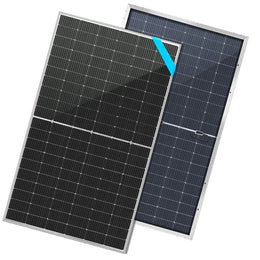
| Sungold 440W N-type (67.8 x 44.65 in) | 18 | 7,920 W | about 378 sq ft | about 833 lb |
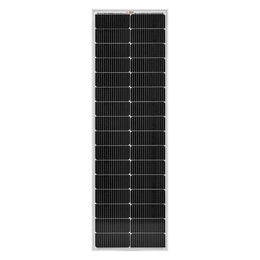
| Sungold 415W mono (67.9 x 44.7 in) | 19-20 | 7,885-8,300 W | about 400-422 sq ft | about 857-902 lb |
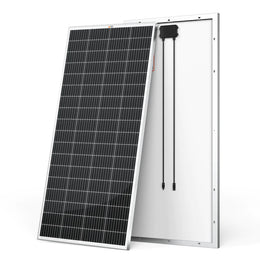
| Sungold 450W mono (75.16 x 44.65 in) | 18 | 8,100 W | about 419 sq ft | about 972 lb |
Plan for 15-25% more roof than the panel area alone, because fire-code setbacks from ridges and edges and the gaps between rows eat space. Panels and racking together typically add 3-4 lb per square foot of dead load; older or low-slope roofs may need an engineer's letter, and a ground mount is the usual way around a small or shaded roof.
Stringing an 8kW array: with the 440W panel (Voc 39.03 V), cold-weather voltage is about 44.5 V per panel using the NEC 690.7 factor of 1.14. Two strings of nine give about 301 V operating and about 400 V cold open-circuit per string - inside the limits of all three inverters in this guide (EG4 12kPV: 600 V max, 120-500 V MPPT; EG4 6000XP: 480 V max; Sungold 8,000W: 500 V max, 125-425 V MPPT). At 13.15 A per string you are also under each tracker's current limit.
How much power an 8kW system produces
A quick, honest estimate is kW x peak sun hours x 0.77. The 0.77 covers heat, wiring, inverter and soiling losses and is the same factor we use in every sizing guide. At the US average of about 4.5 sun hours, 8 kW makes about 27.7 kWh a day, roughly 830 kWh a month and around 10,000 kWh a year. For an exact figure for your roof, run your address through NREL's PVWatts calculator.
What does 27.7 kWh cover? An average US home uses about 29 kWh a day (roughly 870 kWh a month), so an 8kW array offsets most of a typical bill over a year - more in sunny states, less in the North or in a house with electric heat. Summer months over-produce and winter months under-produce; with net metering the grid acts as the seasonal bank, and off-grid you size the battery and a backup generator for the dark weeks instead.
What a battery adds to the price, and what it buys
The battery is the single biggest swing in an 8kW solar system price. In our builds it adds $3,750 for 16 kWh (EG4 WallMount, about $234 per nominal kWh) up to about $4,360 for 20.48 kWh of Sungold server-rack modules. Whether that money pays off depends on three things:
- Outages. A grid-tied system without a battery shuts down when the grid does - that is a safety requirement, not a flaw. If you lose power several times a year, the battery is the part you will actually notice.
- How your utility pays for exports. Where export credits are well below the retail rate (California's net billing is the best-known example), storing midday solar for the evening is worth more than selling it.
- Time-of-use rates. If evening power costs much more than midday power, a battery shifts your own production into the expensive hours.
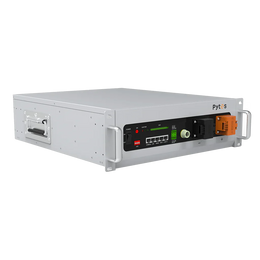
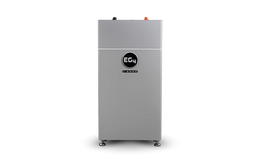
Size it from your goal, not from the array: 10-16 kWh covers essentials overnight, and a full day of an average home needs about 34 kWh. Our battery sizing guide walks through the math. One check matters specifically for 8 kW: battery current. An 8,000 W inverter pulls about 167 A from a 48 V bank at full load. One EG4 WallMount 16 kWh is rated 200 A continuous (about 10.2 kW), so one unit can carry the inverter on its own. Sungold's SG48100P modules are listed at 50 A continuous each, so two of them (as in the SGR-8K10E kit) support roughly 5 kW of battery-only load, and you need four to reach the full 8 kW.
The panel-box check most 8kW quotes include
A grid-tied inverter usually connects through a breaker in your main panel, and the NEC 120% rule limits how big that breaker can be. On a common 200 A panel with a 200 A main, the solar breaker can be 40 A, which supports about 7.7 kW of inverter output. A full 8 kW inverter such as the EG4 12kPV (33.3 A at 240 V, so a 45 A breaker) is just over that line. Electricians solve it with a line-side (supply-side) tap, a slightly smaller main breaker, or by feeding a backed-up subpanel - budget a few hundred dollars for whichever your inspector accepts. A 100 A panel limits you to roughly 3.8 kW on a load-side breaker, which often means a panel upgrade before solar.
Our 7 in-stock 8kW builds, priced
Prices are today's store prices; codes are shown only where the product is actually eligible (ECO50 = $50 off; ECO100 = $100 off orders of $1,500+; SAVE250 = $250 off $4,000+ on eligible items). Builds marked "+" are separate products added to one cart.
| Build | Price | Solar array | Battery | AC output | $ per array watt | Code |
|---|---|---|---|---|---|---|
| EG4 12kPV + 18 x Sungold 440W + EG4 WallMount 16 kWh | $10,255 | 7,920 W | 16 kWh | 8,000 W split-phase, grid-tied or off-grid | $1.29 | - |
| EG4 12kPV + 18 x Sungold 440W (battery later) | $6,505 | 7,920 W | none yet | 8,000 W split-phase, grid-tied | $0.82 | - |
| EG4 6000XP + WallMount 16 kWh + 18 x Sungold 440W | $8,921 | 7,920 W | 16 kWh | 6,000 W split-phase, off-grid (no export) | $1.13 | - |
| Sungold 8,000W inverter + 18 x 440W + 4 x SG48100P | $9,316 | 7,920 W | 20.48 kWh | 8,000 W split-phase, off-grid | $1.18 | ECO50 on inverter: $9,266 |
| Sungold SGM-8K20 kit | $8,880 | 4,980 W | 20.48 kWh | 8,000 W split-phase, off-grid | $1.78 | SAVE250: $8,630 |
| Sungold SGK-8MAX kit | $6,979 | 5,400 W | 10.24 kWh | 8,000 W split-phase, off-grid | $1.29 | ECO100: $6,879 |
| Sungold SGR-8K10E kit | $5,790 | 3,320 W | 10.24 kWh | 8,000 W split-phase, off-grid | $1.74 | ECO100: $5,690 |
EG4 12kPV + 18 x Sungold 440W + EG4 WallMount 16 kWh - $10,255

This is the cleanest way to build a true 8kW solar system with storage. The EG4 12kPV ($2,999) is an 8,000 W split-phase hybrid inverter: it can sell power back to the grid, run fully off-grid, or do both with a battery in between. It takes up to 12,000 W of solar on two MPPT trackers (15,000 W recommended maximum array), so 18 panels use only two of its four inputs and leave room to grow. It is rated 16,000 W peak for half a second, carries a NEMA 4X enclosure for outdoor mounting, UL 9540 and UL 1741, and a 10-year warranty.
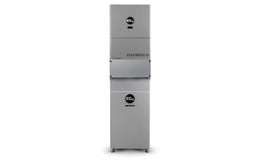
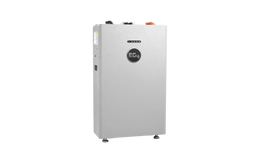
Eighteen Sungold 440W N-type panels come as one variant for $3,506 (7,920 W, UL 61730, 30-year linear power warranty). The EG4 WallMount 16 kWh All-Weather ($3,749.99) adds 16 kWh nominal (12.86 kWh recommended usable), 200 A continuous discharge, self-heating, an IP67 case and a 10-year or 10,000-cycle warranty. The 12kPV listing names this 314Ah battery among its closed-loop partners. The battery's own spec sheet lists its UL certifications as pending, so if your utility or inspector requires a UL 9540-listed combination, confirm the current status with us before ordering.
- Full 8 kW output, grid-tied or off-grid
- Sells excess to the grid where net metering allows
- One battery covers the full inverter load
- Outdoor-rated inverter and battery
- Most expensive build here
- 110 lb inverter + 309 lb battery - two-person install
- Battery UL listing shown as pending on its spec sheet
EG4 12kPV + 18 x Sungold 440W (battery-ready) - $6,505

If the goal is the electric bill and your utility still credits exports fairly, start here: the same 12kPV and 18 panels, no battery. EG4's 12kPV settings include a no-battery grid-tie mode, so the array can offset your bill on day one, and the WallMount (or another compatible 48 V bank of 200 Ah or more) can be added later without changing the inverter or rewiring the array. That staging is the main reason we prefer a hybrid inverter over a grid-tie-only unit at this size, even though grid-tie-only inverters can be cheaper.
At about $0.82 per watt this is the lowest cost per array watt in the guide. The trade-off is clear: with no battery, the system shuts off during a blackout, like any grid-tied system. Ask your utility about interconnection before you buy - some require specific inverter listings, which the 12kPV's UL 1741 certification usually satisfies.
- Lowest $/W for a real 8 kW array
- Add storage later on the same inverter
- Room for up to 12 kW of panels
- No backup power during outages
- Payback depends on your utility's export rate
Sungold SGK-8MAX - $6,979 (ECO100: $6,879)

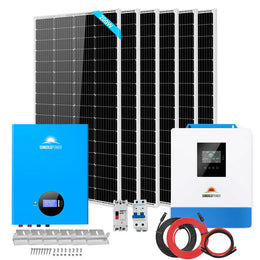
The SGK-8MAX is the all-in-one box for an off-grid cabin or rural home that wants 240V without piecing parts together. It pairs Sungold's 8,000 W split-phase inverter (16,000 W peak, 5 HP motor rating, dual MPPT up to 11,000 W of solar) with twelve 450W panels (5,400 W) and four 12V 200Ah self-heating LiFePO4 batteries wired in series for 10.24 kWh. The batteries have Bluetooth monitoring and an IP65 case and start heating below 33.8°F.
Note the naming: "8kW" here is the inverter, not the array. 5,400 W of panels makes about 18.7 kWh on an average day by our formula, so this kit suits homes using 10-15 kWh a day, with a generator for long cloudy spells. The inverter is IP20 and must live indoors. The listing does not state the batteries' continuous discharge current, so check with us before planning sustained loads near 8 kW.
- Complete kit at a low price per watt
- 240V for well pumps and dryers
- Self-heating batteries for cold garages
- 5.4 kW array, not 8 kW
- Inverter indoor-only (IP20)
- No grid export
Sungold SGM-8K20 - $8,880 (SAVE250: $8,630)

The SGM-8K20 doubles the battery: four 51.2 V 100Ah modules for 20.48 kWh, each rated 100 A maximum continuous and 7,000 cycles at 80% depth of discharge, with room to parallel many more. The 8,000 W split-phase inverter has the same dual-MPPT, 11,000 W solar input as the other Sungold kits, and the twelve 415W panels make 4,980 W (about 17.3 kWh on an average day).
This is the kit for an off-grid household that runs a fridge, well pump and washer and wants a second day of reserve. Its listed inverter warranty is 1 year, shorter than EG4's 10, which is worth weighing against the lower price. SAVE250 applies because the kit is over $4,000 and in the eligible collection.
- 20.48 kWh - two nights of essentials
- Batteries can carry the full 8 kW
- Expandable array (up to 11 kW)
- Inverter warranty listed as 1 year
- ~95 lb per battery module
- Under 5 kW of panels as shipped
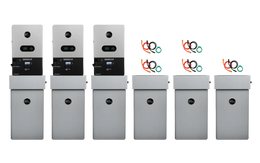
Sungold 8,000W inverter + 18 x 440W + 4 x SG48100P - $9,316

If you want a true 8 kW array off-grid, build it from parts: the Sungold 8,000W 48V split-phase inverter ($1,450, ECO50 eligible), the 18-panel 440W pack ($3,506) and the 4 x SG48100P server-rack battery bundle ($4,360, 20.48 kWh). The inverter accepts 11,000 W of solar on two inputs (500 V max, 200 A max charge), so two strings of nine 440W panels fit with margin.
Four SG48100P modules matter here: at 50 A continuous each, four give about 200 A - enough for the full inverter output, where two would cap battery-only loads near 5 kW. This build costs about $440 more than the SGM-8K20 but gives you 2,940 W more solar, which is the difference between topping up the battery by early afternoon and running the generator on short winter days.
- Full 7.9 kW array with 20 kWh storage
- Proven 8 kW split-phase inverter
- Each part replaceable on its own
- You source racking, breakers and cabling
- Off-grid only (no export)
- Inverter warranty per Sungold's warranty page
EG4 6000XP + WallMount 16 kWh + 18 x 440W - $8,921

The EG4 6000XP + WallMount All-Weather bundle ($5,414.97) is a strong off-grid or backup system where 6,000 W of continuous output is enough. Its 8,000 W solar input is a near-perfect match for 18 x 440W (7,920 W on two 4,000 W trackers, 480 V max), and the 16 kWh battery is the same outdoor-rated WallMount as our top pick.
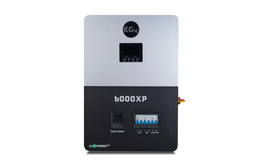
Two things to understand before choosing it: the 6000XP is an off-grid inverter - it can charge from and pass through grid power (50 A bypass) but does not sell power back, so there is no net-metering credit; and its 6,000 W continuous / 12,000 W surge limit means a large AC compressor plus an electric dryer at once may be too much. For a cabin, a shop or a backed-up subpanel, it is excellent value.
- Full 8 kW array on a $1,500-class inverter
- 16 kWh outdoor-rated battery included
- Parallel up to 16 inverters later
- 6 kW output, not 8 kW
- No grid export
- Inverter is IP20 - indoor or enclosed
Sungold SGR-8K10E - $5,790 (ECO100: $5,690)

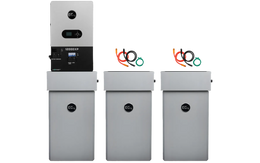
The SGR-8K10E is the cheapest way into 8,000 W split-phase power: the same Sungold inverter, eight 415W panels (3,320 W) and two 5.12 kWh SG48100P batteries (10.24 kWh). It is a sensible start for a part-time cabin or an outage kit you plan to grow - the inverter takes up to 11,000 W of solar, so you can add panels in matched strings later.
Be realistic about its limits: 3,320 W of panels make about 11.5 kWh on an average day, and two SG48100P modules at 50 A each support about 5 kW from the battery alone. Adding two more modules later lifts both storage and battery output.
- Lowest price for 240V off-grid power
- Room to triple the array
- Proven SG48100P batteries (UL1973)
- Small 3.3 kW array
- ~5 kW battery-only limit with two modules
- Indoor-only inverter
Which 8kW build fits your situation
| Your situation | Build | Why |
|---|---|---|
| Grid-tied home, cut the bill, outages rare | 12kPV + 18 x 440W ($6,505) | Lowest $/W; add a battery later on the same inverter |
| Grid-tied home, outages or time-of-use rates | 12kPV + 18 x 440W + WallMount ($10,255) | Full 8 kW backup-capable hybrid with export |
| Off-grid cabin, 10-15 kWh a day | SGK-8MAX ($6,979) | Complete kit, 5.4 kW array, 240V |
| Off-grid home, two nights of reserve | SGM-8K20 ($8,880) or Sungold 8kW parts build ($9,316) | 20.48 kWh; the parts build adds 2.9 kW more solar |
| Backup or shop subpanel, 6 kW is enough | 6000XP bundle + 18 x 440W ($8,921) | Big battery and full array on a smaller inverter |
| Tight budget, plan to grow | SGR-8K10E ($5,790) | Cheapest 8 kW split-phase start |
Bigger or smaller? If your bill says you use more than about 1,100 kWh a month, compare our 15kW solar system guide; for inverter types in more depth, see hybrid vs off-grid vs grid-tie inverters. You can browse every 8 kW kit in our 8kW solar power system collection, hybrid units in hybrid inverters and storage in 48V solar batteries, or run your loads through the Solar Kit Calculator.
Tax credits and rebates in 2026
The 30% federal residential clean energy credit (Section 25D) ended for expenditures after December 31, 2025, so a system bought and installed in 2026 does not qualify for it - that is a big reason DIY equipment prices matter more this year. State, city and utility programs still exist, and some pay specifically for batteries. Our federal solar tax credit guide explains what ended, and solar rebates by state lists where to apply. Many rebates require pre-approval or a licensed installer, so check before you buy. This is general information, not tax advice.
What buyers ask before buying an 8kW system
These come from the searches that bring people to our 8 kW pages and from Google's question results for the topic.
How much does an 8kW solar system produce per day?
About 21-40 kWh depending on sun: 27.7 kWh at the US-average 4.5 peak sun hours using our 8 x hours x 0.77 formula. That is about 830 kWh a month.
Is an 8kW system the same as 8 kWh?
No. kW is the size of the array (or inverter) - how fast it can produce. kWh is energy - how much it produces or stores over time. An 8 kW array makes about 28 kWh on an average day; an 8 kWh battery stores about 8 kWh. Kit names add to the confusion: the Sungold "8kW" kits use an 8,000 W inverter with 3.3-5.4 kW of panels.
Do I need an 8kW inverter for an 8kW array?
Not exactly. Inverters are often paired with slightly more panel watts than their AC rating, and hybrids list a separate solar input limit: the EG4 12kPV takes 12,000 W of panels on an 8,000 W output, and the 6000XP takes 8,000 W on 6,000 W. Size the inverter for the loads you run at once, and the array for the kWh you need.
How much is an 8kW solar battery?
In our store, about $3,750 for 16 kWh (EG4 WallMount) or $4,360 for 20.48 kWh (4 x SG48100P), equipment only. For an 8 kW inverter, make sure the battery can deliver about 167 A continuous, or it will limit your output during outages.
Can an 8kW solar generator run a house?
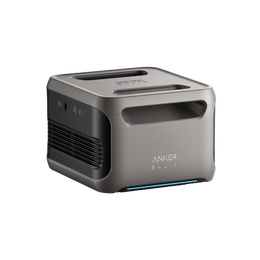
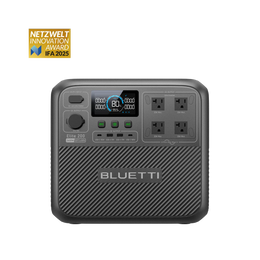
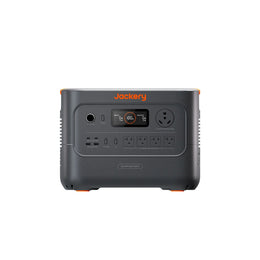
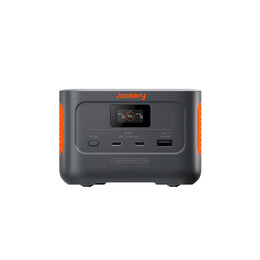
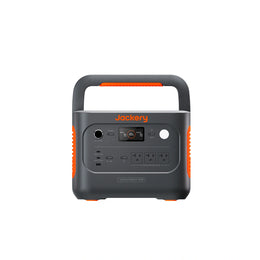
A portable 8 kW-class power station can carry essentials and some 240V loads for hours, but it holds a few kWh, not a day's use, and it has no roof array. For a whole house that runs on sunlight every day, you want a fixed 8 kW array with a hybrid or off-grid inverter like the builds above.
8kW solar system FAQ
How much does an 8kW solar system cost in 2026?
Equipment for a grid-tied 8 kW array starts around $6,500 (hybrid inverter plus 18 x 440W panels) and about $10,250 with a 16 kWh battery. Professionally installed systems are commonly quoted at $2.50-$3.50 per watt, or about $20,000-$28,000 before a battery. Off-grid kits with an 8,000 W inverter start at $5,790.
How many solar panels are in an 8kW system?
About 18 panels of 440-450 W, 20 panels of 400-415 W, or 24 panels of 330 W. Eighteen 440W panels make 7,920 W and need about 378 square feet of panel area plus setbacks.
How many kWh does an 8kW solar system produce a month?
About 830 kWh a month at 4.5 peak sun hours (8 kW x 4.5 x 0.77 x 30). Expect roughly 650 kWh in cloudy northern climates and 950-1,200 kWh in the sunny South and Southwest.
Is 8kW of solar enough to power a house?
For many homes, yes. The average US home uses about 870 kWh a month, and an 8 kW array makes about 830 kWh at average sun. Homes with electric heat, EV charging or a pool usually need 10-15 kW.
How much does a battery add to an 8kW solar system?
In our builds, about $3,750 for 16 kWh or $4,360 for 20.48 kWh of equipment. Installed whole-home batteries are often quoted around $12,000-$16,000. A battery is what keeps your solar running in a blackout.
Can I go off-grid with an 8kW solar system?
Yes, with enough battery for your nights and cloudy days - usually 15-30 kWh for a home - and an off-grid or hybrid inverter. Most off-grid homes also keep a generator for long stretches of bad weather.
Is there still a federal tax credit for an 8kW solar system?
Not for homeowners in 2026. The 30% Section 25D credit ended for expenditures after December 31, 2025. Some states, cities and utilities still offer rebates or battery incentives.
Prices, stock and codes were checked November 9, 2026. Questions about a specific roof or load list? Call us at +1 307 317 7213 and we will match a build to it, or read our solar system sizing guide first.

Serhii Dovzhenko, Solar & Energy Storage Specialist at Eco Solar Kits · LinkedIn
Serhii is based in Vancouver, BC, and works on product data, system sizing and buyer guides for Eco Solar Kits. He attends solar and energy storage industry conferences and is involved in the community of electricians in Vancouver, BC. Credit for the data verification in this guide goes to Adsec.ca.