

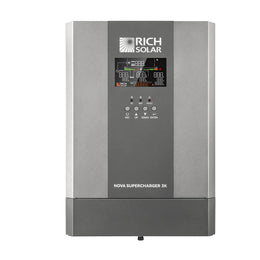

A 15 kW array sits at the top end of residential solar - the size people look at when a heat pump, an EV or a workshop pushes the bill past $250 a month, or when an off-grid property must run a full-size house year-round. At this size mistakes get expensive: the wrong inverter clips output and a roof that looked big enough loses a third of its space to setbacks.
This guide does the math for a 15kW solar system the way we do it for customers: daily and yearly output by climate, panel count and roof area, real equipment prices from listings that are in stock today, battery sizing, and seven ways to build one - from a $6,192 panel package to a 24 kW off-grid power plant. If you are not yet sure 15 kW is your size, start with our what size solar system do I need guide; every finished kit at this size is also in the 15kW solar power system collection.
15kW solar system at a glance
| Question | Answer for 15 kW (DC) | How we got it |
|---|---|---|
| Daily output | 40-75 kWh (52 kWh at 4.5 sun hours) | 15 kW x peak sun hours x 0.77 |
| Yearly output | 14,800-27,400 kWh (about 19,000 kWh at 4.5 h) | Daily output x 365 |
| Panels needed | 38 x 400W, 35 x 440W, 34 x 450W or 26 x 590W | 15,000 W / panel watts, rounded up |
| Module area | 720-800 sq ft before setbacks | Listed panel dimensions x count |
| Module weight | 1,620-1,810 lb (about 2.1-2.5 lb per sq ft) | Listed panel weight x count |
| Inverter | Needs at least 15 kW of PV input; 12-16 kW AC output | See the 7 builds below |
| Equipment cost (DIY) | $6,192 panels only; $11,842-$17,200 complete builds | Eco Solar Kits prices, November 7, 2026 |
| Installed cost (typical quotes) | About $37,500-$52,500 before incentives | $2.50-$3.50 per watt, varies by state and roof |
kW is the array's size (power in full sun); kWh is energy made over a day or stored in a battery. A '15kWh solar system' usually means a 15 kWh battery - a 15 kW array makes several times that every sunny day.
How much power does a 15kW solar system produce
The formula we use for every system size is simple:
Daily kWh = array kW x peak sun hours x 0.77
Peak sun hours are the daily hours of full-strength (1,000 W per square meter) sunlight, averaged over the year. The 0.77 factor covers heat, inverter, wiring and dust losses; shaded or snowy roofs do worse. For a precise number at your address, run NREL PVWatts with your roof tilt and direction.
Seasons matter as much as location: in the northern US a 15 kW array can make three times as much in June as in December. Net metering evens that out for grid-tied homes; an off-grid system has to be sized for the worst month.
Worked example: a home near Denver at 5.5 sun hours: 15 x 5.5 x 0.77 = 63.5 kWh a day, about 1,900 kWh a month and 23,200 kWh a year. At an example rate of $0.17 per kWh that is roughly $320 a month of electricity the array produces.
How many solar panels are in a 15kW system
Panel count = 15,000 W / panel watts, rounded up. Bigger panels mean fewer modules, clamps and connectors, but each one is heavier and harder to carry up a ladder. Here is what 15 kW looks like with panels we stock:
| Panel | Watts | Panels for 15 kW | Array size | Module area | Total weight | Dimensions |
|---|---|---|---|---|---|---|
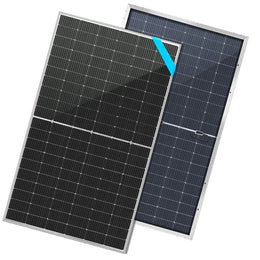
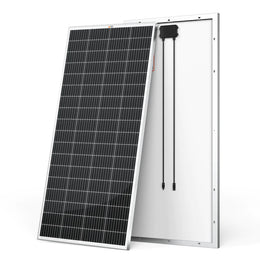
| Sungold 440W N-Type (UL 61730) | 440 W | 35 | 15.4 kW | 736 sq ft | 1,620 lb | 67.8 x 44.65 in, 46.3 lb |
| Sungold 415W Mono PERC (in the SGR kits) | 415 W | 37 | 15.36 kW | 780 sq ft | 1,669 lb | 67.9 x 44.7 in, 45.1 lb |
| Rich Solar MEGA 400W | 400 W | 38 | 15.2 kW | 800 sq ft | 1,718 lb | 67.8 x 44.7 in, 45.2 lb |
| Sungold 450W Mono PERC | 450 W | 34 | 15.3 kW | 794 sq ft | 1,673 lb | 75.2 x 44.7 in, 49.2 lb |
| Sungold 590W bifacial N-Type (in the SGS12K and FR kits) | 590 W | 26 | 15.34 kW | 723 sq ft | 1,806 lb | 89.69 x 44.65 in, 69.45 lb |
Module area is the glass only. Fire-code setbacks from edges and ridges (typically 18-36 inches) plus vents and skylights mean most homes need 900 to 1,100 square feet of usable roof for 15 kW. If the roof is short, split the array across south, east and west faces (east and west make about 10-20% less) or use a ground mount, where the 590W bifacial panels also collect reflected light. Expect about 2.1-2.5 lb per square foot of dead load before racking - have older roofs checked by an engineer.
String layout: cold weather raises panel voltage. The Sungold 440W's 39.03 V Voc times a 1.14 cold factor (NEC 690.7) means a 600 V inverter takes up to 13 per string and a 500 V inverter up to 11; your installer confirms the layout against the MPPT window.
How much does a 15kW solar system cost
Here is what the equipment for a 15kW solar system costs today, built from listings that are active and in stock on November 7, 2026. Prices are the listing price; codes are shown only where the product is in a promotion collection. All ship free to the lower 48 states.
| Build | Equipment price | PV array | Battery | AC output | $ per watt of PV |
|---|---|---|---|---|---|
| EG4 FlexBOSS21 + WallMount 16 kWh + 35 x 440W | $13,284 | 15.4 kW | 16 kWh | 12 kW battery-only / 16 kW with PV | $0.86 |
| Sol-Ark 15K + 35 x 440W (battery-ready) | $11,842 ($11,742 with ECO100) | 15.4 kW | none yet | 15 kW | $0.77 |
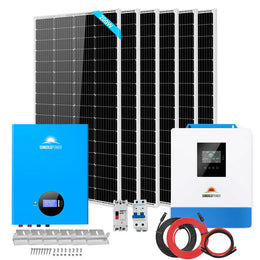
| Sungold SGR-16K25E kit + 6 x 440W | $17,200 ($16,950 with SAVE250 on the kit) | 15.92 kW | 25.6 kWh | 16 kW (2 x 8 kW) | $1.08 |
| Sungold SGR-13KM (20-panel option) + 16 x 440W | $14,850 | 15.34 kW | 25.6 kWh | 13 kW (2 x 6.5 kW) | $0.97 |
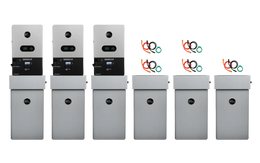
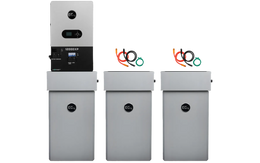
| Sungold SGS12K-PM3-590 hybrid kit | $15,299 ($15,249 with ECO50) | 10.62 kW | 48.21 kWh | 12 kW | $1.44 |
| Sungold FR-24K60CP off-grid kit | $22,707 | 18.29 kW | 61.44 kWh | 24 kW (2 x 12 kW) | $1.24 |
| 35 x Sungold 440W panels only (31-pack + 4-pack) | $6,192 | 15.4 kW | - | - | $0.40 |
Those numbers leave out racking (roughly $0.10-$0.25 per watt, more for a ground mount), wire, disconnects, permits and labor. Installer quotes for a finished 15 kW rooftop system commonly land around $2.50-$3.50 per watt before incentives - about $37,500-$52,500 - with a battery on top. Buying the equipment and hiring a licensed electrician for the install cuts the total, but permits, inspection and utility paperwork still apply. Not sure 15 kW is right? Run your numbers in the Solar Kit Calculator.
Incentives changed in 2026: the 30% federal residential credit (Section 25D) ended for expenditures after December 31, 2025, so homeowners should not count on it for a system bought now. State, utility and city rebates still exist in many places - see our solar rebates by state guide and the full story in our federal solar tax credit guide.
Battery sizing for a 15kW system
A grid-tied system saves money without a battery; storage is for outages, time-of-use rates or living off-grid. Size it to the energy you use after sunset, not to the array:
Battery kWh = evening and overnight kWh / 0.9 (the 0.9 covers inverter losses and a reserve you keep in the battery).
| Goal | Typical overnight use | Battery to plan for | Example from the builds |
|---|---|---|---|
| Essentials during outages (fridge, lights, internet, furnace fan, well pump) | 7-11 kWh | 8-12 kWh | One 16 kWh WallMount with plenty left over |
| Whole house overnight, gas heat | 12-18 kWh | 14-20 kWh | 16 kWh (FlexBOSS21 bundle) or 20.48 kWh |
| Whole house overnight, heat pump or EV charging at night | 20-35 kWh | 22-40 kWh | 25.6 kWh SGR kits, 32 kWh (2 WallMounts) |
| Off-grid, 1-2 cloudy days of autonomy | 40-60 kWh | 45-65 kWh | 48.21 kWh SGS12K-PM3-590 or 61.44 kWh FR-24K60CP |
Check power as well as capacity: one EG4 WallMount 16 kWh is rated for about 10.2 kW continuous, so a FlexBOSS21 needs a second battery to deliver its full 12 kW from batteries alone. Recharging is easy at this size - 40-75 kWh on a sunny day refills even a 48 kWh bank. Our whole-home battery backup cost guide compares storage options in more depth.
What a 15kW system can run
At 4.5 sun hours a 15 kW array makes about 1,560 kWh a month, close to twice the average US household's use of roughly 850-900 kWh. That headroom suits all-electric homes with a heat pump (often 400-1,000 kWh a month in heating season), EV owners (1,000 miles a month adds about 250-330 kWh), pools and shops, and off-grid homesteads with a well pump and freezers.
The array decides how many kWh you make; the inverter decides how much runs at once. A 12 kW inverter runs central air, a well pump and the kitchen together, but stagger the biggest loads or choose a 15-16 kW inverter.
7 ways to build a 15kW system in stock now
All seven are active listings with stock on November 7, 2026. Specs come from each listing's spec table and our product data; promo codes are mentioned only where the product is in a promotion collection. Panel add-ons use the Sungold 440W N-Type panel (UL 61730, 30-year linear power warranty), sold in packs of 2 to 31.
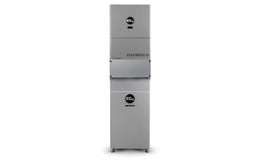
EG4 FlexBOSS21 + WallMount 16 kWh + 35 x 440W - $13,284

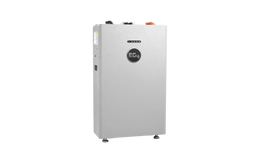
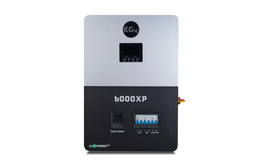
The FlexBOSS21 is built for exactly this array size: three MPPTs and five string inputs use up to 21 kW of PV (25 kW recommended maximum), so 35 Sungold 440W panels in five strings of seven (311 V cold Voc, well inside the 100-600 V input) use it comfortably with room to grow. It delivers 12 kW from battery and grid and up to 16 kW with solar contributing, has a NEMA 4X outdoor enclosure and a 10-year warranty. The bundle pairs it with an EG4 WallMount 16 kWh indoor self-heating battery (314 Ah, UL 9540 system listing with closed-loop communication) for $7,092; add the 31-pack ($5,085) and a 4-pack ($1,107) of 440W panels and the whole 15.4 kW system with 16 kWh of storage is $13,284 in equipment. The two-battery version (32 kWh) is $10,750. Compare brands in our EG4 vs Sol-Ark guide.
Sol-Ark 15K + 35 x 440W - $11,842

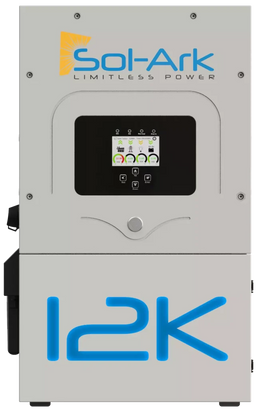
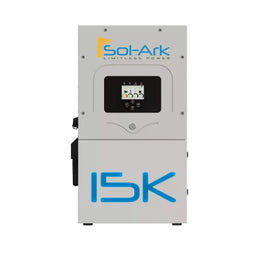
If you want the full 15 kW of AC output from one box and plan to add batteries later, the Sol-Ark 15K is the cleanest route. The listing rates it at 15 kW AC, 18 kW of solar input at up to 600 VDC (13 of the 440W panels per string in cold climates), 250 A battery charging, UL 1741/1741SA and a 10-year warranty, with grid-tie, time-of-use, zero-export, generator and off-grid modes in a pre-wired cabinet. With 35 Sungold 440W panels the 15.4 kW system costs $11,842, or $11,742 with code ECO100 ($100 off orders of $1,500+). It runs without a battery as a grid-tied inverter; when you add 48V storage, check the battery against Sol-Ark's approved list for closed-loop communication.
Sungold SGR-16K25E + 6 x 440W - $17,200

Everything in one order: two 8 kW SPH8048P inverter-chargers in parallel (16 kW of 120/240V split-phase, 5 HP motor rating each), five 5.12 kWh LiFePO4 server-rack batteries (25.6 kWh, 7,000 cycles to 80%) in an enclosed cabinet, 32 Sungold 415W panels (13.28 kW), cables and mounting brackets. The two inverters accept up to 22 kW of PV, so adding a 6-pack of 440W panels ($1,475) as its own string on a free tracker brings the array to 15.92 kW for $17,200 total - $16,950 with code SAVE250 ($250 off the kit on orders of $4,000+).
Sungold SGR-13KM (20 x 415W) + 16 x 440W - $14,850

The SGR-13KM's 20-panel option ($11,655, below its $12,950 compare-at price) ships two paralleled 6.5 kW SPH6548P inverters (13 kW split-phase), 25.6 kWh of LiFePO4 batteries and 20 x 415W panels (8.3 kW). Each inverter has two 5 kW MPPTs (20 kW of PV in total), so add a 16-pack of 440W panels ($3,195) wired as two strings of eight and the array reaches 15.34 kW for $14,850 - the lowest-cost way here to get a full 15 kW array plus 25 kWh of storage.
Sungold SGS12K-PM3-590 hybrid kit - $15,299

This kit puts the money into storage: three PowerMax 314 outdoor batteries (48.21 kWh total, 15.42 kWh usable each, IP65, UL 9540A, 8,000 cycles), an SGS-12K18MAX hybrid inverter (12 kW at 240V, 200 A grid pass-through, IP65, UL 1741 SB, 10-year warranty) and 18 x 590W bifacial N-type panels (10.62 kW). It ships below 15 kW, but the inverter accepts 18 kW of PV on two 9 kW trackers, so the array can grow toward 15 kW later with matched strings - plan that with your installer, because each tracker is limited to 9 kW. $15,249 with code ECO50.
Sungold FR-24K60CP - $22,707

If your usage is above 2,000 kWh a month, or you are off-grid in a northern climate where winter output halves, skip straight past 15 kW. The FR-24K60CP has two FR12K-B inverters (24 kW split-phase, 6 HP motor rating each, 26.4 kW of PV input), twelve CoreX 5 Pro batteries (61.44 kWh, 10-year warranty) and 31 x 590W bifacial panels (18.29 kW) - about 70 kWh a day at 5 sun hours.
Sungold 440W N-Type x 35 (31-pack + 4-pack) - $6,192

Already have an inverter, or buying it elsewhere? The 31-pack of Sungold 440W N-type panels ($5,085, 13.64 kW) plus a 4-pack ($1,107) gives 35 panels and 15.4 kW for $6,192 - about $0.40 per watt, the lowest of any pack on the listing. Each module is a 108-cell TOPCon panel, 67.80 x 44.65 in and 46.3 lb, UL 61730 and CEC listed, rated for 5,400 Pa snow and 2,400 Pa wind loads and a 1,500 V system, with a 30-year linear power warranty and 12 years on the product. More options are in our 450W solar panels collection.
Browse more systems near this size: 12kW solar systems, 20kW solar systems, grid-tied systems with battery backup and whole-house solar power systems.
Grid-tie, hybrid or off-grid at 15 kW
The FlexBOSS21, Sol-Ark 15K and SGS-12K18MAX are UL 1741 listed hybrid inverters: they export surplus to the utility, run the house from batteries in an outage and shift power for time-of-use rates - the right choice for most homes on the grid. The SGR and FR kits use off-grid inverter-chargers with generator input that can charge from the grid but do not export.
Grid-tied systems also face the service panel's limit. Under the NEC 120% rule, a 200 A panel with a 200 A main breaker can usually take a 40 A backfeed breaker - about 7.7 kW of continuous inverter output. A 12-16 kW inverter at this size often needs a supply-side (line-side) connection, a main breaker downsize, a larger panel or an export limit set in the inverter. Our hybrid vs off-grid vs grid-tie inverter guide covers the differences in detail.
What buyers ask before buying a 15kW solar system
These come from the searches that bring people to our 15 kW pages and from Google's question results, answered with the products above.
How much does a 15kW solar system with battery backup cost?
In equipment, $13,284 for 15.4 kW of panels with a 16 kWh battery (FlexBOSS21 bundle), $14,850-$17,200 with 25.6 kWh (Sungold SGR kits plus extra panels), and $10,750 + $6,192 = $16,942 for the FlexBOSS21 with two batteries (32 kWh) and 35 panels. Installation, racking and permits come on top.
How many watts is 15kW?
15,000 watts of panel capacity under standard test conditions. On a clear day at noon a well-installed 15 kW array typically delivers 11-13 kW at the inverter, because heat and wiring losses shave off 15-25%.
Can I get a 15kW system for a 3-phase building?
Many small commercial buildings have 120/208V three-phase service. The Sol-Ark 15K and FlexBOSS21 list 120/208V output and the SGS-12K18MAX lists 120/208V three-phase; check the manual for how many units a three-phase service needs before you order. The SGR and FR off-grid kits are wired 120/240V split-phase.
Frequently asked questions
How much does a 15kW solar system cost in 2026?
Equipment for a 15 kW system costs about $6,200 for the panels alone and roughly $11,800 to $17,200 for complete kits with an inverter and 16-25.6 kWh of batteries, based on Eco Solar Kits prices checked November 7, 2026. Installer quotes for a finished 15 kW rooftop system commonly run around $2.50 to $3.50 per watt before incentives, or about $37,500 to $52,500.
How many kWh does a 15kW solar system produce per day?
About 52 kWh a day at 4.5 peak sun hours, using 15 kW x sun hours x 0.77 for real-world losses. That ranges from about 40 kWh in cloudy northern climates (3.5 sun hours) to 75 kWh in the desert Southwest (6.5 sun hours), or roughly 14,800 to 27,400 kWh a year.
How many solar panels do I need for a 15kW system?
Divide 15,000 W by the panel wattage and round up: 38 panels of 400 W, 35 of 440 W, 34 of 450 W or 26 of 590 W. With 440W panels the modules cover about 736 square feet before spacing and fire-code setbacks.
How much roof space does a 15kW solar system need?
The modules alone need about 720 to 800 square feet, depending on panel size. Add room for fire-code setbacks from ridges and edges and for vents, so most homes need 900 to 1,100 square feet of usable, unshaded south, east or west roof - or a ground mount.
Is a 15kW solar system enough to power a house?
For most homes, yes. At 4.5 sun hours a 15 kW array makes about 1,560 kWh a month, close to twice the average US home's use. It suits large homes with electric heat pumps, an EV or a pool, or properties with a shop or guest unit.
What size battery do I need with a 15kW solar system?
Size the battery to your evening and overnight use, not the array. Essentials need 8-12 kWh; running a whole house through the night typically takes 15-30 kWh, which is one or two 16 kWh wall batteries. A 15 kW array makes 40-75 kWh on a sunny day, enough to refill that and run the house.
Is there a federal tax credit for a 15kW solar system in 2026?
Not for homeowners buying their own system: the 30% residential clean energy credit (Section 25D) ended for expenditures after December 31, 2025. State, utility and local programs may still apply, and businesses should ask a tax professional about commercial credits.
More guides: best off-grid solar kits, whole-home battery backup cost and what size solar system do I need.

Serhii Dovzhenko, Solar & Energy Storage Specialist at Eco Solar Kits · LinkedIn
Serhii is based in Vancouver, BC, and works on product data, system sizing and buyer guides for Eco Solar Kits. He attends solar and energy storage industry conferences and is involved in the community of electricians in Vancouver, BC. Credit for the data verification in this guide goes to Adsec.ca.