
Not sure which one?
Size a system for your home, RV or cabin in about a minute, or put up to 4 products side by side.
ECO100 $100 off $1,500+
In stock · ships in 1-4 days
ECO100 $100 off $1,500+
In stock · ships in 1-4 days
ECO100 $100 off $1,500+
In stock · ships in 1-4 days
ECO100 $100 off $1,500+
In stock · ships in 1-4 days
ECO100 $100 off $1,500+
In stock · ships in 1-4 days
ECO100 $100 off $1,500+
In stock · ships in 1-4 days
ECO100 $100 off $1,500+
In stock · ships in 1-4 days
ECO100 $100 off $1,500+
In stock · ships in 1-4 days
ECO100 $100 off $1,500+
In stock · ships in 1-4 days
ECO100 $100 off $1,500+
In stock · ships in 1-4 days
ECO100 $100 off $1,500+
In stock · ships in 1-4 days
ECO100 $100 off $1,500+
In stock · ships in 1-4 days
ECO100 $100 off $1,500+
In stock · ships in 1-4 days

ECO100 $100 off $1,500+
In stock · ships in 1-4 days

ECO100 $100 off $1,500+
In stock · ships in 1-4 days

ECO100 $100 off $1,500+
In stock · ships in 1-4 days

ECO100 $100 off $1,500+
In stock · ships in 1-4 days

ECO100 $100 off $1,500+
In stock · ships in 1-4 days

ECO100 $100 off $1,500+
In stock · ships in 1-4 days
ECO100 $100 off $1,500+
In stock · ships in 1-4 days
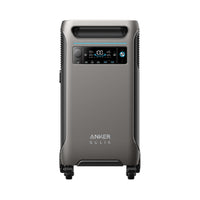
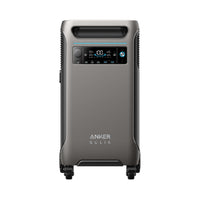
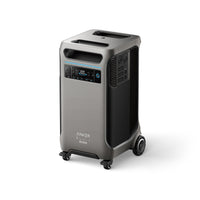
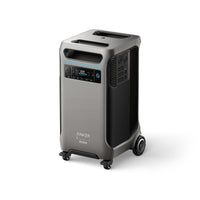
The Anker SOLIX F3800 is the largest station in the lineup and the first one that behaves like a small home battery: 6,000W of continuous output with 9,000W surge, 120V/240V split-phase in one unit, 3,840Wh of LiFePO4 storage that expands with BP3800 batteries to 26.9kWh, and a second station adds up to 12,000W. The F3800 Plus version raises solar input from 2,400W to 3,200W and adds automatic backup activation.
The series collection holds 28 configurations: bare stations, expansion battery stacks, home power panel and transfer switch kits, and solar generator bundles with 400W to 3,520W of panels. Prices run from $2,600 for the F3800 with a PS400 panel to $7,697 for the F3800 Plus with three expansion batteries.

| Product | Key numbers | Best for | Price from |
|---|---|---|---|
| Anker SOLIX F3800 + PS400 400W Panel | 6,000W, 3,840Wh, 400W array | RV and portable backup | $2,600 |
| F3800 + Home Power Panel with Sub Panel | 6,000W, 120V/240V, 3,840Wh | Whole-home backup, single night | $3,100 |
| F3800 + BP3800 + 400W Panel | 6,000W, 7,680Wh, 400W array | Cabin with two-day reserve | $4,299 |
| 2x F3800 + Double Power Hub | 12,000W, 18,000W surge, 7,680Wh | Central AC and heavy 240V loads | $4,599 |

What is the difference between the Anker SOLIX F3800 and the F3800 Plus? Same output and storage. The Plus takes 3,200W of solar rather than 2,400W, and adds automatic backup activation and generator compatibility.
How many BP3800 batteries can I add? Up to six per station for 26.9kWh. The largest bundle here includes three, at 15,360Wh.
Can two stations really give 12,000W? Yes. The Double Power Hub kit joins two F3800 units for 12,000W rated and 18,000W surge at 120V/240V, with 7,680Wh of combined storage.
All configurations ship free to the mainland US from Anker partner warehouses in a few business days, with 30-day returns. Call us with your panel schedule and we will tell you which kit covers it.


