

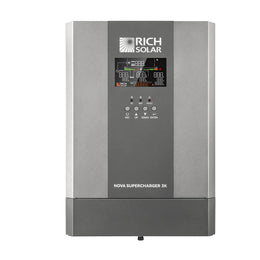

This guide compares the seven 3,000W-4,000W units and kits we actually have in stock today, explains which numbers matter (continuous watts, surge, watt-hours, voltage and solar input) and walks through the sizing math so you can match one to your fridge, pump or RV. Every price, spec and code below was checked against our live listings on November 7, 2026.
The 7 best 3000-watt solar generators at a glance
| Pick | Best for | Continuous / surge | Battery | Voltage | Solar input | Price |
|---|---|---|---|---|---|---|
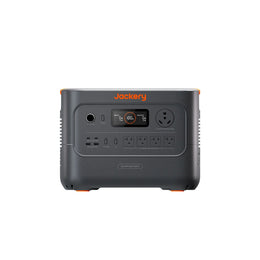
| Jackery HomePower 3000 | Best overall | 3,600W / 7,200W | 3,072 Wh | 120V (30A outlet) | 1,000W | $1,499 |
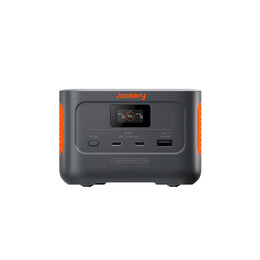
| Jackery HomePower 3600 Pro Max (sold out) | 240V loads, well pumps | 4,000W at 240V (2,000W at 120V) / 8,000W | 3,584 Wh, to 21.5 kWh | 120/240V (NEMA 14-50) | Not stated on listing | $1,799 ($1,699 with ECO100) |
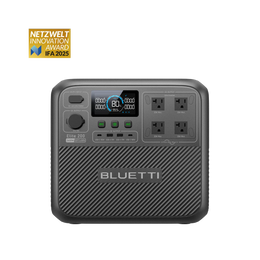
| Bluetti Apex 300 | Highest 120V output, UPS | 3,840W / 7,680W lifting | 2,765 Wh, to 58 kWh (multi-unit) | 120V outlets | Needs SolarX 4K add-on | $1,699 |
| Mango Power E 3.5 kWh | Most Wh per dollar | 3,000W | 3,530 Wh, to 7.06 kWh | 120V (240V with mSocket Pro + 2nd unit) | 2,000W | $1,299 |
| Mango Power E 7 kWh bundle | Multi-day outages | 3,000W | 7,060 Wh | 120V | 2,000W | $1,999 ($1,899 with ECO100) |
| HomePower 3000 + 2x SolarSaga 200W | Ready-to-go solar kit | 3,600W / 7,200W | 3,072 Wh + 400W panels | 120V | 1,000W | $2,149 ($2,049 with ECO100) |
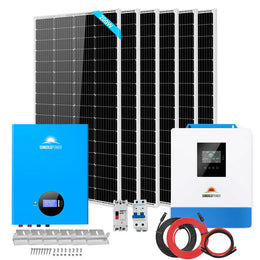
| Sungold SGKT-3PRO kit | Permanent cabin or shed | 3,000W / 6,000VA | 5,120 Wh + 800W panels | 120V | 4,000W (80A MPPT) | $2,485 ($2,385 with ECO100) |
Specs come from our product listings and spec tables. Prices are list prices on November 7, 2026; ECO100 ($100 off orders of $1,500 or more) is shown only for products that are in the code's eligible collection. Jackery has told dealers its promotional pricing is under review, so check the live price before you order.
Watts, surge and watt-hours: what 3000W really means
The "3000W" in a product name is only one of four numbers that matter.
- Continuous watts - the load the inverter can carry indefinitely. This is the number to compare.
- Surge (peak or lifting) watts - the short burst for motors starting. Refrigerators, pumps and air conditioners pull two to four times their running watts for a fraction of a second. The Jackery HomePower 3000 lists 7,200W surge, the 3600 Pro Max 8,000W at 240V, the Apex 300 7,680W and the Sungold inverter 6,000VA.
- Watt-hours (Wh) - the size of the fuel tank. Our picks store 2,765 to 7,060 Wh. Plan on about 85% of the rated Wh reaching your appliances after inverter losses.
- Voltage - most stations here are 120V. Well pumps, central AC, dryers and many shop tools are 240V, which only the HomePower 3600 Pro Max does from a single unit in this list.
What can a 3000-watt solar generator run?
Typical running and start-up watts. Your appliance nameplate beats any table.
| Appliance | Running watts | Start-up watts | On a 3,000-3,840W 120V station? |
|---|---|---|---|
| Refrigerator (modern, 18-22 cu ft) | 150-200 W | 1,200-2,000 W | Yes, with room for other loads |
| Chest freezer | 80-150 W | 800-1,200 W | Yes |
| Microwave (1,000 W class) | 1,000-1,500 W | - | Yes |
| Coffee maker / kettle | 800-1,500 W | - | Yes |
| Space heater | 1,500 W | - | Yes, but drains 3 kWh in 2 hours |
| Furnace blower (gas furnace) | 400-800 W | 1,000-2,000 W | Yes, via transfer switch or inlet |
| Sump pump (1/2 hp, 120V) | 800-1,050 W | 2,000-3,000 W | Yes - check the surge rating |
| Window AC (10,000 BTU) | 900-1,200 W | 2,000-3,000 W | Yes |
| RV roof AC (13,500-15,000 BTU) | 1,300-1,800 W | 2,500-3,500 W+ | Usually; a soft starter helps |
| Well pump (1/2-1 hp, 240V) | 1,000-2,000 W | 3,000-6,000 W | Only on 240V (HomePower 3600 Pro Max) |
| Central AC (2-4 ton, 240V) | 2,000-4,500 W | 6,000-15,000 W | No - beyond a single 3kW station |
| Electric range, dryer, water heater | 3,000-5,500 W | - | No |
The point most buyers miss: a 3,000W station can run almost any one 120V appliance, but you add loads together. A fridge, furnace blower, microwave and lights at once is about 2,400-2,900 W - fine on any pick here. Add a space heater and you are over.
Sizing math: pick the right watts and watt-hours
Size the inverter first, then the battery, then the solar. Here is a worked example for a typical winter outage in a house with a gas furnace and a basement sump pump.
Step 1 - Peak watts (inverter size)
Fridge 150 W + furnace blower 600 W + microwave 1,100 W + lights and Wi-Fi 100 W + sump pump 900 W = 2,850 W if everything runs together. The largest motor start (the sump pump, about +1,800 W for a moment) pushes the instantaneous peak to roughly 4,650 W - well inside a 7,200W surge rating. So a 3,600W continuous station is the right class; a 2,000W unit would trip.
Step 2 - Daily watt-hours (battery size)
| Load | Watts | Hours per day | Wh per day |
|---|---|---|---|
| Refrigerator (cycling average) | ~65 W average | 24 | 1,500 |
| Furnace blower | 600 W | 4 | 2,400 |
| Lights, Wi-Fi, phones | 100 W | 10 | 1,000 |
| Microwave | 1,100 W | 0.3 | 330 |
| Sump pump | 900 W | 1 | 900 |
| Total | 6,130 Wh |
Divide by 0.85 for inverter losses and you need about 7,200 Wh for a full day with no sun. A 3,072 Wh HomePower 3000 covers about 10 hours of this load; the 7,060 Wh Mango Power E bundle covers close to a day; a 3600 Pro Max with one Battery Pack 3600 Plus (7,168 Wh) does the same on 240V.
Step 3 - Solar to refill it
Daily solar Wh = panel watts x peak sun hours x 0.77 (our standard factor for heat, angle and charge losses). At 4.5 sun hours:
| Panels | Wh per day (4.5 sun hours) | Share of a 3,072 Wh battery | Fits which pick |
|---|---|---|---|
| 400 W | ~1,390 Wh | 45% | All with solar input |
| 800 W | ~2,770 Wh | 90% | HomePower 3000, Mango Power E, SGKT-3PRO |
| 1,000 W | ~3,470 Wh | Full refill | HomePower 3000 (max), Mango Power E, SGKT-3PRO |
| 2,000 W | ~6,930 Wh | Refills a 7 kWh bundle | Mango Power E (max), SGKT-3PRO |
If you want to run the numbers with your own appliance list and ZIP code, use our solar kit calculator, or read the longer walkthrough in what size solar generator do I need.
Cost per kWh and runtime compared
Price per kWh of battery is the fairest way to compare units with different capacities.
Runtime is where watt-hours show up. Without any solar, here is how long each pick carries a light essentials load and a heavier winter load:
For a closer look at how long a fridge alone lasts on each size, see how long a power station runs a refrigerator.
Our 7 picks in detail
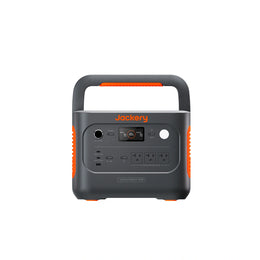
Jackery HomePower 3000 - $1,499

The HomePower 3000 gives you the most usable 120V output per dollar in this class: 3,600W continuous from a 30A outlet, 7,200W surge for compressors and pumps, and 3,072 Wh of LiFePO4 rated for 4,000 cycles. The 30A outlet takes the full 3,600W, so it can feed an RV or a manual transfer switch for up to six household circuits. It recharges from the wall in about 2.2 hours, takes up to 1,000W of solar through two 8mm inputs and weighs 59.5 lb with wheels and a handle - noticeably lighter than the Mango or Bluetti units. The trade-off: it is not expandable. Warranty is listed as 3+2 years. It is part of the Jackery HomePower series.
Jackery HomePower 3600 Pro Max - $1,799 (sold out)

This is the one to buy if you need 240V from a single box. The NEMA 14-50 outlet delivers 4,000W at 240V with an 8,000W surge - enough for many 240V well pumps, a mini-split or shop tools - and it connects to a manual transfer switch for household circuits. The 3,584 Wh LiFePO4 pack is rated for 6,000 cycles, the unit is UL 9540 certified, switches to battery in under 10 ms as a UPS, charges from the wall in about 2.5 hours and expands to 21.5 kWh with up to five Battery Pack 3600 Plus units (the station (sold out) plus one pack is a $3,159 bundle with 7,168 Wh). Watch the 120V side: the two 20A outlets share 2,000W, so for 120V-only homes the HomePower 3000 delivers more. The listing does not state a solar input figure, so we do not quote one. $1,699 with ECO100.
Bluetti Apex 300 - $1,699

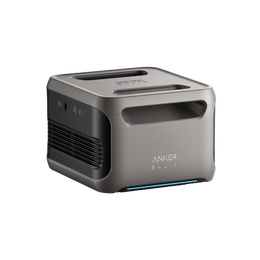
The Apex 300 has the highest continuous rating here at 3,840W, with 7,680W of lifting power and a 0 ms UPS switchover that keeps CPAPs, routers and computers running through a grid drop. It is built as a platform: add B300K or B500K batteries (the Apex 300 + B300K variant is $2,799 for 5,529.6 Wh) and connect up to three units for as much as 58 kWh and 11.52 kW. It accepts generator input up to 11.5 kW and idles at about 20 W, which matters on long outages. Bluetti lists 120V and 240V output; the six outlets on the unit are 120V, so plan 240V loads through Bluetti's home-integration hardware and confirm the setup with us first. Two real limits: there is no built-in solar charge controller (solar needs Bluetti's separate SolarX 4K, which we do not stock) and it is the most expensive per kWh in this list. 83.8 lb, 6,000+ cycles, 5-year warranty. More in the Bluetti Apex series.
Mango Power E 3.5 kWh - $1,299

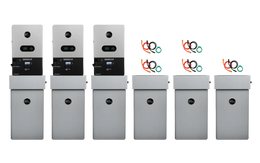
At $1,299 for 3,530 Wh the Mango Power E is the cheapest way into this class per kWh ($368). It gives 3,000W at 120V, 16 output ports, a 2,000W solar input (60-150V, one MPPT) that can refill the battery in a single good day, and 3,000W AC charging that reaches 80% in about an hour. The CATL LFP cells are rated for 6,000 cycles, it self-heats in the cold and carries a 5-year warranty. Add one expansion battery for 7.06 kWh, or a second unit plus the mSocket Pro for 240V split-phase (sold as a $2,599 kit). Downsides: 100 lb, an IP21 enclosure that must stay dry, and no published surge rating on our listing, so leave headroom for big motors. Compare the range in our Mango Power stations.
Mango Power E 7 kWh Home Backup - $1,999

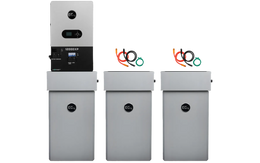
This bundle is the Mango Power E plus one expansion battery for 7,060 Wh at $283 per kWh - the lowest cost per stored kWh of anything in this guide and enough for the full winter-outage day in our sizing example. Output stays 3,000W at 120V, and the 2,000W solar input means about 6.9 kWh a day at 4.5 sun hours with a full array, so it can keep up with an essentials load indefinitely in decent weather. With ECO100 it drops to $1,899. It is two heavy pieces, so treat it as a home battery on wheels. For other ways to add capacity later, see expandable power stations compared.
Jackery Solar Generator HomePower 3000 + 2x SolarSaga 200W - $2,149

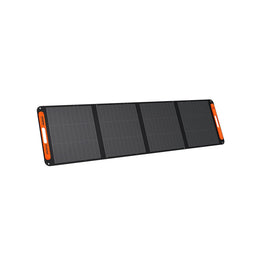
If you want panels in the same box and no compatibility homework, this kit pairs our top pick with two folding SolarSaga 200W bifacial panels. That 400W array returns roughly 1,390 Wh on a 4.5-sun-hour day - about 45% of the battery - which is enough to stretch an outage or keep a weekend camp running. The station takes up to 1,000W, so you can add a third and fourth panel later. With ECO100 the kit is $2,049. We feature this version rather than the SolarSaga 500 X kit because Jackery has put the 500 X panel on pre-order (shipping expected around November 20).
Sungold Power SGKT-3PRO - $2,485

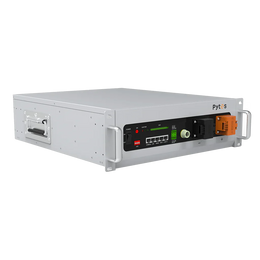
For a cabin, shed or workshop the SGKT-3PRO gives more battery and solar headroom for the money: a 3,000W 24V inverter-charger (6,000VA peak, 10 ms UPS transfer, 40A AC or generator charging) with a built-in 80A MPPT that accepts up to 4,000W of panels at up to 450 Voc, two self-heating, Bluetooth-monitored 24V 100Ah LiFePO4 batteries (5,120 Wh total) and four 200W monocrystalline panels with Z-brackets. Battery and inverter warranty is listed at 5 years and the panels carry a 25-year output warranty. It needs mounting and wiring, and the inverter idles at about 50 W (25 W in saver mode), so it suits buildings that stay powered. $2,385 with ECO100. See more in our off-grid solar kits.
Which 3000W solar generator should you buy?
- Fridge, sump pump, furnace fan and lights on 120V: Jackery HomePower 3000 - highest 120V output for the price.
- A 240V well pump, mini-split or shop tool: HomePower 3600 Pro Max (sold out) - the only single-unit 240V pick here.
- Computers, medical devices or a home office that must not blink: Bluetti Apex 300 with its 0 ms UPS.
- Long outages on a budget: Mango Power E 7 kWh bundle - 7 kWh for under $2,000.
- RV, camping and outage use with panels included: HomePower 3000 + 2x SolarSaga 200W.
- A cabin or shed that stays powered all year: Sungold SGKT-3PRO.
Still deciding between a battery and fuel? Our solar generator vs gas generator guide compares five-year running costs. You can browse every unit in this class in our 3000W portable solar power stations collection, or step up to bigger systems in household solar generators.
Connecting a 3000W solar generator to your house safely
Extension cords are fine for a fridge and a lamp. To run hard-wired loads such as a furnace blower, well pump or sump pump, have a licensed electrician install a manual transfer switch or a generator inlet with an interlock kit. Never plug a power station into a wall outlet or dryer receptacle to backfeed the house - it can energize utility lines and injure line workers, and it can damage the station. Match the inlet to the outlet you will use: a 30A 120V connection for the HomePower 3000, a 240V 50A-style connection for the 3600 Pro Max's NEMA 14-50.
What buyers ask before buying a 3000W solar generator
These questions come from what people search for when they land on our 3000W pages and from Google's related questions for this topic, plus two that came in by email this week.
Is a 3000 watt battery backup enough for my home?
For essentials, usually yes; for everything, no. Watts decide what can run at once and watt-hours decide for how long. Our worked example - fridge, furnace blower, lights, microwave and a sump pump - peaks at about 2,850 W but uses about 6.1 kWh a day, which is why we point long-outage buyers to the 7 kWh Mango bundle or a 3600 Pro Max with a battery pack.
Is a 4000 watt power station worth it over 3000W?
Only if you need the extra output for a specific load. The 4,000W HomePower 3600 Pro Max earns its price on 240V; at 120V it is limited to 2,000W. For 120V loads the 3,840W Apex 300 is the higher-output choice.
Does a discount code affect the manufacturer warranty?
No. A buyer asked us this about the HomePower 3000 kit this week: ECO100 is a store discount and does not change the Jackery warranty. It applies to eligible products on orders of $1,500 or more.
Is it in stock or on backorder?
Every pick in this guide showed stock on our listings on November 7, 2026. One exception worth knowing: Jackery's SolarSaga 500 X panel is on pre-order at the brand level, which is why we feature the 2x 200W kit instead. If timing matters, call us before ordering and we will confirm the ship date.
FAQ
What will a 3000 watt solar generator run?
Most single 120V household appliances plus several small ones at once: a refrigerator, microwave, window air conditioner, sump pump, furnace blower, coffee maker or a 1,500 W space heater. Keep the combined running watts under the rated output and motor start-up surges under the surge rating (7,200-8,000 W on the Jackery picks).
How long will a 3000 watt solar generator last?
Runtime depends on watt-hours, not watts. A 3,072 Wh station like the Jackery HomePower 3000 delivers about 2,600 Wh of usable energy, so it runs a 150 W essentials load (fridge, Wi-Fi, lights) for roughly 17 hours or a 400 W load for about 6.5 hours without sun. A 7,060 Wh bundle such as the Mango Power E 7 kWh doubles that.
Can a 3000 watt solar generator run a house?
It can run a house's essential circuits - fridge, freezer, lights, internet, furnace blower and a sump pump - but not everything at once. Electric ranges, dryers, water heaters and central air conditioners need more output and 240V. For whole-house backup look at installed battery systems or stack two stations on 240V.
Can a 3000W solar generator run central air or a well pump?
Most central air conditioners and many deep-well pumps are 240V loads with large start-up currents, so a 120V-only 3,000W station cannot run them. The Jackery HomePower 3600 Pro Max delivers 4,000 W at 240V with an 8,000 W surge, which covers many 240V well pumps; central AC above about 2 tons usually needs more output plus a soft starter.
What is the difference between 3000W and 3000Wh?
Watts (W) are how much power the inverter can deliver at one moment; watt-hours (Wh) are how much energy the battery stores. A 3,000W station with 3,000 Wh could run a 3,000 W load for about 50 minutes after losses, or a 300 W load for about 8.5 hours. Check both numbers before you buy.
How much does a 3000 watt solar generator cost?
At Eco Solar Kits (prices checked November 7, 2026) in-stock 3,000-4,000W stations cost $1,299 to $1,799 for the unit alone, $1,799 to $2,485 with solar panels, and $1,999 for 7 kWh of storage in the Mango Power E bundle. Code ECO100 takes $100 off eligible orders of $1,500 or more.
How many solar panels do I need to charge a 3000 watt solar generator?
Divide the battery size by the daily solar yield. At 4.5 sun hours, each 100 W of panels puts back roughly 350 Wh a day, so 400 W refills about 45% of a 3,072 Wh battery and 800-1,000 W refills most of it on a clear day. Stay within the station's solar input limit (1,000 W on the HomePower 3000, 2,000 W on the Mango Power E).
More guides: what size solar generator do I need, expandable power stations compared and solar generator vs gas generator.

Serhii Dovzhenko, Solar & Energy Storage Specialist at Eco Solar Kits · LinkedIn
Serhii is based in Vancouver, BC, and works on product data, system sizing and buyer guides for Eco Solar Kits. He attends solar and energy storage industry conferences and is involved in the community of electricians in Vancouver, BC. Credit for the data verification in this guide goes to Adsec.ca.