

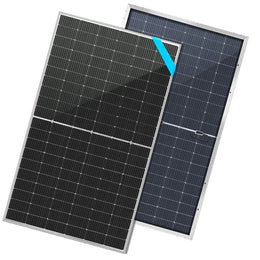
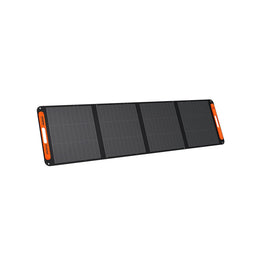
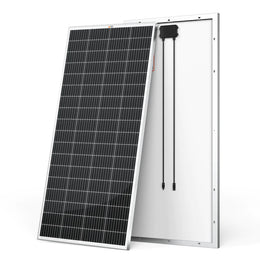

The 2000-watt class is where a portable power station stops being a camping gadget and starts covering real household jobs: the fridge during an outage, the coffee maker on a job site, a CPAP plus a laptop for a long weekend off grid. This guide compares the seven 2 kWh-class stations and kits we have in stock today, explains the two numbers that decide everything (watts and watt-hours), and walks through the sizing and solar math so you buy the right size once. Every price, spec and code below was checked against our live listings on November 7, 2026.
The 7 best 2000W power stations at a glance
| Pick | Best for | Continuous / surge | Battery | Max solar | Cycles | Weight | Price |
|---|---|---|---|---|---|---|---|
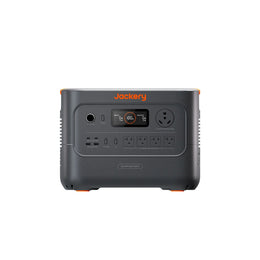
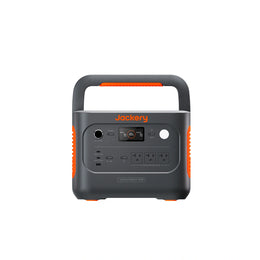
| Jackery HomePower 2000 Plus v2 | Best overall | 2,400W / 4,800W | 2,048 Wh | 800W | 6,000 | 41.5 lb | $1,199 |
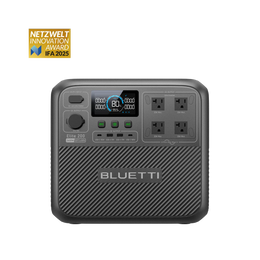
| Bluetti Elite 200 V2 | Most output per dollar | 2,600W / 3,900W lifting* | 2,073.6 Wh | 1,000W | - | 53.4 lb | $899 |
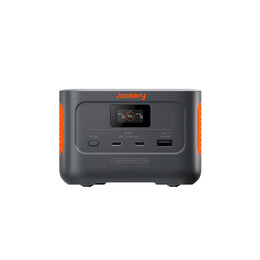
| Jackery Explorer 2000 v2 | Lightest 2 kWh | 2,200W / 4,400W | 2,042 Wh | 400W | 4,000 | 39.5 lb | $999 ($949 with ECO50) |
| Jackery Solar Generator HomePower 2000 Plus v2 + 2x SolarSaga 200W (sold out) | Best solar kit | 2,400W / 4,800W | 2,048 Wh + 400W panels | 800W | 6,000 | 70.1 lb kit | $1,479 |
| Jackery Solar Generator 2000 v2 + SolarSaga 200W (sold out) | Budget solar kit | 2,200W / 4,400W | 2,042 Wh + 200W panel | 400W | 4,000 | 53.8 lb kit | $1,249 ($1,199 with ECO50) |
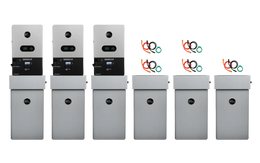
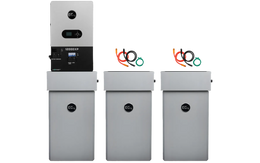
| Jackery HomePower 1000 Plus v2 + Battery Pack 2000 Plus v2 | Most Wh per dollar, modular | 1,800W / 3,600W | 3,072 Wh | see listing | 6,000 | 23.8 + 32.6 lb | $1,269 |
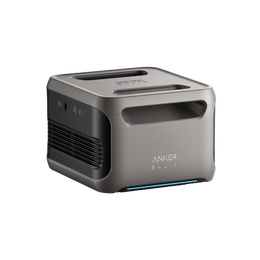
| Anker SOLIX C1000 Gen 2 | 2,000W on a budget | 2,000W / 3,000W | 1,024 Wh | 600W | 4,000 | 24.9 lb | $549.99 |
*Bluetti's Power Lifting mode runs resistive loads such as kettles and heaters up to 3,900W at reduced voltage; it is not a motor surge rating. Cycle figures are the manufacturer's ratings to 70-80% capacity (Bluetti does not list one for the Elite 200 V2 on our listing). Codes: ECO50 takes $50 off items in its promo group with no minimum; none of the other picks qualify for a code at their price on their own today. Jackery pricing is under review by the distributor after November 8, so check the product page for the live price.
Watts vs watt-hours: what 2000W really buys you
Shoppers often search for a "2000 watt power station" when they mean two different things. Watts (W) are the power the inverter can deliver at one moment - the limit that decides whether a microwave or hair dryer will start. Watt-hours (Wh) are the energy in the battery - the number that decides how many hours the fridge stays cold. A unit can be strong and small, or big and gentle:
- The Anker SOLIX C1000 Gen 2 delivers 2,000W (3,000W peak) but stores 1,024 Wh, so a 1,000W microwave empties it in under an hour.
- The HomePower 1000 Plus v2 + Battery Pack 2000 Plus v2 stores 3,072 Wh but its inverter tops out at 1,800W.
- The true 2 kWh class - HomePower 2000 Plus v2, Elite 200 V2 and Explorer 2000 v2 - pairs 2,042-2,074 Wh with 2,200-2,600W, which is the balance most households want.
Two more numbers matter. Surge (or peak) covers the half-second start-up spike of motors and compressors - a fridge can pull 3-5 times its running watts at start. Solar input decides how fast the sun can refill you: 400W of input means a 2 kWh battery takes a full sunny day or more; 800-1,000W can refill it in an afternoon. All seven picks use LiFePO4 (lithium iron phosphate) cells, which last thousands of cycles and are safer than the older NMC chemistry.
What can a 2000-watt power station run?
Use running watts to check the inverter and start-up watts to check the surge rating. Typical figures (check the label on your own appliance):
| Appliance | Running watts | Start-up watts | Works on a 2000W-class station? |
|---|---|---|---|
| Refrigerator (full size) | 100-200 W avg (150 W typical) | 600-1,200 W | Yes, all picks |
| Chest freezer | 50-100 W avg | 500-800 W | Yes |
| CPAP (no humidifier / heated) | 30-60 W / 60-100 W | - | Yes |
| Microwave (1,000 W) | 1,000-1,500 W | - | Yes (C1000 Gen 2 for short runs) |
| Coffee maker / kettle | 800-1,500 W | - | Yes |
| Window AC (6,000-8,000 BTU) | 450-750 W | 1,200-2,000 W | Yes, 2,200W+ units preferred |
| Space heater on high | 1,500 W | - | Yes, about an hour |
| Circular saw / miter saw | 1,200-1,800 W | 2,500-4,000 W | 2,400W units with 4,000W+ surge |
| Sump pump 1/2 hp | 800-1,000 W | 2,000-3,000 W | HP2000 Plus v2 or Explorer 2000 v2 |
| Well pump 240V / central AC | 240V or 3,000 W+ | - | No - see the 3000W guide |
The pattern: anything that plugs into a normal 15A or 20A outlet is fair game one at a time, and you can stack small loads (fridge + router + lights + phone charging) all day. What 2 kWh cannot do is run high-draw appliances for long - that is a battery-size question, not an inverter question, and it is covered in the next section. If your list includes a 240V well pump, a 30A RV air conditioner running for hours or central air, step up to our 3000-watt solar generator guide.
Sizing math: will 2 kWh be enough?
Three steps size any power station.
1. Add up the watt-hours you need. Multiply each device's average watts by the hours you want it to run. Example for a 12-hour overnight outage: fridge 150 W x 12 h = 1,800 Wh; router + modem 20 W x 12 h = 240 Wh; LED lights 30 W x 5 h = 150 Wh; phones and a laptop 150 Wh. Total: about 2,340 Wh.
2. Allow for losses. The inverter and battery management use 10-15% of stored energy, so divide by 0.85: 2,340 / 0.85 = about 2,750 Wh of battery. A 2 kWh station covers that night if you skip the lights or keep the fridge door shut (a closed fridge cycles less and often averages under 100 W at night); the 3,072 Wh HomePower 1000 Plus v2 + pack covers it with margin, or add one Battery Pack 2000 Plus v2 ($899) to a HomePower 2000 Plus v2 for 4,096 Wh.
3. Check the peak. Add the running watts of everything that might be on at once, then add the biggest start-up surge. Fridge 150 W + microwave 1,200 W + router 20 W = 1,370 W running; with the fridge compressor kicking on (up to about 1,200 W) the momentary peak is about 2,500 W - inside every 2,200-2,600W pick's surge rating, but too close for the 1,800W HomePower 1000 Plus v2 if both run together.
Recharge from solar. Daily solar energy is roughly panel watts x peak sun hours x 0.75 (heat, angle and controller losses). At 4.5 sun hours:
| Solar array | Energy per sunny day (4.5 h) | Time to refill 2,048 Wh | Stations that accept it |
|---|---|---|---|
| 200W (1 panel) | 675 Wh | about 3 days | All picks |
| 400W (2 x 200W) | 1,350 Wh | about 1.5 days | All picks |
| 600W | 2,025 Wh | about 1 day | C1000 Gen 2 (to its 600W max), HP2000 Plus v2, Elite 200 V2 |
| 800W | 2,700 Wh | under 1 day | HP2000 Plus v2, Elite 200 V2 |
| 1,000W | 3,375 Wh | about 2/3 of a day | Elite 200 V2 |
In winter in the northern states and Canada, plan on 2-3 sun hours, which roughly halves those numbers. Panels have voltage limits too: the Jackery stations accept up to 60V per input, the Elite 200 V2 12-60V, so two 200W SolarSaga panels (22V open-circuit each) are fine in series but a large rooftop-style panel is not.
Price per kWh and runtime compared
Price per kWh is the fairest way to compare stations of different sizes: the modular HomePower 1000 Plus v2 + pack, the Elite 200 V2 and the Explorer 2000 v2 all land near $415-440 per kWh, while the HomePower 2000 Plus v2 costs more per kWh because you are paying for 6,000-cycle cells, four 20A outlets and the expansion port. The two kits look expensive per kWh only because their price includes panels - at $1,479 the HomePower kit is $410 more than the bare station for 400W of folding solar.
Our 7 picks in detail
Jackery HomePower 2000 Plus v2 - $1,199

The most complete 2 kWh station we stock. It stores 2,048 Wh and delivers 2,400W continuous with 4,800W surge from four 20A outlets, enough to start a fridge or sump pump while the coffee maker runs. The LiFePO4 cells are rated for 6,000 cycles (Jackery quotes about 16 years of use), solar input goes up to 800W, and an expansion port takes up to five Battery Pack 2000 Plus v2 units ($899 each) for roughly 12 kWh - the same packs the HomePower 1000 Plus v2 uses. At 41.5 lb it is about a third lighter than the previous generation of expandable 2 kWh units, and Jackery rates it at 30 dB, quiet enough for a bedroom. Note that it works only with the v2 packs, not the original Battery Pack 2000 Plus.
Bluetti Elite 200 V2 - $899

The strongest inverter in the group for the money: 2,600W continuous and a Power Lifting mode that lets resistive loads like kettles and heaters up to 3,900W run at reduced voltage. It stores 2,073.6 Wh, accepts the most solar of any pick (1,000W at 12-60V) and charges from the wall at up to 1,800W - about 80% in 1.1 hours, full in about 1.4 hours by Bluetti's figures. The 5-year warranty is the longest among the 2 kWh stations here. Capacity can be extended with Bluetti's B80, B230 or B300 batteries (ask us for current availability). The listing also offers it with one or two 200W or 350W panels from $1,499.
Jackery Explorer 2000 v2 - $999 ($949 with ECO50)

If the station will travel - truck bed, cabin, job site - the Explorer 2000 v2 carries 2,042 Wh in 39.5 lb, the lightest true 2 kWh unit we stock. It delivers 2,200W (4,400W surge) from three AC outlets, recharges from the wall in about 1.75 hours and takes up to 400W of solar through two DC inputs. Code ECO50 brings it to $849, about $416 per kWh. The trade-offs: no expansion port, 4,000-cycle cells and a 400W solar ceiling, so it is a grab-and-go battery rather than the core of a growing system. Warranty is 3+2 years.
Jackery Solar Generator HomePower 2000 Plus v2 + 2x SolarSaga 200W - $1,479 (sold out)

The HomePower 2000 Plus v2 above with two SolarSaga 200W bifacial panels (IP68, 14.3 lb each, 22V open-circuit). The 400W pair puts back roughly 1,350 Wh on a 4.5-hour sun day, so a full charge takes about a day and a half; because the station accepts 800W you can add two more panels later and refill in under a day. Buying the bundle costs $410 more than the bare station. It is $21 short of the $1,500 ECO100 threshold on its own, so ECO100 only applies if you add another eligible item to the order.
Jackery Solar Generator 2000 v2 + SolarSaga 200W - $1,249 ($1,199 with ECO50) (sold out)

The least expensive way into a 2 kWh solar generator: the Explorer 2000 v2 plus one SolarSaga 200W panel. One panel adds about 675 Wh on a good day - enough to keep a fridge and router going during a multi-day outage if you ration heavier loads - and you can add a second 200W panel to reach the station's 400W limit. ECO50 applies, bringing it to $1,199. Good for weekend cabins, tailgates and emergency kits where light weight matters more than expansion.
Jackery HomePower 1000 Plus v2 + Battery Pack 2000 Plus v2 - $1,269

Not a 2000W unit - its inverter is 1,800W (3,600W surge) - but it is the best value per stored kWh here at about $413, because the bundle gives you 3,072 Wh in two pieces: a 23.8 lb station and a 32.6 lb pack, each an easy one-hand carry. Both use 6,000-cycle LiFePO4 cells, and the station accepts more Battery Pack 2000 Plus v2 units later. Choose it when long runtime (fridge, CPAP, home office) matters more than running a microwave and a kettle at the same moment.
Anker SOLIX C1000 Gen 2 - $549.99

For buyers who need 2,000W of output (3,000W peak) more than they need capacity. It stores 1,024 Wh, weighs 24.9 lb and recharges from the wall at up to 1,600W in UltraFast mode, so you can refill it between rolling outages or on a short generator run. It also takes 600W of solar, up to 800W from Anker's alternator charger, switches to battery in 10 ms as a UPS, and carries a 5-year warranty. Think of it as half a 2 kWh station at roughly half the price - fine for a microwave or tools in short bursts, short for an overnight fridge.
Which 2000W power station should you buy?
| Your situation | Pick | Why |
|---|---|---|
| Home backup for fridge, router, lights | HomePower 2000 Plus v2 | 6,000 cycles and expandable when one night turns into three |
| Kitchen appliances, tools, most watts per dollar | Elite 200 V2 | 2,600W and 1,000W solar for $899 |
| Camping, cabin, carrying it often | Explorer 2000 v2 | 39.5 lb; see our camping and CPAP guide |
| Off-grid weekends and outages with solar | HomePower 2000 Plus v2 + 2x 200W (sold out) | Panels included, input to 800W |
| Tight budget with a panel | Solar Generator 2000 v2 + 200W (sold out) | $1,199 with ECO50 |
| Longest runtime per dollar, light pieces | HomePower 1000 Plus v2 + pack | 3,072 Wh; add packs later |
| Short high-power bursts, quick recharge | SOLIX C1000 Gen 2 | 2,000W, 1,600W wall charging |
If you already know one 2 kWh battery will not be enough, compare growth paths in our expandable power stations guide; for powering a backyard workshop or shed full time with panels, see how much solar power a shed needs. You can also browse every unit in this class in our 2000W portable power station collection, the Jackery power stations, Bluetti power stations and solar generator kits.
Using a 2000W station for home backup safely
A 2000W station is a great fit for keeping a few essentials alive with extension cords: fridge, freezer, internet, a lamp and phone chargers. If you want it to feed house circuits directly, follow three rules:
- Use a transfer switch or approved transfer panel installed by a licensed electrician. It isolates your home from the grid so the station never sends power back onto utility lines.
- Never backfeed through a dryer or wall outlet with a "suicide" double-male cord. It is illegal in most places, can start fires and can kill line workers.
- Size the circuits to the inverter. All seven picks are 120V only. Pick the 120V circuits you actually need (fridge, furnace blower, internet, a few lights) and keep their combined running load under the station's continuous rating.
What buyers ask before buying a 2000W power station
These questions come from what people search for on Google before buying a 2000W-class station (including the "People also ask" results) and a few recurring questions in our own inbox, answered with the specs of the units we stock.
What is the best 2000 watt power station?
For most homes, the Jackery HomePower 2000 Plus v2, because it combines 2,400W, 6,000-cycle cells and an expansion path. If output per dollar matters more than expansion, the Elite 200 V2 at $899 is the strongest inverter in the class.
How long will a Jackery 2000 run a refrigerator?
The Explorer 2000 v2 has about 1,735 Wh usable (2,042 Wh x 0.85). At a 150 W average that is roughly 11-12 hours; a newer fridge averaging 80-100 W stretches it to 17-22 hours. Our fridge runtime guide has the full math.
What is the difference between the Explorer 2000 v2 and the HomePower 2000 Plus v2?
Both store about 2 kWh. The HomePower 2000 Plus v2 adds 200W more output, four 20A outlets instead of three, 800W solar instead of 400W, 6,000-cycle cells instead of 4,000 and an expansion port, for $170 more. The Explorer 2000 v2 is 2 lb lighter and qualifies for ECO50. (The older Explorer 2000 Plus is currently sold out.)
Will a 2000W power station run a 30-amp RV?
It will run most of a 30A RV's 120V loads (fridge, lights, water pump, outlets, microwave) through an adapter, but not a rooftop air conditioner for long: a 13,500 BTU unit draws about 1,200-1,500 W running, which drains 2 kWh in roughly 1.5 hours.
How fast will it ship?
A pattern in recent buyer messages is timing - people want the station before late-November storms or holiday travel. All seven picks ship free within the contiguous US from brand partner warehouses, and orders placed this month have typically received tracking within one to three business days.
FAQ
What will a 2000 watt power station run?
Almost any single 120V household appliance up to its rated output: a microwave, coffee maker, toaster, induction burner, hair dryer or a 1,500 W space heater, plus a fridge, router and lights together as long as the total stays under the rating. It will not run central air, an electric range, a dryer or a 240V well pump.
How long will a 2000 watt power station run a refrigerator?
A 2 kWh station gives about 1,740 Wh of usable AC energy. A modern full-size fridge that averages 100-150 W runs roughly 12-17 hours; an efficient fridge using about 1 kWh a day runs close to 40 hours. Add a 200-400 W solar panel and you can keep a fridge going through a multi-day outage on sunny days.
Is a 2000W power station the same as 2000Wh?
No. Watts (W) are how much power it can deliver at once; watt-hours (Wh) are how much energy is stored. The Anker SOLIX C1000 Gen 2 delivers 2,000 W but stores only 1,024 Wh, while the Jackery HomePower 2000 Plus v2 delivers 2,400 W and stores 2,048 Wh. Check both numbers before you buy.
How many solar panels do I need to charge a 2000W power station?
Divide the battery size by daily solar output. In 4.5 peak sun hours a panel delivers about watts x 4.5 x 0.75, so 400 W of panels puts back about 1,350 Wh a day (a full 2 kWh charge in about a day and a half), and 800 W refills it in under a day. Never exceed the station's maximum solar input or voltage.
Can a 2000W power station run a space heater or window AC?
Yes, but not for long. A 1,500 W heater empties a 2 kWh station in a little over an hour, and a 500 W window AC runs about 3.5 hours. For heating during an outage, an electric blanket (50-100 W) lasts many times longer on the same battery.
Can I plug a 2000W power station into my house?
Only through a properly installed transfer switch or a manufacturer-approved transfer panel. Never backfeed a dryer or wall outlet with a male-to-male cord - it can energize utility lines and injure line workers. None of the 2 kWh picks here output 240V, so a licensed electrician should help you choose 120V circuits to back up.
Which 2000W power station is the best value?
On price per stored kWh, the Jackery HomePower 1000 Plus v2 + Battery Pack 2000 Plus v2 ($1,269 for 3,072 Wh, about $413/kWh) and the Bluetti Elite 200 V2 ($899 for 2,073.6 Wh, about $434/kWh) lead our list. The Explorer 2000 v2 drops to $949 with code ECO50 (about $465/kWh).
Prices, stock and codes in this guide were checked on November 7, 2026 and can change; the product page always shows the current price. Related reading: best portable power station for camping and CPAP and expandable power stations compared.

Serhii Dovzhenko, Solar & Energy Storage Specialist at Eco Solar Kits · LinkedIn
Serhii is based in Vancouver, BC, and works on product data, system sizing and buyer guides for Eco Solar Kits. He attends solar and energy storage industry conferences and is involved in the community of electricians in Vancouver, BC. Credit for the data verification in this guide goes to Adsec.ca.