


An RV is the hardest place to get solar right. The roof is small and full of vents, every pound counts against your cargo capacity, the battery lives in a compartment that can freeze or bake, and the system has to get along with the converter and shore power cord the rig already has. A kit that is perfect for a cabin can be a poor fit for a 24-foot trailer.
This guide sizes an RV system from your daily use, checks it against roof space, weight and the 12 V wiring you already have, and then matches seven in-stock picks to trailers, camper vans and 30-amp and 50-amp motorhomes. Prices are store prices checked on November 3, 2026. For a portable unit that also backs up the house, see our solar generator sizing guide; for fridge runtimes, see how long a power station runs a refrigerator.
Step 1: how much power does your RV use?
Start with daily energy in kilowatt-hours (kWh), not panel watts. Most RVers fall into one of four patterns:
| RV use | Typical loads | Daily energy | Biggest single load |
|---|---|---|---|
| Weekend camping, propane fridge | LED lights, water pump, furnace fan, phones, a fan | 0.5-1 kWh | 100-300 W |
| Weekend camping, 12 V compressor fridge | All of the above plus a 12 V fridge, laptop, TV | 1-1.5 kWh | 300-600 W |
| Full-time or remote work, no AC | Residential fridge, Starlink, laptops, coffee maker, microwave in short bursts | 2.5-4 kWh | 1,000-1,500 W (microwave) |
| Running the roof air conditioner | 13,500-15,000 BTU AC at about 1,200-1,700 W running | +1.2-1.7 kWh per hour of AC | 2,000-3,500 W starting surge (less with a soft start) |
A worked full-timer example: residential fridge 1.2 kWh, Starlink 50 W x 16 h = 0.8 kWh, two laptops 120 W x 6 h = 0.7 kWh, lights and water pump 0.3 kWh, TV 0.1 kWh, coffee maker 1,000 W x 0.2 h = 0.2 kWh. Total: about 3.3 kWh a day. A weekend couple with a 12 V fridge, lights, the furnace fan and phone charging lands closer to 1.2 kWh. The nameplates on your own appliances, or the battery monitor after a weekend out, give you the real number.
Step 2: the sizing math
Panel watts
Panel watts = daily Wh / (peak sun hours x 0.75). Peak sun hours run about 5-6.5 in the Southwest in summer and 2-3 in northern states in winter. The 0.75 covers heat, flat-mounted panels (most RV panels lie flat instead of tilting to the sun), wiring and controller losses, and dust.
- Weekend camper, 1.2 kWh: 1,200 / (5.5 x 0.75) = about 290 W in summer; 640 W in winter. A 400 W kit covers spring to fall.
- Full-timer, 3.3 kWh: 3,300 / (5.5 x 0.75) = about 800 W in summer; 1,760 W in winter, which rarely fits a roof. Full-timers who travel north in winter plan on a generator, alternator charging or campground hookups for the dark weeks.
Battery kWh
Battery kWh = daily kWh x days of autonomy / 0.9 for LiFePO4, which can use about 90% of its rating (lead-acid only about 50%). Boondockers usually want two days to ride through a cloudy day: 1.2 x 2 / 0.9 = 2.7 kWh for the weekend couple, 3.3 x 2 / 0.9 = 7.3 kWh for the full-timer. In 12 V terms, every 100 Ah lithium battery is 1.28 kWh.
Inverter watts
Inverter continuous watts ≥ the biggest 120 V loads you run together, plus about 20%. A microwave (1,000-1,500 W) and a coffee maker are the usual limits for a 2,000 W inverter; a 3,000 W inverter runs either plus the fridge. Running a roof AC from batteries needs about 3,000 W or more continuous with a strong surge, or a soft-start kit on the AC.
Step 3: roof space, weight and the 12 V system you already have
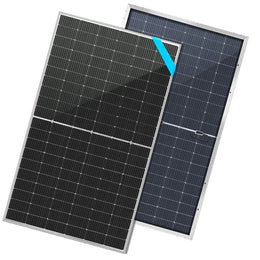
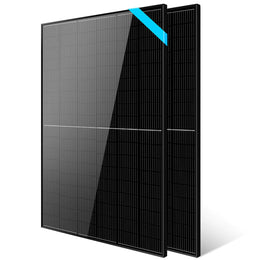
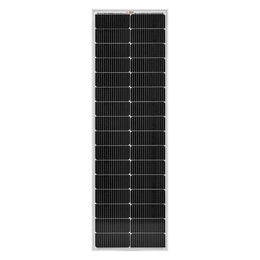
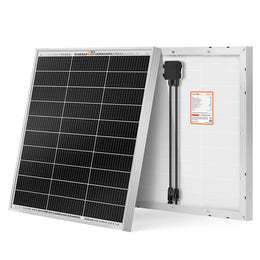
- Roof space. A 200 W rigid panel measures about 58.7 x 26.8 in (11 sq ft) and weighs 24 lb. Most travel trailers fit two to four between vents, the AC shroud and the antenna; large fifth wheels and Class A coaches fit six or more. Curved van roofs and fiberglass caps suit light flexible panels like the Rich Solar 100 W FLEX ($169, 4.8 lb).
- Weight. Check your cargo carrying capacity (CCC sticker). Four rigid panels plus brackets add about 100 lb; a 200 Ah lithium battery weighs about 50 lb, roughly half of the two lead-acid batteries it replaces.
- Your converter. Most RVs have a converter that charges the house battery from shore power. If you switch to lithium, it needs a lithium (LiFePO4) charging profile, or you replace it.
- Inverter vs inverter-charger. The Rich Solar kits include a plain pure sine inverter with its own outlets. It does not charge from shore power or switch your coach outlets automatically. For that you need an inverter-charger, such as the Rich Solar NOVA SUPERCHARGER 3K ($799), or an all-in-one hub like the Bluetti RV5.
- Your shore power plug. A 30-amp RV has a TT-30 plug (120 V); a 50-amp RV has a 14-50 plug (two 120 V legs). Plug-in power stations need the matching outlet.
RV solar kits compared (November 2026)
Store prices before any code, all in stock on November 3, 2026. Daily solar is estimated at 4 peak sun hours x 0.75.
| Pick | Battery | Output (surge) | Panels incl. | Est. daily solar | Best for | Price |
|---|---|---|---|---|---|---|
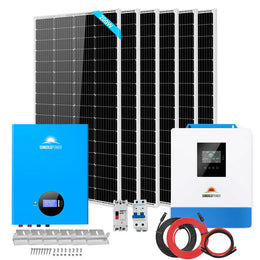
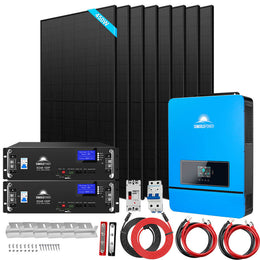
| Rich Solar 12V Complete Kit, 400 W (sold out) | 1,280 Wh, self-heating | 2,000 W (4,000 W) | 2 x 200 W rigid | 1.2 kWh | Travel trailers, weekenders | $1,629.99 |
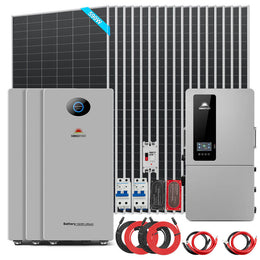
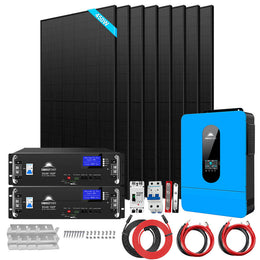
| Rich Solar 12V Complete Kit, 800 W (sold out) | 2,560 Wh, self-heating | 3,000 W (6,000 W) | 4 x 200 W rigid | 2.4 kWh | Full-timers, boondockers | $2,759.99 |
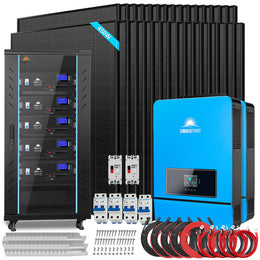
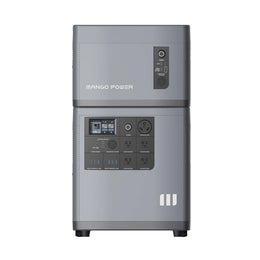
| Bluetti RV5 Power Hub + B4810 | 5,120 Wh | 5,000 W (10,000 W) | None (up to 1,800 W) | Depends on panels | Fifth wheels, Class A/C rebuilds | $3,699 |
| Anker SOLIX C2000 Gen 2 + Alternator Charger (sold out) | 2,048 Wh (to 4,096 Wh) | 2,400 W (4,000 W) | None (up to 800 W) | Alternator: 800 W while driving | Camper vans, 30-amp RVs | $1,369.99 |
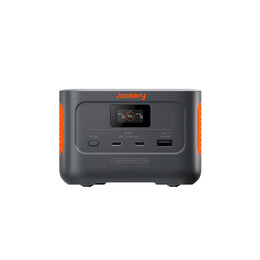
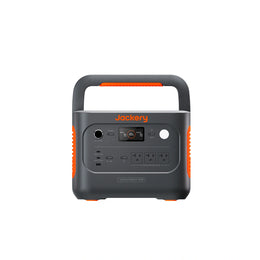
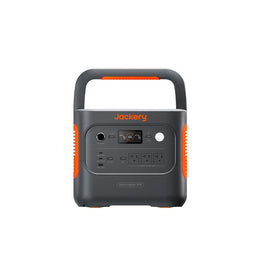
| Jackery HomePower 3600 Pro Max + SolarSaga 500 X (sold out) | 3,584 Wh (to 21.5 kWh) | 4,000 W at 240 V (8,000 W) | 500 W folding | 1.5 kWh | 50-amp motorhomes, home + RV | $2,649 |
| Rich Solar 400 W charging kit (sold out) | Uses your battery | - | 2 x 200 W rigid | 1.2 kWh | RVs with a battery and inverter already | $799.99 |
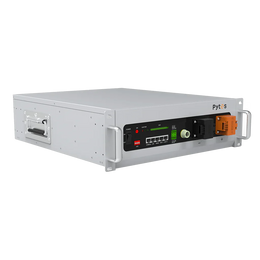
| Rich Solar ALPHA 2 LITE 12V 200Ah | 2,560 Wh | 200 A continuous | - | - | Lead-acid to lithium upgrade | $729.99 |
Read price per kWh together with what is in the box. The Rich Solar kits look expensive per kWh because they include rigid roof panels, a controller, cables and a separate inverter; the Bluetti hub and the Anker van kit include no panels at all. The ALPHA 2 LITE is the cheapest storage, but it is only a battery.
Our picks by RV type
Rich Solar 12V Complete Kit with 400 W - $1,629.99 (sold out)

Everything a trailer needs in one box: two 200 W rigid panels with Z-brackets and a cable entry housing, a BRAVO 30 MPPT controller with Bluetooth, a 12.8 V 100 Ah ALPHA 1 LiFePO4 battery (5,000+ cycles, internal self-heating for cold mornings) and a NOVA PURE 2K inverter with 2,000 W continuous and 4,000 W surge. The listing estimates about 1.4 kWh of solar a day at 4 peak sun hours, which matches a weekend couple with a 12 V fridge. The controller handles up to 500 W at 12 V, so there is room for one more panel.
Rich Solar 12V Complete Kit with 800 W - $2,759.99 (sold out)

Four 200 W panels, a 60 A BRAVO 60 MPPT controller (up to 900 W of solar at 12 V), a 200 Ah ALPHA 2 battery with self-heating (2.56 kWh, 5,000 cycles) and a UL 458-listed NOVA PURE 3K inverter with 3,000 W continuous and 6,000 W surge. That runs a microwave or coffee maker with the fridge on, and the panels refill about 2.4-2.9 kWh on a good day - close to our full-timer example. Add one or two more 200 Ah batteries for two days of autonomy.
Bluetti RV5 Power Hub + B4810 5.12 kWh - $3,699

The RV5 replaces six separate parts: inverter, inverter-charger, solar controller, alternator charger, DC system and protection. It delivers 5,000 W continuous with a 10,000 W surge and 1,620 W of DC output, charges at up to 1,800 W from solar, 1,200 W from a 24 V alternator (600 W on 12 V) and 5,000 W from shore power, and is IP65 rated, UL 458 certified and covered for 5 years. The bundled B4810 adds 5,120 Wh (6,000 cycles) but weighs 101 lb. Panels are not included; the solar input accepts 12-50 V, so 12 V panels like the Rich Solar MEGA 200 ($229.99) go in pairs in series. Bluetti notes that 12 V auto-levelers drawing over 100 A should keep their own 12 V battery.
Anker SOLIX C2000 Gen 2 + Alternator Charger - $1,369.99 (sold out)

Vans have little roof and lots of driving, so the alternator is the best panel you own. This kit pairs a 2,048 Wh LiFePO4 station (2,400 W, 4,000 W peak) with Anker's Alternator Charger, which refills it at up to 800 W while you drive - about 3 hours from empty. It also takes 800 W of solar, has a TT-30 RV port, draws only 9 W at idle and weighs 41.7 lb. Add a BP2000 Gen 2 ($749.99) for 4,096 Wh. Prefer to charge from panels? The C2000 Gen 2 + 400 W panel (sold out) bundle is $1,499.99.
Jackery HomePower 3600 Pro Max + SolarSaga 500 X - $2,649 (sold out)

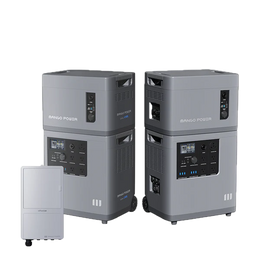
One of the few plug-in units with a NEMA 14-50 outlet: plug a 50-amp RV cord straight in. It delivers 4,000 W at 240 V (8,000 W surge) or 2,000 W at 120 V, holds 3,584 Wh of UL 9540-certified LiFePO4 rated for 6,000 cycles, and expands to 21.5 kWh with Battery Pack 3600 Plus units. The 500 W folding panel set (IP68) sets up on the ground at camp; it is not meant for permanent roof mounting. The station is wheeled and goes back into the house as outage backup between trips.
Rich Solar 400 W Solar Charging Kit - $799.99 (sold out)

If your RV already has a lithium battery and an inverter, you only need the charging side: two 200 W rigid panels, an MPPT controller with Bluetooth, Z-brackets, a cable entry housing, a 15 A inline fuse and 30 ft of 10 AWG cable. Note that the kit contents list a 30 A BRAVO 30 controller (rated for up to 500 W at 12 V), not the 40 A in the product title. The panels carry a 25-year output warranty.
Rich Solar ALPHA 2 LITE 12V 200Ah - $729.99

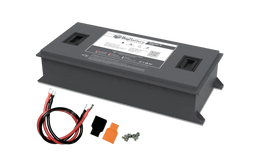
Swapping two lead-acid batteries for one 200 Ah LiFePO4 roughly doubles usable energy and saves weight. The ALPHA 2 LITE stores 2,560 Wh, is rated for 4,000+ cycles and 200 A continuous discharge (enough for a 2,000 W inverter), has individually fused cells and an IP55 case, and weighs 52.9 lb. It has no self-heating and charges only between 32°F and 131°F, so keep it inside the heated space in winter. Two-pack: $1,399.
Browse more in complete RV solar power systems, camper van solar systems, camper and motorhome batteries, pure sine wave inverters for RVs and portable solar generators for RVs, or run your loads through our solar kit calculator.
Which RV solar setup for which rig
| Your rig and use | Daily use | Panels | Battery | Inverter | Start with |
|---|---|---|---|---|---|
| Travel trailer, weekends and holidays | 1-1.5 kWh | 400 W | 1.3-2.6 kWh | 2,000 W | Rich Solar 400 W kit |
| Camper van | 1-2 kWh | 200-400 W + alternator | 2-4 kWh | 2,000-2,400 W | Anker C2000 Gen 2 + Alternator Charger |
| Full-timer, 30-amp trailer | 2.5-4 kWh | 800-1,200 W | 5-7.5 kWh | 3,000 W | Rich Solar 800 W kit + 1-2 ALPHA 2 LITE |
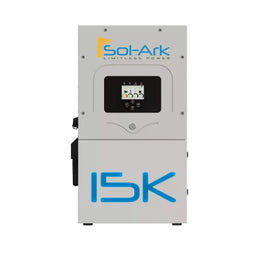
| Fifth wheel or Class A, wants AC off-grid | 4-10 kWh | 1,200-1,800 W | 10 kWh+ | 5,000 W | Bluetti RV5 + two B4810 |
| 50-amp rig, also wants home backup | 2-4 kWh | 500 W+ portable | 3.6-7 kWh | 4,000 W at 240 V | Jackery HP3600 Pro Max + 500 X |
Installing RV solar safely
- Mounting. Use the supplied Z-brackets or adhesive mounts rated for your roof material, seal every screw with self-leveling sealant, and route cables through a cable entry housing. Leave a gap under rigid panels for cooling.
- Short, thick DC cables and fuses. Keep the battery-to-inverter run as short as the kit cables (3-4 ft) and fuse every positive lead close to the battery.
- Battery location. LiFePO4 cannot charge below about 32°F without self-heating. Mount it inside the heated space or pick a self-heating battery.
- One charger in charge. Set the converter, solar controller and any DC-DC charger to the same lithium profile.
What buyers ask before buying an RV solar kit
These questions come from searches that bring RV owners to our pages and from the questions Google shows for RV solar searches, answered with what is in stock today.
Can RV solar run the air conditioner?
Briefly, yes; all day, rarely. A 13,500 BTU unit draws about 1,200-1,700 W, so six hours of cooling is 7-10 kWh - more than most roofs can harvest. You need 5 kWh or more of battery, a 3,000-5,000 W inverter (the Bluetti RV5 or the 800 W Rich Solar kit with a soft start) and shore power or a generator to refill.
What is the best solar generator for a 30-amp RV?
Pick one with a TT-30 outlet so the RV cord plugs straight in. The Anker SOLIX C2000 Gen 2 has one, with 2,400 W of output - enough for a 30-amp rig if you run one big load at a time.
What is the best solar generator for a 50-amp RV?
Look for a NEMA 14-50 outlet. The Jackery HomePower 3600 Pro Max has one, with 4,000 W at 240 V and 3,584 Wh that expands to 21.5 kWh.
Are Anker SOLIX power stations good for RV owners?
The C2000 Gen 2 is a strong RV fit: TT-30 port, 800 W alternator and 800 W solar charging, 9 W idle draw and a 5-year warranty. Its limit is 120 V only, so it is a 30-amp solution.
Flexible or rigid panels for an RV or van?
Rigid panels last longer, run cooler and are cheaper per watt; use them wherever the roof is flat enough. Flexible panels such as the Rich Solar 100 W FLEX (4.8 lb, IP68) fit curved van roofs and save weight, but carry shorter warranties.
FAQ
What size solar kit do I need for an RV?
Most weekend campers need 200-400 W of panels and 1-1.5 kWh of lithium battery. Full-timers who run a residential fridge, Starlink and laptops need 800-1,200 W and 2.5-5 kWh. Running the air conditioner from batteries takes 5 kWh or more plus shore power or a generator to refill.
How many solar panels does it take to run an RV?
Usually two to six 200 W panels. Two panels (400 W) keep a weekend trailer charged most of the year, four (800 W) cover a full-timer without air conditioning in good sun, and six (1,200 W) give winter margin, if the roof has the space.
Can I install an RV solar kit myself?
Many owners mount the panels and wire the charge controller themselves using the kit instructions. The 120 V side - an inverter feeding the coach outlets, a transfer switch or a new subpanel - should be done by a qualified RV technician or licensed electrician.
Do I need an inverter for RV solar?
Only for 120 V loads. Panels, controller and battery charge your 12 V system on their own, which already runs lights, the water pump, furnace fan and a 12 V fridge. Add an inverter (2,000-3,000 W) for outlets, a microwave, a coffee maker or a residential fridge.
Can I leave RV solar connected while plugged into shore power?
Yes. The MPPT controller simply stops charging when the battery is full, and the converter or inverter-charger handles shore power. Set both to a lithium charging profile if you have a LiFePO4 battery.
Will an RV solar kit work in winter?
Yes, with less output - plan on about half the summer harvest. Lithium batteries need to stay above about 32°F to charge unless they have self-heating, like the ALPHA batteries in the Rich Solar kits. Keep snow off the panels.
Related guides: expandable power stations compared and solar generator vs gas generator.

Serhii Dovzhenko, Solar & Energy Storage Specialist at Eco Solar Kits · LinkedIn
Serhii is based in Vancouver, BC, and works on product data, system sizing and buyer guides for Eco Solar Kits. He attends solar and energy storage industry conferences and is involved in the community of electricians in Vancouver, BC. Credit for the data verification in this guide goes to Adsec.ca.


