


Camping power is a balancing act: enough battery to get through the night, light enough to carry from the car to the site, quiet enough for a tent and quick to refill from the sun or the car. If you sleep with a CPAP, the stakes go up, because running out of power at 3 AM means a bad night or a night without therapy.
This guide works out what your camp actually uses, shows the CPAP runtime math with and without the humidifier, checks how much a folding panel puts back, and then matches seven in-stock power stations to tent weekends, CPAP trips and family basecamps. Prices are store prices checked on November 4, 2026. Camping in a trailer or van? Our RV solar kit guide covers built-in systems; for fridges and coolers, see how long a power station runs a refrigerator.
Step 1: add up your camp loads
Size a camping power station by watt-hours (Wh) per day, not by its watt rating. The watt rating only has to cover what runs at the same moment. Typical camp loads:
| Load | Typical draw | Per day |
|---|---|---|
| Phone charging (2-4 phones) | 15 Wh per charge | 30-60 Wh |
| LED lantern or string lights | 5-20 W x 4-5 h | 25-100 Wh |
| Tent fan | 15-25 W x 8 h | 120-200 Wh |
| Laptop or camera batteries | 40-60 Wh per charge | 50-120 Wh |
| Starlink Mini | 25-40 W while on | 100-300 Wh |
| 12 V compressor cooler or fridge | 40-60 W while running, cycles on and off | 400-700 Wh |
| CPAP, humidifier off | 30-60 W | 250-500 Wh per night |
| CPAP with heated humidifier and hose | 70-110 W average | 600-900 Wh per night |
| Electric kettle or coffee maker | 1,000-1,500 W for a few minutes | 80-150 Wh |
Three worked examples. Weekend tent camper: phones 60 Wh, lights 50 Wh, fan 160 Wh = about 270 Wh a day. CPAP camper: CPAP with humidifier 850 Wh, phones and lights 110 Wh = about 960 Wh a day. Family basecamp: 12 V cooler 550 Wh, CPAP without humidifier 380 Wh, phones, lights and a fan 270 Wh, morning coffee 100 Wh = about 1.3 kWh a day. Multiply by the nights you want to cover without recharging, then divide by about 0.85 for the inverter loss on AC loads.
Step 2: CPAP runtime math
CPAP draw varies more than most people expect. The motor alone uses about 30-60 W at typical pressures. A heated humidifier and heated hose can double or triple that, especially in a cold tent. The power supply brick often says 65-90 W, which is the maximum, not the average.
Runtime (hours) = battery Wh x 0.85 / CPAP watts when you plug into the AC outlet. The 0.85 covers inverter and conversion losses. Run the CPAP from the 12 V car port with the maker's DC cord or converter and use about 0.9 instead.
- 1,070 Wh x 0.85 / 40 W = 22.7 hours, about 2.8 eight-hour nights with the humidifier off.
- 1,070 Wh x 0.85 / 90 W = 10.1 hours, about 1.3 nights with a heated humidifier and hose.
- 2,042 Wh x 0.85 / 90 W = 19.3 hours, about 2.4 nights with the humidifier on.
The fastest way to stretch a battery is to turn off the heated humidifier and hose, or switch to a heat-moisture exchanger if your clinician agrees. To find your own machine's draw, plug it into the power station at home for one night and read the Wh used on the display or app the next morning. That one test beats any chart.
Step 3: recharging at camp
Three ways to refill at camp, from best to slowest:
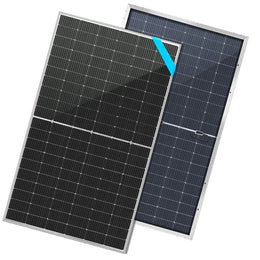
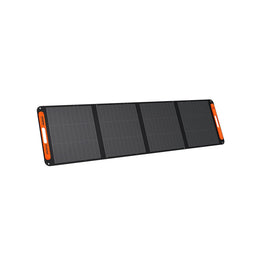
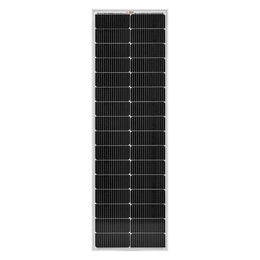
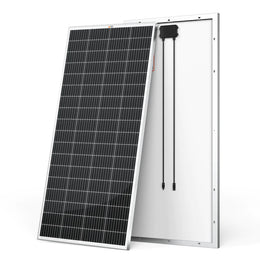
- Solar. Daily Wh = panel watts x peak sun hours x 0.75. With 4.5 sun hours a 200 W panel puts back about 675 Wh, close to one humidifier night; a 40 W panel only about 135 Wh, enough for phones and lights.
- The car. A 12 V car charging cable adds about 100-120 W while you drive, so a 2-hour drive puts back roughly 200 Wh. Anker's optional alternator charger raises the C1000 Gen 2 to 800 W.
- Campground outlet. If your site has a 120 V outlet, the Explorer 1000 v2 refills in about an hour in Emergency Super Charge mode and the C1000 Gen 2 in about 49 minutes in UltraFast mode.
Rule of thumb for CPAP users who camp more than two nights: bring at least 200 W of panels for every night you use the humidifier, and park the panel in full sun by mid-morning.
Camping power stations compared (November 2026)
Store prices, all in stock on November 4, 2026. CPAP nights assume 8-hour nights through the AC outlet (12 V DC for the 300D).
| Power station | Battery | Output (surge) | Weight | CPAP nights 40 W / 90 W | Camp-relevant extras | Price |
|---|---|---|---|---|---|---|
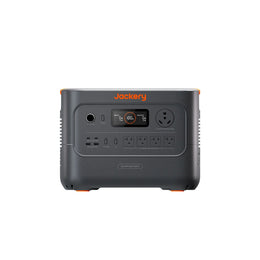
| Jackery Explorer 1000 v2 | 1,070 Wh | 1,500 W (3,000 W) | 23.8 lb | 2.8 / 1.3 | Car port 12 V 10 A, 2 USB-C (to 100 W) | $559 |
| Anker SOLIX C1000 Gen 2 | 1,024 Wh | 2,000 W (3,000 W) | 24.9 lb | 2.7 / 1.2 | Car socket 12 V 10 A, USB-C 140 W, 10 ms UPS | $549.99 |
| Jackery Solar Generator 1000 v2 + SolarSaga 200W | 1,070 Wh + 200 W panel | 1,500 W (3,000 W) | 38.1 lb kit | 2.8 / 1.3 | Panel puts back about 675 Wh/day | $879 |
| Anker C1000 Gen 2 + PS200 200 W (sold out) | 1,024 Wh + 200 W panel | 2,000 W (3,000 W) | 35.5 lb kit | 2.7 / 1.2 | IP68 bifacial panel | $799.99 |
| Jackery Explorer 2000 v2 | 2,042 Wh | 2,200 W (4,400 W) | 39.5 lb | 5.4 / 2.4 | Under 30 dB, UPS under 20 ms | $999 |
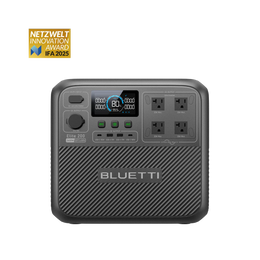
| Bluetti Elite 200 V2 | 2,074 Wh (to 5,122 Wh) | 2,600 W | 53.4 lb | 5.5 / 2.4 | 1,000 W solar input, 5-yr warranty | $899 |
| Jackery Solar Generator 300 v2 + 40 Air | 288 Wh + 40 W panel | 300 W (600 W) | 10.1 lb kit | 0.8 / 0.3 | Car port 12 V 10 A, 10 ms UPS | $379 |
| Jackery Explorer 300D (DC only) | 288 Wh | 300 W DC total | 5.5 lb | 0.8 / 0.4 (DC) | No AC outlet; 2 x 140 W USB-C, 12 V 10 A | $209 |
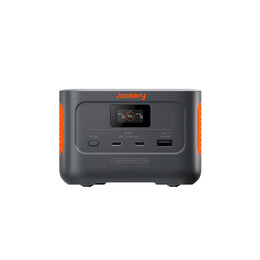
| Jackery Explorer 100 Plus | 99 Wh | 128 W USB only | 2.1 lb | Not for CPAP | Under 100 Wh: carry-on friendly | $109 |
Per kWh of battery, the 2 kWh class is the best value: the Bluetti Elite 200 V2 works out to about $433 per kWh and the Explorer 2000 v2 to $440, against $466 for the Explorer 1000 v2 and $537 for the C1000 Gen 2. Small units cost more per kWh ($726-$1,247) but are the only ones you can carry far from the car.
Our picks
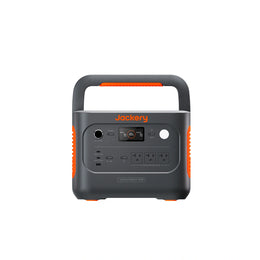
Jackery Explorer 1000 v2 - $559

The sweet spot between runtime and weight. 1,070 Wh of LiFePO4 (4,000 cycles to 70%) covers about two to three CPAP nights with the humidifier off, or one long night with it on, plus phones and lights. Three pure sine wave AC outlets give 1,500 W (3,000 W surge) for a kettle or coffee maker, and the 12 V 10 A car port takes a CPAP DC cord or a 12 V cooler. Two USB-C ports (one at 100 W) charge a laptop. Emergency Super Charge refills it in about an hour from a wall outlet, and it accepts up to 400 W of solar through two 8 mm inputs. 23.8 lb, 3+2-year warranty.
Anker SOLIX C1000 Gen 2 - $549.99

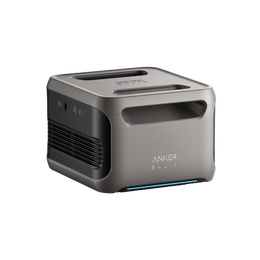
Rated at 20 dB or less below 200 W of load, which covers a CPAP, so it is one of the quietest 1 kWh units for a tent. It has 1,024 Wh, 2,000 W (3,000 W peak) across 10 ports, a 12 V 10 A car socket, a 140 W USB-C port and a 10 ms UPS, so at home it can sit between the wall and the CPAP and take over in an outage. It recharges in about 49 minutes in UltraFast mode, takes 600 W of solar (about 1.8 hours of good sun from empty) and up to 800 W with Anker's alternator charger. It discharges down to -4°F. Want the panel too? The C1000 Gen 2 + PS200 200 W bundle (sold out) is $799.99.
Jackery Solar Generator 1000 v2 + SolarSaga 200W - $879

The Explorer 1000 v2 above plus a SolarSaga 200 W folding bifacial panel (IP68) for $200 more than the station alone. On a clear day with 4-5 sun hours the panel puts back about 600-700 Wh, enough to replace most of a humidifier night or two to three nights of phones, lights and a fan. That makes it the simplest setup for long weekends with no hookups. Kit weight is 38.1 lb, and you can add a second 200 W panel later, since the station accepts 400 W.
Jackery Explorer 2000 v2 - $999

Twice the battery for 15.7 lb more. 2,042 Wh runs a 40 W CPAP for about five nights or a humidifier setup for two, with room left for a cooler or a coffee maker. It delivers 2,200 W (4,400 W surge), is rated under 30 dB, switches to battery in under 20 ms as a UPS, and refills in about 1.7 hours from the wall. Solar input is 400 W, so pair it with two 200 W panels for longer trips. 39.5 lb with a handle, 4,000 cycles, 3+2-year warranty.
Bluetti Elite 200 V2 - $899

Same price as the Explorer 2000 v2 with a little more capacity (2,074 Wh), more output (2,600 W) and much more solar input (1,000 W), so a pair of larger panels can refill it in a single sunny day. It expands to 5,122 Wh with an add-on battery, has app control over Wi-Fi and Bluetooth, three USB-C ports and a 5-year warranty. At 53.4 lb it is a basecamp and car-camping unit, not one to carry down a trail.
Jackery Solar Generator 300 v2 + SolarSaga 40 Air - $379

For tent campers who need phones, lights, a fan and a camera, not a fridge. The Explorer 300 v2 holds 288 Wh in an 8.16 lb body with two AC outlets (300 W, 600 W surge), a 100 W USB-C port, a 12 V 10 A car port and a 10 ms UPS, and reaches 80% in about an hour from a wall outlet. The 1.98 lb SolarSaga 40 Air tops up about 135 Wh a day. CPAP users should treat it as a one-short-night backup: about 6 hours at 40 W with the humidifier off. Station only: $249.
Jackery Explorer 300D - $209

No inverter at all: two 140 W USB-C ports, a 65 W USB-C port, USB-A and a 12 V 10 A DC output share 300 W. That makes it efficient for 12 V gear and USB devices, and at 5.51 lb it fits a pack. The carry strap doubles as a 140 W USB-C cable. With a CPAP maker's 12 V DC cord it covers about 6.5 hours at 40 W, so it suits a short night with the humidifier off. It also takes up to 100 W of solar and discharges down to 5°F. Need something even smaller for a flight? The 99 Wh Explorer 100 Plus ($109) is under the 100 Wh carry-on limit, for phones and cameras only.
Browse more in portable solar generators for camping, camping solar kits, small portable solar generators and portable solar panels for camping. Keeping food cold too? The Anker SOLIX EverFrost 2 40L ($749.99) is a 12 V cooler with its own 288 Wh battery, so it does not drain your power station.
Which power station for which trip
| Trip | Daily use | Size | Start with |
|---|---|---|---|
| Tent weekend, no CPAP | 200-300 Wh | 300 Wh + 40-100 W panel | Jackery Solar Generator 300 v2 + 40 Air |
| Backpacking or walk-in site, 12 V devices | 100-250 Wh | 300 Wh DC | Jackery Explorer 300D |
| CPAP weekend, humidifier off | 400-500 Wh | 1,000 Wh | Jackery Explorer 1000 v2 or Anker C1000 Gen 2 |
| CPAP weekend, humidifier on | 900-1,000 Wh | 1,000 Wh + 200 W panel, or 2,000 Wh | Solar Generator 1000 v2 + 200W or C1000 Gen 2 + PS200 |
| 4+ nights with CPAP, or a family with a 12 V cooler | 1-1.5 kWh | 2,000 Wh + 200-400 W panels | Jackery Explorer 2000 v2 |
| Car-camping basecamp, big panels | 1.5-2.5 kWh | 2,000-5,000 Wh + 400-1,000 W panels | Bluetti Elite 200 V2 |
Not sure where you land? Run your loads through our solar kit calculator or our solar generator sizing guide.
Using a power station with a CPAP safely
- Check your CPAP manual first. Most CPAP makers sell a 12 V or 24 V DC cord or converter for their machines and list which battery types they support. Use the maker's own DC accessory, not a generic adapter.
- Use a pure sine wave outlet. All AC picks here are pure sine wave. Plug the CPAP power supply straight into the station, not through a long, thin extension cord.
- Test at home. Run one full night on the station before the trip and note the Wh used.
- Keep it dry and off frozen ground. Power stations are not waterproof; keep them in the tent vestibule or car, on a mat.
- Charge above freezing. LiFePO4 charges only above about 32°F.
What buyers ask before buying a camping power station
These questions come from searches that bring campers to our pages and from the questions Google shows for camping and CPAP power station searches, answered with what is in stock today.
What is the best Jackery for CPAP?
For one or two nights, the Explorer 1000 v2 ($559): about 2.8 nights at 40 W, or 1.3 with a heated humidifier. For longer trips or nightly humidifier use, the Explorer 2000 v2 ($999) roughly doubles that. The Explorer 300 v2 is under one night.
What is the best budget portable power station for CPAP?
The cheapest unit that reliably covers a full night with margin is the 1 kWh class, starting at $559 for the Explorer 1000 v2. The $209 Explorer 300D and $249 Explorer 300 v2 cost less but give about 6 hours at 40 W.
What is the best solar generator for camping?
For most car campers, a 1 kWh station with a 200 W folding panel, such as the Jackery Solar Generator 1000 v2 + SolarSaga 200W ($879) or the Anker C1000 Gen 2 + PS200 ($799.99). The panel refills about 600-700 Wh on a sunny day.
What size solar panel do I need for camping?
40-100 W keeps phones, lights and a fan going. A 12 V cooler or a CPAP without humidifier needs about 200 W, and a CPAP with heated humidifier needs 200-400 W to break even every day.
Can a portable power station run a 12 V camping fridge?
Yes. A 12 V compressor cooler averages about 400-700 Wh a day, so a 1 kWh station runs it for one to two days and a 2 kWh station for three to four, longer with a panel.
FAQ
What size power station do I need for camping?
For phones, lights and a fan, 300 Wh covers a weekend. Add a 12 V fridge or cooler and you need about 1,000 Wh plus a 100-200 W panel. A CPAP user needs about 400 Wh per night without the humidifier and 850 Wh with it, so 1,000 Wh is the practical minimum for a weekend and 2,000 Wh for three or more nights.
How many nights will a 1,000 Wh power station run a CPAP?
About two to three nights at 40 W with the humidifier off, and a little over one night at 90 W with a heated humidifier and hose, assuming 8-hour nights and the AC outlet. Running the CPAP from the 12 V car port with the maker's DC cord adds roughly 5-10%.
Is it better to run a CPAP from DC or AC?
DC is more efficient because it skips the inverter, so the battery lasts longer. You need the CPAP maker's 12 V DC power cord or converter. AC is simpler: plug in the normal power supply. Either way, turning off the humidifier and heated hose saves the most energy.
Can I recharge a power station with solar while camping?
Yes. A 200 W folding panel puts back about 600-700 Wh on a clear day with 4-5 peak sun hours, which roughly matches one CPAP night with the humidifier. Angle the panel toward the sun and move it every few hours. A car charging cable is the backup on cloudy days.
Are power stations allowed in campgrounds during quiet hours?
Usually, yes. Power stations have no engine and no exhaust, so they can run inside a tent and through quiet hours that rule out gas generators; check your campground's rules. Fan noise is low; the Anker SOLIX C1000 Gen 2 is rated at 20 dB or less below 200 W and the Explorer 2000 v2 under 30 dB.
Can I take a portable power station on a plane?
Only very small units. Lithium batteries up to 100 Wh can go in carry-on bags, so the 99 Wh Jackery Explorer 100 Plus qualifies. Camping power stations from 288 Wh up are too large for passenger flights; check your airline before you travel.
Do power stations work in cold weather?
They discharge in the cold but charge only above about 32°F. Jackery rates its Explorer units to discharge down to 14°F and the Anker C1000 Gen 2 to -4°F. Keep the unit in the tent or car overnight and insulated from frozen ground.
Related guides: power station and solar gift guide and expandable power stations compared.

Serhii Dovzhenko, Solar & Energy Storage Specialist at Eco Solar Kits · LinkedIn
Serhii is based in Vancouver, BC, and works on product data, system sizing and buyer guides for Eco Solar Kits. He attends solar and energy storage industry conferences and is involved in the community of electricians in Vancouver, BC. Credit for the data verification in this guide goes to Adsec.ca.