


Solar on a mobile home is the same technology as solar on any house, with three differences that decide which panels make sense: a roof framed to the HUD code rather than a site-built code, a small footprint (a single-wide roof is often 14-16 feet wide), and an electrical panel that is frequently only 100 amps. Pick the wrong panel and you either overload the roof, run out of space, or end up with an inverter the panel cannot accept.
This guide works through the roof check, the sizing math for single-wide and double-wide homes, panel weight and price per watt, and then matches seven in-stock panels to the job: grid-tie arrays, ground mounts, small off-grid systems and curved roofs. Prices are store prices checked on November 5, 2026. To browse every light-format panel at once, see our lightweight solar panels for mobile homes collection. For general home sizing outside the mobile-home specifics, our what size solar system do I need guide goes deeper.
Step 1: check the roof before you pick a panel
Every HUD-code home built since 1976 has a data plate, usually inside a kitchen cabinet, a bedroom closet or near the electrical panel. It lists the roof load zone and wind zone the home was built for. Under the federal standard (24 CFR 3280.305) roofs are designed for 20 psf in the South zone, 30 psf in the Middle zone and 40 psf in the North zone, and the wind zone (I, II or III) sets how strongly the roof is tied down.
Those numbers are snow and live-load capacity, not spare capacity for equipment. A rooftop array adds about 3 lb per square foot of permanent dead load (panel plus rails and clamps), concentrated at the mounting points, and every lag bolt is a hole in a thin roof deck. That is why the practical rules are:
- Get written approval from the home manufacturer or a structural engineer's letter before mounting full-size panels on the roof. Many permit offices ask for it anyway.
- Prefer a ground mount for anything above about 2-3 kW. It needs no roof work, faces true south at the best tilt, is easy to clean and keeps the roof warranty intact.
- Keep roof systems light and small when approval is not available: 100-150 W panels on rails, or flexible panels bonded to a metal roof, for a small off-grid or backup system.
- Check wind ratings. Full-size panels here are rated for 2,400 Pa wind (about 50 psf) and 5,400 Pa snow (about 113 psf), but the racking and its attachment to the roof are what usually fail. In Wind Zone II or III, use engineered racking.
Panel for panel, rigid glass modules all land between about 2.1 and 2.5 lb per square foot, whether they are 100 W or 560 W. The flexible panel is the outlier at 0.76 lb per square foot, which is why it is the default for curved or questionable roofs. A bigger panel does not mean a heavier roof load per square foot; it means fewer mounting points per kW.
Step 2: size the array for a single-wide or double-wide
Start with the kWh on your last 12 power bills, not the home size. Then:
Array kW = monthly kWh / (30 x peak sun hours x 0.77). The 0.77 covers inverter, wiring, temperature and dirt losses. At 4.5 peak sun hours, a common US average, every 1 kW of panels makes about 104 kWh a month.
| Monthly use | Array size (4.5 sun hours) | 440 W panels | Panel area | Panel weight | Fits on |
|---|---|---|---|---|---|
| 300 kWh (partial offset) | 2.9 kW | 7 | 147 sq ft | 324 lb | Single-wide roof (with approval) or small ground mount |
| 600 kWh | 5.8 kW | 14 | 294 sq ft | 648 lb | Double-wide roof or ground mount |
| 900 kWh | 8.7 kW | 20 | 420 sq ft | 926 lb | Ground mount (two rows) |
| 1,200 kWh (electric heat, AC) | 11.5 kW | 27 | 567 sq ft | 1,250 lb | Ground mount |
Panel area uses 21.0 sq ft per 440 W panel (67.8 x 44.65 in). Real roofs lose space to vents, a swamp cooler or AC unit, plumbing stacks and fire-code setbacks from edges and ridges, so plan on using roughly half of a single-wide roof. A 16 x 76 ft single-wide has about 1,200 sq ft of roof, so about 600 sq ft of usable space at best, and less if the roof is a shallow gable with one face pointing north. Double-wides usually have a true gable, and the south face is the one that counts.
Then check the electrical panel. This is the step that catches most mobile-home projects. Under the 120% busbar rule in the electrical code, a 100 A panel with a 100 A main breaker can only accept a 20 A backfed solar breaker. That is 16 A of continuous inverter output x 240 V = about 3.8 kW AC. A 200 A panel with a 200 A main allows a 40 A breaker, or about 7.6 kW. Anything larger needs a supply-side connection, a derated main breaker or a service upgrade, all of which are jobs for a licensed electrician and the utility. If your home still has a 100 A service, a 3-4 kW grid-tie system, or a hybrid inverter with a battery that powers critical loads, is often the realistic ceiling without an upgrade.
Mobile home solar panels compared (November 2026)
Seven in-stock panels that cover the real choices on a manufactured home: full-size UL-listed modules for grid-tie and hybrid systems, a bifacial panel for ground mounts, and three light formats for roofs that cannot take full-size glass. All prices checked November 5, 2026.
| Panel | Price (pack) | $/W | Weight | Size | lb/sq ft | Cells / listing | Warranty | Best for |
|---|---|---|---|---|---|---|---|---|
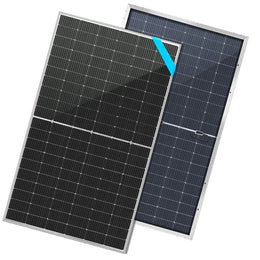
| Sungold 440W N-Type | $797 (2) / $1,760 (8) | $0.50-0.91 | 46.3 lb | 67.8 x 44.7 in | 2.20 | N-type, UL 61730, CEC listed | 30-yr power | Grid-tie / hybrid, roof with approval or ground |
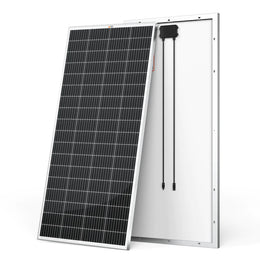
| Rich Solar MEGA 400W 24V | $2,599 (8) / $3,699 (12) | $0.77-0.81 | 45.2 lb | 67.8 x 44.7 in | 2.15 | Mono, UL 61730, CSA | 25-yr output | Larger grid-tie arrays by the pallet |
| Sungold 560W bifacial | $980 (2) / $2,365 (8) | $0.53-0.88 | 70.4 lb | 89.8 x 44.7 in | 2.53 | N-type bifacial, CE/TUV | 30-yr power | Ground mounts only |
| Rich Solar MEGA 150W 12V | $169 | $1.13 | 18.1 lb | 44.0 x 26.4 in | 2.24 | TOPCon 25.3% cells, UL 61730 | 25-yr output | Small 12 V roof systems |
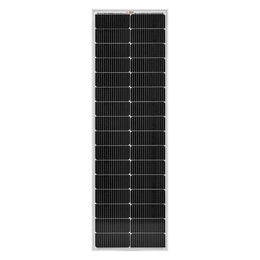
| Rich Solar MEGA 100W SLIM | $129 | $1.29 | 12.4 lb | 50.0 x 15.7 in | 2.28 | TOPCon, UL 61730 | 25-yr output | Narrow strips between vents |
| Rich Solar MEGA 100W FLEX | $169 | $1.69 | 4.8 lb | 57.8 x 15.7 x 0.1 in | 0.76 | Mono 22.8%, flexible | 1-yr materials | Curved or weak roofs |
| Rich Solar MEGA 200W 24V | $239.99 / $899.96 (4) | $1.12-1.20 | 24.0 lb | 58.7 x 26.8 in | 2.20 | TOPCon 24.8% | 25-yr output | 24 V off-grid battery banks |
The price gap is the main reason full-size panels win whenever the mounting allows them: a watt from an eight-pack of 440 W panels costs about a third of a watt from a flexible 100 W panel. Small panels earn their place only where size, weight or roof shape rule out full-size glass.
Our picks
Sungold 440W N-Type Mono Black (UL 61730) - from $797 for two

The panel we would put on most manufactured-home projects. N-type cells, 440 W in a standard 67.8 x 44.65 in frame and 46.3 lb, so it fits common residential rails and ground-mount kits. It is UL 61730 listed and on the California Energy Commission list, which matters when a permit office or utility checks the equipment list. Rated 5,400 Pa snow and 2,400 Pa wind load, IP68 junction box, and a 30-year linear power warranty. Packs of 2, 4, 6 and 8 cost $797, $1,107, $1,475 and $1,760, so the eight-pack works out to about $0.50 per watt for 3.52 kW, a good match for a 100 A panel's roughly 3.8 kW inverter limit.
Rich Solar MEGA 400W 24V - $2,599 for eight

If you are building a bigger ground-mount or double-wide roof array and want a US brand with a long support history, the MEGA 400 is sold in 8, 10, 12 and 36-panel lots: $2,599 (3.2 kW), $3,099, $3,699 (4.8 kW) and $11,699. It uses 108 monocrystalline cells, weighs 45.2 lb, measures 67.8 x 44.7 in and is certified to UL 61730, IEC 61215 and CSA C22.2, with a 25-year output warranty. It is in our ECO100 promotion: code ECO100 takes $100 off orders of $1,500 or more, so the eight-pack comes to $2,499.
Sungold 560W Bifacial N-Type - $2,365 for eight

On a ground mount the back of the panel sees light reflected from gravel, grass or snow, and a bifacial panel turns some of it into extra output. Sungold quotes up to 30% bifacial gain in ideal conditions; in a typical yard plan on less. At 89.8 x 44.7 in and 70.4 lb this is not a roof panel for a mobile home, but on a ground rack it gives the lowest cost per watt of our picks after the 440 W: $2,365 for 4,480 W, or about $0.53 per watt, with a 30-year power and 12-year workmanship warranty. Note that the listing shows CE and TUV certification rather than UL 61730, so confirm your permit office and utility accept it before you buy for a grid-tie system.
Rich Solar MEGA 150W 12V Lightweight - $169

For a small roof system on a single-wide or park-model home, for example lights, a fridge, a fan and phones through a 12 V battery, this is the most useful size. It packs 150 W of 25.3% TOPCon cells into 44.0 x 26.4 in and 18.1 lb, so one person can lift it onto the roof and four of them (600 W) fit in about 32 sq ft. It is certified to UL 61730, IEC 61215 and CSA C22.2, rated 5,400 Pa snow and 2,400 Pa wind, and has a 25-year output warranty. Vmp is 17.5 V, a natural match for 12 V MPPT controllers.
Rich Solar MEGA 100W SLIM - $129

Mobile-home roofs are often broken up by a swamp cooler, vents and plumbing stacks. At just 15.7 in wide and 50.0 in long, the SLIM fits strips where a standard panel does not, at 12.4 lb. It uses 16-busbar TOPCon cells (25.1% max efficiency), an IP67 junction box, UL 61730 certification and a 25-year performance warranty. Two or three SLIMs are a tidy way to keep a 12 V battery topped up for backup lighting and a router.
Rich Solar MEGA 100W FLEX - $169

Older single-wides with rounded metal roofs, and roofs where nobody will sign off on rails, are where flexible panels belong. The FLEX weighs 4.8 lb, is 0.1 in thick, bends to follow a curved surface and mounts with adhesive, screws through its grommets, or both. Its 22.8% cells make 100 W from 57.8 x 15.7 in. The trade-offs are real: panels bonded flat to a roof run hotter, which lowers output in summer, and the warranty is one year on materials and workmanship versus 25 years on Rich Solar's rigid glass panels.
Rich Solar MEGA 200W 24V - $239.99

A 24 V battery bank with an MPPT controller is a common middle ground for an off-grid mobile home, cabin-style. This panel delivers 200 W at a 36.3 V Vmp, so one panel replaces two 12 V 100 W panels and halves the number of wires and roof penetrations. It uses N-type TOPCon cells (24.8% max efficiency), weighs 24.0 lb at 58.7 x 26.8 in, and carries a 25-year performance warranty. A four-pack is $899.96, about $1.12 per watt.
Which panel for which mobile home
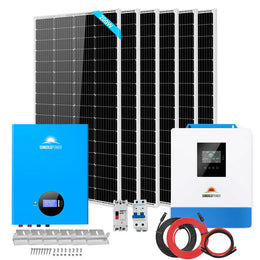
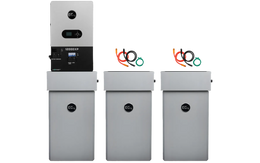
- Grid-tie or hybrid system, 100 A panel: eight Sungold 440 W panels (3.52 kW) on a ground mount or an approved roof, paired with an inverter of about 3.8 kW AC or a hybrid inverter from our hybrid inverter range.
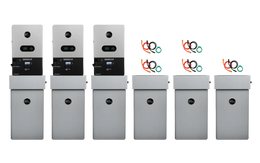
- Grid-tie with 200 A service, 600-900 kWh a month: 14-20 full-size panels on a ground mount: the Sungold 440W or a pallet lot of the Rich Solar MEGA 400W. See our grid-tied systems with battery backup.
- Big yard, ground mount only: the Sungold 560W bifacial for the lowest cost per watt, if your permit office accepts its listing.
- Off-grid single-wide or park model: a complete kit from our off-grid solar kits, or a 24 V build around MEGA 200W 24V panels. Our best off-grid solar kits guide covers inverter and battery sizes.
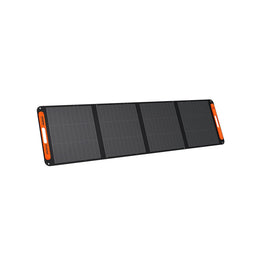
- Backup lights, fridge and internet only, roof with no approval: two to four MEGA 150W or MEGA 100W SLIM panels, or MEGA 100W FLEX panels on a curved roof, feeding a 12 V battery or a power station.
What it costs
Panels are the cheapest part of a mobile home system. For a 3.5 kW grid-tie set, eight Sungold 440 W panels are $1,760. Racking, a grid-tie or hybrid inverter, wire and disconnects, permits, an electrician for the panel connection and any engineering letter usually add more than the panels themselves, and a battery adds the most. Our whole-home battery backup cost guide breaks down DIY system prices by component.
On incentives: the 30% federal residential credit (25D) ended for systems paid for after December 31, 2025, so it no longer applies to new homeowner installs, including manufactured homes; see our federal solar tax credit guide for what changed. State, utility and city programs still exist in many places, and some explicitly include manufactured homes. Our solar rebates by state directory links each program's official page. Many of them require a licensed installer or pre-approval, so check before you buy.
What buyers ask before buying solar panels for a mobile home
These come from the searches that bring people to our mobile home panel pages and from the questions Google shows for this topic, answered with current store data.
How many solar panels fit on a single-wide trailer?
A typical single-wide roof is 14-16 ft wide. Full-size panels mounted portrait (67.8 in across the roof) leave room for one row, sometimes two once edge setbacks and the AC or swamp cooler are taken out. Seven 440 W panels side by side need about 26 ft of roof length and 5.7 ft of width, which is a 3 kW array. Small panels are easier to place: the 15.7 in wide MEGA 100W SLIM fits strips a full-size panel cannot. Get roof approval first either way.
What about solar panels for a double-wide?
Double-wides are 20-32 ft wide with a real gable, so if the long side faces south, one roof face can carry 10-16 full-size panels (about 4.4-7 kW of 440 W panels) once an engineer confirms the framing. If the ridge runs north-south, the east and west faces each produce about 10-20% less than a south face; a ground mount often beats that.
Are there complete solar kits for mobile homes?
Yes. Any residential grid-tie, hybrid or off-grid kit works on a manufactured home if the panels are mounted correctly and the inverter fits the electrical panel. Browse our off-grid kits and grid-tied kits with battery backup, then check the kit's inverter output against the 3.8 kW (100 A panel) or 7.6 kW (200 A panel) limit from Step 2.
Is a solar generator enough for a mobile home?
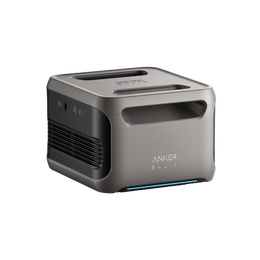
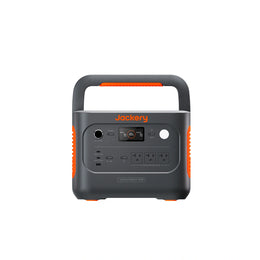
For outage backup, often yes. A large power station with a transfer switch or an inlet installed by an electrician can run a fridge, lights, internet and a furnace blower for a day or more, and panels recharge it. It will not offset your power bill like a grid-tie array. Compare options in our best solar generators for home backup guide and the home backup solar generator collection.
Which lightweight solar panels work for manufactured homes?
Among in-stock panels: the MEGA 100W FLEX (4.8 lb), the MEGA 100W SLIM (12.4 lb), the MEGA 150W (18.1 lb) and the MEGA 200W 24V (24.0 lb). Per square foot, only the flexible panel is truly lighter; the rigid ones weigh about the same per square foot as full-size panels but are easier to handle and need fewer penetrations for small systems.
FAQ
Can you put solar panels on a mobile home?
Yes. Mobile and manufactured homes can carry solar, but the roof was built to the HUD code with lighter framing than a site-built house, so get the home maker's approval or an engineer's letter before mounting a full-size array on it. A ground mount next to the home avoids the roof question entirely and is the most common choice for larger systems.
How many solar panels does a mobile home need?
Divide your monthly kWh by about 104 (30 days x 4.5 sun hours x 0.77 system losses) to get array kW. A home using 900 kWh a month needs about 8.7 kW, or 20 panels of 440 W. A 300 kWh partial-offset system needs about 7 panels. Sun hours vary by state, so use your own number.
How much do solar panels for a mobile home cost?
Panels alone run about $0.50 to $0.90 per watt for full-size 400-560 W modules bought in packs, and $1.10 to $1.70 per watt for small lightweight panels. A 3.5 kW set of eight Sungold 440 W panels is $1,760. Inverter, batteries, racking, permits and an electrician add the larger share of a full system's cost.
Are flexible solar panels good for a mobile home roof?
They are the lightest option at under 1 lb per square foot and they follow a curved metal roof, but they produce less per square foot, run hotter because they sit flat on the roof, and carry shorter warranties. They suit small off-grid or backup systems. For grid-tie systems, rigid glass panels on rails or a ground mount last longer.
Can you put solar on a mobile home that is not on a permanent foundation?
Yes. Ground-mounted panels do not depend on the home's foundation at all, and roof systems depend on the roof structure, not the foundation. What changes is paperwork: in a land-lease community you need the park's written approval, and the electrical permit and utility interconnection rules still apply.
Does adding solar void a manufactured home warranty?
It can if roof penetrations are not approved. Ask the home manufacturer for written approval or an engineer's letter before drilling into the roof, use flashed mounts sized for the roof deck, and tell your insurer about the system. A ground mount keeps the roof and its warranty untouched.
What size inverter can a mobile home's electrical panel take?
Under the common 120% busbar rule, a 100 A panel with a 100 A main breaker can take a 20 A backfed breaker, which limits the inverter to about 3.8 kW AC. A 200 A panel with a 200 A main allows about 7.6 kW. Larger systems need a supply-side connection or panel upgrade designed by a licensed electrician.
More guides: what size solar system do I need, best off-grid solar kits and best RV solar kits for travel trailers and park models that move.

Serhii Dovzhenko, Solar & Energy Storage Specialist at Eco Solar Kits · LinkedIn
Serhii is based in Vancouver, BC, and works on product data, system sizing and buyer guides for Eco Solar Kits. He attends solar and energy storage industry conferences and is involved in the community of electricians in Vancouver, BC. Credit for the data verification in this guide goes to Adsec.ca.