


12V vs 24V vs 48V at a glance
System voltage is the nominal voltage of your battery bank, and everything on the DC side - inverter, charge controller, fuses, cables - has to match it. LiFePO4 batteries are actually 12.8 V, 25.6 V and 51.2 V nominal, but the industry calls them 12V, 24V and 48V. The choice is mostly about current: power equals volts times amps, so doubling the voltage halves the amps for the same watts. Here is how the three compare in practice.
| 12V | 24V | 48V | |
|---|---|---|---|
| Typical inverter size | 300-2,000 W (3,000 W max) | 1,500-4,000 W | 3,000-18,000 W+ |
| Current at 3,000 W | ~278 A | ~139 A | ~69 A |
| Best for | Vans, boats, small RVs, sheds | Large RVs, cabins, workshops | Home backup, off-grid homes, hybrid inverters |
| Native DC appliances | Huge range (RV fridges, fans, pumps, lights) | Trucks, marine, some pumps | Few - use a DC-DC converter |
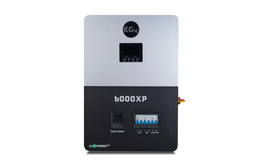
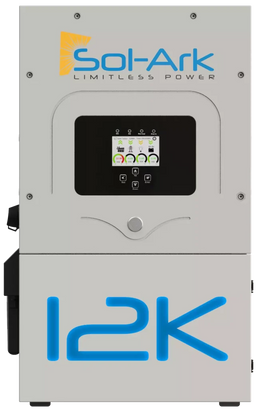
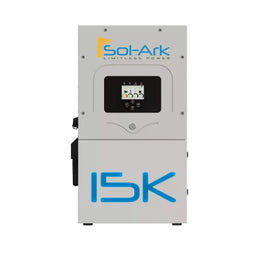
| 120/240V split phase | Rare | Rare (some 6,000 W units) | Common (EG4, Sol-Ark, Sungold) |
| Battery options | Most choice, cheapest per unit | Fewer models | Server rack, wall and outdoor modules up to 76 kWh+ |
| Grows into whole-home? | No | Limited | Yes |
Two rules cover most decisions. First, if you already own 12V appliances or a 12V RV coach, a 12V house bank avoids converters. Second, once your inverter passes about 3,000 W, or you want 240V output, a hybrid inverter or room to grow, 48V is the only voltage most manufacturers build for.
Why voltage matters: amps, cable size and losses
The inverter pulls DC current from the battery equal to its output watts divided by battery voltage, plus about 10% for conversion losses. That current decides how thick the cables are, how big the fuse is and how much energy turns into heat before it reaches your loads.
| Inverter load | 12V bank | 24V bank | 48V bank |
|---|---|---|---|
| 1,000 W | 93 A | 46 A | 23 A |
| 2,000 W | 185 A | 93 A | 46 A |
| 3,000 W | 278 A | 139 A | 69 A |
| 5,000 W | 463 A | 231 A | 116 A |
| 8,000 W | 741 A | 370 A | 185 A |
Formula: amps = watts / (battery volts x 0.9). Cable and fuse sizing usually adds another 25% on top for continuous loads, so a 3,000 W inverter on 12V needs conductors and protection rated for roughly 350 A - two parallel heavy cables in many installs. The same inverter at 48V runs on cable about the size of a stove circuit.
Heat loss in a cable rises with the square of current, so halving the current cuts the loss to a quarter. In the example above, a 12V system wastes about 120 W as heat in just 10 ft of thick cable at full load and sees a 3.6% voltage drop - enough to trip a low-voltage alarm on a partly discharged bank. At 48V the same cable loses about 8 W. Longer runs, such as batteries in a garage feeding an inverter inside, make the gap bigger.
Solar charging: the same controller does more at 48V
Charge controllers are rated in amps on the battery side, so the solar power they can deliver scales with battery voltage. An 80 A MPPT controller can push about 1,150 W into a 12V bank, about 2,300 W into a 24V bank and about 4,600 W into a 48V bank.
This is why a 24V all-in-one unit can list "4,000 W max PV input" while its 80 A charger caps battery charging at roughly 2,300 W: the extra panel watts help on cloudy mornings and in winter, but they do not raise the peak charge rate. When you compare inverter-chargers, look at the charge current in amps as well as the PV watts.
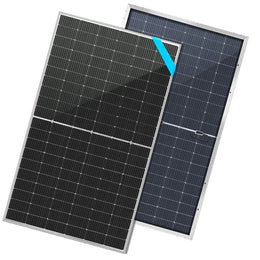
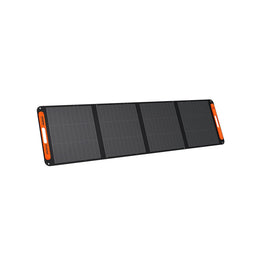
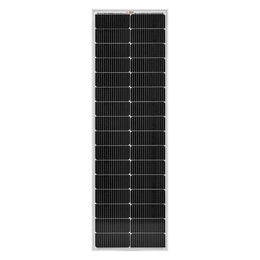
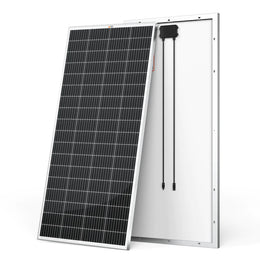
Panel voltage is a separate question. An MPPT controller converts high string voltage down to battery voltage, so a 48V system happily uses the same 400-590 W panels sold in our 48V solar panels collection, and a 12V system can use small 12V solar panels or larger panels in series. Only cheap PWM controllers need panels labeled for the battery voltage.
Sizing math: same kWh, different amp-hours
Battery capacity is best compared in kWh, because amp-hours change with voltage. A 100Ah 48V battery stores the same energy as a 400Ah 12V bank.
| Energy you need | 12V bank (12.8 V) | 24V bank (25.6 V) | 48V bank (51.2 V) |
|---|---|---|---|
| 5 kWh | 391 Ah (2 x 200Ah) | 195 Ah (2 x 100Ah) | 98 Ah (1 x 100Ah) |
| 10 kWh | 781 Ah (4 x 200Ah) | 391 Ah (4 x 100Ah) | 195 Ah (2 x 100Ah) |
| 20 kWh | 1,562 Ah (8 x 200Ah) | 781 Ah (8 x 100Ah) | 391 Ah (4 x 100Ah) |
Worked example - an off-grid cabin. Loads: a fridge (1.2 kWh/day), lights and router (0.6 kWh), a well pump (0.8 kWh), laptop and TV (0.6 kWh) and a microwave or power tools for short bursts. Daily use is about 3.2 kWh, peak load about 2,500 W with a 5,000 W pump start. For two days of autonomy at 80% usable depth: 3.2 x 2 / 0.8 = 8 kWh of battery.
- At 12V that is 625 Ah, about 3 x 200Ah batteries in parallel, and a 3,000 W inverter pulling up to 230 A for the microwave. Workable, but cables and fuses get expensive.
- At 24V it is 313 Ah (3 x 100Ah) and about 116 A at 2,500 W - comfortable for a 3,000 W 24V inverter-charger.
- At 48V it is 156 Ah (two 5.12 kWh modules) with about 58 A at peak, and it can grow into a 5,000 W or split-phase system later.
Solar for the same cabin: 3.2 kWh / (4.5 sun hours x 0.77) = about 920 W of panels in summer; plan 1,500-2,000 W for winter. On 12V that already exceeds one 80 A controller; on 24V or 48V it fits easily. Our solar system sizing guide walks through the same math for whole homes.
Our 7 picks by voltage
All seven were active and in stock on November 8, 2026. Prices are list prices; discount codes are mentioned only where the product is in a code's eligible collection.
| Pick | Voltage | Price | Key spec | Best for |
|---|---|---|---|---|
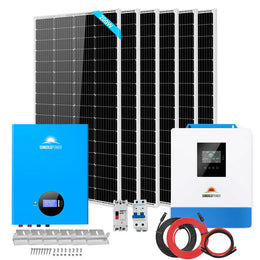
| Sungold SGK-5PRO kit | 48V | $4,958 (ECO100: $4,858) | 5,000 W, 10.24 kWh, 2,700 W panels | Cabins, off-grid homes |
| Sungold CoreX 5 Elite | 48V | $1,125 | 5.12 kWh, 100 A, 10-yr warranty | Growing a 48V bank |
| HUSKY 2 + Victron MultiPlus-II | 48V | $2,920.15 | 5.12 kWh, 2,400 W, PowerAssist | Large RVs, mobile backup |
| Sungold 3,000W 24V + 2 batteries | 24V | $1,637 (ECO50: $1,587) | 3,000 W, 80 A MPPT, 4.8 kWh | 24V cabins and sheds |
| Rich Solar ALPHA 4 LITE | 24V | $799 (2-pack $1,599.99) | 2,560 Wh, 100 A, 4,000+ cycles | 24V RV or off-grid bank |
| Sungold 12V 200Ah | 12V | $589 | 2,560 Wh, 200 A BMS, self-heating | Vans, boats, RV house banks |
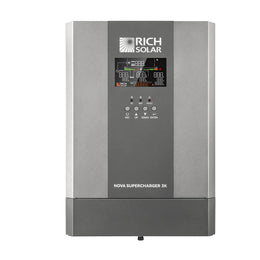
| Rich Solar NOVA SUPERCHARGER 3K | 12V | $799 | 3,000 W, 150 A charger, 20 ms transfer | RVs and boats on shore power |
Sungold SGK-5PRO 5,000W 48V Kit - $4,958

Everything for a small off-grid home or cabin in one order: a 5,000 W, 120V hybrid inverter-charger (10,000 VA peak, UL 1741, Wi-Fi), four 12V 200Ah self-heating LiFePO4 batteries wired in series for 10.24 kWh at 48V, six 450 W UL 61730 panels (2,700 W), Z-brackets, PV cable and breakers. The single MPPT accepts up to 5,500 W and 500 V open circuit, so you can add panels later; six 41.72 V panels in one string give about 285 V on a very cold morning, well inside the limit. It is a nice illustration of this guide's point: the same 12V batteries become a 48V bank, so the inverter pulls about 116 A at full load instead of 463 A. Up to six inverters can run in parallel. The kit is in the ECO100 collection, so the code takes $100 off ($4,858). Output is 120V only per the listing, so 240V well pumps or dryers need a different system.
Sungold CoreX 5 Elite 5.12 kWh Wall Battery - $1,125

At about $220 per kWh this is the least expensive way into a proper 51.2 V bank in our catalog. Each unit holds 5.12 kWh (100Ah, EVE Grade A cells), discharges up to 100 A (about 5 kW), charges at up to 95 A and is rated for 5,000 cycles at 100% depth of discharge to 80% capacity. CAN, RS485 and RS232 ports talk to Sungold, Sol-Ark, EG4, Victron, Schneider, Growatt and other inverters, and up to 15 units parallel to 76.8 kWh, so a 10 kWh start can grow into whole-home storage. It mounts on a wall next to the inverter, has an LCD plus Wi-Fi and Bluetooth, and carries a 10-year warranty. It is IP20, so indoors only (50-113°F recommended), and at 105.8 lb it is a two-person lift.
HUSKY 2 5.12 kWh + Victron MultiPlus-II 3000 Kit - $2,920.15

For a big rig or a mobile backup cart that wants 48V efficiency without home-sized hardware. The HUSKY 2 battery is IP65 / NEMA 4X, self-heating, 5.12 kWh and rated for 100 A continuous. The Victron MultiPlus-II 48/3000 delivers 2,400 W continuous at 25°C (2,200 W at 40°C) with 5,500 W peak, a 35 A charger and a 50 A AC input with PowerAssist, which lets the battery top up a weak campground pedestal or small generator instead of tripping its breaker. Transfer is under 20 ms, and the Cerbo GX gives remote monitoring through Victron's VRM app. There is no solar controller inside, so add a separate 48V MPPT for panels, and use a 48-to-12V DC-DC converter for the coach's 12V circuits.
Sungold 3,000W 24V Inverter Charger + 2 x 24V 100Ah - $1,637

The inverter, solar controller and batteries for a 24V cabin or workshop - you add the panels. The all-in-one unit delivers 3,000 W of 120V pure sine power (6,000 VA peak), switches to battery in 10 ms, charges from the grid or a generator at up to 40 A (with generator auto-start) and has an 80 A MPPT that takes strings from 120 to 450 V. The two 24V 100Ah batteries (4.8 kWh total per the listing) are IP65, Bluetooth-monitored, self-heating and UL 1973, with a 5-year warranty. As explained above, 80 A at 28.8 V caps solar charging at about 2,300 W even though the input accepts up to 4,000 W. Idle draw is 50 W (25 W in power-saver mode), so switch it to saver for light overnight loads. It is in the ECO50 collection: $1,587 with the code.
Rich Solar ALPHA 4 LITE 24V 100Ah - $799

A value 24V LiFePO4 battery for RVs, trailers, boats and off-grid banks: 25.6 V, 100Ah, 2,560 Wh, 100 A continuous discharge, more than 4,000 cycles and individually fused cells, with a 5-year warranty and 52.9 lb weight. One battery supplies about 2,400 W continuous, so a 3,000 W 24V inverter running flat out (about 139 A) needs two in parallel. The 2-battery option ($1,599.99) is in the ECO100 collection, which brings it to $1,499.99. There is no self-heating: charging is rated from 32°F, so keep it in a heated space for winter use.
Sungold 12V 200Ah LiFePO4 (self-heating, IP65) - $589

2,560 Wh for $589 (about $230 per kWh) with features usually found on pricier batteries: a 200 A BMS, IP65 case, Bluetooth app plus LCD, and self-heating that switches on below 33.8°F so it can charge in cold vans and boats. It is rated for 4,000+ cycles with a 5-year warranty. Sungold lets you wire it for 12V, 24V or 48V, so the same batteries can follow you if you move up a voltage later (the SGK-5PRO kit uses four of them in series). Packs of 2 ($1,178) and 4 ($2,356) are available. A 200 A BMS per battery matters on 12V: a 3,000 W inverter needs at least two in parallel.
Rich Solar NOVA SUPERCHARGER 3K 12V - $799

If you stay at 12V, this is the hub for an RV or boat that plugs into shore power or a generator. It combines a 3,000 W pure sine inverter (6,000 W surge for 5 seconds, under 5% THD), an automatic transfer switch that changes source in about 20 ms, and a charger adjustable from 5 to 150 A - roughly double what many 3,000 W inverter-chargers offer, so a big lithium bank refills quickly from a generator. It weighs 18.5 lb and peaks at 91% efficiency. There is no solar controller, so pair it with an MPPT, and pair it with a bank that can supply about 300 A at full load (for example two Sungold 12V 200Ah in parallel).
Which voltage should you build?
| Your situation | Build at | Start with |
|---|---|---|
| Van, truck camper or small boat, inverter under 1,500 W | 12V | 12V 200Ah battery + MPPT; see 12V batteries |
| Travel trailer or RV with a 12V coach, up to 3,000 W | 12V | NOVA SUPERCHARGER 3K + 2 x 12V 200Ah |
| Big fifth wheel or motorhome with AC and induction | 24V or 48V | HUSKY 2 + Victron kit + DC-DC converter |
| Cabin, shed workshop or tiny home, 1,500-3,000 W | 24V | Sungold 24V bundle or 24V solar kits |
| Off-grid home or cabin over 3,000 W, 120V | 48V | SGK-5PRO kit or 48V solar systems |
| Home backup with 240V loads or grid-tie | 48V | Hybrid inverter + 48V batteries |
| Large home storage over 30 kWh | 48V or high voltage | 48V modules or high-voltage batteries |
When in doubt between two voltages, choose the higher one if your inverter will be over 2,000 W or you expect to expand. Moving from 12V to 48V later means replacing the inverter and charge controller, so it is cheaper to start where you will end up. The exception is a 12V RV coach: there, a 12V house bank keeps things simple. For 48V battery shopping, our 48V server rack battery guide compares rack modules, and the inverter types guide explains which inverter fits which job. RV owners can also check our RV solar kit picks.
Wiring and safety at each voltage
- 12V: keep inverter-to-battery runs short (under about 5-6 ft for 2,000-3,000 W), use the cable size in the inverter manual and add a fuse within inches of the battery.
- 24V: the same rules with roughly half the cable cross-section. Series-wired 12V batteries need a balancer or identical, matched batteries.
- 48V: a fully charged LiFePO4 bank sits around 54-57.6 V, below the 60 V DC threshold commonly used for extra-low-voltage systems, but PV strings feeding it can reach 450-500 V. Treat the solar side as high voltage, use the inverter's PV disconnect and follow local code for rapid shutdown on roofs.
- Batteries: use identical models in a bank, let closed-loop CAN/RS485 communication set charge limits where supported, and never mix the original and new versions of a battery line unless the maker says they are compatible.
What buyers ask before choosing a system voltage
These come from searches that lead people to our store and from the questions Google shows for this topic, plus one pattern we see in buyer emails. Answers use the specs of products we stock.
Can I use a 12V solar panel to charge a 24V or 48V battery?
Yes, with an MPPT controller. Wire panels in series until the string voltage is inside the controller's MPPT range - for example the Sungold 24V unit needs at least 120 V, so several panels in series - and check the cold-weather open-circuit voltage stays under its 450 V limit. With a PWM controller, the panel must match the battery voltage.
Is it worth switching my 12V system to 48V?
Only if you are outgrowing it. If your inverter is under 2,000 W and runs fine, keep 12V. If you want a 5,000 W inverter, 240V or 10 kWh+, plan a 48V system; 12V batteries that allow series wiring, such as the Sungold 12V 200Ah, can be reused as a 48V bank, but the inverter and controller must be replaced.
How do I run 12V RV appliances from a 24V or 48V bank?
Use a DC-DC converter sized for the 12V loads (lights, fans, pump and fridge controls usually need 20-40 A). It also keeps the 12V circuits at a steady voltage while the main bank charges and discharges.
Does a 48V inverter need solar panels to charge the batteries?
No. Buyers often ask us this by email. Most inverter-chargers also charge from the grid or a generator: the SGK-5PRO inverter lists up to 100 A of hybrid charging, the Sungold 24V unit 40 A from AC, and the Victron MultiPlus-II 35 A. Solar is optional; you can add panels later.
Which voltage gives the cheapest battery storage per kWh?
In our catalog today it is a tie at roughly $220-230 per kWh between the 48V CoreX 5 Elite ($1,125 for 5.12 kWh) and the Sungold 12V 200Ah ($589 for 2.56 kWh). The battery is similar; the real savings at 48V come from thinner cable, smaller fuses and fewer charge controllers.
FAQ
Which is better: a 12V, 24V or 48V solar system?
It depends on inverter size. 12V suits vans, boats and small RVs with inverters up to about 1,500-2,000 W. 24V fits big RVs, cabins and workshops in the 1,500-3,000 W range. 48V is the right choice above about 3,000 W and for every home backup or off-grid house, because it carries a quarter of the current of 12V for the same power.
What is the largest inverter you should run on 12V?
About 3,000 W is the practical ceiling, and many installers stop at 2,000 W. A 3,000 W inverter pulls roughly 278 A from a 12V bank at full load, which needs very heavy cable, a large fuse and batteries that can each deliver 200 A. Above that, move to 24V or 48V.
How many batteries do I need for a 48V system?
One 51.2 V module (for example a 5.12 kWh server rack or wall battery) is already a 48V bank. With 24V batteries you wire 2 in series, and with 12V batteries you wire 4 in series, if the battery maker allows series connection. Add capacity by paralleling identical modules.
Is a 48V solar system more efficient than 12V?
Yes. For the same power, a 48V bank carries a quarter of the current of a 12V bank, so cable heat losses fall by a factor of 16 for the same wire. In our 3,000 W example the loss in a 10 ft 2/0 cable run drops from about 120 W at 12V to about 8 W at 48V. Inverters and charge controllers also tend to be slightly more efficient at 48V.
Do I need special solar panels for a 24V or 48V battery?
No. With an MPPT charge controller or hybrid inverter, the panel voltage is independent of the battery voltage. You wire panels in series until the string voltage sits inside the controller's MPPT window and stays below its maximum open-circuit voltage on the coldest morning. "12V" and "24V" panel labels only matter for old PWM controllers.
Can I mix 12V batteries to make 24V or 48V?
Only with identical batteries of the same model, capacity and age, and only if the maker allows series wiring (the Sungold 12V 200Ah used here supports up to 4 in series). Never mix old and new batteries or different brands in one bank. A single 24V or 48V battery is simpler and has one BMS watching every cell.
What voltage is best for an RV solar system?
Most RVs stay at 12V because the coach lights, fans, water pump and slide motors are 12V. A large fifth wheel or motorhome that runs a 3,000 W inverter, an air conditioner and induction cooking often moves to 24V or 48V for the house bank and keeps a DC-DC converter to feed the 12V circuits.
Prices, stock and codes were checked on November 8, 2026 and can change. Browse all 12V inverters, 24V inverters, 48V inverters, 24V batteries and 24V solar panels, or compare complete systems in our off-grid solar kit guide.

Serhii Dovzhenko, Solar & Energy Storage Specialist at Eco Solar Kits · LinkedIn
Serhii is based in Vancouver, BC, and works on product data, system sizing and buyer guides for Eco Solar Kits. He attends solar and energy storage industry conferences and is involved in the community of electricians in Vancouver, BC. Credit for the data verification in this guide goes to Adsec.ca.