


How many panels make 1,000 watts?
"1000 watts" is the array's nameplate rating - the sum of each panel's rated watts. Home and RV panels top out around 450-600 W, so a 1 kW array is always several panels wired together, and the panel size changes the count, space, weight and wiring.
| Panel size | Panels for ~1 kW | Array watts | Example we stock | Approx. area | Approx. weight |
|---|---|---|---|---|---|
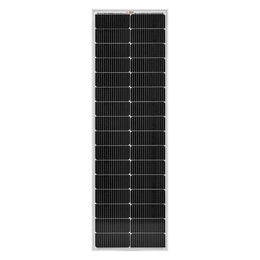
| 100 W | 10 | 1,000 W | Rich Solar MEGA 100W rigid | 55-60 sq ft | ~150 lb+ |
| 200 W | 5 | 1,000 W | Rich Solar MEGA 200W 24V | ~55 sq ft | ~120 lb |
| 250 W | 4 | 1,000 W | Rich Solar MEGA 250W | 50 sq ft | 108 lb |
| 350 W (folding) | 3 | 1,050 W | BLUETTI PV350 | 70 sq ft open | 92 lb |
| 400 W (folding) | 3 | 1,200 W | Mango Power Solar Move 400W | 77 sq ft open | 52 lb |
| 450 W | 2 (or 3) | 900 W (1,350 W) | Sungold 450W PERC | 47 sq ft (70) | 98 lb (148) |
Areas and weights come from listing dimensions (100 W and 200 W rows are estimates). Small panels fit RV and shed roofs but need more racking and connections; 400-450 W residential panels give the cheapest watts and fewest parts but are about 6 ft long; folding panels cost more per watt but pack away.
How much power a 1,000 W array makes
Heat, sun angle, dust, wiring and conversion cost about 20-25% of nameplate, so we use daily kWh = kW x peak sun hours x 0.77. Peak sun hours run about 3.5-4 in the cloudy north and in winter, about 4.5 as a US average and 5.5-6.5 in the Southwest.
At the US average that is about 3.5 kWh a day, or 104 kWh a month - roughly a tenth of a typical US home's use. That makes 1 kW the classic size for cabins, RVs, sheds, tiny homes, backup circuits and plug-in systems; to offset a whole home bill, start with our solar system sizing guide.
For off-grid use, size for winter: a site with 6 sun hours in July may see 2.5-3 in December, so plan a generator or grid charging for cloudy stretches, or room to grow to 1.5-2 kW.
What a 1,000-watt solar setup will run
Energy (Wh per day) decides whether the array and battery keep up; power (watts at once) sizes the inverter. A 1 kW array can run a 1,500 W microwave if the battery and inverter supply it - the array only refills what you used.
| Appliance | Running watts | Typical use | Wh per day | Share of 3.5 kWh |
|---|---|---|---|---|
| Full-size Energy Star refrigerator | 100-200 W (cycling) | 24 h | 1,200 | 34% |
| Chest freezer (7 cu ft) | 60-100 W (cycling) | 24 h | 600 | 17% |
| 10 LED bulbs | 100 W | 5 h | 500 | 14% |
| TV (50-55") | 100 W | 4 h | 400 | 11% |
| Laptop | 60 W | 6 h | 360 | 10% |
| CPAP (no humidifier) | 40 W | 8 h | 320 | 9% |
| Wi-Fi router + modem | 10 W | 24 h | 240 | 7% |
| Microwave | 1,000-1,200 W | 15 min | 250-300 | 8% |
| 1/2 hp well pump | ~1,000 W (3-4x to start) | 45 min | 750 | 21% |
| Window AC (8,000 BTU) | ~600 W | 6 h | 3,600 | 103% |
| Electric space heater | 1,500 W | 2 h | 3,000 | 86% |
Typical figures; check your labels. A cabin or backup mix of fridge, lights, router, laptop, TV and microwave lands around 3 kWh, which 1 kW covers on an average day. A window AC or space heater alone eats the whole harvest, so keep heating and cooling on propane, wood or a bigger system. More on fridge loads in our fridge runtime guide.
The parts of a 1 kW setup and how to size them
Panels make DC power whose voltage changes with the sun, so every 1 kW setup needs something to turn it into usable power. There are three common ways.
- Off-grid (panels + charge controller + battery + inverter). Works anywhere and powers you at night and in outages. Complete kits bundle all four parts.
- Solar generator (panels + power station). Controller, battery and inverter in one box; nothing to wire, and it moves between house, RV and campsite. The limit is the station's solar input range.
- Plug-in grid-tie (panels + microinverters). Feeds 120V AC into your home through an outlet to cut the bill. No battery, so it stops in a blackout, and it is only legal where your state and utility allow it.
Charge controller. Amps = array watts / charging voltage: about 69 A on a 12V LiFePO4 bank, 35 A on 24V and 17 A on 48V. So an 80 A MPPT at 12V, 40-60 A at 24V, 20 A+ at 48V. That is why 1 kW is where many RV owners move to 24V - see our 12V vs 24V vs 48V guide.
String voltage. The string's operating voltage (Vmp x panels in series) must sit inside the controller's window, and its open-circuit voltage on the coldest morning (Voc x panels x 1.14, the NEC 690.7 factor for about -4°F) must stay below the maximum. Four MEGA 250 panels in series run at about 76 V and reach about 104 V cold - fine for a 150 V controller, but under the 120 V minimum of the high-voltage inverter in the Sungold SGM-5K5E.
Battery and inverter. To store an average day's 3.5 kWh, plan 4-5 kWh of LiFePO4 (one 5.12 kWh 48V module, two 24V 100Ah batteries or about 400Ah at 12V); for evening loads only, 2-3 kWh is often enough. Size the inverter for everything that runs at once plus start-up surges (fridges and pumps draw 3-5 times running watts for a second): 1,500-2,000 W for fridge and electronics, 3,000 W if a microwave and pump overlap. Our Solar Kit Calculator totals your loads.
How much a 1,000-watt solar setup costs
Rigid panels in our catalog cost about $0.70-1.20 per watt and folding panels $1.50-1.70; the controller or station, battery and inverter usually cost more than the panels.
| Setup type | What you buy | Typical cost for ~1 kW | Night / outage power? |
|---|---|---|---|
| Panels only | 4-5 rigid panels (you supply controller, battery, inverter) | $900-1,200 | Depends on what you add |
| Plug-in grid-tie | Panels + microinverters + export limiter | ~$2,700 | No |
| Solar generator | Power station + 800-1,200 W of portable panels | $2,300-2,900 | Yes, 3.5 kWh |
| Complete off-grid kit | 1,200 W panels, 5.12 kWh battery, 3-5 kW inverter, controller, cables | $3,150-4,300 | Yes, 5.12 kWh |
Add racking for rigid panels (our ground mount brackets hold two 400-590 W panels for $185), fuses, a DC disconnect and, for building wiring, a permit and electrician. The federal 25D homeowner credit ended for systems installed after December 31, 2025; see solar rebates by state for programs that still pay.
Our 7 picks for a 1 kW solar setup
All seven were active and in stock on November 8, 2026. Prices are list prices; codes are mentioned only where the product is in a code's eligible collection (ECO100 = $100 off orders of $1,500+).
| Pick | Type | Array | Price | Battery / output | Best for |
|---|---|---|---|---|---|
| 4 x Rich Solar MEGA 250W | Rigid panels | 1,000 W | $1,169.99 | Add your own | RVs, sheds, DIY builds |
| 2 x Sungold 450W PERC | Rigid panels | 900 W | $899 | Add your own | Lowest cost per watt |
| Mango Power S PIPV 1200W + Gateway Lite | Plug-in grid-tie | 1,200 W | $2,698 | None / 1,120 W AC | Cutting the bill, renters |
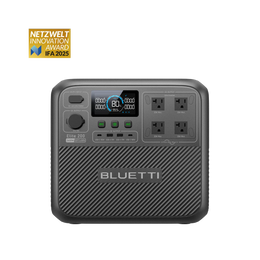
| Mango Power E Kit Pro + 1 Solar Move 400W | Solar generator | 1,200 W | $2,299 + $599 | 3,530 Wh / 3,000 W | Portable backup, RV, camp |
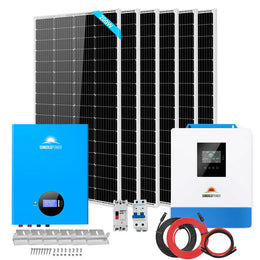
| Sungold SGM-5K5E | Off-grid kit, 48V | 1,200 W | $3,145 (ECO100: $3,045) | 5.12 kWh / 5,000 W | Cabins that will grow |
| Rich Solar 24V kit, 1,200 W | Off-grid kit, 24V | 1,200 W | $4,299.99 (ECO100: $4,199.99) | 5.12 kWh / 3,000 W | RVs, tiny homes |
| 3 x BLUETTI PV350 | Folding panels | 1,050 W | $1,797 | Add a station | Big power stations |
4 x Rich Solar MEGA 250W 12V Panels - $1,169.99

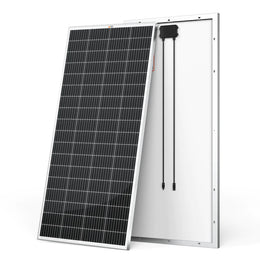
Four of these make exactly 1,000 W for $1,169.99 (compare-at $1,299), about $1.17 per watt. Each MEGA 250 uses N-type TOPCon cells at 25.1% efficiency, measures 60.6 x 29.9 in and weighs 26.9 lb - small enough for an RV ladder or shed roof. It is rated for 2,400 Pa wind and 5,400 Pa snow loads, has an IP68 junction box and a 25-year output warranty (80% at 25 years).
Each panel is Vmp 18.9 V / Voc 22.8 V. Four in series run at about 76 V (about 104 V cold), which suits a 100-150 V MPPT or a power station with a 60-150 V input; two-series-two-parallel gives about 38 V for low-voltage controllers. On a 12V battery you need an 80 A MPPT for the full 1,000 W; at 24V a 40 A unit will do.
2 x Sungold 450W PERC Panels - $899 (900 W)

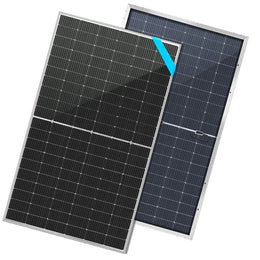
Two big residential panels are the cheapest route to nearly 1 kW: 900 W for $899, about $1.00 per watt. The 4-panel option (1,800 W) is $1,250, about $0.69 per watt - worth it if winter output is tight. Each panel is 75.2 x 44.7 in and 49.2 lb, carries UL 61730, CE, TUV and CEC listing (useful for permits) and a 25-year output plus 12-year workmanship warranty.
Each is Vmp 34.2 V / Voc 41.72 V. Two in series run at about 68 V (about 95 V cold) for a 150 V MPPT or a 60-150 V station input; four in series (about 137 V, 190 V cold) suit 120-450 V inverters. Plan a ground mount or a large roof - they do not suit most RVs.
Mango Power S PIPV 1200W Plug-In Kit + Smart Gateway Lite - $2,698

The simplest way to use 1 kW of solar on the grid: four 300 W N-type TOPCon panels with stands and four Mango Power S microinverters, joined by a 4-in-1 cable that plugs into a standard outlet - no battery, controller or roof holes. Each microinverter tracks its own panel and is limited to 280 W at 120V for plug-in use (1,120 W AC). The Smart Gateway Lite clamps on your main feed (up to 200 A) and throttles output within about 200 ms so nothing is exported, and adds whole-home monitoring. It is UL 1741-SA/SB, IEEE 1547:2018 and CA Rule 21 certified, with a 25-year inverter warranty, at $2,698 (compare-at $3,224).
Two limits: it stops when the grid goes down, and plug-in solar is only allowed where state law and your utility permit it. Utah was first, and by fall 2026 about nine states had passed plug-in laws (New Jersey in September 2026, with a 1,200 W cap) - check the plug-in solar state tracker and your utility first.
Mango Power E Kit Pro (2 x 400W) + 1 Solar Move 400W - $2,898

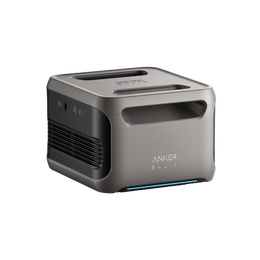
The Kit Pro ($2,299, compare-at $2,759) pairs the Mango Power E - 3,530 Wh of LiFePO4, 3,000 W of 120V output, 6,000 cycles, UPS switchover and a 10-year warranty - with two 400 W Solar Move folding panels. Add a third Solar Move 400W ($599) for a 1,200 W array at $2,898. The E accepts 60-150 V and up to 2,000 W of solar; three panels in series (Mango allows up to three per string) run at about 97 V and reach about 140 V cold, inside the limit. At 4.5 sun hours, 1,200 W refills about 4.2 kWh - more than the battery holds.
Each panel is 17.2 lb and IP67 but opens to almost 8 ft, and the station is about 93 lb. For double the storage, the Kit Ultra ($3,999) adds an expansion battery (7,060 Wh) and four panels (1,600 W).
Sungold SGM-5K5E 5,000W 48V Kit (1,200 W panels, 5.12 kWh) - $3,145

The least expensive complete system in our catalog with a 1 kW-class array: six 200 W panels (1,200 W), a 5.12 kWh 51.2 V LiFePO4 battery (7,000 cycles at 80% depth of discharge), a 5,000 W, 120V inverter-charger (10,000 VA peak) with built-in MPPT, plus PV cables and Z-brackets. It is in the ECO100 collection: $3,045 with the code.
Its strength is headroom: the inverter takes up to 5,500 W of solar (120-450 V MPPT, 500 V max), charges at up to 100 A and parallels with up to five more units, so a cabin can grow without replacing it. The 120 V MPPT minimum means panels must be wired in series, output is 120V only, and battery charging is rated from 32°F. Have a licensed electrician install it.
Rich Solar 3000W 24V Complete Kit with 1,200W Array - $4,299.99

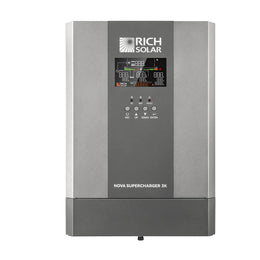
Everything for a trailer, tiny home or cabin from one brand: six MEGA 200W panels (1,200 W), two ALPHA 4 25.6 V 100Ah self-heating LiFePO4 batteries (5.12 kWh, Bluetooth, 5-year warranty), a NOVA PURE 3K inverter (3,000 W, 6,000 W surge, 120V), a 60 A MPPT controller and all brackets and cables. It is in the ECO100 collection: $4,199.99 with the code.
At 24V the 150 V, 60 A controller handles up to 1,600 W, so you can add two panels later (the 1600 Watt kit ships with eight). Self-heating batteries are why we prefer it for shoulder-season RVs and cabins, and two 24V batteries fit an RV bay more easily than one 95 lb 48V module.
3 x BLUETTI PV350 Folding Panels - $1,797 (1,050 W)

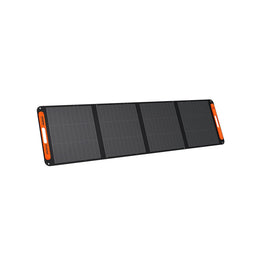
For owners of a large power station who want 1 kW of panels that pack away. Each PV350 is 350 W, 23.4% efficient, ETFE-laminated with kickstands and MC4 leads, folds to 35.6 x 24.1 x 2.5 in and weighs 30.6 lb. Three cost $1,797, about $1.71 per watt.
Each is Vmp 37.5 V / Voc 46.5 V. Three in series reach 139.5 V open-circuit on a mild day and about 159 V when freezing, so that string needs an input rated well above 150 V; on a 150 V input use two in series. They are IP65 (Bluetti advises against rain), FCC/CE listed and carry a 12-month warranty.
Which 1 kW setup fits your situation
| Your situation | Best setup | Start with |
|---|---|---|
| House or apartment on the grid, want a lower bill | Plug-in grid-tie (where allowed) | Mango Power S PIPV kit |
| Outage backup without wiring, also for camping | Solar generator | Mango Power E Kit Pro + 1 panel |
| Weekend cabin or tiny home, off-grid | Complete off-grid kit | Sungold SGM-5K5E or off-grid kits |
| Travel trailer or fifth wheel | 24V kit or rigid panels + 24V controller | Rich Solar 24V kit; see our RV solar kit picks |
| Shed or workshop with an existing battery | Rigid panels + MPPT | 4 x MEGA 250W; see the shed solar guide |
| Ground mount on a budget | Large residential panels | Sungold 450W or 450W panels |
| You own a big power station | Folding panels | BLUETTI PV350 or portable solar panels |
Not sure which side of the line you are on? If your daily use is under about 3 kWh and you have space for four or five panels, 1 kW is the right target. If your loads are closer to 5-8 kWh a day, look at 2 kW and larger systems in our 1 kilowatt solar power systems and 1000 watt solar panel kits collections and size up from there.
Wiring a 1,000 W array safely
- Series vs parallel. Series adds voltage (less current, thinner wire); parallel adds current. With MPPT, series is usually better as long as cold Voc stays under the limit - exceeding it can destroy the controller.
- Wire and mounting. At 70-140 V a 1 kW array carries only 7-14 A, so 10 AWG PV cable is typical. Use rated brackets and respect roof load limits, especially on RVs and mobile homes (see our mobile home solar guide).
What buyers ask before buying 1,000 watts of solar
These come from the searches that bring people to our store and the questions Google shows for this topic, plus one pattern we see in buyer emails. Answers use the specs of products we stock.
Is there a single 1000 watt solar panel?
Not for home, RV or cabin use - the largest common panels are 450-600 W and weigh 50-70 lb. A "1000W solar panel" listing almost always means a set of panels or a kit, so check how many panels are in the box.
Can a 1000W solar panel give me 120V or 230V?
Panels only make DC; an inverter (in a power station, kit or microinverters) turns it into AC. In the US and Canada that means 120V, or 120/240V split phase for larger systems. 230V is the European standard and not what US appliances need.
Do I need a battery with a 1000W solar setup?
Only if you want power after sunset or during outages. A plug-in grid-tie kit like the Mango Power S PIPV works without one but shuts off when the grid does. For off-grid or backup use, plan 2-5 kWh of LiFePO4 depending on how much you use at night.
Can I use rigid panels instead of folding panels with my power station?
Yes, and buyers ask us this by email fairly often - usually because they want panels that stay up all season. Any MC4 panels work if the string voltage fits the station's solar input window and the cold-weather open-circuit voltage stays under its maximum. Four MEGA 250 panels in series (about 76 V operating, 104 V cold) or two Sungold 450 W panels in series (about 68 V, 95 V cold) both fit a 60-150 V input like the Mango Power E's.
How much does a 1kW solar panel setup cost?
From our November 8, 2026 prices: $900-1,200 for panels alone, about $2,700 for a plug-in kit, $2,300-2,900 for a power station with 1 kW-class panels and $3,150-4,300 for a complete off-grid kit. Permits, racking and installation are extra for permanent systems.
FAQ
What will a 1000-watt solar panel setup run?
On an average US day 1,000 W of panels makes about 3.5 kWh - enough for a full-size fridge (about 1.2 kWh a day), LED lights, a router, laptops, a TV and a CPAP, or a well pump that cycles a few times. It will not run central air, an electric water heater or a range, and it needs a battery to power anything after sunset.
How many kWh does a 1000W solar system produce per day?
About 2.7 kWh with 3.5 peak sun hours, 3.5 kWh with 4.5 hours (a typical US average) and 4.2-5.0 kWh in sunny southern states, using kW x sun hours x 0.77 for real-world losses. That is roughly 104 kWh a month at 4.5 sun hours.
How many panels make 1000 watts?
Ten 100 W panels, five 200 W panels, four 250 W panels or three 350 W panels. Two 450 W panels give 900 W and three 400 W panels give 1,200 W.
What size charge controller do I need for 1000 watts of solar?
About 69 A on a 12V LiFePO4 bank (use an 80 A MPPT), 35 A on 24V (40 A or larger) and 17 A on 48V (20 A or larger). The string's cold-weather open-circuit voltage must also stay under the controller's maximum input voltage.
How many batteries do I need for a 1000W solar system?
To store one average day's harvest, plan about 4-5 kWh of LiFePO4, such as one 5.12 kWh 48V battery, two 24V 100Ah batteries or about 400Ah at 12V. For evening and overnight loads only, 2-3 kWh is often enough. A plug-in grid-tie kit needs no battery.
Can a 1000-watt solar system run a refrigerator?
Yes. A modern full-size fridge uses about 1-1.5 kWh a day, a third or less of an average day's output. You need at least 2 kWh of battery for the night and an inverter that handles its start-up surge, usually 3-5 times its running watts.
How much space does 1000 watts of solar panels need?
About 47-77 sq ft: two Sungold 450 W panels cover about 47 sq ft, four Rich Solar MEGA 250 W panels about 50 sq ft and three folding 350-400 W panels 70-77 sq ft when open. Leave extra room so rows do not shade each other.
Prices, stock and codes were checked on November 8, 2026 and can change. Browse rigid solar panels, grid-tied solar systems and 12V solar panels, or see how the same math scales up in our system sizing guide.

Serhii Dovzhenko, Solar & Energy Storage Specialist at Eco Solar Kits · LinkedIn
Serhii is based in Vancouver, BC, and works on product data, system sizing and buyer guides for Eco Solar Kits. He attends solar and energy storage industry conferences and is involved in the community of electricians in Vancouver, BC. Credit for the data verification in this guide goes to Adsec.ca.