


kWh first, batteries second
"How many batteries" has no single answer because batteries come in very different sizes. A 12V 100Ah battery stores 1.28 kWh, a 48V server rack module stores 5.12 kWh and a floor-standing outdoor unit can hold 16 kWh. So the useful question is how many kilowatt-hours you need. Once you know that, the battery count is simple division.
The quick conversion: kWh = volts x amp-hours / 1,000. A 51.2 V 100 Ah module is 51.2 x 100 / 1,000 = 5.12 kWh. A 12.8 V 200 Ah battery is 2.56 kWh. Ignore the amp-hours when you compare batteries of different voltages - only kWh compares like for like.
Sizing then takes four steps: add up your daily energy, choose what the battery is for, add the losses and reserve, and check that the bank can deliver enough power (kW) for your inverter. We use the same factors throughout this guide so you can repeat the math for your own home.
Step 1: add up what you want to power
Multiply each appliance's running watts by the hours it runs in a day. Your utility bill gives the whole-home number (monthly kWh / 30); an average US home uses close to 29 kWh a day, but backup systems rarely need to cover all of it. These are typical figures for an essentials list - check the labels on your own appliances.
| Load | Typical running watts | Hours per day | Wh per day |
|---|---|---|---|
| Refrigerator (full size, Energy Star) | 100-200 W (cycling) | 24 h | 1,200 |
| Chest freezer | 60-100 W (cycling) | 24 h | 700 |
| LED lights (10 bulbs) | 100 W | 5 h | 500 |
| Wi-Fi router + modem | 20 W | 24 h | 480 |
| TV | 100 W | 4 h | 400 |
| CPAP (no heated humidifier) | 40 W | 8 h | 320 |
| Phones and laptops | - | - | 300 |
| Microwave | 1,000 W | 15 min | 250 |
| Essentials subtotal | 4,150 | ||
| Gas furnace blower (winter) | 500 W | 6 h | 3,000 |
| Well pump (1 hp) | 1,000 W | 1 h | 1,000 |
| Essentials + furnace fan + well | 8,150 | ||
| Central A/C (3 ton), for reference | 3,000-3,500 W | 8 h | 24,000-28,000 |
The last row shows why whole-home backup gets expensive: one central air conditioner on a hot day can use more energy than everything else in the house combined. Electric water heaters, electric ranges and resistive heat strips are in the same class. Most people who buy batteries for outages leave those circuits off the backup panel.
Step 2: pick your goal - backup, bill savings or off-grid
The same house can need 5 kWh or 35 kWh of storage depending on what the battery is for. Decide which of these four jobs you are buying it for.
| Goal | What to cover | Days of storage | Typical bank (nominal) |
|---|---|---|---|
| Essentials backup (short outages) | Fridge, lights, internet, CPAP, phones | 1 day, solar refills it | 5-10 kWh |
| Critical-loads backup (storm country) | Essentials + furnace fan, well pump, some cooking | 1-2 days | 10-20 kWh |
| Bill savings (time-of-use, no export credit) | The evening peak, roughly 4-9 pm | Daily cycle | 10-15 kWh |
| Whole-home backup | Everything on the main panel, A/C included | 1 day | 30-40 kWh+ |
| Off-grid cabin | Lights, fridge, pump, small electronics | 2-3 days | 5-10 kWh |
| Off-grid home | Full daily use, efficient appliances | 2-3 days | 30-60 kWh |
Grid-tied homes can size for one day because solar refills the bank the next morning and the grid returns eventually. Off-grid homes plan for two or three cloudy days in a row (or a backup generator), so their bank is usually two to three times their daily use. For bill savings, size the battery to your evening usage - a bigger bank that never empties does not save more money.
Step 3: turn kWh into a battery count
A battery's label shows nominal capacity. You never get all of it at the outlet: the battery management system keeps a small reserve (LiFePO4 is typically set to use about 90-95%), and the inverter loses about 5-10% turning DC into AC. We use one combined factor of 0.85:
Nominal kWh needed = daily kWh x days of storage / 0.85
Two more adjustments: add 10-20% if you want a reserve left when the grid comes back or the sun rises late, and plan for cold. LiFePO4 cannot charge below about 32°F, so a bank in an unheated garage or shed needs self-heating batteries or an insulated, conditioned space.
Now divide by the size of the battery you are considering and round up. This table shows how many units hit common targets with the batteries we stock:
| Target bank | 12V 200Ah (2.56 kWh) | 48V 100Ah module (5.12 kWh) | 48V 200Ah wall unit (10.24 kWh) | EG4 PowerPro (14.3 kWh) | Sungold PowerMax (16.07 kWh) |
|---|---|---|---|---|---|
| 5 kWh | 2 | 1 | 1 | 1 | 1 |
| 10 kWh | 4 | 2 | 1 | 1 | 1 |
| 15 kWh | 6 (not practical) | 3 | 2 | 2 (or 1 at 14.3) | 1 |
| 20 kWh | 8 (not practical) | 4 | 2 | 2 | 2 |
| 30 kWh | - | 6 | 3 | 3 (or 2 at 28.6) | 2 |
| 40 kWh | - | 8 | 4 | 3 | 3 |
12V batteries make sense up to about 5-10 kWh (RVs, vans, sheds, small cabins). Beyond that the cables and fuses get huge, and 48V batteries are cheaper and simpler. Our 12V vs 24V vs 48V guide walks through the voltage choice in detail.
Step 4: check power, not just capacity
Capacity (kWh) decides how long the bank lasts; power (kW) decides what it can run at the same time. Every battery has a maximum continuous discharge current, and the bank must supply what the inverter draws. On a 48V system the battery-side current is roughly inverter watts / 48: a 6 kW inverter pulls about 125 A, a 12 kW inverter about 250 A.
| Battery | Continuous discharge (listing) | About this many kW | Units for a 12 kW inverter |
|---|---|---|---|
| Rich Solar ALPHA 5 PRO 5.12 kWh | 100 A | 5.1 kW | 3 |
| Sungold SG48200T 10.24 kWh | 200 A BMS | 10.2 kW | 2 |
| EG4 PowerPro 14.3 kWh | 140 A (200 A for 30 min) | 7.2 kW | 2 |
| Sungold PowerMax 16.07 kWh | 150 A standard, 190 A max | 7.7-9.7 kW | 2 |
| BigBattery ETHOS 4-module kit 20.48 kWh | 200 A (kit) | 10.2 kW | 1-2 |
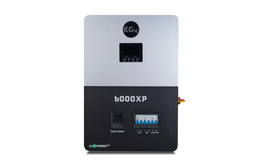
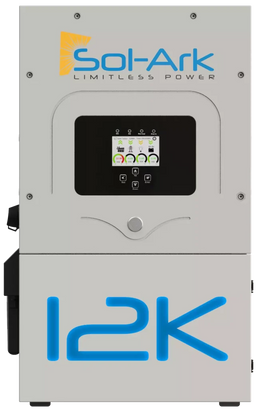
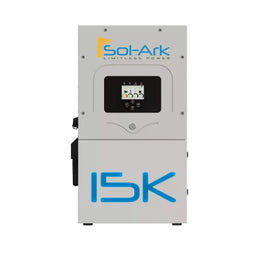
So a small battery count can be the limit even when the kWh look fine: a single 5 kWh module behind a 12 kW hybrid inverter will trip its BMS when a well pump and a microwave start together. The inverter has limits too. Many hybrids deliver less from battery alone than with sun on the panels - for example the EG4 FlexBOSS21 is rated 16 kW with PV but 12 kW from battery only, and the Sol-Ark 12K is 9 kW continuous. Our EG4 vs Sol-Ark comparison covers those inverters.
Worked example: a winter storm backup bank
A household with gas heat and a private well wants to ride out a 24-hour winter outage with the fridge, freezer, furnace blower, well pump, lights, internet and a CPAP. The battery sits in an unheated attached garage.
- Daily energy: the essentials + furnace fan + well row above = 8.15 kWh.
- Days: 1 day, with rooftop solar topping up whatever sun there is.
- Nominal bank: 8.15 / 0.85 = 9.6 kWh. Add a 15% reserve = about 11 kWh.
- Power: well pump start-up (about 3-4 kW for a second) + furnace blower + fridge compressor = about 5-6 kW peak, so a 6 kW+ inverter and about 125 A from the battery.
- Cold: garage drops below freezing, so the battery must self-heat to recharge.
Result: two self-heating 5.12 kWh modules (10.24 kWh, 200 A combined) cover it, or three for the reserve. Two ALPHA 5 PRO modules are $3,449 ($3,349 with ECO100); a 2-pack of Sungold SGH48100T is $2,300 ($2,250 with ECO50). If the same family wanted central air in summer too, the target jumps to 30 kWh+ - the point where a large single unit like the PowerMax becomes the cheaper route.
Our 7 battery picks for every bank size
All seven were in stock on November 8, 2026, with prices from our store on that day. Codes are shown only where the product is actually eligible: ECO50 is $50 off with no minimum and ECO100 is $100 off orders of $1,500+ (both active, no end date). Products marked "no code" are not in a promo collection, even if a badge on the page suggests otherwise.
| Battery | Capacity | Voltage | Price (Nov 8) | $/kWh | Self-heating | Warranty | Code |
|---|---|---|---|---|---|---|---|
| Rich Solar ALPHA 5 PRO | 5.12 kWh | 51.2 V | $1,749 | $342 | Yes (150 W heater) | 10 yr | ECO100: $1,649 |
| Sungold PowerMax | 16.07 kWh | 51.2 V | $2,696 | $168 | No | 10 yr | No code |
| EG4 PowerPro | 14.3 kWh | 51.2 V | $3,124 | $218 | Yes | 10 yr | No code |
| Sungold SG48200T | 10.24 kWh | 51.2 V | $2,390 | $233 | Not listed | 10 yr | No code |
| BigBattery ETHOS 4-module kit | 20.48 kWh | 51.2 V | $5,372 | $262 | Not listed | 12 yr | No code |
| 2 x Sungold SGH48100T | 10.24 kWh | 51.2 V | $2,300 | $225 | Yes | 10 yr | ECO50: $2,250 |
| Rich Solar ALPHA 2 LITE | 2.56 kWh | 12.8 V | $729.99 | $285 | No | See listing | ECO100 on 3-pack: $1,899 |
Rich Solar ALPHA 5 PRO 5.12 kWh - $1,749

If you want the battery count to match the kWh math one-for-one, a 5.12 kWh module is the easiest unit to plan with: 2 for essentials, 4 for 20 kWh, 6 for 30 kWh. The ALPHA 5 PRO adds what matters for that kind of growth - up to 30 units in parallel, RS485 and CAN communication for the major inverter brands, Bluetooth and Wi-Fi monitoring, and a built-in 150 W heater that warms the cells before charging below 41°F. It carries UL1973 and UL9540A, is rated 7,000+ cycles at 80% depth of discharge and has a 10-year warranty.
Each module delivers 100 A (about 5.1 kW), so plan two for a 6-8 kW inverter and three or more for 12 kW. It weighs 100.9 lb and measures 17.7 x 17.8 x 5.2 in. Multi-packs are on the same page: 2 for $3,449, 4 for $6,849 and 5 for $8,998.99 with a free battery cabinet. ECO100 takes $100 off any of them. Note: it is not compatible with the original ALPHA 5, so build or expand with ALPHA 5 PRO units only.
Sungold Power PowerMax 16.07 kWh Outdoor - $2,696

At $168 per kWh (compare-at $2,995), this is the cheapest storage in our lineup by a wide margin, and one unit covers most critical-loads plans on its own. It is a 51.2 V 314 Ah floor-standing battery rated IP65 for indoor or outdoor installation, with UL1973, UL9540A and CEC listing - useful when your permit office or a rebate program asks for paperwork. Up to 16 units run in parallel (257 kWh), so two of them make a 32 kWh whole-home bank.
It delivers 150 A standard and 190 A maximum, about 7.7-9.7 kW, and is rated 8,000 cycles at 80% DOD with a 10-year warranty (15-year design life). The trade-offs: it is 271 lb, and the listing shows no self-heating, with charging allowed from 32°F and discharging only down to 14°F - mount it somewhere that stays above freezing in winter.
EG4 PowerPro 48V 14.3 kWh - $3,124

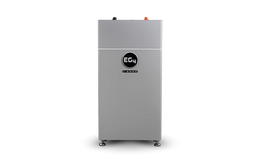
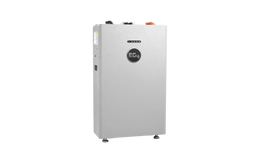
The PowerPro is the cold-climate answer to the PowerMax: 14.3 kWh in an IP65 cabinet with a built-in heater that switches on at 32°F and off at 41°F, so it can live outside or in an unheated garage and still recharge in winter. It is the natural partner for EG4 hybrid inverters and is rated 140 A continuous (200 A for 30 minutes), 8,000+ cycles at 80% DoD and 10 years of warranty. Price is $3,124, down from $3,669 compare-at - $218 per kWh.
Two large all-weather batteries in this class (about 28-32 kWh) behind an 18-21 kW hybrid inverter is a pairing we quote often for whole-home backup. At 308.6 lb and 36.1 in tall, it is a two-person (or dolly) install.
Sungold Power Powerwall X SG48200T 10.24 kWh - $2,390

Ten kilowatt-hours is the sweet spot for critical-loads backup, and this wall-mounted unit gets you there in one box for $2,390 ($233/kWh). The 200 A BMS lets one battery feed about 10 kW, which is enough for most 6-8 kW hybrid inverters without a second unit - something two 100 A modules can only match together. It has a built-in LCD for voltage, power and state of charge, communicates over CAN and RS485, supports up to 32 units in parallel and has a 10-year warranty with 8,000+ rated cycles.
It is 198.4 lb and 6.8 x 17 x 27.6 in, with wall bracket and hardware included. The listing does not state self-heating or an IP rating, so treat it as an indoor battery.
BigBattery ETHOS 48V 20.48 kWh Kit (4 Modules) - $5,372

Four 5.12 kWh ETHOS modules stacked as one 20.48 kWh bank, rated IP65 / NEMA 4X for outdoor installs and listed to UL9540, UL9540A and UL1973 - the full set many permit offices want for a whole-home system. The kit delivers 200 A continuous (10,240 W) with 300 A peaks for 5 seconds, expands to 81.92 kWh, and carries the longest warranty here at 12 years. Price is $5,372, down from $6,550 ($262/kWh).
Twenty kWh covers a day of critical loads with room to spare, or most of a day for an efficient home without central air. Larger 3- and 6-module versions and ETHOS + EG4 inverter bundles are also in stock; see our whole-home battery backup cost guide for complete system pricing.
2 x Sungold Power SGH48100T Self-Heating 10.24 kWh - $2,300

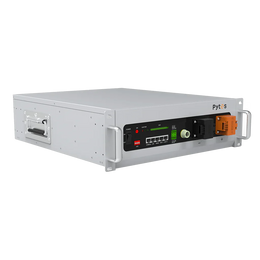
Two self-heating 3U rack modules for $2,300 - $225 per kWh, or $2,250 with ECO50. The heater starts below 41°F and stops at 53.6°F, which is what makes a 48V bank workable in an unheated cabin, barn or shop. Each module is 51.2 V 100 Ah, rated 7,000+ cycles, and up to 32 can be paralleled. The 10-year warranty matches the premium modules at about two-thirds of the price.
One thing to check before you buy: the listing shows UL1973 and UL 9540 as pending, so if your inspector requires listed storage, choose the ALPHA 5 PRO or PowerMax instead. A 4-pack (20.48 kWh) is $4,600 and a single module $1,150.
Rich Solar ALPHA 2 LITE 12V 200Ah - $729.99

For a van, trailer, boat or shed, "how many batteries" usually means how many 12V batteries. Each ALPHA 2 LITE is 2.56 kWh (12.8 V x 200 Ah) with 200 A continuous discharge - enough for a 2,000 W inverter - in a 52.9 lb IP55 case, rated 4,000+ cycles. One covers a weekend of lights, fans, a 12V fridge and phones; two (5.12 kWh, $1,399) run a small off-grid cabin; three are $1,999, or $1,899 with ECO100.
No heater: charging is allowed from 32°F, so in winter keep it inside the living space. If you are heading past three or four batteries, a 24V or 48V bank is usually the better build - see our RV solar kit guide for complete 12V systems.
Which battery bank fits your situation
| Your situation | Target | Battery count | Approx. price (Nov 8) |
|---|---|---|---|
| Fridge, internet, lights, CPAP for short outages | 5 kWh | 1 x ALPHA 5 PRO | $1,749 ($1,649 with ECO100) |
| Critical loads, heated space, 6-8 kW inverter | 10 kWh | 1 x SG48200T | $2,390 |
| Critical loads in a cold garage or cabin | 10 kWh | 2 x SGH48100T | $2,300 ($2,250 with ECO50) |
| Storm country, 1-2 days of critical loads | 15-16 kWh | 1 x PowerMax or 1 x PowerPro | $2,696 / $3,124 |
| Permit-friendly whole-home starter | 20 kWh | ETHOS 4-module kit | $5,372 |
| Whole home with A/C, 1 day | 30-35 kWh | 2 x PowerMax or 2 x PowerPro | $5,392 / $6,248 |
| Van, trailer, boat | 2.5-5 kWh | 1-2 x ALPHA 2 LITE | $729.99 / $1,399 |
Battery-only prices - you also need a hybrid or off-grid inverter, cabling, fusing and, for home backup, a critical-loads panel or transfer switch. Browse the full range in server rack batteries, 48V solar batteries, home backup batteries and 12V solar batteries, and pair them with a hybrid inverter.
Expanding, mixing and installing safely
- Buy the same model, ideally together. Parallel batteries share load best when they are the same model, firmware and age. If you add units later, add them within the first year or two and bring every battery to the same voltage before connecting them.
- Do not mix chemistries or brands on one bus unless both manufacturers approve it. Mixing lithium with lead-acid, or two different BMS designs, leads to uneven charging and early wear.
- Use the battery's communication link. Closed-loop CAN or RS485 lets the inverter charge each battery at the right current and see the real state of charge - it matters more as the battery count grows.
- Size busbars and fuses for the whole bank. Four 100 A modules can push 400 A; use a busbar or cabinet rated for it and a properly sized DC breaker or class-T fuse.
- Check local storage limits. Many US jurisdictions follow NFPA 855 / IRC R328, which caps residential energy storage at roughly 40 kWh in a utility closet and 80 kWh in a garage or on an outside wall. Your inspector may also ask for UL 9540 listing.
What buyers ask before sizing a solar battery bank
These questions come from the searches that bring people to our store and from Google's question results for battery sizing. The answers use the store data above.
How big is a solar battery for a house?
In energy, home batteries usually run 5-16 kWh per unit and 10-30 kWh per system. Physically, a 5 kWh rack module is a flat box of about 18 x 18 x 5 in (the ALPHA 5 PRO weighs about 100 lb), a 10 kWh wall unit is about 28 in tall and 7 in deep, and a 14-16 kWh floor unit is 36-41 in tall and 270-310 lb.
Do I need a battery for solar panels at all?
Not for a standard grid-tie system - the grid acts as your storage, and the panels shut off in an outage. You need a battery if you want backup power, if your utility pays little for exported power so storing it for the evening saves more, or if you are off the grid.
How much do solar batteries cost?
Battery hardware in our store ran from $168 to $342 per kWh on November 8, 2026 - about $1,700-$3,400 for a 10 kWh bank and $5,400-$6,250 for 20-30 kWh with the value picks above. Installed turnkey systems cost several times more per kWh; the whole-home backup cost guide breaks that down.
Can I add a battery to my existing solar system?
Yes, two ways. If your grid-tie inverter is staying, an AC-coupled battery inverter sits beside it and charges the battery from the house wiring. Or you replace the inverter with a hybrid that takes the panels and the battery directly - usually the better value when the old inverter is near the end of its warranty. Either way, size the battery with the steps above, not from the array size.
I only need a couple of critical circuits after long storm outages - how much battery is that?
For a fridge, internet, lights and a few outlets, plan on 5-10 kWh plus enough solar to refill it each day; one 10 kWh battery and 2-4 kW of panels can run those circuits indefinitely in decent sun. Add a well pump or furnace blower and aim for 10-16 kWh.
FAQ
How many batteries do I need to power a house?
Work in kWh: an average US home uses about 29 kWh a day, so a full day of whole-home backup needs about 34 kWh of nominal battery (29 / 0.85). That is seven 5.12 kWh modules, three or four 10 kWh units, or two 16 kWh units. Backing up only essentials takes 5-10 kWh - one or two 5 kWh batteries.
How many kWh of battery do I need for a 10 kW solar system?
The array size does not set the battery size - your goal does. A 10 kW array makes about 35 kWh on an average day, but most owners pair it with 10-20 kWh for backup or evening use, and off-grid homes with 30-40 kWh or more. Size the battery from your daily loads and days of storage, then check that the array can refill it.
How long will a 10 kWh battery last?
About 8.7 kWh is usable after battery reserve and inverter losses. That runs a 500 W average load for about 17 hours, a 1 kW load for about 9 hours, or an average whole home (about 1.2 kW) for about 7 hours. Solar recharging during the day extends it.
Does depth of discharge change how many batteries I need?
Yes. Lead-acid batteries should only be discharged to about 50%, so they need roughly twice the nominal capacity of lithium. LiFePO4 batteries are typically set to use 90-95% of their capacity, which is why we divide by 0.85 (including inverter losses) rather than 0.5.
How many 12V batteries do I need for a 48V system?
Four in series. Series wiring adds the voltage and keeps the amp-hours, so four 12.8 V 200 Ah batteries make a 51.2 V 200 Ah bank (10.24 kWh). The batteries must be the same model and age, and the manufacturer must allow series use; for new 48V systems a single 48V battery is usually simpler.
Is one big battery better than several small ones?
One large unit is often cheaper per kWh and has fewer cables, but several modules let you start small, add capacity later and keep running if one unit fails. Check power as well: each battery has a current limit, so a big inverter may need two or more units even when one would hold enough kWh.
Can I add more batteries later?
Usually, if you add the same model within a year or two and match the voltage before connecting. Use the battery's communication link so the inverter sees the whole bank. Some lines are not cross-compatible - for example the Rich Solar ALPHA 5 PRO cannot be mixed with the original ALPHA 5.
Ready to build? Start with lithium batteries and solar battery storage, compare rack modules in our best 48V server rack battery guide, or size the panels with our solar system sizing guide.

Serhii Dovzhenko, Solar & Energy Storage Specialist at Eco Solar Kits · LinkedIn
Serhii is based in Vancouver, BC, and works on product data, system sizing and buyer guides for Eco Solar Kits. He attends solar and energy storage industry conferences and is involved in the community of electricians in Vancouver, BC. Credit for the data verification in this guide goes to Adsec.ca.