

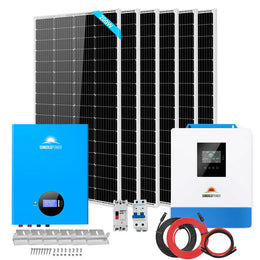
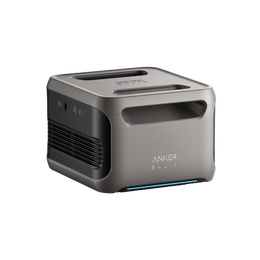
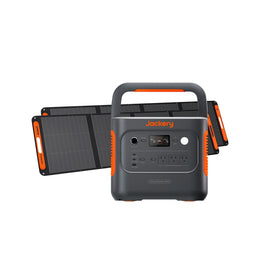
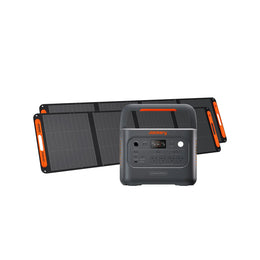
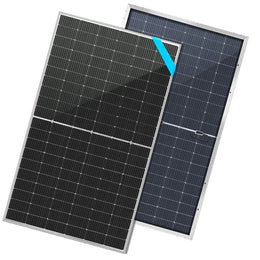
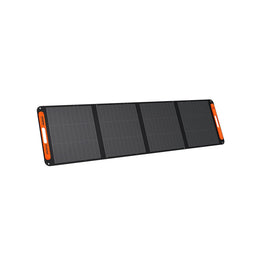
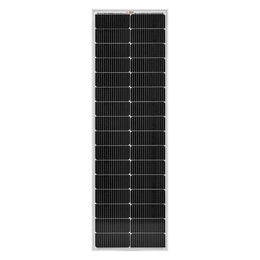
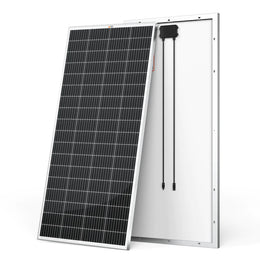
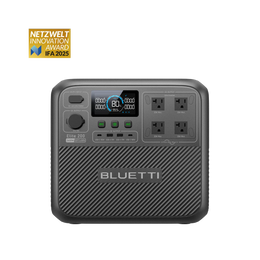
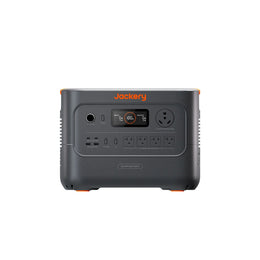
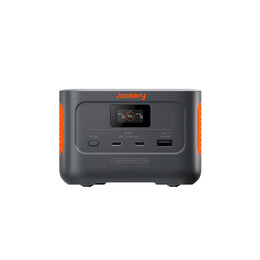

Winter outages are harder on backup power than summer ones. The load is bigger because the heating system has to run, the days are short so solar refills less, and the battery itself may be sitting in a 20F garage. This guide covers what cold does to lithium batteries, how to size a bank for a winter outage, and which in-stock batteries and power stations are built for it.
If you are still choosing between fuel and battery backup, start with solar generator vs gas generator. For general bank sizing, see how many batteries you need for solar.
What cold does to a lithium battery
Almost every home battery and power station sold today uses lithium iron phosphate (LiFePO4) cells. They are safe and long-lived, but they have two cold-weather rules that buyers miss.
- Charging stops at freezing. Below 32F (0C), lithium ions cannot enter the anode fast enough and plate on its surface as metal instead. That damage is permanent. A proper battery management system (BMS) refuses to charge a frozen pack, which protects the cells but leaves you with a battery that will not refill.
- Discharging still works, with less capacity. Most LiFePO4 packs deliver power down to about -4F. The cold slows the chemistry, so expect roughly 10 to 20% less usable energy near freezing and 30% or more near 0F, depending on the load.
| Cell temperature | Discharge (running loads) | Charge | What to plan for |
|---|---|---|---|
| Above 50F (10C) | Full rated capacity | Normal | Rated runtime |
| 32F to 50F (0 to 10C) | About 90% | Allowed, often at reduced speed | Slower recharge |
| 14F to 32F (-10 to 0C) | About 80% | Blocked unless self-heating | Self-heating or warm the battery first |
| -4F to 14F (-20 to -10C) | About 70%, output may be limited | Blocked unless self-heating | Keep the battery indoors if you can |
| Below -4F (-20C) | Most units shut down | Blocked | Insulated or heated space only |
The percentages are typical planning figures, not a promise for any one model. The exact limits for each product are on its spec sheet, and we list them for our picks below.
Self-heating batteries: how they work and when you need one
A self-heating battery has a heating film or pad around the cells and a BMS that controls it. When a charger is connected and the cells are too cold, the BMS sends the incoming power to the heater first. Once the cells reach a safe temperature, it switches to charging. You do nothing; the battery simply takes longer to start charging on a cold morning.
The switch-on point differs by model, and it matters. These are the figures on today's listings:
| Battery | Heater turns on | Heater turns off | Enclosure | Listed cold limit |
|---|---|---|---|---|
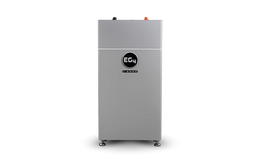
| EG4 WallMount 16 kWh All-Weather | Automatic (keeps cells in the 32F+ charge range) | Automatic | IP67, outdoor rated | Discharges -4F to 131F |
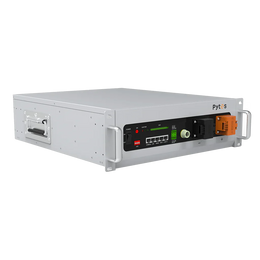
| Sungold SGH48100T 5.12 kWh | Below 41F (5C) | 53.6F (12C) | Indoor server rack | Heater works down to -13F |
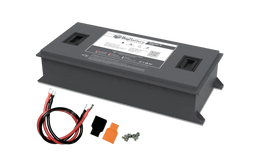
| Sungold 12V 200Ah | Below 33.8F (1C) | Above 42.8F (6C) | IP65 | Operates -4F to 140F |
You need self-heating if the battery lives in an unheated garage, shed, cabin, RV or outdoors and you expect to recharge it in freezing weather from solar or a generator. You do not need it if the battery sits in a basement or utility room that stays above 40F. In that case, any quality LiFePO4 battery works, and our 48V server rack battery guide covers more options.

Cold, clear days are good for panels. The limits in winter are short days and snow cover, not temperature.
What a winter outage load looks like
Size the bank from a load list, not from the size of the house. This is a typical winter essentials list for a home with a gas, propane or oil furnace:
| Load | Watts | Hours per day | Wh per day |
|---|---|---|---|
| Furnace blower, igniter and controls (50% duty) | 600 | 12 | 7,200 |
| Refrigerator | 55 average | 24 | 1,300 |
| Router and modem | 15 | 24 | 360 |
| LED lights | 60 | 6 | 360 |
| Phones and a laptop | - | - | 30 |
| Total | 385 average | 9,250 (9.25 kWh) |
Battery size = daily kWh x days / 0.85. The 0.85 covers inverter losses and the reserve the BMS keeps. One day needs 9.25 / 0.85 = 10.9 kWh. Three days with no recharging needs 32.6 kWh.
Two things change this number a lot:
- Wood or pellet stove homes drop the furnace line. The list falls to about 2.05 kWh per day, which a 3 kWh power station covers for more than a day.
- Electric heat does not fit on a battery. Baseboard heaters, an electric furnace or heat pump backup strips draw 5 to 15 kW. A 10 kW heat load empties a 16 kWh battery in a little over an hour. If your heat is electric, plan the battery for the essentials and a separate heat source that is rated for indoor use.
A furnace blower also has a start-up surge of two to three times its running watts for a moment, so pick an inverter or power station with at least 1,500 W of continuous output for a typical gas furnace. A sump pump or well pump adds more; see what size inverter you need.
How long each battery runs the winter essentials
Runtime in hours = usable Wh / average watts. We used capacity x 0.85 for usable energy (for the EG4 WallMount, the listed 12.86 kWh usable x 0.92 for inverter loss) and the 385 W average from the table above.

| Battery | Capacity | With furnace (385 W) | No furnace (85 W) | Price today |
|---|---|---|---|---|
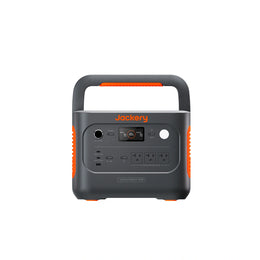
| Jackery Explorer 1500 v2 | 1.54 kWh | 3.4 h | 15 h | $849 ($799 with ECO50) |
| Sungold 12V 200Ah + inverter | 2.56 kWh | 5.7 h | 26 h | $589 + inverter |
| Jackery HomePower 3000 | 3.07 kWh | 6.8 h | 31 h | $1,349 |
| Sungold SGH48100T | 5.12 kWh | 11.3 h | 51 h | $1,150 |
| 2 x Sungold SGH48100T | 10.24 kWh | 22.6 h | 102 h | $2,300 ($2,250 with ECO50) |
| EG4 WallMount All-Weather | 16 kWh | 30.7 h | 139 h | $3,749.99 |
These figures assume a battery at room temperature. For a pack that sits near freezing, take off 10 to 20%. The takeaway: portable stations carry a furnace through an evening, not a storm. For multi-day outages you need 10 kWh or more, or a way to recharge every day.
Recharging in winter: short days, snow and generators
Daily solar output = array kW x peak sun hours x 0.77. In December most of the northern US gets 2 to 3.5 peak sun hours instead of 4.5 or more in summer.

A 3 kW array that covers the essentials in summer covers only half to two thirds of them in December, and nothing while it is under snow. Three ways to close the gap:
- Tilt and clear the panels. A steep tilt (latitude plus 15 degrees) sheds snow faster and faces the low sun. Clear ground mounts with a soft roof rake. Do not climb an icy roof.
- Oversize the array for winter. To make 9.25 kWh on a 2.5 sun-hour day you need 9.25 / (2.5 x 0.77) = 4.8 kW of panels. Our system sizing guide has the full method.
- Add a generator as the winter charger. A battery turns a generator from an all-day machine into a two-hour one. A 5 kW generator putting about 4 kW into the bank refills 9.25 kWh in roughly 2.5 hours, then the house runs silent for the rest of the day.
Remember the charging rule: solar or generator power cannot go into a frozen battery. That is the real reason to buy self-heating for a cold location.
Six cold-ready batteries and power stations in stock
All six were in stock on November 13, 2026. Prices are as listed today. Jackery prices are sale prices scheduled to end November 16, 2026. Codes shown were tested in the cart today; where none is shown, no code applies.
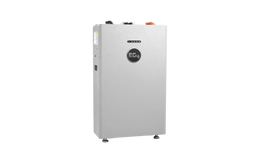
1. EG4 WallMount 16 kWh All-Weather

$3,749.99 (list $4,225.99, no code) - about $234 per kWh
The battery we would put on a garage or exterior wall. It heats itself automatically, the enclosure is IP67, and it discharges from -4F to 131F. With 16 kWh nominal (12.86 kWh recommended usable) and 200 A / 10.2 kW of continuous output, one unit runs the winter essentials for about 31 hours. It needs a 48V inverter; EG4 hybrids communicate with it directly. The listing notes its UL certifications as pending, so confirm status before a permitted install.
- Self-heating, IP67
- 10.2 kW continuous
- 10 years or 10,000 cycles
- 309 lb, two-person install
- Inverter sold separately
- UL listing shown as pending
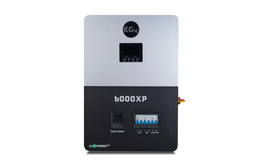
2. EG4 6000XP + WallMount All-Weather bundle

$5,414.97 for 1 inverter + 1 battery (no code)
The same battery with a 6,000 W split-phase inverter, so it runs 120V and 240V loads such as a well pump (12,000 W surge for 3.5 seconds). The 6000XP takes up to 8,000 W of solar and has an AC input with a 50 A bypass for grid or generator charging, which is what you want when panels are snowed in. Transfer time is under 15 ms. The inverter is IP20 and must be mounted indoors even though the battery can live outside. Size the generator from the inverter manual.
- 120/240V, 6 kW continuous
- Solar plus AC charging
- Battery can sit outdoors
- Inverter is indoor only
- Off-grid unit, no grid export
- 5-year inverter warranty
3. Sungold Power SGH48100T 5.12 kWh

$1,150 each - 2 for $2,300 ($2,250 with code ECO50, about $220 per kWh)
A 48V 100Ah rack module whose heater switches on below 41F and off at 53.6F. Start with one (11 hours of winter essentials) and add modules later; up to 32 connect in parallel. Rated for 7,000+ cycles with a 10-year warranty. The two-pack is the one that takes the ECO50 code. It is an indoor rack battery, so it suits an unheated but dry garage or shed, not open weather. The listing says UL 1973 and UL 9540 testing is in progress.
- Lowest cost per kWh here
- Expandable one module at a time
- 10-year warranty
- Indoor enclosure only
- UL listing still pending
- Needs a rack or cabinet
4. Sungold Power 12V 200Ah Self-Heating

$589 each, $1,178 for two (no code) - about $230 per kWh
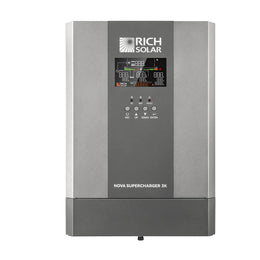
2.56 kWh in an IP65 case with a 200 A BMS, Bluetooth monitoring and a heater that turns on below 33.8F and off above 42.8F. Operating range is -4F to 140F. Pair it with a 12V inverter such as the Rich Solar NOVA PURE 2K ($319) to run a fridge, lights and a small furnace blower. For the full parts list see our 12V solar kit setup guide.
- Self-heating at a low price
- IP65, Bluetooth
- 4,000+ cycles, 5-year warranty
- Needs a separate inverter and charger
- 12V limits you to about 2 kW
- Weight not on the listing
5. Jackery Explorer 1500 v2

$849 ($799 with code ECO50, sale price to November 16)
The only portable station here listed to charge as well as discharge from -4F to 113F. It holds 1,536 Wh, delivers 2,000 W (1,200 W between -4F and 14F, and USB-C switches off in that range), recharges from a wall outlet in about 81 minutes and weighs 32 lb. It is the right size for a wood-stove home, a CPAP, a fridge overnight or a few hours of furnace blower. No electrician needed for plug-in loads.
- Charges below freezing
- 6,000 cycles
- Light enough to carry
- 3.4 hours with a furnace load
- Output drops below 14F
- Stock is limited
6. Jackery HomePower 3000

$1,349 (sale price to November 16, no code)
3,072 Wh and 3,600 W (7,200 W surge) with a 30 A outlet, enough for a furnace blower, fridge and sump pump together. It runs our winter list for about 7 hours and takes up to 1,000 W of solar. Its cold limits are narrower than the Explorer 1500 v2: charging needs 32F or warmer and output falls to 2,000 W between 5F and 14F. Keep it inside the house, which is where a furnace backup belongs anyway.
- 3,600 W, 30 A outlet
- About 7 hours of winter essentials
- 2.2-hour wall recharge
- No charging below 32F
- 59.5 lb
- 4,000 cycles
More options: 10 kWh and larger battery banks, LiFePO4 batteries, 12V batteries and home backup power stations.
Where to keep the battery and a pre-storm checklist
| Location | Typical winter temperature | What works |
|---|---|---|
| Basement or utility room | 50F to 65F | Any LiFePO4 battery or power station. Best runtime and lifespan. |
| Attached garage | 25F to 45F | Self-heating battery, or a power station you carry indoors to recharge. |
| Detached garage, shed, cabin | Follows outdoor air | Self-heating battery in a dry enclosure. Insulate the cabinet. |
| Exterior wall | Outdoor air, wet | Outdoor-rated (IP65 or higher) self-heating battery only. |
Before the storm:
- Charge everything to 100% when a storm is forecast. A full, warm battery is the cheapest insurance you have.
- Test the system under real load for an hour. Run the furnace from it once before you need to.
- Label the circuits you will back up and write the load list on the panel door.
- Check that vents on power stations are clear and nothing is stacked against a wall battery.
- Stock fuel safely if a generator is your winter charger, and test-start it.
- Keep a battery-powered carbon monoxide alarm on every level.
Cold also affects how long a battery lasts over the years. The details are in how long solar batteries last.
Safety: furnaces, transfer switches and fuel heaters
- Never run a fuel generator, grill or camp stove indoors or in an attached garage. Keep generators at least 20 feet from doors and windows.
- Do not warm a frozen battery with a space heater or heat gun. Let it reach room temperature on its own or let its built-in heater do the work.
- Keep batteries dry. Condensation forms when a cold battery is brought into a warm room; wait before plugging it in.
What buyers ask before a winter outage
These questions come from searches that led people to our site over the last 90 days and from the questions Google shows for winter backup topics.
What is the best power station for winter storms?
One that is rated to charge in the cold and is big enough for your heat source. With a wood stove, the Explorer 1500 v2 covers about 15 hours of essentials. With a gas furnace, start at 3 kWh (HomePower 3000) and plan to recharge daily. Sizing steps are in what size solar generator you need.
My panels were snow-covered at 0F and made almost nothing. What battery system also charges from a generator?
Look for an inverter with an AC or generator input and a battery that heats itself. The EG4 6000XP with the WallMount All-Weather does both. A few hours of generator time per day then replaces round-the-clock running.
One 13 kWh battery only covers about two hours of our winter load. Should I buy two or three?
A load that drains 13 kWh in two hours is around 6 kW, which means electric heat. Three batteries would still give you only six hours. It is usually cheaper to back up the essentials and use a non-electric heat source than to buy 100 kWh of storage. If you do want whole-home coverage, see whole-home battery backup cost.
Will my refrigerator and freezer be fine if the furnace takes most of the battery?
Yes. A fridge averages about 55 W, a small share of the 385 W winter load. Runtime tables for fridges and freezers are in our refrigerator runtime guide.
FAQ
Can you charge a LiFePO4 battery below freezing?
Not safely. Charging lithium iron phosphate cells below 32F (0C) can plate metallic lithium on the anode, which permanently cuts capacity. A good battery management system blocks charging below freezing, and a self-heating battery warms its cells first and then accepts the charge. Discharging is fine well below freezing, typically down to about -4F.
Do portable power stations work in cold weather?
Yes for running loads, with limits. Most LiFePO4 power stations discharge down to roughly -4F to 14F but only charge above 32F. Check the label: the Jackery Explorer 1500 v2 is rated to charge and discharge from -4F to 113F, with AC output capped at 1,200 W below 14F. Expect less runtime from a cold battery and keep the station indoors when you can.
Will a power station run my gas furnace?
Usually, because a gas furnace only needs electricity for the blower, igniter and controls: roughly 400 to 800 W while running. The catch is the connection. Most furnaces are hardwired, so you need a transfer switch or a listed inlet installed by a licensed electrician. Never backfeed a panel through an outlet.
How big a battery do I need for a 3-day winter outage?
Multiply your daily load by three and divide by 0.85. Our winter essentials list (gas furnace blower, refrigerator, router, lights, phones) is 9.25 kWh per day, so three days without recharging needs about 33 kWh of battery. With a generator or solar topping the bank up daily, 10 to 16 kWh is enough.
Do solar panels work in winter and snow?
They work, and cold panels are slightly more efficient, but short days cut output. A 3 kW array that makes about 10.4 kWh on a 4.5 sun-hour summer day makes roughly 4.6 to 5.8 kWh on a 2 to 2.5 sun-hour December day. Snow-covered panels make close to nothing until they are cleared or the snow slides off.
Can I leave a power station in an unheated garage or car all winter?
Storage in the cold does not hurt a LiFePO4 pack if it stays within the storage range on its spec sheet, but you cannot recharge most units until they warm above 32F. Store it at 50 to 80% charge, top it up every three months, and bring it indoors a few hours before you need to charge it.

Serhii Dovzhenko, Solar & Energy Storage Specialist at Eco Solar Kits · LinkedIn
Serhii is based in Vancouver, BC, and works on product data, system sizing and buyer guides for Eco Solar Kits. He attends solar and energy storage industry conferences and is involved in the community of electricians in Vancouver, BC. Credit for the data verification in this guide goes to Adsec.ca.


