


How long solar batteries last, by chemistry
"How long will it last?" is the second question almost every battery buyer asks, right after "how much does it cost?". The honest answer depends on three things: the chemistry inside the case, how hard you cycle it, and where it lives. Chemistry sets the ceiling, so start there.
| Chemistry | Typical rated cycles | Usable depth of discharge | Typical service life | Where you still see it |
|---|---|---|---|---|
| Flooded lead-acid | 300-1,000 (at 50% DoD) | About 50% | 3-7 years with maintenance | Older off-grid cabins, budget backup |
| AGM / gel lead-acid | 400-1,200 (at 50% DoD) | About 50% | 3-6 years | Older RVs, UPS units |
| NMC lithium-ion | 1,000-3,000 | 80-90% | 7-10 years | Older power stations, some early wall batteries |
| LiFePO4 (LFP) | 3,000-10,000 | 80-100% | 10-15+ years | Almost every home, rack, RV battery and power station we stock today |
The ranges are typical manufacturer ratings, not lab results of ours. The gap is the point: a lead-acid bank that is cycled every day can need replacing two or three times during the life of one LiFePO4 bank, and you can only use about half of its rated capacity without shortening its life further. That is why lithium iron phosphate (LFP) has taken over solar storage. It also runs cooler and is far less prone to thermal runaway than NMC, which matters when the battery sits in a garage or utility room.
Cycle life vs calendar life: the two clocks
Every battery ages on two clocks at once, and whichever runs out first decides when you replace it.
- Cycle life counts use. One cycle is one full discharge and recharge, or the equivalent in partial cycles: two days at 50% depth of discharge add up to roughly one cycle. A rating like "6,000 cycles" means the cells still hold a stated share of their original capacity (usually 70% or 80%) after that many cycles under test conditions.
- Calendar life counts time. Lithium cells slowly lose capacity even when they sit unused, mostly from chemical side reactions that speed up with heat and with being held at a high state of charge. Most LFP makers quote a design life of 10-15 years, and the warranty term is a good proxy for how confident they are.
For a battery that is cycled every day - an off-grid cabin, or a grid-tied home that charges from solar and discharges every evening - the cycle clock and the calendar clock run at similar speeds, so 10-15 years is a fair expectation. For a backup-only battery that cycles a handful of times a year, the cycle count barely moves and calendar aging is what eventually retires it.
The cycle rating also depends on the test. The EG4 WallMount Indoor listing, for example, rates 10,000 cycles at 0.5C and 80% depth of discharge. Discharge it harder or deeper every day and you should expect fewer. That is why comparing two batteries by the headline number alone can mislead you - read the conditions next to it.
How many years is 6,000 cycles?
Divide the rated cycles by how many full cycles you use per year. The table shows the raw arithmetic for four common use patterns. Treat anything above about 15 years as "calendar-limited": the cells will age out on time before they run out of cycles.
| How you use it | Full cycles / year | 4,000 cycles | 6,000 cycles | 7,000 cycles | 10,000 cycles |
|---|---|---|---|---|---|
| Off-grid home or daily solar self-use (1 cycle/day) | 365 | 11.0 yr | 16.4 yr | 19.2 yr | 27.4 yr |
| Daily use at ~70% depth (cabin, weekday loads) | 260 | 15.4 yr | 23.1 yr | 26.9 yr | 38.5 yr |
| Weekends, RV trips, seasonal cabin | 100 | 40 yr | 60 yr | 70 yr | 100 yr |
| Backup only (outages + monthly test) | 20 | 200 yr | 300 yr | 350 yr | 500 yr |
The last two rows look absurd on purpose. They show that for most RV, camping and backup buyers, cycle life is not the limit - temperature, storage habits and the warranty are. A 4,000-cycle power station used on weekends will not wear out its cycles; it will age out after roughly a decade. For a daily-cycled off-grid bank, cycle life does matter, and the step from 4,000 to 6,000+ cycles adds about five years of rated service.
Capacity also fades gradually rather than falling off a cliff. A battery at "end of rated life" still holds 70-80% of what it did new, so a 10 kWh bank becomes roughly a 7-8 kWh bank. Many owners keep using it and simply add a module when runtime gets short, which is easier on rack and stackable systems built to expand.
What shortens battery life (and what does not)
LiFePO4 is forgiving, but five habits wear it out faster than the spec sheet suggests:
- Heat. Heat is the biggest driver of calendar aging. A battery that lives in an uninsulated garage in Arizona or Texas will age faster than the same battery in a cool basement. Keep it shaded, ventilated and inside its listed operating range.
- Charging below freezing. Charging LFP cells below 32°F can plate lithium on the anode and permanently cut capacity. Good BMS units block it; self-heating batteries warm the cells first. Discharging in the cold is fine within the listed range - it is charging that needs care.
- Sitting at 100% for months. Holding cells full and warm speeds up side reactions. For a backup battery that is fine for normal use, but if you store a portable station or RV battery for the season, leave it around 50-60% and top it up every few months.
- Running it flat and leaving it there. A deeply discharged battery left for weeks can drop below the BMS cutoff and, in the worst case, refuse to wake up. Set your inverter's low-voltage cutoff or reserve (many owners use 10-20%).
- High current for its size. Pulling a battery's maximum current every day stresses it more than the test rate. Size the bank so normal loads stay well under its continuous rating - our battery sizing guide shows the amps math.
What does not matter much with LFP: partial charging (you do not need to fill it to 100% each day), the "memory effect" (that was nickel chemistries), and occasional full discharges (they count as one cycle, nothing more).
How to read a battery warranty
A warranty is the manufacturer putting money behind its lifespan claim, so it is the most useful number on the page - if you read all of it. Check four things:
- Term: years, and whether it ends at a cycle count or energy throughput first ("10 years or 10,000 cycles, whichever comes first").
- What it covers: defects in materials and workmanship only, or a guaranteed remaining capacity (for example 70% at the end of the term). Many DIY batteries cover defects; some home systems add a capacity guarantee.
- Conditions: installation by a qualified electrician, an approved inverter, operation within the temperature range and, on some batteries, registration or online monitoring.
- Who honors it: the manufacturer or its US distributor. Buying from an authorized reseller matters here.
Here is how the batteries in this guide state their ratings on their listings (checked November 9, 2026):
| Battery | Rated cycles and condition | Warranty | Charge temperature | Self-heating |
|---|---|---|---|---|
| EG4 WallMount 16 kWh Indoor | 10,000 at 0.5C, 80% DoD | 10 years or 10,000 cycles | 32-122°F | Yes |
| BigBattery ETHOS 10.24 kWh | 6,000+ | 12 years | 32-113°F | Not listed |
| Sungold SG48100M 5.12 kWh | 7,000+ at 80% DoD | 10 years (designed for up to 15) | Not listed | No |
| Pytes V5 5.12 kWh | 6,000+ with over 80% capacity retained | 10 years | 14-122°F operating | Not listed |
| Rich Solar ALPHA 2 PRO 12V 200Ah | 7,000+ at 77°F | 10 years | 32-131°F | Yes (below 41°F) |
| Mango Power E 3.5 kWh | 6,000 to over 70% at 77°F | 5 years | -4 to 140°F | Yes |
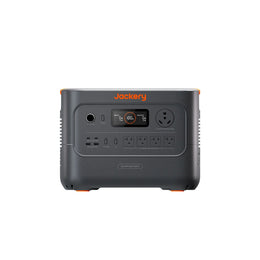
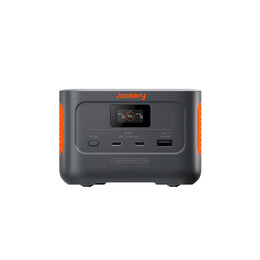
| Jackery Explorer 1500 v2 | 6,000 to 70%+ | 3+2 years (per listing) | -4 to 113°F | Not listed |
Notice the end points differ: 70% vs 80% remaining capacity is not a small difference. Two "6,000-cycle" batteries are only equal if they measure to the same end point.
Lifetime cost per kWh: the number that matters
A battery that costs more but lasts twice as long can be the cheaper buy. A simple way to compare is the cost of each kWh the battery can deliver over its rated life:
Lifetime cost per kWh = price ÷ (nominal kWh × 0.8 × rated cycles)
We use 0.8 as a uniform average for depth of discharge and capacity fade so every battery is measured the same way. It is our simplified calculation, not a manufacturer figure, and it ignores calendar aging - which favors batteries you will actually cycle every day. Worked example for the Pytes V5: $1,550 ÷ (5.12 × 0.8 × 6,000 = 24,576 kWh) = about 6.3 cents per kWh.
Two caveats keep this honest. First, battery-only products (green) need an inverter and installation, while the power stations (blue) include an inverter, charger and outlets - so their cents-per-kWh buys more than storage. Second, the math assumes you use the cycles. A backup-only buyer will never reach 10,000 cycles, so for them warranty years and build quality count for more than this chart.
7 long-life LiFePO4 batteries in stock
Every pick below is in stock and uses LFP cells rated for at least 6,000 cycles. Specs come from the product listings and manufacturer spec sheets; prices are as of November 9, 2026.
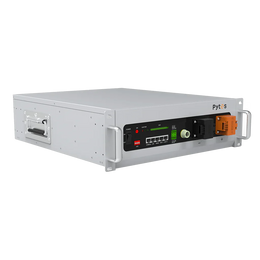
Pytes V5 5.12 kWh server rack battery - $1,550

The Pytes V5 balances the three things that decide real lifespan: a 6,000+ cycle rating measured to more than 80% remaining capacity (a stricter end point than 70%), a 10-year warranty, and the certifications that keep it usable in permitted grid-tied systems - UL 9540, UL 1973, CEC and SGIP are listed. It is a 51.2V 100Ah module with 100 A max charge/discharge (75 A recommended), at least 95% round-trip efficiency, RS485/CAN communication for closed-loop control with most 48V inverters, and expansion to 491.52 kWh in parallel. Busbars, the cascade communication cable and a grounding cable are included. It weighs 97 lb.
Multi-packs are listed too: 2 x V5 (10.24 kWh) for $3,100 and 4 x V5 (20.48 kWh) for $6,200 - no discount code applies to this line.
- 6,000+ cycles to over 80% capacity
- UL 9540, UL 1973, CEC, SGIP listed
- 10-year warranty
- Scales far beyond a home bank
- Needs a rack or shelf, indoor use
- No self-heating listed - keep it above freezing to charge
- 75 A recommended current per module
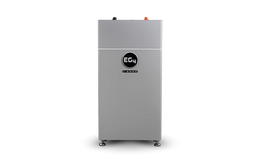
EG4 WallMount 16 kWh Indoor Self-Heating (314Ah) - $3,719.99

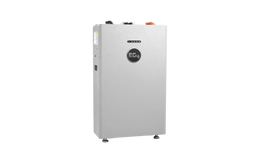
If you will cycle a battery hard every day, the EG4 WallMount Indoor has the highest rating in our catalog: 10,000 cycles at 0.5C and 80% depth of discharge, with a warranty of 10 years or 10,000 cycles, whichever comes first. That is why it tops the lifetime cost chart at about 2.9 cents per kWh. It stores 16 kWh nominal (12.86 kWh recommended usable), delivers 200 A / 10.2 kW continuous and 12.8 kW for 3 seconds, charges at up to 157 A (8 kW), and heats its own cells automatically so it can charge through cold snaps. A third-generation BMS with Auto-ID, an LCD touchscreen and an E-stop are built in, and up to 16 units run in parallel.
Certifications listed: UL 1973 and UN 38.3; UL 9540 as a DC system, and as an AC system with the EG4 18kPV, 12kPV, FlexBOSS18 or FlexBOSS21. UL 9540A calls for 6 inches between units. It is IP20 and indoor-only (charge range 32-122°F) and weighs 293.2 lb.
- 10,000-cycle rating, lowest lifetime cost per kWh
- Self-heating for cold garages and basements
- 10.2 kW continuous from one unit
- Indoor only (IP20)
- 293 lb - needs a solid wall or floor mount
- Warranty ends at 10 years even if cycles remain
BigBattery ETHOS 48V 10.24 kWh (2 modules) - $2,780

The ETHOS 2-module kit carries a 12-year warranty, the longest in BigBattery's lineup and the longest of any battery in this guide. Two 5.12 kWh LFP modules sit on one shared control box rated 200 A / 10,240 W continuous (300 A for 5 seconds), and you can add modules later - up to 16 per control box, roughly 80 kWh - without changing platforms. Adding modules buys runtime, not more power: the control box caps output at 10,240 W regardless of module count. It is sealed to IP65 and NEMA 4X for indoor or outdoor installation (discharge range -4 to 140°F, charge 32-113°F) and lists UL 9540, UL 9540A, UL 1973 and UN 38.3. Grid-tied UL 9540 pairing is listed with the EG4 18kPV, FlexBOSS18 and FlexBOSS21.
List price is $3,390; the current price is $2,780 with no code needed.
- 12-year warranty
- IP65 / NEMA 4X, outdoor-rated
- Expands module by module
- Grid-tied UL 9540 pairings limited to three EG4 inverters
- Output capped at 10,240 W per control box
Sungold Power SG48100M 5.12 kWh Powerwall - $1,130

At $1,130 the Sungold SG48100M is the least expensive way into a 7,000-cycle battery: rated 7,000+ cycles at 80% depth of discharge, with a 10-year warranty and a stated design life of up to 15 years. That works out to about 3.9 cents per lifetime kWh. It is a 51.2V 100Ah wall-mount module with an LCD, an IP65 rating, CAN/RS485/RS232 communication for most popular inverters (Sungold, Growatt, Luxpower, Victron, Schneider and others are listed), and up to 16 units in parallel for 81.9 kWh. UL 1973 is listed. It weighs 114.6 lb (23 x 16.5 x 6 in).
Two-packs ($2,260) and four-packs ($4,520) are available. No code applies.
- 7,000+ cycles for $1,130
- IP65, wall-mount
- Works with most 48V inverters
- No self-heating
- Continuous current and UL 9540 not stated on the listing - confirm for permitted installs
Rich Solar ALPHA 2 PRO 12V 200Ah - $1,099

Most 12V drop-in batteries are rated 4,000-5,000 cycles. The ALPHA 2 PRO is rated 7,000+ at 77°F, carries a 10-year warranty, and adds the two features that protect a 12V battery's life in an RV or cabin: internal self-heating (switches on when charging below 41°F, off at 50°F, drawing 100 W) and Bluetooth monitoring so you can see state of charge before it gets too low. It stores 2,560 Wh, delivers 200 A continuous, charges at up to 200 A (current tapers in the cold per the listing), is IP55 with a UL94 V-0 flame-retardant case, and lists ANSI/CAN/UL 1973 and ETL. Monthly self-discharge is 5% or less. It weighs 52.9 lb.
List price $1,299, now $1,099. It is in the ECO100 promotion, which needs a $1,500 cart - two batteries ($2,198) would qualify for $100 off.
- 7,000+ cycles in a 12V drop-in
- Self-heating plus Bluetooth
- 200 A continuous
- Heater draws 100 W while running
- 12V limits large inverters - see our 12V vs 24V vs 48V guide
Mango Power E 3.5 kWh portable power station - $1,299

If you want long life without wiring a battery bank, the Mango Power E uses CATL LFP cells rated for more than 70% capacity after 6,000 cycles at 77°F, and backs the unit with a 5-year warranty - longer than most power stations. It stores 3.53 kWh, puts out 3,000 W at 120V from 16 ports, charges from the wall at up to 3,000 W (80% in about an hour) and from up to 2,000 W of solar (60-150V). Its charge range runs down to -4°F, which helps in unheated spaces. Add an expansion battery for 7.06 kWh, the mSocket Pro for 240V split phase, or the mPanel for circuit-level home backup (all sold separately). It is 100 lb on wheels, IP21.
List price $1,599, now $1,299. It is in the ECO100 promotion but below the $1,500 minimum on its own.
- 6,000 cycles plus a 5-year warranty
- 2,000 W solar input, fast AC charging
- Wide charging temperature range
- 100 lb - rolls, but not light
- 240V and panel backup need extra accessories
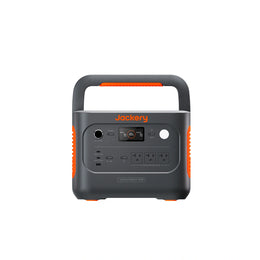
Jackery Explorer 1500 v2 - $849

Many 1-2 kWh stations are still rated 4,000 cycles. The Explorer 1500 v2 is rated 6,000 cycles to 70%+ capacity in a 32 lb package - enough for well over a decade of weekend and outage use, where calendar aging, not cycles, will set the pace. It stores 1,536 Wh, delivers 2,000 W (4,000 W surge) from three AC outlets plus USB-C, recharges from the wall in 81 minutes (about 64 minutes in fast mode) and takes up to 400 W of solar. Charge and discharge range is -4 to 113°F, with AC output derated to 1,200 W below 14°F. Warranty is listed as 3+2 years.
List price $934, now $849, and the ECO50 code (no minimum) takes it to $799. Stock was limited (9 units) when we checked.
- 6,000 cycles at 32 lb
- Fast 81-minute AC recharge
- ECO50 brings it to $799
- Not expandable
- 400 W solar input
- Shortest warranty of the seven
Which battery lasts longest for your use
| Your situation | What limits life | Best fit | Why |
|---|---|---|---|
| Off-grid home, cycled daily, indoor | Cycles | EG4 WallMount 16 kWh Indoor | 10,000 cycles, self-heating, lowest lifetime cost |
| Grid-tied home with permit and UL 9540 needs | Cycles + certification | Pytes V5 or ETHOS | UL 9540 listed, 10-12 year warranties |
| Outdoor wall or hot garage | Heat + weather | ETHOS 10.24 kWh | IP65 / NEMA 4X, discharge to 140°F, 12-year warranty |
| Tight budget, small 48V system | Price per cycle | Sungold SG48100M | 7,000 cycles for $1,130 |
| RV, van or cabin on 12V, cold winters | Cold charging | ALPHA 2 PRO | Self-heating and Bluetooth, 7,000 cycles |
| Plug-and-play home backup, no install | Calendar aging | Mango Power E | 6,000 cycles, 5-year warranty, expandable |
| Camping, weekend trips, short outages | Calendar aging + storage habits | Explorer 1500 v2 | 6,000 cycles in a 32 lb station |
For more choices by format, browse our LiFePO4 batteries, EG4 batteries and BigBattery lithium collections, or compare power stations that take add-on packs in our expandable power stations guide.
How to make a solar battery last longer
- Pick the right spot. A conditioned basement or interior utility room beats an attic or a sun-facing outdoor wall. If it must go outside, choose an outdoor-rated (IP65 or better) battery and shade it.
- Use closed-loop communication. Connecting the battery's BMS to the inverter over CAN or RS485 lets the inverter charge to the battery's exact limits instead of guessing from voltage.
- Set a sensible reserve. Keeping 10-20% in reserve protects against deep discharges and leaves power for the next outage.
- Do not charge frozen cells. In cold climates choose a self-heating battery or keep it indoors. Discharging in the cold is fine within the listed range.
- Store portable gear half full. For seasonal storage, leave power stations and RV batteries at about 50-60%, in a cool place, and top them up every three months.
- Size for headroom. A bank that runs at a fraction of its rated current ages more gently. If your inverter can pull more than the battery's continuous rating, add a module.
- Update firmware and watch the app. BMS and inverter updates sometimes improve charging profiles and cell balancing.
What buyers ask about battery lifespan
These questions come from searches that brought people to our site and from the questions Google shows for this topic. Answers use the specs of batteries we stock.
"What does a 6,000 cycle LFP home battery mean in years?"
About 16 years if you use one full cycle every day, and calendar-limited (roughly 10-15+ years, depending on heat) if you cycle less. The warranty term - 10 years for the Pytes V5, 12 for the ETHOS - is the most reliable planning number.
"When should a solar battery storage system be replaced?"
When the remaining capacity no longer covers your needs, not on a fixed date. Most monitoring apps show a state-of-health figure. A bank at 70% still works; many owners add a module rather than replacing everything, which is easy with stackable systems like the ETHOS or rack modules like the Pytes V5.
"What is a high cycle life RV battery?"
For 12V RV batteries, 4,000-5,000 cycles is common for LFP and 7,000+ is at the top. The ALPHA 2 PRO is rated 7,000+ and self-heats, which protects it when you camp in the cold. Our RV solar kit guide covers the rest of the system.
"How do I compare battery warranties?"
Compare term, the cycle or throughput cap, what remaining capacity counts as "end of life" (70% vs 80%), and the install conditions. A 10-year/10,000-cycle warranty that measures at 80% DoD is a stronger promise than 10 years with no stated end point.
"Can you replace the battery in a power station?"
Usually not by the owner: most portable stations have sealed packs, and opening them can void the warranty. That makes the cycle rating and warranty of a power station even more important. Stations that take external packs (like the Mango Power E) let you add capacity as the main battery ages.
Solar battery lifespan FAQ
How long do solar batteries last?
LiFePO4 solar batteries typically last 10-15 years or more, rated for 6,000-10,000 cycles with 10-12 year warranties. Lead-acid batteries usually last 3-7 years, and NMC lithium about 7-10 years.
How many years is 6,000 cycles?
About 16.4 years at one full cycle per day (6,000 ÷ 365). With fewer cycles, calendar aging usually ends the battery's life first, typically after 10-15+ years depending on temperature.
Do LiFePO4 batteries degrade if not used?
Yes, slowly. Lithium cells lose some capacity over time even when idle, faster when hot or stored full. Store them around 50-60% charge in a cool place and top up every few months.
Is it bad to keep a solar battery at 100%?
For a home backup battery it is normal and acceptable, but holding cells full and warm for months speeds up aging. If the battery is used daily, a normal charge-discharge routine is fine; for long storage, keep it partly charged.
Does cold weather damage lithium batteries?
Discharging in the cold is fine within the listed range, but charging LiFePO4 below 32°F can permanently reduce capacity. Choose a self-heating battery or keep it indoors in cold climates.
When should I replace my solar battery?
Replace or expand it when its remaining capacity no longer covers your needs. A battery at the end of its rated cycles still holds about 70-80% of its original capacity.
Which lasts longer, lithium or lead-acid?
Lithium (LiFePO4) lasts several times longer: 3,000-10,000 cycles at 80-100% depth of discharge versus 300-1,200 cycles at about 50% for lead-acid.
Related guides: best 48V server rack batteries, whole-home battery backup cost and how many batteries you need for solar. Shop all lithium batteries.

Serhii Dovzhenko, Solar & Energy Storage Specialist at Eco Solar Kits · LinkedIn
Serhii is based in Vancouver, BC, and works on product data, system sizing and buyer guides for Eco Solar Kits. He attends solar and energy storage industry conferences and is involved in the community of electricians in Vancouver, BC. Credit for the data verification in this guide goes to Adsec.ca.