

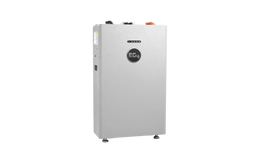
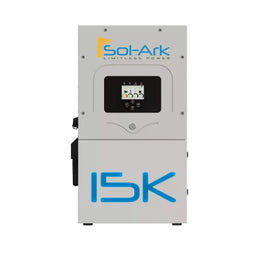
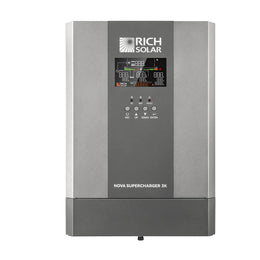

Almost every house in the US and most of Canada is wired for 120/240V split-phase power. When you add a battery-based solar system and want it to run the house the way the utility does, the inverter has to recreate that service: two hot legs, one neutral, 120V from each leg to neutral and 240V across the legs. That is what "split phase" on an inverter listing means.
Plenty of inverters can only make 120V. They are fine for an RV, a shed or a subpanel of lights and outlets, but they cannot start a 240V well pump, a dryer, a range, a central air condenser or a Level 2 EV charger. Below: how split-phase output works, why leg balance and surge matter, how to size one, and seven in-stock models from $1,450 to $6,415. If you are still deciding between grid-tie, off-grid and hybrid designs, start with our hybrid vs off-grid vs grid-tie inverter guide; if you mainly need a wattage number, see what size inverter do I need.
What split-phase power actually is
The utility transformer on your pole or pad has a secondary winding with a tap in the middle. The center tap is grounded and becomes the neutral. The two ends of the winding become your two hot legs, usually called L1 and L2. Because they come from opposite ends of the same winding, the two legs are mirror images: when L1 is at its positive peak, L2 is at its negative peak. Measured to neutral, each leg reads about 120V. Measured leg to leg, you get about 240V.
Your breaker panel uses both. A single-pole breaker feeds a 120V circuit from one leg; a double-pole breaker spans both legs for a 240V appliance. A split-phase inverter does the same job electronically: it builds two 120V waveforms locked 180 degrees apart and connects to the panel exactly where the utility would.
Split phase vs 120V, 230V and 208V three-phase
"240V" shows up in several different services, and an inverter built for one will not always work on another. This table sorts the common ones:
| Service | Where you find it | Voltages | Inverter you need | Examples in our stock |
|---|---|---|---|---|
| 120V single-phase | RVs, vans, sheds, subpanels of 120V circuits | 120V only | Any 120V inverter | Rich Solar NOVA PURE and NOVA SUPERCHARGER (120V) |
| 120/240V split-phase | Most US and Canadian houses | 120V leg-neutral, 240V leg-leg | Split-phase inverter (this guide) | All 7 picks below |
| 230/240V single-phase (2-wire) | Europe and export markets; some imported appliances and shop tools | 230-240V, no 120V | 230V single-phase inverter; not for a US panel | Not what US homes use |
| 120/208V three-phase wye | Apartment buildings, condos, light commercial | 120V leg-neutral, 208V leg-leg | Inverter that lists 208V output | Sol-Ark 12K, Sol-Ark 18K, EG4 FlexBOSS21 (list 120/208V) |
| 277/480V three-phase | Commercial and industrial | 277V / 480V | Three-phase commercial inverter | Sol-Ark 60K (commercial, not covered here) |
Two traps come up often. First, "220V" on a product page usually means the same 240V leg-to-leg service; US utilities moved from 110/220 to 120/240 nominal long ago, and appliances rated 220-240V run on split-phase power. Second, a condo or apartment unit fed from a 208V three-phase building service gets only 208V across its two hots. A 240V-only inverter may refuse to sync with that grid; pick a model that lists 208V, or plan an off-grid subpanel instead of grid interconnection.
How an inverter makes 120/240V
There are three common ways to get split-phase output from a battery bank, and each has trade-offs.
1. Low-frequency (transformer) inverter chargers
These use a large iron-core transformer with a center tap, much like the utility does. The transformer makes them heavy, but it also soaks up big start-up currents. The Sungold 15,000W inverter charger weighs 176.6 lb and lists 15 kW continuous with 45 kW of surge for 20 seconds, which is why low-frequency units are popular for well pumps, shop compressors and older air conditioners. The downsides are idle draw and, on most models, no built-in solar input.
2. High-frequency (transformerless) hybrid inverters
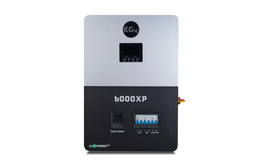
Most modern split-phase hybrids use fast switching electronics instead of a big transformer. They are lighter (the EG4 FlexBOSS21 is 88 lb, the EG4 6000XP 52.9 lb), more efficient at idle, and usually include several MPPT solar trackers, a grid input, generator support and an app. Their surge windows are shorter (0.5 s on the FlexBOSS21, 3.5 s on the 6000XP), which covers most residential motors.
3. Two 120V inverters paired for split phase
Some inverter families let two identical 120V units sync 180 degrees apart through a parallel kit, which gives 120/240V. It works, but only with models designed for it, and every unit has to be configured as L1 or L2. Wiring two unrelated 120V inverters to the two bus bars of a panel does not make 240V and can damage equipment. An autotransformer can also derive 120/240V from a 120V inverter, at the cost of weight and losses.

Which breakers sit on which leg decides how evenly a split-phase inverter is loaded.
Leg balancing: the part most buyers miss
A 240V appliance draws the same current from both legs, so it is automatically balanced. A 120V appliance draws from only one leg, and the neutral carries the difference between the two legs. On the grid that imbalance rarely matters. On an inverter it can, because many split-phase inverters split their rating across the two legs, and some limit how much one leg can carry on its own. Check the manual for a per-leg figure.
Here is a worked example: a house on a well, running its essentials on battery during an outage. Running watts are typical figures; check the nameplates on your own appliances.
| Load | Voltage | Running W | On leg | L1 amps | L2 amps |
|---|---|---|---|---|---|
| Refrigerator | 120V | 150 | L1 | 1.3 | - |
| Furnace blower | 120V | 500 | L1 | 4.2 | - |
| Lights, router, TV | 120V | 400 | L1 | 3.3 | - |
| Microwave | 120V | 1,200 | L1 | 10.0 | - |
| Chest freezer | 120V | 100 | L2 | - | 0.8 |
| Washer | 120V | 500 | L2 | - | 4.2 |
| Sump pump | 120V | 800 | L2 | - | 6.7 |
| Internet and office | 120V | 200 | L2 | - | 1.7 |
| Well pump, 1 HP | 240V | 1,000 | Both | 4.2 | 4.2 |
| Mini-split heat pump | 240V | 1,500 | Both | 6.3 | 6.3 |
| Total | 6,350 | 29.2 | 23.8 |
L1 carries 3,500 W and L2 2,850 W, so the neutral carries about 5.4 A, the difference between the legs. That is a reasonable balance. Now imagine the microwave, freezer and sump pump all landed on L1: L1 would jump to about 41 A and L2 would drop to about 12 A. Same total watts, but one leg does three-quarters of the work and could trip a per-leg limit. The fix is free: move a few single-pole breakers to the other leg (alternate panel slots usually alternate legs) when the backup panel is built.
Sizing math: watts, surge and battery amps
Sizing a split-phase inverter takes four steps. Using the example above:
- Continuous watts. Add the loads that can run together: 6,350 W. Multiply by 1.25 for headroom: about 7,940 W. That rules out a 6 kW inverter and points to the 8 kW class or larger.
- Surge. A 1 HP well pump can briefly draw 3-4 times its running power at start-up, say 4,000 W instead of 1,000 W. Peak demand is then about 6,350 - 1,000 + 4,000 = 9,350 W. Compare that with the surge rating and its time window.
- Battery current. On a 48V system, battery amps are roughly watts / 48 / 0.92 (inverter efficiency). 6,350 W draws about 144 A, more than a single 100 A battery module can supply, so you need at least two in parallel, or one higher-current wall battery. See how many batteries do I need for solar for kWh sizing.
- Pass-through and service size. Whole-home backup means the inverter carries the house while the grid is up too. A 200 A pass-through (SGN-11K15PRO, Sol-Ark 18K) can sit in front of a full 200 A panel; 50-90 A (6000XP, FlexBOSS21) suits a backup subpanel or an external hub such as EG4's GridBOSS.
The battery-current step catches many DIY plans, so here it is for common inverter sizes (48V nominal, 92% efficiency; real LiFePO4 banks sit near 51-53V, which lowers these figures by about 7-10%):
| Inverter output | Battery amps at 48V | Typical 100 A modules needed | Typical 200 A batteries needed |
|---|---|---|---|
| 6,000 W | 136 A | 2 | 1 |
| 8,000 W | 181 A | 2 | 1 |
| 9,000 W | 204 A | 3 | 2 |
| 11,400 W | 258 A | 3 | 2 |
| 12,000 W | 272 A | 3 | 2 |
| 15,000 W | 340 A | 4 | 2 |
| 18,000 W | 408 A | 5 | 3 |
For grid-tied hybrids there is one more limit: the panel bus bar. Under the common 120% rule, a 200 A bus with a 200 A main breaker can take a 40 A back-fed inverter breaker, which allows about 32 A continuous or roughly 7.7 kW of export at 240V. Larger inverters often need a line-side tap, a main breaker derate or a supply-side connection designed by your electrician.
Surge windows matter: the Sol-Ark 18K and Sungold 15,000W hold their peaks for 10 and 20 seconds; the FlexBOSS21 for half a second, which suits most pumps with soft starts. Two picks list no surge figure; we say so rather than guess.
7 split-phase inverters in stock, compared
Every inverter below is in stock and ships from our brand partners. Prices were checked on November 11, 2026, and codes are shown only where the product is eligible (ECO50 = $50 off, no minimum; ECO100 = $100 off orders of $1,500 or more).
| Inverter | Price (best code) | Continuous | Surge | Output voltages | Solar input | Pass-through | Enclosure | Warranty |
|---|---|---|---|---|---|---|---|---|
| Sungold SGN-11K15PRO | $3,100 ($3,000 ECO100) | 11,400 W | Not listed | 120/240V | 15 kW, 3 MPPT, 600 V | 200 A | IP65 / NEMA 3R | Not on listing |
| EG4 FlexBOSS21 | $4,129.99 (no code) | 12,000 W (16,000 W with PV) | 24 kW 0.5 s | 120/240V, 120/208V | 21 kW, 3 MPPT, 600 V | 90 A | NEMA 4X | 10 years |
| Sol-Ark 18K | $6,415 ($6,315 ECO100) | 18,000 W | 36 kW 10 s | 120/240V, 208V | 28.8 kW usable, 3 MPPT, 500 V | 200 A | IP65 / NEMA 3R | 10 years |
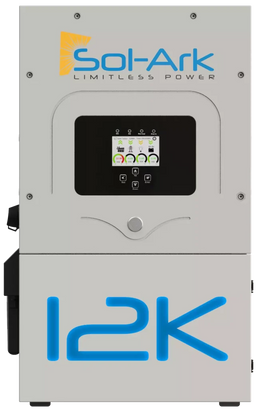
| Sol-Ark 12K | $4,350 ($4,250 ECO100) | 9,000 W | 16 kVA 10 s | 120/240V, 208V | 13 kW, 2 MPPT, 500 V | 50 A breakers | Not on listing | 10 years |
| EG4 6000XP | $1,499 (no code) | 6,000 W | 12 kW 3.5 s | 120/240V | 8 kW, 2 MPPT, 480 V | 50 A | IP20 (indoor) | 5 years |
| Sungold 8,000W | $1,450 ($1,400 ECO50) | 8,000 W | Not listed | Split-phase | 11 kW, 2 inputs, 500 V | Not listed | Not listed | See Sungold terms |
| Sungold 15,000W LF | $3,350 ($3,250 ECO100) | 15,000 W | 45 kW 20 s | 120V and 240V | None (add MPPT) | Internal transfer switch | Not listed | Not on listing |
1. Sungold Power SGN-11K15PRO 11.4kW Split-Phase Hybrid Inverter

$3,100 ($3,000 with ECO100)
The SGN-11K15PRO is the best fit for the typical 200 A house: 11.4 kW of native 120/240V output, an integrated 2 x 200 A load breaker so it can back up a whole standard panel, and a 300 A battery breaker that matches the roughly 258 A it can pull at full output. Three 600 V MPPT trackers (70-540 V window) take up to 15 kW of panels, so different roof faces can go on separate trackers.
It runs grid-tied, off-grid or hybrid, parallels up to 9 units, has a generator auto-start contact, an IP65 / NEMA 3R enclosure and UL1741 certification. What the listing does not give: a surge rating, a weight or a warranty term, so ask us for the data sheet before you size around a large motor, and confirm grid-support certification (UL1741 SB) with your utility if you plan to export.
- 11.4 kW with 200 A whole-home backup
- 15 kW PV across 3 MPPTs
- Outdoor-rated, parallels to 9 units
- Surge, weight and warranty not on the listing
- Newer model with less field history
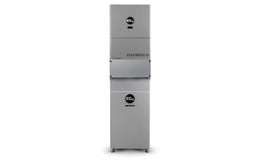
2. EG4 FlexBOSS21 Split-Phase Hybrid Inverter

$4,129.99 (no code)
The FlexBOSS21 delivers 12,000 W continuously from battery and grid, rising to 16,000 W when solar is feeding in at the same time. It accepts up to 21 kW of PV across three MPPTs and five strings, outputs 120/240V or 120/208V, and peaks at 24 kW for 0.5 seconds.
It is NEMA 4X for outdoor mounting, has rapid shutdown and arc-fault protection, a 10-year warranty and UL 9540 listings with BigBattery ETHOS and EG4 280Ah or 314Ah batteries. The 90 A bypass means whole-home backup usually goes through EG4's GridBOSS hub (sold separately). For the head-to-head with Sol-Ark, see our EG4 vs Sol-Ark comparison.
- 21 kW of PV input on 3 MPPTs
- 120/208V option for condo buildings
- UL 9540 with matched batteries, 10-year warranty
- 12 kW (not 16 kW) from battery alone
- 90 A bypass; GridBOSS needed for 200 A homes
3. Sol-Ark 18K 120/240/208V Hybrid Inverter

$6,415 ($6,315 with ECO100; list $7,399)
The Sol-Ark 18K is the pick when the house has heavy loads that run together: 18,000 W continuous from batteries, 36,000 W of surge for 10 seconds, 75 A of continuous output and 200 A of grid pass-through. Battery current is rated at 350 A continuous with 2 x 200 A disconnects, so plan a large bank with high-current batteries.
It takes 28.8 kW of usable PV across three MPPTs plus up to 19.2 kW AC-coupled for retrofits, outputs 120/240V or 208V, is IP65 / NEMA 3R, weighs 137 lb and carries a 10-year warranty plus UL1741 SB and IEEE 1547-2018 listings.
- 18 kW continuous, 36 kW for 10 s
- 200 A pass-through for whole-home
- Long certification list for permits
- Highest price here
- Needs a big, high-current battery bank
4. Sol-Ark 12K 120/240/208V Hybrid Inverter

$4,350 ($4,250 with ECO100; list $5,699)
The "12K" name trips people up: per Sol-Ark's spec sheet it delivers 9,000 W continuous on-grid, off-grid and from batteries, with 16,000 VA of peak for 10 seconds. The 12 kW refers to the solar power it can deliver to batteries and loads combined. It takes up to 13 kW of PV (6,500 W per MPPT, 500 V max, 1-6 strings) and charges batteries at up to 185 A.
Its strengths are flexibility and track record: 120/240V or 208V output, built-in auto generator start, PV and battery disconnects, arc-fault and ground-fault detection, current sensors included, and a 10-year warranty. It suits a condo or small building on 208V service, or a house whose outage loads stay under about 7 kW after margin.
- 208V support
- Good surge window for its size
- 10-year warranty, AGS built in
- 9 kW continuous despite the name
- Highest price per kW in this list
5. EG4 6000XP 6,000W 120/240V Off-Grid Hybrid Inverter

$1,499 (no code; list $1,699)
The 6000XP is the most affordable full 120/240V inverter with solar built in that we stock: 6,000 W continuous, 12,000 W for 3.5 seconds (11,000 W for 5 seconds), 25 A at 240V, and two MPPTs for up to 8 kW of panels (100-480 V input, 120-385 V tracking).
It is an off-grid design: grid or generator power can charge the batteries and pass through (50 A bypass), but it does not export. The enclosure is IP20, so it belongs indoors, and the warranty is 5 years. Up to 16 units can run in parallel.
- Lowest entry price for 120/240V with solar
- Strong surge for a 6 kW unit
- Parallels up to 16
- Off-grid only (no export)
- Indoor only, 5-year warranty
6. Sungold Power 8,000W 48V Split-Phase Solar Inverter

$1,450 ($1,400 with ECO50)
At about $175 per kW after the code, the Sungold 8,000W split-phase inverter is the cheapest way into the 8 kW class that our worked example needed. It takes up to 11,000 W of PV on two inputs (500 V max) and charges at up to 200 A.
It parallels up to six units and is ETL certified. The listing is short: it gives no surge rating, enclosure rating or warranty term (it points to Sungold's warranty page), so treat it as an off-grid or backup inverter for an indoor location and ask us for the manual's surge and per-leg figures before you rely on it for a big pump.
- Lowest price per kW with solar charging
- 11 kW PV and 200 A charging
- Parallels to 6 units
- Surge, enclosure and warranty not listed
- 200 A charging needs a bank that can accept it
7. Sungold Power 15,000W 48V Split-Phase Inverter Charger

$3,350 ($3,250 with ECO100)
This is a classic low-frequency inverter charger: 15,000 W continuous, 45,000 W of surge for 20 seconds, 120V and 240V output, a 100 A AC battery charger with power factor correction, auto generator start, a battery temperature sensor and a remote.
Two details decide whether it fits. It needs a 240V AC input (not 120V), and it has no solar input listed, so solar comes through a separate MPPT charge controller wired to the battery bank. For a farm, shop or off-grid home with large compressors and a generator, the weight buys surge capacity no hybrid here matches.
- 45 kW surge for 20 seconds
- Built-in transfer switch and AGS
- Works with LiFePO4, AGM, gel or flooded
- No built-in solar charging
- Heavy; 240V AC input only
Which inverter fits which home
| Your situation | Pick | Why |
|---|---|---|
| 200 A house, whole-home backup, grid stays connected | Sungold SGN-11K15PRO | 11.4 kW, 200 A load breaker, 15 kW PV |
| Large or complex roof, plans to add batteries and a GridBOSS | EG4 FlexBOSS21 | 21 kW PV on 3 MPPTs, UL 9540 pairings |
| Central air plus well pump plus range during outages | Sol-Ark 18K | 18 kW continuous, 36 kW for 10 s |
| Condo or small building on 120/208V service | Sol-Ark 12K or FlexBOSS21 | Both list 208V output |
| Off-grid cabin with a 240V pump, tight budget | EG4 6000XP | $1,499, 12 kW surge, parallels later |
| Off-grid home in the 8 kW class, lowest cost | Sungold 8,000W | $1,400 with ECO50, 11 kW PV |
| Shop, farm or generator-first system with big motors | Sungold 15,000W LF | 45 kW surge, generator-friendly transfer |
Browse all split-phase inverters or the shorter list of 240V inverters. If you are working on a battery voltage decision first, our 12V vs 24V vs 48V guide explains why every inverter here runs on 48V.
Installation and safety notes
- Use a licensed electrician for panel and utility connections; grid-tied hybrids need a permit, interconnection approval and inspection.
- Never backfeed a panel through an outlet or without a listed transfer method. Use the inverter's transfer switch, a listed transfer switch or an approved interlock.
- Neutral-to-ground bonding must happen in exactly one place. Follow the inverter manual and local code.
- Cable and fuse the battery side for the real current. 258 A at 11.4 kW needs heavy conductors and a rated DC breaker or fuse.
- Check cold-weather string voltage. Panel open-circuit voltage rises in the cold (about 14% at -40F under NEC 690.7); keep strings under the inverter's maximum PV voltage (480-600 V on these picks).
What buyers ask before buying a split-phase inverter
These questions come from what people search before they land on our split-phase pages and from the questions Google shows for this topic. Answers use the specs of inverters we stock.
"Do I need a split-phase inverter if I only have 120V loads?"
Not strictly. A 120V inverter feeding a subpanel of 120V circuits works and costs less. But if a well pump, dryer, range, central air or EV charger is ever in the plan, or you want the whole panel live during an outage, buy split phase now; swapping inverters later costs more than the difference. The EG4 6000XP at $1,499 keeps the step up small.
"Is a 220V split-phase inverter the same thing?"
In the US, yes in practice: 220V, 230V and 240V on appliance labels all describe the leg-to-leg voltage of split-phase service, which is nominally 240V today. What is not the same is a 230V single-phase inverter built for export markets, which has no 120V legs and no neutral split. Look for "120/240V split phase" on the listing.
"Can a 48V battery make 240V?"
Yes, that is exactly what these inverters do. Every pick here takes a 48V battery bank (roughly 40-60V operating) and outputs 120/240V. At 12V the same 6,000 W would need over 540 A, which is why whole-home split-phase inverters are almost all 48V.
"Are there 12V or 24V split-phase inverters?"
A few exist, mostly for RVs and small cabins, but none are in stock with us right now (our 24V split-phase models are sold out). At 12V or 24V the battery current gets very high above about 3,000 W, so for 240V loads we recommend moving to a 48V bank.
FAQ
What is a split-phase inverter?
A split-phase inverter turns DC power from a battery bank and solar array into the same 120/240V service a typical US home gets from the utility: two 120V legs that are 180 degrees apart, with 240V between them and a shared neutral. That lets one inverter feed a normal breaker panel, so 120V outlets and 240V loads such as a well pump, dryer or central air all work.
Is split phase the same as two-phase or three-phase power?
No. Split phase is single-phase power taken from a center-tapped transformer winding, so the two legs are mirror images of each other. Three-phase power, such as 120/208V in many apartment and commercial buildings, uses three waveforms 120 degrees apart. The Sol-Ark 12K, Sol-Ark 18K and EG4 FlexBOSS21 list 208V output too; most split-phase inverters are 120/240V only.
Do I need a split-phase inverter for a well pump?
If the pump is a 240V model, yes, or a separate transformer. Many deep-well pumps run on 240V and draw several times their running current at start-up, so check the surge rating as well as continuous watts.
Can I stack two 120V inverters to get 240V?
Only with models built for it. Some inverters can be paired in a split-phase configuration with a parallel or sync kit so the two outputs are locked 180 degrees apart. Wiring two unrelated 120V inverters to the two legs of a panel does not create 240V and can damage equipment.
How big a split-phase inverter does a whole house need?
Add up the loads that run at the same time, multiply by 1.25 for margin, then check the largest motor start against the surge rating. Efficient homes often land at 8 to 12 kW; homes with central air, a well pump and an electric range often need 12 to 18 kW or two inverters in parallel.
What is the difference between a low-frequency and a high-frequency split-phase inverter?
A low-frequency inverter uses a large iron transformer, so it is heavy but handles big surges well; the Sungold 15,000W weighs 176.6 lb and lists 45 kW for 20 seconds. A high-frequency (transformerless) inverter is lighter and more efficient at idle; the EG4 FlexBOSS21 weighs 88 lb.
Still not sure which one fits your panel? Send us your load list and service size and we will check it against these inverters. More reading: whole-home battery backup cost and 15kW solar system cost and output.

Serhii Dovzhenko, Solar & Energy Storage Specialist at Eco Solar Kits · LinkedIn
Serhii is based in Vancouver, BC, and works on product data, system sizing and buyer guides for Eco Solar Kits. He attends solar and energy storage industry conferences and is involved in the community of electricians in Vancouver, BC. Credit for the data verification in this guide goes to Adsec.ca.