

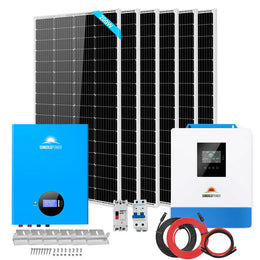
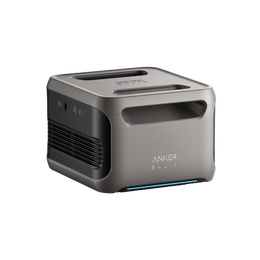
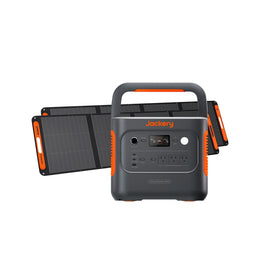
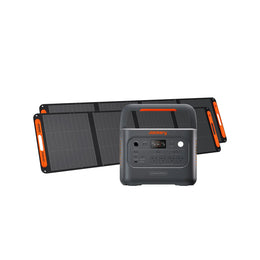

A 10 kW array is the size where solar starts to cover a whole average American home rather than a slice of it. It is also where the battery, the inverter and the utility paperwork begin to matter as much as the panels. This guide prices 10 kW with storage three ways, shows what it produces, and compares seven in-stock systems. If you are still deciding on size, start with what size solar system you need, then come back.
What a 10 kW solar system with battery costs in 2026
There are three honest ways to quote this, and they differ by a factor of four. All store prices below were checked on November 14, 2026.
| Path | What you get | Typical price |
|---|---|---|
| Panels only | 24 x 440 W (10.56 kW), no inverter or battery | $5,049 (about $0.48 per watt) |
| Off-grid kit with battery | 10,000 W inverter, 20 to 26 kWh battery, 5.4 to 6.6 kW of panels in the box | $8,967 to $11,258 |
| Hybrid system with battery, full 10 kW array | 12 kW grid-capable inverter, 10 to 20 kWh battery, 10.56 kW of panels | $11,579 to $14,233 |
| Contractor-installed, no battery | 10 kW grid-tie system, turnkey | Commonly $25,000 to $35,000 ($2.50 to $3.50 per watt) |
| Contractor-installed with one battery | Same, plus one 13 to 16 kWh home battery | Commonly $37,000 to $51,000 |
The do-it-yourself rows are equipment only. Racking, wire, conduit, disconnects, permit fees and any electrician time come on top and vary by site. The installed ranges are general market figures, not quotes, and the battery adder comes from our whole-home battery backup cost guide.
The federal 25D residential credit ended for spending after December 31, 2025, so 2026 buyers should not budget for a 30% federal credit. State, city and utility programs are what is left - see solar rebates by state and our federal solar tax credit explainer.
How much power a 10 kW system makes
We use one formula in every guide: daily kWh = array kW x peak sun hours x 0.77. The 0.77 covers heat, wiring, dirt and inverter losses.

A 10 kW array beats the average home's daily use everywhere except the cloudiest regions.
| Peak sun hours | Per day | Per month | Per year | Value at 17 cents per kWh |
|---|---|---|---|---|
| 3.5 | 27.0 kWh | 810 kWh | 9,840 kWh | About $1,670 a year |
| 4.5 (US average) | 34.7 kWh | 1,040 kWh | 12,650 kWh | About $2,150 a year |
| 5.5 | 42.4 kWh | 1,270 kWh | 15,460 kWh | About $2,630 a year |
| 6.5 | 50.1 kWh | 1,500 kWh | 18,270 kWh | About $3,110 a year |
The dollar column assumes every kWh offsets one you would have bought. Where the utility pays less for exported power than it charges, a battery raises the share you use yourself, and that is the main financial case for storage on a grid-tied system.
How many panels make 10 kW
Panel count is 10,000 divided by panel watts, rounded up. Bigger panels mean fewer rails and connections, but each one is heavier to carry onto a roof.
| Panel | Panels for 10 kW | Array size | Panel area | Panel weight |
|---|---|---|---|---|
| 440 W (67.8 x 44.65 in, 46.3 lb) | 23 (we use 24) | 10.12 kW (10.56 kW) | 484 sq ft (505) | 1,065 lb (1,111) |
| 450 W (75.16 x 44.65 in, 54.0 lb) | 23 | 10.35 kW | 536 sq ft | 1,242 lb |
| 550 W (89.72 x 44.65 in, 63.05 lb) | 19 | 10.45 kW | 529 sq ft | 1,198 lb |
| 590 W (89.69 x 44.65 in, 69.45 lb) | 17 | 10.03 kW | 473 sq ft | 1,181 lb |
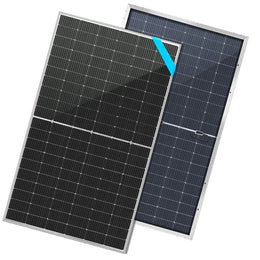
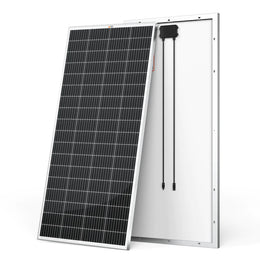
We price the builds below with 24 of the Sungold Power 440 W N-type panel (UL 61730): a 20-pack at $3,942 plus a 4-pack at $1,107. Twenty-four splits into three strings of eight. Each string runs at about 268 V and reaches about 356 V open-circuit on a cold morning (39.03 V x 1.14 x 8), which sits well inside the 600 V input of the EG4 hybrids. Eleven of these panels is the most a 500 V input should see in one string. The method is in our series vs parallel wiring guide. These layouts are our calculation - the inverter manual is the authority.
How big a battery to pair with 10 kW
Size the battery to a goal, not to the array. We use nominal kWh = daily kWh x days / 0.85, the same rule as our battery sizing guide.
| Goal | Energy to cover | Nominal battery | Fits |
|---|---|---|---|
| Outage essentials (fridge, lights, internet, furnace fan) | About 8 kWh a day | About 10 kWh | ETHOS 10.24 kWh |
| Overnight for an average home (40% of 29 kWh) | About 12 kWh | About 14 kWh | One 16 kWh WallMount or PowerMax |
| Most of an evening peak plus a cloudy morning | About 17 kWh | About 20 kWh | ETHOS 20.48 kWh or 4 x 5.12 kWh |
| One full day with no sun | 29 kWh | About 34 kWh | Two 16 kWh batteries |
Then check power. A 10 kW inverter draws about 225 A from a 48 V bank at full load (10,000 / 48 / 0.92). One EG4 WallMount delivers 200 A, about 10.2 kW. Two ETHOS modules share a 200 A control box. Four Sungold 5.12 kWh batteries give 200 A at their standard 50 A each and more at their 100 A maximum. A single small battery behind a big inverter limits what you can run when the sun is down.

A 10 kW array needs roughly 500 square feet of unshaded roof or ground. Stock photo, not a specific system.
A 10,000 W kit is not a 10 kW array
Most products sold as "10 kW solar kits" are named for the inverter. The four Sungold Power kits in our 10 kW solar system collection pair a 10,000 W inverter with 5.4 to 6.6 kW of panels. That is a sensible off-grid balance: the inverter is sized for the biggest load, the array for the daily energy. It is not 10 kW of solar, though, and it makes 19 to 23 kWh a day instead of 35.
So decide which 10 kW you mean. If you want to offset an average home's yearly use, you need about 10 kW of panels. If you want to run a house with 240 V loads from batteries, you need about 10 kW of inverter and can add panels later. Our Sungold Power kits explained guide decodes the model names.
Seven 10 kW-class systems compared
The first three builds add a full 24-panel array to an inverter and battery bundle. The last four are kits priced as they ship. Codes never stack, and each code applies only to the products listed for it.
| System | Price today | Best code | Array | Battery | Inverter output | Daily solar at 4.5 sun hours | Grid export |
|---|---|---|---|---|---|---|---|
| EG4 FlexBOSS21 + WallMount 16 kWh + 24 x 440 W | $12,141 | None today | 10.56 kW | 16 kWh | 12 kW (16 kW with PV) | 36.6 kWh | Yes |
| EG4 18kPV + ETHOS 20.48 kWh + 24 x 440 W | $14,482.99 | SAVE250: $14,232.99 | 10.56 kW | 20.48 kWh | 12 kW | 36.6 kWh | Yes |
| EG4 12kW + ETHOS 10.2 kWh + 24 x 440 W | $11,828.99 | SAVE250: $11,578.99 | 10.56 kW | 10.24 kWh | 12 kW | 36.6 kWh | Yes |
| Sungold SGS12K-PM1-450 | $9,248 | None today | 9.0 kW | 16.07 kWh | 12 kW | 31.2 kWh | Yes |
| Sungold SGR-10K2M | $9,330 | ECO100: $9,230 | 5.4 kW | 20.48 kWh | 10 kW (2 x 5 kW) | 18.7 kWh | No |
| Sungold SGM-10K20 | $9,217 | SAVE250: $8,967 | 5.5 kW | 20.48 kWh | 10 kW | 19.1 kWh | No |
| Sungold SGR-10K25S | $11,358 | ECO100: $11,258 | 6.6 kW | 25.6 kWh | 10 kW | 22.9 kWh | No |

Green bars include a full 10.56 kW array. Blue bars are kits with the smaller arrays they ship with.
The seven builds in detail
1. EG4 FlexBOSS21 + WallMount 16 kWh Indoor + 24 x 440 W

$12,141 ($7,092 bundle + $5,049 panels) - 10.56 kW, 16 kWh, no code today
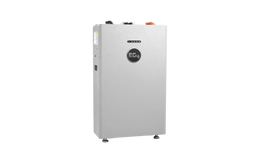
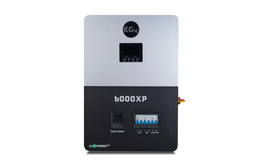
The FlexBOSS21 is a grid-tied hybrid that also runs off-grid: 12 kW from the battery alone and up to 16 kW with solar, 21 kW of PV on three MPPT trackers at 100 to 600 V, in a NEMA 4X case with a 10-year warranty. The 314 Ah WallMount stores 16 kWh (12.86 kWh usable), delivers 200 A or about 10.2 kW, heats itself in the cold and is an indoor unit. Three strings of eight 440 W panels fill the three trackers. Two-battery ($10,750) and three-battery ($14,408) versions of the bundle are on the same page.
- Real 10.56 kW of panels, about 37 kWh on an average day
- Can export to the grid or run zero-export
- One battery already supports about 10 kW at night
- Battery is indoor-rated; the All-Weather bundle costs more
- No discount code applies today
- Racking and wiring are not included
2. EG4 18kPV + BigBattery ETHOS 20.48 kWh + 24 x 440 W

$14,482.99 ($14,232.99 with code SAVE250) - 10.56 kW, 20.48 kWh
Four stackable 5.12 kWh ETHOS modules sit under one control box and talk to the EG4 18kPV in closed loop. The inverter supplies 12 kW of 120/240 V power, accepts 18 kW of solar on three MPPTs and passes 200 A of grid power through, so it can sit between the meter and the main panel. The listing states the pair is UL 9540 listed as a system, the stack is IP65 / NEMA 4X, and warranties run 12 years on the battery and 10 on the inverter.
- 20.48 kWh covers an evening peak and a cloudy morning
- Grows past 80 kWh by adding modules
- 200 A pass-through for whole-panel backup
- Highest price of the seven
- Battery charges only from 32F, so plan a frost-free spot
- One control box caps discharge at 200 A
3. EG4 12kW + ETHOS 10.2 kWh system + 24 x 440 W

$11,828.99 ($11,578.99 with code SAVE250) - 10.56 kW, 10.24 kWh
The same 18kPV inverter with two ETHOS modules. This is the build for a grid-tied home that wants the full array now, backup for essentials, and more storage later. Two modules still deliver 200 A through the control box, so the inverter is not starved, but 10.24 kWh will not carry an average home through the night. Add modules when the budget allows.
- Cheapest way here to get 10.56 kW of panels with a battery
- Same upgrade path as build 2
- Grid export or zero-export
- 10.24 kWh is an essentials-sized battery
- Evening use will lean on the grid until you add modules
4. Sungold Power SGS12K-PM1-450

$9,248 - 9.0 kW, 16.07 kWh, no code today
One order line gets a 12 kW hybrid inverter (UL 1741 SB, IP65, 200 A pass-through, 18 kW of PV on two trackers), twenty 450 W bifacial N-type panels and one PowerMax outdoor battery with 16.07 kWh. At 9.0 kW the array is one size under 10 kW and makes about 31 kWh a day. One PowerMax is rated for 7.68 kW, so a second battery is what lets the inverter reach its full 12 kW after dark. PV cables and breakers are in the box; racking is not.
- Lowest price per watt of array in this comparison
- Outdoor-rated inverter and battery
- Hybrid: can work with the grid
- 9.0 kW, not 10
- Battery-only power limited by one PowerMax
- Battery charges from 32F and has no heater
5. Sungold Power SGR-10K2M

$9,330 ($9,230 with code ECO100) - 5.4 kW, 20.48 kWh
Two 5,000 W inverters run in parallel for 10,000 W of 120/240 V output, with four 5.12 kWh rack batteries (UL 1973) and twelve 450 W panels. Each inverter takes up to 5,000 W of solar at up to 500 V, so there is room to roughly double the array later. The box lists PV cables, Z-brackets and DC and PV breakers. The included array makes about 19 kWh a day.
- Two inverters: one can keep 120 V loads running if the other is down
- Batteries rated for 7,000 cycles at 80% depth of discharge
- Up to six inverters in parallel
- Off-grid only, no export
- Rack batteries are IP20 and belong indoors
- Needs about 10 more panels to become a 10 kW array
6. Sungold Power SGM-10K20

$9,217 ($8,967 with code SAVE250) - 5.5 kW, 20.48 kWh
A single 10,000 W low-frequency inverter with a listed 30,000 W surge for 20 seconds, which is the feature to want for a deep-well pump or a large compressor. Four wall-mounted 5.12 kWh batteries store 20.48 kWh and ten 550 W panels make about 19 kWh a day. The listing gives a 100 W no-load draw, about 2.4 kWh a day, and does not state the maximum solar input, so confirm that before planning a larger array.
- Strongest motor-starting surge of the seven
- Wall batteries save floor space
- Lowest price after SAVE250
- 100 W idle draw eats into a small array
- Maximum PV input not on the listing
- Off-grid only
7. Sungold Power SGR-10K25S

$11,358 ($11,258 with code ECO100) - 6.6 kW, 25.6 kWh
The same 10,000 W low-frequency inverter with five rack batteries in an enclosed cabinet (25.6 kWh) and twelve 550 W panels. At about 23 kWh a day from the array and 25.6 kWh stored, it is the best balanced of the off-grid kits for a home that uses around 20 kWh a day. The SGR-10K32P, with 32.14 kWh of outdoor PowerMax batteries, is covered in the Sungold guide linked above.
- Largest array and battery of the three off-grid kits
- Battery cabinet included
- 30,000 W surge for 20 seconds
- Still 6.6 kW of panels, not 10
- Indoor batteries, charging from 32F
- Off-grid only
Grid connection, permits and safety
A 10 kW system is real electrical work. Three things decide whether the project goes smoothly.
- Interconnection. Any system that can export needs a utility agreement before it is switched on, and many utilities require UL 1741 SB inverters and UL 9540 listed storage. The EG4 builds and the SGS12K kit are the candidates here; the SGR and SGM kits are for off-grid use or a dedicated backup panel.
- The 120% rule. On a 200 A panel with a 200 A main, a load-side solar breaker is limited to 40 A, about 7.7 kW of inverter. A 12 kW hybrid needs a 62.5 A circuit (50 A x 1.25), so expect a line-side connection, a main-breaker derate or a feed-through design. Your electrician and inspector decide which.
- Battery location. Fire codes limit how much storage can sit in a garage or utility room and require clearances. Check with your local building department before choosing 16 kWh or 32 kWh.
For inverter choices, see hybrid vs off-grid vs grid-tie inverters and split-phase inverters explained. For the sizes on either side of this one, see the 8 kW price guide and the 15 kW guide. Parts are in our hybrid inverter, lithium battery and solar panel collections.
What buyers ask before ordering a 10 kW system
These come from the searches that reach our site (Google Search Console, last 90 days), not from a survey.
What is the price of a 10 kW solar system with battery?
This is the most common 10 kW search we see. For equipment: $11,579 to $14,233 for a full 10.56 kW array with a hybrid inverter and 10 to 20 kWh of storage, or $8,967 to $11,258 for an off-grid kit with a 10,000 W inverter and a smaller array. Installed by a contractor, expect commonly $37,000 to $51,000 with one battery.
Is there a 10 kW DIY solar kit?
The closest single kit is the SGS12K-PM1-450 at 9.0 kW. To reach a true 10 kW, combine an inverter and battery bundle with a 20-pack and a 4-pack of panels, as in builds 1 to 3. DIY covers mounting and DC wiring in many areas; the service connection and the permit still follow local rules.
Can a 10 kW array go on a ground mount?
Yes. The panels themselves cover about 500 square feet, and a tilted ground mount with space between rows needs noticeably more land than that. Ground mounts avoid roof-load questions and let you face the array due south, at the cost of trenching and longer wire runs. Ask us for racking options before you order.
Is a 10,000 Wh battery the same thing as 10 kW?
No. 10,000 Wh is 10 kWh of stored energy, less than a third of what a 10 kW array makes in a day. Many searches mix the two. If you want about 10 kWh of storage, the ETHOS 10.24 kWh build is the match; if you want 10 kW of power after dark, you need a battery that can deliver about 200 A.
FAQ
How much does a 10 kW solar system with battery cost in 2026?
Equipment for a do-it-yourself 10 kW system with a battery runs about $9,000 to $14,500 at Eco Solar Kits on November 14, 2026. A full 10.56 kW array with an EG4 FlexBOSS21 hybrid inverter and a 16 kWh battery totals $12,141 before racking, wiring and permits. Installed by a contractor, 10 kW commonly costs $25,000 to $35,000 before the battery, and one installed home battery commonly adds $12,000 to $16,000.
How many solar panels do I need for 10 kW?
Divide 10,000 by the panel wattage and round up: 25 panels at 400 W, 23 at 440 W or 450 W, 19 at 550 W and 17 at 590 W. We price our builds with 24 x 440 W (10.56 kW) because 24 panels split into three equal strings of eight. That array covers about 505 square feet and weighs about 1,110 lb before racking.
How much electricity does a 10 kW solar system produce per day?
About 35 kWh a day at the US average of 4.5 peak sun hours, using a 0.77 system factor for heat, wiring and inverter losses. The range is roughly 27 kWh a day at 3.5 sun hours to 50 kWh at 6.5 sun hours. That is about 1,040 kWh a month and 12,600 kWh a year in an average location.
What size battery do I need for a 10 kW solar system?
For overnight use in an average home, plan about 14 to 16 kWh. For a full day without sun, plan about 34 kWh. Also check power, not just energy: a 10 kW inverter pulls roughly 225 A from a 48 V battery at full load, so the bank needs about 200 A or more of continuous discharge to let the inverter reach its rating without solar.
Can a 10 kW solar system run a whole house?
In most of the US, yes over a year: a 10 kW array makes about 35 kWh a day against roughly 29 kWh a day for an average home. Whether it carries the house during an outage depends on the inverter and battery. A 10 to 12 kW split-phase inverter runs 120 V and 240 V loads, but electric heat, EV charging and several large appliances at once can exceed it.
Is a 10 kW system the same as a 10 kWh battery?
No. Kilowatts (kW) measure power, the rate at which panels or an inverter deliver electricity. Kilowatt-hours (kWh) measure stored or used energy. A 10 kW array makes about 35 kWh on an average day, so a 10 kWh battery stores less than a third of one day of its output.

Serhii Dovzhenko, Solar & Energy Storage Specialist at Eco Solar Kits · LinkedIn
Serhii is based in Vancouver, BC, and works on product data, system sizing and buyer guides for Eco Solar Kits. He attends solar and energy storage industry conferences and is involved in the community of electricians in Vancouver, BC. Credit for the data verification in this guide goes to Adsec.ca.


