

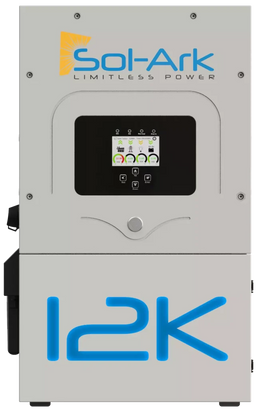
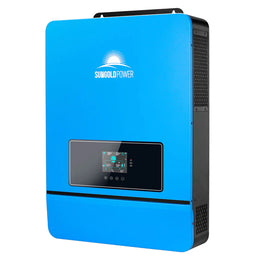


A 5,000W inverter is the size where a battery system stops being a camping accessory and starts carrying a house. It is big enough for the refrigerator, freezer, lights, furnace blower, internet and a pump all at once, and small enough to stay affordable: complete kits with a 5kW inverter and 10 kWh of lithium start a little over $4,000 at our live prices. The catch is that the inverter is only half the system. The battery decides how long the power lasts, how much current the inverter can actually draw, and whether a well pump or AC starts cleanly.
This guide covers what a 5kW inverter runs, how much battery it needs (with the current limit most buyers miss), runtime and solar math, the 120V vs 240V question, and the in-stock kits that pair a 5,000W-class inverter with a battery. If you are still deciding on inverter size at all, start with our what size inverter do I need guide; if you want the full price of a 5kW solar array, our 5kW solar system with battery guide covers panel count and production.
What a 5,000-watt inverter can run
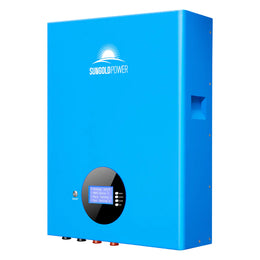
An inverter has two ratings that matter. Continuous watts is what it can deliver all day: 5,000W on the Sungold SPH-series units. Peak (surge) watts is what it can deliver for a few seconds while a motor starts: 10,000VA on the same units. Motors in refrigerators, pumps, compressors and furnace blowers pull two to three times their running watts for a moment at start-up, so both numbers have to fit.

Every single appliance above starts and runs on one 5,000W inverter. The limit is how many run at the same time.
A realistic outage evening looks like this: refrigerator 150W + freezer 100W + LED lights 200W + TV and router 150W + furnace blower 800W + microwave 1,500W = 2,900W running. If the well pump kicks on during that, it adds 1,000W running and a 2,100W start spike, for a brief peak around 5,000W, which is half the 10,000VA surge rating. Add a window AC (1,200W) and you are at 5,100W running, just over the line, so either skip the microwave while the AC runs or stagger loads.
| Load group | Running watts | Fits on 5kW? | Note |
|---|---|---|---|
| Fridge + freezer + lights + internet | 600 W | Yes, with lots of room | About 3.5 kWh per day |
| + furnace blower (gas heat) | 1,400 W | Yes | Blower runs in cycles |
| + 1/2 HP well pump (120V) | 2,400 W | Yes | 2,100W start spike |
| + microwave or coffee maker | 3,900 W | Yes | Short bursts |
| + 10,000 BTU window AC | 5,100 W | Borderline | Stagger the microwave |
| Central AC, dryer, range, EV charger | - | No (240V) | Needs split phase - see below |
The table is why 5kW is a popular backup size: it covers the circuits most people actually miss in a blackout. Pumps are the most common surprise; our well pump and sump pump sizing guide goes through the start-up math for 120V and 240V pumps in detail.
How much battery a 5,000W inverter needs
Battery sizing has two parts: energy (kWh, how long you can run) and power (amps, how hard the inverter can pull). Most guides only cover the first one.
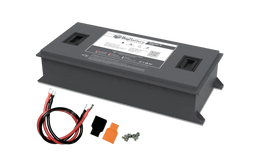
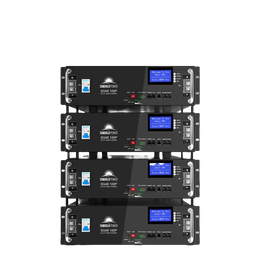
The current check. A 48V inverter delivering 5,000W draws roughly 5,000 / 0.92 efficiency / 51.2V = about 106A from the battery, and more as the battery voltage sags toward empty. A single 51.2V 100Ah server-rack or wall battery such as the Sungold SG48100P is rated for 100A continuous. That works out to about 4,700W of AC output, not 5,000W. Two batteries in parallel share the load (50-55A each) and run cooler, which is why every full-power kit in this guide ships with at least 10.24 kWh.
| Battery bank (48V) | Usable energy (85%) | Max continuous to inverter | Good for |
|---|---|---|---|
| 1 x 5.12 kWh (100Ah) | 4.35 kWh | About 4,700W AC | Short outages, cabins, starter systems |
| 2 x 5.12 kWh = 10.24 kWh | 8.70 kWh | Full 5,000W | One day of essential loads |
| 14.3 kWh (BigBattery NEXUS) | 12.2 kWh | 7.6 kW battery rating | Overnight + morning with margin |
| 16 kWh (EG4 314Ah, 12.86 kWh recommended usable) | 12.86 kWh | 200A / 10.2 kW | Heavier daily cycling, outdoor install |
| 20 kWh+ | 17 kWh+ | Full output | Two-day autonomy, cloudy climates |
The energy check. Add up a day of use, not the peak. The load groups above, run through a normal day, come to about 9-10 kWh: refrigerator 1.5 kWh, freezer 1.2 kWh, lights 1 kWh, TV/router/laptops 1.2 kWh, furnace blower about 3 kWh (800W cycling about 4 hours), well pump 1 kWh, microwave and coffee maker 0.6 kWh. A 10.24 kWh bank gives about 8.7 kWh usable, so it covers that day with solar topping it up, or most of it without. If you want two days without sun, double the bank. Our how long will a battery run a house guide has runtime tables for 5, 10 and 15 kWh banks across whole-house loads.
Runtime math: how long the battery lasts

The formula is simple: hours = battery kWh x 0.85 x 1,000 / load watts. The 0.85 covers inverter conversion losses (about 8-10%) and a small reserve so the battery management system does not cut out at the very bottom. Some examples:
| Steady load | 5.12 kWh | 10.24 kWh | 14.3 kWh | What that load looks like |
|---|---|---|---|---|
| 500 W | 8.7 h | 17.4 h | 24.3 h | Fridge, freezer, lights, internet, TV |
| 1,000 W | 4.4 h | 8.7 h | 12.2 h | Above + furnace blower cycling |
| 2,000 W | 2.2 h | 4.4 h | 6.1 h | Above + pump and kitchen use |
| 3,000 W | 1.5 h | 2.9 h | 4.1 h | Window AC running with essentials |
| 5,000 W | 0.9 h | 1.7 h | 2.4 h | Inverter maxed out (rarely sustained) |
Nobody runs 5,000W for hours. Real homes average 400-1,000W across a day with short peaks, which is why a 10 kWh bank usually lasts a night and a morning on its own. The 5,000W rating is about headroom for peaks, not about draining the battery at that rate.
Solar recharge: how many panels keep it full

Panels refill the battery by day; the battery carries the evening and night.
For off-grid use, the panels have to put back what you use. Daily harvest is roughly array watts x peak sun hours x 0.8 (the 0.8 covers heat, wiring, dust and charge losses). US peak sun hours run about 3 in winter in the north to 6 in summer in the southwest.
| Kit / array | Array size | 3 sun hours | 4.5 sun hours | 6 sun hours |
|---|---|---|---|---|
| SGM-5K5E (6 x 200W) | 1,200 W | 2.9 kWh | 4.3 kWh | 5.8 kWh |
| SGM-5K10M (6 x 370W) | 2,220 W | 5.3 kWh | 8.0 kWh | 10.7 kWh |
| SGR-5KE (6 x 415W) | 2,490 W | 6.0 kWh | 9.0 kWh | 12.0 kWh |
| SGK-5PRO (6 x 450W) | 2,700 W | 6.5 kWh | 9.7 kWh | 13.0 kWh |
| Sungold 5kW inverter at its 5,000W solar limit | 5,000 W | 12.0 kWh | 18.0 kWh | 24.0 kWh |
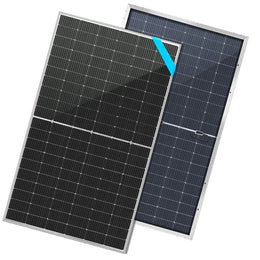
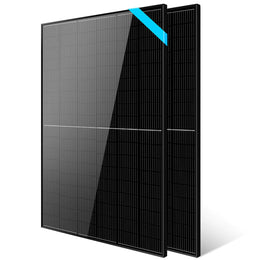
So a 10 kWh battery with about 2,500W of panels is balanced for spring through fall in most of the US: a 4.5-sun-hour day refills it. In winter, expect to add panels (the Sungold 5kW inverters accept up to 5,000-5,500W of PV) or run a generator into the inverter's AC input on cloudy stretches. The six SGR-5KE panels go in a single series string at about 233V open-circuit and 190V working voltage, inside the 120-450V MPPT window with room for cold-morning voltage rise; our series vs parallel wiring guide shows how to check a string before you buy more panels.
120V vs 240V: when one 5kW inverter is not enough
Most 5kW all-in-one inverters are 120V only. That is fine for outlets and most essential circuits, but US homes are wired 120/240V split phase, and the big loads (central AC and heat pumps, electric dryers, ranges, water heaters, many deep-well pumps, EV chargers) are 240V. A single 5kW 120V inverter can still back up a split-phase panel only if those 240V circuits are left off and the 120V circuits are moved to a dedicated essential-loads panel by an electrician.
| Option | Output | Continuous | Price (Nov 22) | Best for |
|---|---|---|---|---|
| Sungold 5kW (SPH series) in a kit | 120V | 5,000W | from $2,831 (kit) | 120V essentials, cabins, shops |
| Sungold 2 x 5,000W parallel set | 120/240V split phase | 10,000W | $1,350 (ECO50: $1,300) | Upgrade path to 240V |
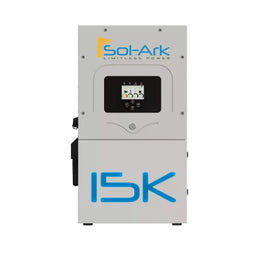
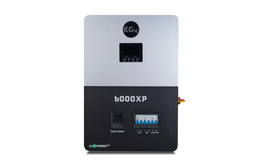
| EG4 6000XP | 120/240V split phase | 6,000W | $1,499 | One-box 240V at this size |
| BigBattery APEX-6.5K | Split phase | 6,500W | $1,490 | Two AC inputs (grid + generator) |
| Victron MultiPlus-II 5000 (in the HUSKY kit) | 120V | 4,000W at 77F | kit $4,926.80 | RV, UPS-grade transfer |
If a 240V well pump or central AC has to run, skip straight to a split-phase unit: the EG4 6000XP gives 6,000W of 120/240V from one box, or two Sungold 5kW units in parallel give 10,000W. Beyond that, our best 10,000-watt inverters guide covers the 10-12 kW class, and the split-phase inverter explainer explains how the two 120V legs work. If you have already settled on the 6000XP, the EG4 6000XP guide covers battery pairing and string sizing.
5,000W inverter and battery kits compared
Every product below was active and in stock on November 22, 2026. "BF" is the automatic Black Friday discount ($150 off qualifying items in a $1,500+ cart, through December 1, 2026); it does not stack with codes, so we show whichever is lower.
| Kit | Inverter | Battery | Panels | Price | Price per usable kWh* |
|---|---|---|---|---|---|
| Sungold SGM-5K5E | 5,000W 120V | 5.12 kWh | 6 x 200W | $2,831 (BF $2,681) | $616 |
| Sungold SGR-5KE | 5,000W 120V | 10.24 kWh | 6 x 415W | $4,304 (BF $4,154) | $477 |
| Sungold SGM-5K10M | 5,000W 120V | 10.24 kWh | 6 x 370W | $4,326 (BF $4,176) | $480 |
| Sungold SGK-5PRO | 5,000W 120V | 10.24 kWh (4 x 12V 200Ah, self-heating) | 6 x 450W | $4,462 (BF $4,312) | $495 |
| NEXUS 14.3 kWh + APEX-6.5K | 6,500W split phase | 14.3 kWh | None | $4,535 | $373 |
| NEXUS 14.3 kWh + EG4 6000XP | 6,000W 120/240V | 14.3 kWh | None | $4,544 | $374 |
| HUSKY 2 10.24 kWh + Victron MultiPlus-II 5000 | 4,000W (5,000VA) 120V | 10.24 kWh IP65 | None (no MPPT) | $4,926.80 | $566 |
| EG4 314Ah All-Weather + 6000XP | 6,000W 120/240V | 16 kWh (12.86 usable) | None | $5,414.97 | $421 |
| HUSKY 2 5.12 kWh + MultiPlus-II 3000 | 2,400W (3,000VA) 120V | 5.12 kWh | None | $2,920.15 | $671 |
| Sungold 3,000W 24V + 2 x 24V 100Ah | 3,000W 120V | 4.8 kWh | None | $1,473 (ECO50 $1,423) | $349 |
| Sungold SGKT-3PRO | 3,000W 120V | 5.12 kWh | 4 x 200W | $2,237 (ECO50 $2,187) | $503 |
*Our calculation: lowest price shown / usable kWh (85% of nominal, or the listed recommended usable figure for the EG4 314Ah). Kits with panels carry the panel cost in this number, so they look more expensive per kWh than battery-only systems.
Browse the whole range in our 5kW solar power systems, Sungold Power kits and BigBattery kits collections, or the 48V inverters if you already own batteries.
Best 5,000W inverter with battery picks for 2026
1. Sungold SGR-5KE: 5,000W inverter + 10.24 kWh + 2,490W of panels

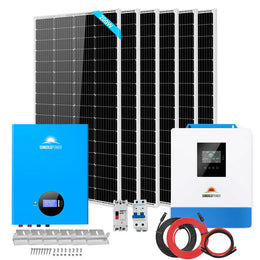
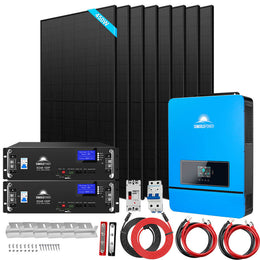
The SGR-5KE is the cleanest answer to "5000 watt inverter with battery kit": a 5,000W / 10,000VA peak 48V inverter (SPH504880A) with built-in 80A MPPT and Wi-Fi, two 51.2V 100Ah SG48100P server-rack batteries (10.24 kWh, 7,000+ cycles to 80%), six 415W panels, 50 ft of PV cable and Z-brackets. The inverter carries an ETL listing to UL 1741 / CSA C22.2 No. 107.1. Two batteries mean the inverter gets its full 5,000W, and the 2,490W array refills the bank on a 4.5-sun-hour day.
- Full 5kW with two batteries sharing current
- Lowest price per kWh of the complete kits with panels
- UL 1741 (ETL) listed inverter
- 120V only (pair two inverters for 240V)
- IP20 rack batteries need an indoor, dry spot
- Roof or ground racking beyond the Z-brackets is extra
Price: $4,304 (list $4,782). Black Friday automatic $150 off brings it to $4,154 through December 1, 2026; or ECO100 for $4,204.
See the SGR-5KE kit2. Sungold SGM-5K5E: the lowest-cost way into a 5kW inverter

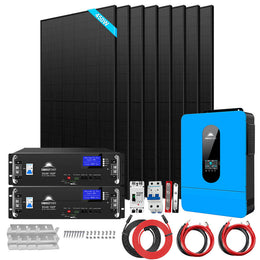
Same 5,000W / 10,000VA inverter platform (SPH5048P, up to 5,500W of PV, 6 units in parallel) with one 5.12 kWh IP65 battery and six 200W panels. It is the right start for a cabin, shop or short-outage backup where you want the big inverter now and will add a second battery later. Just remember the current limit: on one battery, plan on about 4,700W sustained rather than 5,000W.
- 5kW inverter and surge headroom at under $3,000
- IP65 battery enclosure
- Add a second battery and more panels later
- One battery: about 4.35 kWh usable
- 1,200W array is small for daily off-grid use
- Wi-Fi monitoring is an optional extra
Price: $2,831 (list $3,145). Black Friday automatic $150 off: $2,681; or ECO50 for $2,781.
See the SGM-5K5E kit3. Sungold SGK-5PRO: self-heating batteries and the biggest array

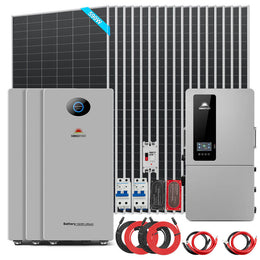
The SGK-5PRO builds its 10.24 kWh bank from four 12V 200Ah LiFePO4 batteries wired in series to 48V, each with Bluetooth monitoring and built-in heating that kicks in below 33.8F so the bank can still take a charge on cold mornings. It adds a 200A DC breaker, a 25A PV breaker and 4 AWG cables, plus six 450W panels (2,700W), the largest array in the 5kW kits.
- Self-heating cells for winter charging
- 2,700W array: about 9.7 kWh on a 4.5-sun-hour day
- Breakers and battery cables included
- Four batteries to wire and balance instead of two
- $158 more than the SGR-5KE
- 120V only
Price: $4,462 (list $4,958). Black Friday automatic $150 off: $4,312; or ECO100 for $4,362.
See the SGK-5PRO kit4. NEXUS 14.3 kWh + EG4 6000XP: split phase and more storage

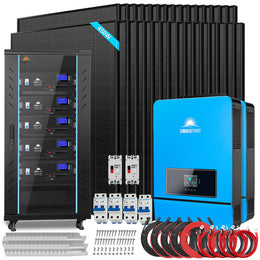
If a 240V well pump, dryer or mini-split is on your list, this pair skips the 120V limit entirely. The EG4 6000XP gives 6,000W of 120/240V split-phase output (12,000W surge for 3.5 seconds), 8,000W of dual-MPPT solar input and under-15 ms UPS switching. The BigBattery NEXUS adds 14.3 kWh with a 7.6 kW continuous rating and 6,000+ cycles, and the system expands to 214.5 kWh. No panels are included, so budget about $2,500 for a 12-panel array.
- 120/240V from one inverter
- 14.3 kWh for about the price of a 10 kWh kit
- Among the lowest prices per usable kWh here
- Panels, racking and breakers are extra
- Indoor installation for both parts
- No current discount applies
Price: $4,544 (list $4,999). 2 + 2 configuration: $7,689.
See the NEXUS + 6000XP system5. HUSKY 2 10.24 kWh + Victron MultiPlus-II 5000

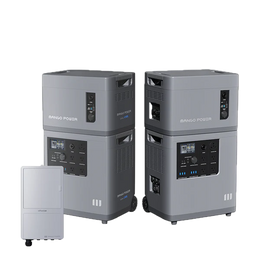
This kit is for people who care most about how the power switches over: the Victron MultiPlus-II has a no-break transfer under 20 ms and PowerAssist, which lets the batteries top up a weak generator or shore-power feed instead of tripping its breaker. Two IP65, self-heating HUSKY 2 batteries (10.24 kWh, 100A each) and a Cerbo GX with VRM remote monitoring are included. Note the honest rating: 5,000VA, which is 4,000W continuous at 77F (3,700W at 104F), with a 9,000W peak.
- No-break transfer for computers and medical devices
- PowerAssist with generators and shore power
- IP65 batteries rated for vibration (RVs, vans)
- 4,000W continuous, not 5,000W
- No built-in solar charger: add a Victron MPPT
- Highest price per kWh of the 10 kWh kits
Price: $4,926.80 (list $5,349). No discount code applies.
See the HUSKY 2 + Victron kit6. Sungold 3,000W 24V inverter + 2 x 24V 100Ah batteries

If your list is a fridge, lights, internet and the occasional microwave, a 3,000W battery backup costs a third of a 5kW kit. This bundle pairs the SPH302480A inverter (3,000W, 6,000VA peak, 80A MPPT up to 4,000W of PV, 40A AC charger, 10 ms UPS transfer, generator auto-start) with two 24V 100Ah Bluetooth LiFePO4 batteries for 4.8 kWh. Add panels now or later; the SGKT-3PRO kit is the same idea with 5.12 kWh and four 200W panels.
- Lowest entry price for real home backup
- Built-in MPPT and generator auto-start
- 10 ms transfer keeps electronics on
- 3,000W limit: no window AC plus microwave at once
- 24V, so it does not grow into a 48V system
- No panels in this bundle
Price: $1,473 (list $1,637). ECO50 brings it to $1,423.
See the 3,000W bundleWhat buyers ask before buying a 5kW inverter with battery
These come from the searches that bring people to our inverter pages and from the questions Google shows for this topic. Answers use our store data from November 22, 2026.
How much does a 5kW inverter with battery cost for a home?
The inverter alone runs $1,350-$1,499 for the 5-6 kW units we stock (Sungold 2 x 5kW set $1,350, EG4 6000XP $1,499). With 10-14 kWh of lithium it is about $4,300-$5,400 as a kit, and $2,681 at the bottom with one 5 kWh battery during Black Friday. A professional install adds labor, permits and a transfer switch or backup panel on top.
How many kW of inverter do I need to run a house?
Add the running watts of everything that could be on at once, then add the largest motor's start-up surge. For essential circuits that is usually 3,000-5,000W; for a whole house with central AC and electric appliances it is 10-15 kW at 240V. Our inverter sizing guide walks through the worksheet.
How long will an inverter run a refrigerator?
The inverter does not limit it; the battery does. A full-size fridge uses about 1.2-2 kWh a day. On 8.7 kWh usable (10.24 kWh bank) that is 4-7 days for the fridge alone, or about one day when it shares the battery with the rest of the essential loads.
How many 12V batteries do I need for a 4,000-5,000W inverter?
For a 48V inverter, four 12V batteries in series, each sized for the capacity you want (four 12V 200Ah = 10.24 kWh, as in the SGK-5PRO). Running 4,000-5,000W from a single 12V bank means 350-450A of current, which is why systems this size move to 48V.
FAQ
What will a 5000-watt inverter run?
A 5,000W 120V inverter runs a typical home's essential circuits at the same time: refrigerator, freezer, lights, internet, TV, microwave, furnace blower, a 1/2 HP well or sump pump and a window air conditioner, as long as the running total stays under 5,000W. Its 10,000VA peak (on the Sungold units) covers motor start-up. It cannot run 240V loads such as a central AC, electric dryer or range on its own.
How many batteries do I need for a 5000W inverter?
At 48V, plan on at least 10 kWh, which is two 51.2V 100Ah (5.12 kWh) batteries. One 100Ah battery is limited to about 100A, or roughly 4,700W of AC output after inverter losses, so it cannot carry the full 5,000W for long. Two batteries share the current and give about 8.7 kWh of usable energy, enough for one day of essential loads.
How long will a 10 kWh battery last with a 5000W inverter?
About 1.7 hours at a full 5,000W load, 4.4 hours at 2,000W, 8.7 hours at 1,000W and 17 hours at 500W. That uses 85% of the 10.24 kWh nominal capacity to allow for inverter losses and a reserve. Most homes average 500-1,000W across a day, so 10 kWh usually covers one night and the next morning without solar.
Can a 5000W inverter run a whole house?
It can run a small home or cabin and the essential circuits of a larger home, but not everything at once. A 5kW inverter handles about 41A at 120V. Central air conditioning, electric water heaters, dryers and ranges are 240V loads that need a split-phase inverter such as the EG4 6000XP or two 5kW inverters in parallel, plus a larger battery.
Does a 5000W inverter give 240V?
Most 5kW all-in-one inverters, including the Sungold 5,000W units and the Victron MultiPlus-II 120V, output 120V only. Two identical Sungold 5kW units can be paralleled for 120/240V split phase. The EG4 6000XP is the exception at this size: one unit gives 6,000W of 120/240V split-phase power.
Can I use 12V batteries with a 5000W inverter?
Only if they are wired in series to match the inverter's 48V input: four 12V batteries make one 48V bank, which is how the Sungold SGK-5PRO kit is built. A true 12V 5,000W inverter would pull over 400A from the battery, which needs very heavy cable and is rarely practical. 48V is the standard for 5kW systems.

Serhii Dovzhenko, Solar & Energy Storage Specialist at Eco Solar Kits · LinkedIn
Serhii is based in Vancouver, BC, and works on product data, system sizing and buyer guides for Eco Solar Kits. He attends solar and energy storage industry conferences and is involved in the community of electricians in Vancouver, BC. Credit for the data verification in this guide goes to Adsec.ca.


