


When the power goes out, two pumps decide how bad the outage gets. The well pump decides whether you have water at all. The sump pump decides whether the basement stays dry. Both are small loads on paper and difficult loads in practice, because a pump motor asks for several times its normal power for the first second, and because most well pumps run on 240V while most portable power stations make only 120V.
This guide shows how to read your pump, do the start-up math, and pick a solar generator that will actually start it. Every price and spec below was read from our live product listings on November 15, 2026, and all seven picks were available to order. For general sizing of a whole outage kit, start with what size solar generator do I need; this guide stays on pumps.
Why pumps are hard on a solar generator
A refrigerator, a laptop and a few lights are easy: low watts, 120V, gentle starts. A pump is different in three ways.
- Start-up surge. An induction motor starting against a column of water draws 3 to 5 times its running power for a fraction of a second up to about a second. The power station has to cover that peak or it shuts down to protect itself.
- Voltage. Nearly all sump pumps are 120V. Most submersible well pumps are 240V, which a 120V-only power station cannot supply no matter how many watts it has.
- It starts without warning. A pressure switch or a float starts the pump whenever it wants, often while other loads are already running. The surge lands on top of whatever else is plugged in.
The good news is the other half of the picture: pumps run for minutes, not hours, so they use little energy. A well pump that would overwhelm a small power station at start-up may use less energy per day than a refrigerator. That is why the right question is "will it start my pump", and battery size comes second.
120V or 240V: read your pump first
Before comparing products, find three facts about your pump. It takes five minutes and saves a return.
- Voltage. Look at the breaker. A single-pole 15 A or 20 A breaker means 120V. A double-pole breaker (two handles tied together) means 240V. The label on the pump, the control box or the pressure switch cover confirms it.
- Horsepower and amps. For a submersible pump the motor is down the well, so check the control box, the well record or the installer invoice. Running watts are roughly amps x volts.
- 2-wire or 3-wire. A 3-wire submersible pump has a control box on the wall with the start capacitor in it and starts more gently. A 2-wire pump has no control box and usually pulls a higher start-up surge. Constant-pressure systems with a variable speed drive ramp up slowly and are the easiest of all to start.
| Pump type | Usual voltage | Usual size | What it needs from a power station |
|---|---|---|---|
| Pedestal or submersible sump pump | 120V | 1/3 to 1/2 HP | A standard 120V outlet, 2,000 W+ with a 4,000 W surge |
| Shallow well jet pump | 120V or 240V | 1/2 to 1 HP | Check the motor label; many are wired for either voltage |
| Submersible deep well pump | 240V (some 1/2 HP are 120V) | 1/2 to 1.5 HP | A 120/240V split-phase output and a high surge rating |
| Constant-pressure (VFD) well pump | 240V | 1 to 2 HP | 240V; soft ramp-up, so the surge is low |
| Sewage or effluent pump | 120V or 240V | 4/10 to 1 HP | Same method as a sump pump, sized by the label |
If split-phase is a new term, split-phase inverters explained covers how a 120/240V output works and why a 240V load uses both legs.
Start-up math: running watts vs surge
The method is short:
- Running watts = amps on the label x voltage. (This slightly overstates real watts, which keeps the estimate on the safe side.)
- Start-up watts = running watts x 3 for sump pumps, jet pumps and 3-wire submersibles with a control box. Use x 5 for 2-wire submersibles.
- Pick a power station whose surge rating is above the start-up watts and whose continuous rating is above the running watts plus everything else that will be on at the same time.
| Pump | Running watts (typical) | Start-up at 3x | Start-up at 5x |
|---|---|---|---|
| Sump pump, 1/3 HP, 120V | 800 - 1,000 W | 3,000 W | - |
| Sump pump, 1/2 HP, 120V | 1,000 - 1,100 W | 3,300 W | - |
| Well pump, 1/2 HP, 240V | 1,000 W | 3,000 W | 5,000 W |
| Well pump, 3/4 HP, 240V | 1,500 W | 4,500 W | 7,500 W |
| Well pump, 1 HP, 240V | 2,000 W | 6,000 W | 10,000 W |
| Well pump, 1.5 HP, 240V | 2,500 W | 7,500 W | 12,500 W |

Running watts vs start-up watts by pump size. Planning figures; the pump label decides.
These are planning figures, not measurements of your pump. Pumps of the same horsepower differ by brand, depth and age. The most reliable number is the locked rotor amps (LRA) on the motor data sheet multiplied by the voltage, or a reading from a clamp meter with an inrush setting taken by an electrician. If you cannot get either, use the 5x column and you will rarely be caught short.
Sump pump: sizing and runtime
Sump pumps are the easy case. They are 120V, they plug into a normal outlet, and most are 1/3 or 1/2 HP. As a reference point, Zoeller lists its M53 at 9.7 amps on 115V and its 1/2 HP M98 at 9.4 amps. Amps x volts gives about 1,100 volt-amps for each, so we plan 1,000 to 1,100 W running and 3,000 to 3,300 W at start-up.
That means a 2,000 W class power station with a 4,000 W surge covers nearly every household sump pump with room to spare. What changes from house to house is runtime, and runtime depends on how often the pump runs.
Pump-hours = capacity (Wh) x 0.85 / running watts. The 0.85 covers inverter losses. Then divide by the duty cycle, the share of each hour the pump is actually running.
| Power station | Capacity | Pump-hours at 1,000 W | Light rain (6 min per hour) | Steady rain (15 min per hour) | Storm (30 min per hour) |
|---|---|---|---|---|---|
| Jackery Explorer 2000 v2 | 2,042 Wh | 1.7 h | about 17 h | about 7 h | about 3.5 h |
| Anker SOLIX C2000X Gen 2 | 2,048 Wh | 1.7 h | about 17 h | about 7 h | about 3.5 h |
| Jackery HomePower 3000 | 3,072 Wh | 2.6 h | about 26 h | about 10 h | about 5 h |
| Jackery Explorer 5000 Plus | 5,040 Wh | 4.3 h | about 43 h | about 17 h | about 8.5 h |
Real numbers come in a little lower, because the power station uses some energy just keeping its AC output on between pump cycles. To find your own duty cycle, time the pump during a heavy rain: seconds on, seconds off. If it runs 20 seconds every 2 minutes, that is a 17% duty cycle, close to the "steady rain" column.
Two practical points. First, leave the pump plugged into the power station and the power station plugged into the wall, so it switches over by itself when the grid drops; the Explorer 2000 v2 lists a switchover under 20 ms and the C2000X Gen 2 lists 10 ms. Second, keep the unit off the basement floor and away from the pit. None of these power stations is rated for standing water.
Well pump: small energy, big surge
A well pump moves a lot of water in very little time. A typical residential pump delivers around 10 gallons per minute. In an outage, a careful household can live on about 200 gallons a day for drinking, cooking, toilets and short showers. That is 20 minutes of pumping.
| Well pump | Running watts | Run time for 200 gallons at 10 gpm | Energy per day |
|---|---|---|---|
| 1/2 HP | 1,000 W | 20 minutes | 0.33 kWh |
| 3/4 HP | 1,500 W | 20 minutes | 0.5 kWh |
| 1 HP | 2,000 W | 20 minutes | 0.67 kWh |
| 1.5 HP | 2,500 W | 20 minutes | 0.83 kWh |
Compare that with a refrigerator at 1 to 2 kWh per day. On energy alone, even a mid-size power station holds several days of water. The hard part is the first second of every start, at 240V. So for a well pump, shop by output voltage and surge rating first, then by capacity.

Twenty minutes of pumping a day covers about 200 gallons. The surge at each start is what sizes the power station.
Here is how the 240V-capable units we stock line up against the planning figures above.
| Power station | Continuous | Surge | Largest well pump at 3x | Largest well pump at 5x |
|---|---|---|---|---|
| Bluetti Apex 300 | 3,840 W | 7,680 W | 1 HP (6,000 W) | 3/4 HP (7,500 W) |
| Mango Power E 240V kit | 6,000 W | not listed | 1 HP (6,000 W, at the limit) | 1/2 HP (5,000 W) |
| Jackery Explorer 5000 Plus | 7,200 W | 14,400 W | 2 HP | 1.5 HP (12,500 W) |
| Jackery HomePower 3600 Plus Double Kit | 7,200 W | 14,400 W | 2 HP | 1.5 HP (12,500 W) |
The Mango Power E listing gives no surge figure, so we size that kit by its 6,000 W continuous rating only, which is the cautious reading. Where a pump sits right at a limit in this table, treat it as a maybe and leave headroom: choose the next size up, or ask a well technician about a soft starter for the pump.
If your pump is larger than 2 HP, or you want the well on backup permanently together with the rest of the house, a wall-mounted inverter and battery bank is the better tool. What size inverter do I need walks through that sizing, and the 240V inverters collection lists the options.
How to connect a pump safely
Sump pump. It has a cord and a plug. Plug it into the power station. Nothing else is needed.
Well pump. It is hardwired to a double-pole breaker, so it cannot simply be plugged in. There are two accepted ways to feed it:
- Manual transfer switch or interlock with a power inlet. An electrician installs a small transfer switch (or a listed interlock on the main panel) and an inlet box. In an outage you run one 240V cord from the power station to the inlet and flip the switch. The well pump circuit, and usually a few others, now run from the power station.
- Smart or automatic transfer hardware. Kits such as the {L("e5000sts", "Explorer 5000 Plus with Smart Transfer Switch")} ($4,439) or the {L("mpanel", "Mango Power E 240V kit with mPanel Pro")} ($3,099) move chosen circuits over without a trip to the basement.
Check the outlet on the power station against the inlet your electrician plans to fit. The Explorer 5000 Plus has a combined NEMA L14-30 / 14-50 outlet rated 30 A at 120/240V. The Mango Power mSocket Pro delivers up to 30 A at 120/240V from two linked units. For a comparison with fuel generators on the same job, see solar generator vs gas generator.
Keeping it charged with solar
Because pumps use so little energy, a small array keeps up with them. Daily solar harvest is roughly panel watts x 4.5 sun hours x 0.75 for losses.
- 400 W of panels: about 1.35 kWh per day. That covers a 1 HP well pump twice over (0.67 kWh) or roughly 1.3 hours of sump pumping.
- 800 W of panels: about 2.7 kWh per day, enough for the well pump plus a refrigerator.
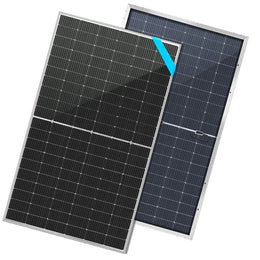
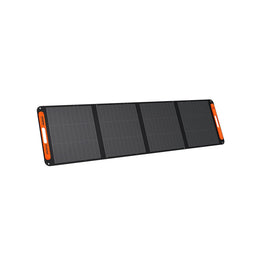
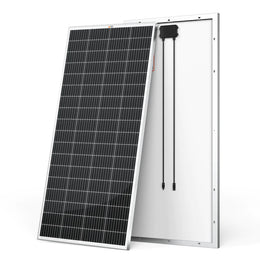
Match the panels to the solar input of the unit. Each Mango Power E accepts up to 2,000 W at 60 to 150 V, so panels are wired in series to reach that window; the Mango Power 200W panel ($399) is the matching portable. The Explorer 2000 v2 takes up to 400 W, the HomePower 3000 up to 1,000 W and the Explorer 5000 Plus up to 4,000 W; the Jackery SolarSaga 200W ($429) fits all three. The Apex 300 needs the separate SolarX 4K controller for solar. More options are in best portable solar panels for power stations, and winter charging limits are covered in the winter power outage guide.
Seven picks for well and sump pumps
Four picks make 240V for well pumps and three are 120V units for sump pumps and 120V well pumps. Codes shown were active on November 15, 2026; one code per order.
| Pick | Price | Output | Surge | Capacity | Best for |
|---|---|---|---|---|---|
| Mango Power E 240V kit | $2,599 | 6,000 W, 120/240V | not listed | 7,060 Wh | 240V well pump up to 1/2 HP, long runtime |
| Jackery Explorer 5000 Plus | $3,499 | 7,200 W, 120/240V | 14,400 W | 5,040 Wh | 1 to 1.5 HP well pumps |
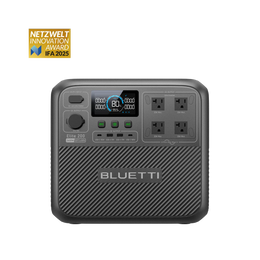
| Bluetti Apex 300 | $1,699 | 3,840 W, 120/240V | 7,680 W | 2,764.8 Wh | Lowest-cost 240V for 1/2 to 3/4 HP |
| Jackery HomePower 3600 Plus Double Kit | $3,979 | 7,200 W, 120/240V | 14,400 W | 7,168 Wh | Well pump plus house loads |
| Jackery HomePower 3000 | $1,499 | 3,600 W, 120V | 7,200 W | 3,072 Wh | 120V well pump or two sump pumps |
| Jackery Explorer 2000 v2 | $999 | 2,200 W, 120V | 4,400 W | 2,042 Wh | One sump pump |
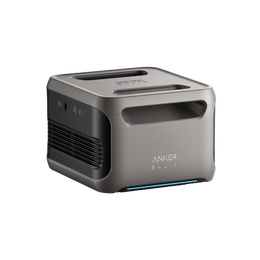
| Anker SOLIX C2000X Gen 2 | $999.99 | 2,400 W, 120V | 4,000 W | 2,048 Wh | Sump pump with fast switchover |
1. Mango Power E 6,000W 240V Kit with mSocket Pro

$2,599 (list $3,149) - 6,000 W at 120/240V, 7,060 Wh - $2,499 with code ECO100
Two Mango Power E stations and the mSocket Pro combiner, which turns them into one 120/240V split-phase source rated 6,000 W and 30 A. With 7,060 Wh on board it holds about 6 hours of pumping at 1,000 W, the most energy per dollar of the 240V picks. Each unit takes up to 2,000 W of solar, uses CATL LFP cells rated for 6,000 cycles and carries a 5-year warranty. The listing gives no surge figure, so we rate it for 240V pumps up to 1/2 HP of any type and up to 1 HP only for soft-starting or 3-wire pumps. Each unit weighs 100 lb and rolls on wheels.
- Lowest price per watt-hour at 240V
- 7,060 Wh covers the pump and a refrigerator for days
- Up to 4,000 W of solar across the two units
- Surge rating not published on the listing
- Two 100 lb units to place and link
- Automatic circuit backup needs the mPanel version
2. Jackery Explorer 5000 Plus

$3,499 (list $3,849) - 7,200 W at 120/240V, 14,400 W surge - $3,399 with code ECO100
The only single unit here with native 240V and a five-figure surge: 7,200 W continuous and 14,400 W peak through a NEMA L14-30 / 14-50 outlet. That clears the 5x start-up figure for a 1.5 HP pump (12,500 W). Capacity is 5,040 Wh, expandable to 60 kWh, with up to 4,000 W of solar input and a 0 ms online UPS mode. Rated for 4,000 cycles, 5-year warranty. At about 134.5 lb it is a park-it-once unit. The listing itself names well pumps among its 240V loads.
- Highest surge of the picks in one box
- Native 240V, no linking hardware
- Expandable to 60 kWh
- Heaviest single unit at about 134.5 lb
- Highest price for a single station
- 4,000 cycles vs 6,000 on the Mango and Apex
3. Bluetti Apex 300

$1,699 - 3,840 W at 120V and 240V, 7,680 W surge - no code
The lowest-cost way into 240V. One 83.78 lb unit supplies 120V and 240V at the same time, 3,840 W continuous with 7,680 W of surge for motor starts. That covers a 1/2 HP well pump of any type and a 3/4 HP pump at the 5x figure, with 2,764.8 Wh for about 2.4 hours of pumping at 1,000 W. Cells are rated for 6,000+ cycles and the warranty is 5 years. Solar charging needs the separate SolarX 4K controller, and the unit must be kept dry.
- 240V from a single unit under $1,700
- Published 7,680 W surge
- 0 ms UPS switchover
- Solar input needs an add-on controller
- Smallest battery of the 240V picks
- No discount codes on Bluetti
4. Jackery HomePower 3600 Plus Double Kit

$3,979 (list $4,377) - 7,200 W at 120/240V, 7,168 Wh - $3,879 with code ECO100
Two HomePower 3600 Plus stations linked with the Jackery Connector for 7,200 W of split-phase output and a listed 14,400 W surge peak on the 240V port. It matches the Explorer 5000 Plus on power and adds 2,128 Wh more storage, in two 77 lb units with wheels and pull handles that one person can move. Cells are rated for 6,000 cycles. Split apart, each unit still works alone as a 3,600 W 120V station, which is handy when the sump pump and the well are at opposite ends of the house.
- 7,168 Wh and 14,400 W surge at 240V
- Two movable 77 lb units instead of one 134 lb unit
- Each station also works alone at 120V
- Costs $480 more than the Explorer 5000 Plus
- 240V only while both units are linked
- Two units to keep charged
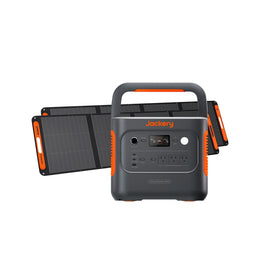
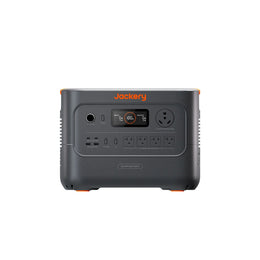
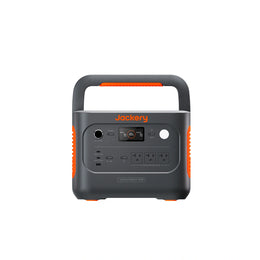
5. Jackery HomePower 3000

$1,499 (list $1,649) - 3,600 W at 120V, 7,200 W surge - no code at this price
For homes where everything critical is 120V: a 120V well or jet pump, one or two sump pumps, the refrigerator. It delivers 3,600 W with a 7,200 W surge and has a 30 A 120V outlet for a small manual transfer switch that backs up as many as six circuits. The 3,072 Wh battery gives about 2.6 hours of pumping at 1,000 W. It weighs 59.5 lb with wheels and a handle, takes up to 1,000 W of solar and can discharge down to 5F at reduced output.
- 7,200 W surge handles two pumps starting close together
- 30 A outlet for a transfer switch
- Light for its capacity
- 120V only - not for 240V well pumps
- $1 under the $1,500 minimum for code ECO100
- 4,000-cycle cells
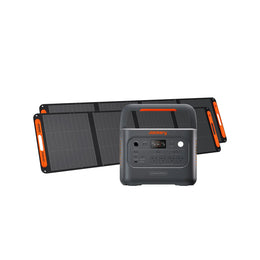
6. Jackery Explorer 2000 v2

$999 (list $1,099) - 2,200 W at 120V, 4,400 W surge - $949 with code ECO50
The straightforward sump pump answer. 2,200 W continuous and a 4,400 W surge clear the 3,300 W start-up figure for a 1/2 HP pump, and 2,042 Wh gives about 1.7 pump-hours: roughly 17 hours of protection in light rain or 7 in steady rain. At 39.5 lb it is easy to carry downstairs and set on a shelf. The listing gives a UPS switchover under 20 ms, so the pump can stay plugged in all year. Solar input is limited to 400 W.
- Lowest price here after code
- 39.5 lb, easy to place off the floor
- UPS mode for unattended switchover
- 400 W solar input is slow to refill
- Not expandable
- One pump only
7. Anker SOLIX C2000X Gen 2

$999.99 (list $1,599.99) - 2,400 W at 120V, 4,000 W peak - no code
A little more continuous power than the Explorer 2000 v2 and a faster 10 ms UPS switchover, which matters if a dehumidifier or a network router shares the unit with the pump. Capacity is 2,048 Wh, expandable to 4,096 Wh with one BP2000 battery for about 3.5 pump-hours. Solar input is 800 W, twice the Jackery. The 4,000 W peak is the lowest surge among the picks, enough for 1/3 and 1/2 HP sump pumps at the 3x figure but with less margin. 41.7 lb, 5-year warranty.
- 10 ms UPS switchover
- Expandable to 4,096 Wh
- 800 W solar input
- Lowest surge figure of the seven
- No discount code today
- 120V only
Which one fits which pump
| Your pump | Pick | Why |
|---|---|---|
| 1/3 or 1/2 HP sump pump | Explorer 2000 v2 or C2000X Gen 2 | 4,000 W+ surge, about 17 hours in light rain |
| Two sump pumps, or a 120V well pump | HomePower 3000 | 7,200 W surge and a 30 A outlet |
| 240V well pump, 1/2 HP | Mango Power E 240V kit or Apex 300 | Most storage, or lowest price |
| 240V well pump, 3/4 HP | Apex 300 (3-wire) or Explorer 5000 Plus (2-wire) | 7,680 W surge is at the limit for a 2-wire pump |
| 240V well pump, 1 to 1.5 HP | Explorer 5000 Plus or HomePower 3600 Plus Double Kit | 14,400 W surge |
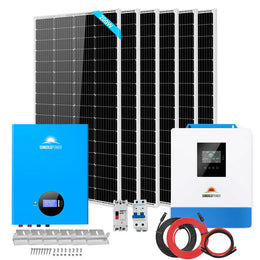
| Over 2 HP, or whole-home backup | Inverter and battery system | Hardwired, higher surge, larger battery bank |
Browse the full range in solar generators, Mango Power power stations and Jackery power stations.
What buyers ask before powering a pump
These questions come from what people type into Google before landing on our pages (Search Console, last 90 days) and from the questions Google shows for pump backup.
What is the best solar generator for a well pump?
The one that matches the pump voltage and clears its start-up surge. For a typical 240V, 1/2 HP submersible pump that is the Mango Power E 240V kit on value or the Bluetti Apex 300 on price. For 1 HP and above it is the Jackery Explorer 5000 Plus, because of its 14,400 W surge.
What is the best battery for sump pump backup?
A dedicated 12V backup pump with a deep-cycle battery is the traditional answer, and it works. A power station does the same job with your existing, stronger main pump, runs other things too, and recharges from solar. For one pump, the Explorer 2000 v2 is enough. If the pit fills fast in storms, step up to the HomePower 3000 for about 50% more runtime.
Can I use a portable power station as an emergency power supply for a sump pump without being home?
Yes, if the model has a UPS or pass-through mode. Leave the station plugged into the wall and the pump plugged into the station. When the grid fails it switches to battery in 10 to 20 ms on the models above and the pump never notices. Check the charge level a few times a year.
We have a deep well pump, a fridge, a freezer and a home office. What should we buy?
This is a common rural setup. Size the output by the well pump surge and the battery by everything else. A refrigerator and freezer together use roughly 2 to 3 kWh a day, an office about 1 kWh, the pump under 1 kWh. A 7 kWh 240V unit such as the Mango Power E 240V kit or the HomePower 3600 Plus Double Kit covers about a day and a half without sun, and 800 W or more of solar stretches that. Runtime detail for the kitchen is in how long a power station runs a refrigerator.
FAQ
Can a solar generator run a well pump?
Yes, if it matches the pump on two points: voltage and start-up surge. Most submersible well pumps are 240V, so the power station needs a 120/240V split-phase output, and its surge rating has to cover 3 to 5 times the running watts of the pump. A 1/2 HP pump that runs at about 1,000 W can need 3,000 to 5,000 W for the first second.
What size solar generator do I need for a 1 HP well pump?
Plan for about 2,000 W running and 6,000 to 10,000 W at start-up, at 240V. In our store that points to a 7,200 W unit with a 14,400 W surge rating such as the Jackery Explorer 5000 Plus. A 3,840 W or 6,000 W unit can start a 1 HP pump only when the pump is a 3-wire model with a control box or has a soft starter, and it leaves little headroom.
Can a 120V power station run a 240V well pump?
No. A 120V-only power station cannot run a 240V pump on its own, however many watts it has. You need a unit with a 120/240V outlet, two units linked through a split-phase connector, or a step-up transformer sized for the start-up surge. Linking two stations or buying a native 240V model is the cleaner route.
How long will a power station run a sump pump?
Divide usable watt-hours by the running watts to get pump-hours, then divide by the share of time the pump runs. A 2,042 Wh station gives about 1.7 hours of actual pumping at 1,000 W. If the pump runs 6 minutes in every hour, that is roughly 17 hours of protection; at 15 minutes per hour it is about 7 hours.
How many watts does a sump pump use?
Most 1/3 HP and 1/2 HP sump pumps draw 800 to 1,100 W while running and two to three times that for a moment at start-up. As a reference, Zoeller lists 9.7 amps at 115V for its M53 and 9.4 amps for its 1/2 HP M98, which is about 1,100 volt-amps each. Read the amps on your own pump label and multiply by the voltage.
Do I need a transfer switch to run a well pump from a power station?
For a hardwired well pump, yes. The safe ways to feed it are a transfer switch or a listed generator interlock with an inlet, installed by a licensed electrician, so the pump circuit can never be fed by the grid and the power station at the same time. A plug-in sump pump does not need one; it plugs straight into the power station.

Serhii Dovzhenko, Solar & Energy Storage Specialist at Eco Solar Kits · LinkedIn
Serhii is based in Vancouver, BC, and works on product data, system sizing and buyer guides for Eco Solar Kits. He attends solar and energy storage industry conferences and is involved in the community of electricians in Vancouver, BC. Credit for the data verification in this guide goes to Adsec.ca.


