



Mango Power is a younger brand than Jackery or Bluetti, but its lineup is built around one idea: a single heavy-duty station, the Mango Power E, that you can use on its own, double with an expansion battery, or pair with a second unit for 240V home backup. Add the newer Mango Power S plug-in solar kits and microinverters, and you have about a dozen product names that are really four or five building blocks in different combinations.
This guide sorts the whole Mango Power range we stock, shows which kit contains which parts, does the runtime and solar math, and points out where a bundle is cheaper than buying parts. All prices are our live prices on November 22, 2026. If you are comparing brands instead, see our Bluetti vs Jackery vs Anker SOLIX comparison; for 240V systems from every brand, our best whole-house solar generators guide goes wider.
The Mango Power lineup at a glance
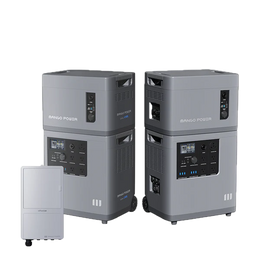
Every Mango Power E product is built from the same parts: A = the E station (3,000W, 3.53 kWh), B = the 3.53 kWh expansion battery, the mSocket Pro (plug-in 240V adapter), the mPanel Pro (hard-wired panel box) and Solar Move portable panels. Here is what each listing contains.
| Product | What is inside | Storage | AC output | Price | Black Friday price |
|---|---|---|---|---|---|
| Mango Power E (station only) | 1x E | 3.53 kWh | 3,000W / 120V | $1,499 | - |
| E 7 kWh 120V bundle | 1x E + 1x battery | 7.06 kWh | 3,000W / 120V | $2,299 | $2,149 |
| E Expansion Battery | 1x battery (add-on) | +3.53 kWh | - | $1,299 | - |
| Solar Generator Kit Pro | 1x E + 2x Solar Move 400W | 3.53 kWh | 3,000W / 120V | $2,499 | $2,349 |
| Big Battery Solar Generator Kit | 1x E + 1x battery + 2x 400W | 7.06 kWh | 3,000W / 120V | $3,359 | $3,209 |
| Solar Generator Kit Ultra | 1x E + 1x battery + 4x 400W | 7.06 kWh | 3,000W / 120V | $4,299 | $3,899 |
| 240V Power Kit (mSocket Pro) | 2x E + mSocket Pro | 7.06 kWh | 6,000W / 120/240V | $2,999 | $2,849 |
| 240V Home Backup Kit (mPanel Pro) | 2x E + mPanel Pro | 7.06 kWh | 6,000W / 120/240V | $3,499 | $3,349 |
| 240V Power Kit Pro 14 kWh | 2x E + 2x battery + mSocket Pro | 14.12 kWh | 6,000W / 120/240V | $4,399 | $3,999 |
| 240V 14 kWh Kit with mPanel Pro | 2x E + 2x battery + mPanel Pro | 14.12 kWh | 6,000W / 120/240V | $4,899 | $4,499 |
| Solar Move 400W panel | 1x 400W foldable panel | - | - | $599 | - |
| S PIPV 1200W Plug-In Kit + Gateway | 4x 300W panel + 4x microinverter + Gateway | no battery | 1,200W grid-tie / 120V | $2,698 | $2,548 |
| S Pro 5,000W Microinverter Set | 10x 500W microinverter + Gateway | no battery | 5,000W grid-tie / 240V | $2,608 | $2,458 |
The Black Friday column is our automatic cart discount ($150 off $1,500+, $400 off $4,000+ on eligible products), running through December 1, 2026. It does not stack with promo codes. The standalone E at $1,499 sits $1 under the $1,500 tier, so on its own it ships at the store price; with any other eligible item in the cart, the ECO100 code ($100 off $1,500+) applies instead. Browse everything in our Mango Power collection.
Mango Power E: the 3,000W / 3.53 kWh core unit
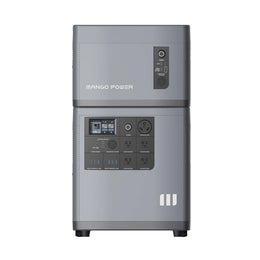
The Mango Power E is the heart of every kit. It is a wheeled, 100 lb station with a 3,000W pure sine inverter and 3.53 kWh of CATL LFP (lithium iron phosphate) cells - the same cell maker used in many electric vehicles. That makes it a class above 1-2 kWh camping stations: it can run a full-size fridge, a microwave or a window AC, and it has a 30A RV outlet for a travel trailer.
| Spec | Mango Power E | What it means |
|---|---|---|
| Battery | 3.53 kWh CATL LFP | About 3 kWh usable after inverter losses |
| AC output | 3,000W continuous, 120V; overload 3,150-4,800W for short periods | Starts most fridges, pumps and power tools |
| Cycle life | 6,000 cycles to at least 70% capacity (25 C) | About 16 years at one full cycle per day |
| Solar input | Up to 2,000W, 60-150V, 1 MPPT | Needs at least two Solar Move panels in series |
| AC charging | Up to 3,000W; 80% in about 1 hour, full in about 1.5 hours | One of the fastest wall recharges in this class |
| Other charging | Generator, EV charger (with adapter), car | Flexible in long outages |
| Outlets | 16 ports: 4x 20A AC, 30A RV, 6x USB-A, 2x USB-C (65W + 100W), 12V car + 2x DC5521 | Covers RV, home and devices |
| Size / weight | 17.8 x 13.6 x 19.4 in, 100 lb | Wheels and handle; not a carry-by-hand unit |
| Temperature | Charge -4 to 140 F, discharge -22 to 140 F | Can charge below freezing, unlike many LFP batteries |
| Noise / rating | Under 40 dB idle, under 51 dB full load; IP21 | Indoor or covered use only |
| Warranty | 5 years (station listing) | - |
Two specs stand out. First, the charge window starts at -4 F, so the E can refill from solar in a cold garage where many LFP packs refuse to charge below 32 F (our winter outage backup guide explains why that matters). Second, the 1.5-hour wall recharge means you can top it up during a short grid window or from a generator without running the generator all day.
Expansion battery and the 7 kWh bundle
The Mango Power E Expansion Battery adds another 3.53 kWh and plugs into the E with one cable (the E+ connection cable is included). It weighs 73 lb, has its own USB-A, USB-C (100W) and 12V ports, and works only with the Mango Power E. One battery per station is the limit, so a single E tops out at 7.06 kWh.
The price math is the interesting part. Bought separately, the station ($1,499) plus the battery ($1,299) cost $2,798. The E 7 kWh 120V Home Backup bundle - the same two boxes - is $2,299, and $2,149 during Black Friday. That is about $326 per kWh at the store price, the lowest of any 120V Mango Power configuration. Buy the add-on battery alone only if you already own an E.
What 7.06 kWh means in practice: about 6 kWh usable, which covers a fridge, internet, lights, phones and a few hours of TV for two to four days. A 1,500W space heater, by contrast, would drain it in about four hours, so plan heat around gas, wood or a heat pump instead.
240V kits: mSocket Pro vs mPanel Pro
A single Mango Power E is 120V only. For a well pump, electric dryer, 240V water heater element or central AC, you link two E stations into a 6,000W, 120/240V split-phase source. Mango Power gives you two ways to do that:
| mSocket Pro (240V Power Kits) | mPanel Pro (Home Backup Kits) | |
|---|---|---|
| What it is | Portable adapter that keeps both inverters in phase and gives a 240V outlet (plus 120V) | Smart panel integration box wired between your utility feed and essential-loads panel |
| Install | Plug-in; feeding house circuits needs an interlock or transfer switch installed by an electrician | Electrician required (NEC and local code) |
| When the grid fails | You switch over by hand | Essential circuits move to battery automatically |
| Grid recharge | From wall outlets | Through the mPanel Pro when the grid returns |
| Kits (7.06 kWh) | 240V Power Kit - $2,999 | Home Backup Kit - $3,499 |
| Kits (14.12 kWh) | 240V Power Kit Pro - $4,399 | 14 kWh kit with mPanel Pro - $4,899 |
| Best for | Portable 240V for a pump or shop, or a budget home setup with a manual interlock | Hands-off backup that works when nobody is home |
Both 240V kits deliver the same 6,000W and accept up to 4,000W of solar (2,000W per station). The difference is purely how they connect to the house. If you already have a generator interlock and inlet, the mSocket Pro kits are the cheaper path. If you want the lights to stay on without walking to the garage, the mPanel Pro is worth the extra $500. For the wiring options in detail, read our split-phase explainer; for pump start-up loads, see solar generators for well pumps.
One limit to respect: 6,000W is the ceiling for the pair. A 3-ton central AC (roughly 3,500W running, more at start) fits, but not at the same time as a dryer and a well pump. List your 240V loads and stagger the big ones.
Solar generator kits and Solar Move panels
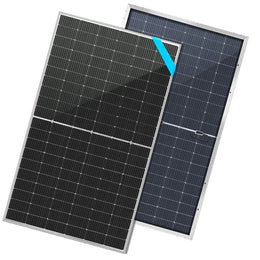
Mango Power's solar generator kits add Solar Move 400W foldable panels ($599 each): 23% efficient monocrystalline cells, IP67, 17.2 lb, MC4 leads, 40.8V open-circuit voltage (Voc), 32.4V at max power (Vmp) and 11.7A. Because the E's MPPT needs 60-150V, panels must go in series - one panel alone will not charge it.
| Array | Wiring | Voc (cold, our calc) | Vmp | Solar watts | Daily harvest at 4.5 sun hours |
|---|---|---|---|---|---|
| 2x Solar Move 400W | 2 in series | 81.6V (about 91V cold) | 64.8V | 800W | about 2.9 kWh |
| 3x Solar Move 400W | 3 in series | 122.4V (about 137V cold) | 97.2V | 1,200W | about 4.3 kWh |
| 4x Solar Move 400W (Kit Ultra) | 2 series x 2 parallel | 81.6V (about 91V cold) | 64.8V | 1,600W | about 5.8 kWh |
| 5x Solar Move 400W | Not valid: 4+ in series exceeds 150V | - | - | - | - |
Harvest assumes 4.5 peak sun hours and a 0.8 real-world factor (angle, heat, wiring). Cold Voc uses about +12% for a 14 F morning. A practical tip from the math: two panels in series put Vmp at 64.8V, only a few volts above the E's 60V floor. On a hot day panel voltage sags, so a three-panel series string (97V Vmp, still under 150V cold) keeps the MPPT working in summer heat and gives 50% more power. Our guide on matching solar panels to a power station walks through this check for any brand.
Kit pricing again rewards bundles: the Solar Generator Kit Ultra (E + battery + four panels + parallel cable) is $4,299, against $4,557 for the Big Battery Solar Generator Kit ($3,359) plus two extra panels ($1,198). And the Big Battery kit itself is $138 cheaper than the 7 kWh bundle plus two loose panels. If you start with the Solar Generator Kit Pro (E + two panels, $2,499), you can add the expansion battery and more panels later.
Mango Power S: plug-in solar and microinverters
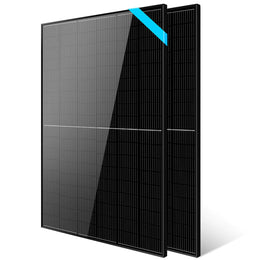
Mango Power S is a different product: grid-tie solar with no battery. The S PIPV 1200W Plug-In Solar Kit pairs four 300W N-type TOPCon panels with four microinverters that plug into a regular 120V outlet. Each microinverter is firmware-limited to 280W at 120V for plug-in use, carries UL 1741-SA/SB and IEEE 1547 listings, is sealed to NEMA 6P / IP68 and has a 25-year warranty. Mango Power estimates about 6 kWh a day at 5 sun hours. The included Smart Gateway Lite clamps on your main feed (up to 200A) and throttles output within 200 ms so nothing exports to the grid - Mango Power requires it outside Utah.
The S Pro 5,000W Microinverter Set is the hard-wired version: ten 500W, 240V microinverters, the 10-in-1 trunk cable and the Gateway, for a 5 kW array with your own panels (16-60V MPPT range; Mango Power suggests a 1.2-1.5 DC/AC ratio). It needs an electrician and utility interconnection like any grid-tie system.
Two points to know before buying either. Plug-in solar is legal in some states and still a gray area in others, so check your utility's interconnection rules (our solar rebates by state guide links each state's energy office). And neither kit powers your home in a blackout - the microinverters shut off when the grid does. For backup, pair solar with a battery system such as the E kits above.
Sizing math: runtime, recharge and price per kWh
Quick sizing rule for Mango Power E systems: usable energy is about 85% of rated capacity (inverter efficiency up to 88%, plus a small reserve). Divide by your average load in watts to get hours.
Worked example: a fridge (about 150W average), internet router (15W), LED lights (60W) and a TV in the evening (100W for 5 hours) average roughly 250W over a day, or 6 kWh. One E covers about half a day; the 7.06 kWh bundle covers a full day with margin; 14.12 kWh covers about two days. Add an 800W array and you replace roughly 2.9 kWh a day in fair weather, which stretches the 7 kWh setup to three or four days. Our battery runtime guide has load tables for bigger homes.
The chart shows why the bundles are the smart buy: the 240V Power Kit Pro (14.12 kWh) is the cheapest per kWh at $312, or $283 during Black Friday, while the station alone is $425. The Home Backup Kit costs the most per kWh because you are paying for automatic switching, not storage.
Best Mango Power picks for 2026
Mango Power E 7 kWh 120V bundle - best value

The station and expansion battery together for $499 less than buying them separately. 7.06 kWh behind a 3,000W inverter handles a fridge, internet, lights and medical devices for two to four days, and the 30A RV outlet makes it a strong trailer or cabin battery.
$2,299 (Black Friday $2,149)
See price and stockMango Power E 240V Power Kit Pro (14.12 kWh) - best for 240V loads

Two stations, two batteries and the mSocket Pro: 6,000W of split-phase power and 14.12 kWh, enough to run a well pump and essential circuits for days. Cheapest Mango Power storage per kWh.
$4,399 (Black Friday $3,999)
See price and stockMango Power E 240V Home Backup Kit (mPanel Pro) - best automatic backup

Two E stations and the mPanel Pro, wired by an electrician so essential circuits switch to battery the moment the grid drops. Grows to 14.12 kWh with one expansion battery per station.
$3,499 (Black Friday $3,349)
See price and stockMango Power E Big Battery Solar Generator Kit - best ready solar setup

Station, expansion battery and two Solar Move 400W panels in one order. 7.06 kWh of storage plus about 2.9 kWh a day of solar in fair weather, and room to add panels up to the 2,000W input limit.
$3,359 (Black Friday $3,209)
See price and stockMango Power E 3,000W 3.5 kWh - best single station

The core unit on its own: 3,000W, 3.53 kWh, 16 ports and a 30A RV outlet. Start here if you want one portable unit now and the option to add a battery or a second station for 240V later.
$1,499
See price and stockMango Power S PIPV 1200W Plug-In Kit + Gateway - best for cutting the bill

Four 300W panels with their own microinverters plug into a 120V outlet; the Gateway keeps you zero-export. A low-effort way to offset daytime use where your utility allows plug-in solar.
$2,698 (Black Friday $2,548)
See price and stockWhat buyers ask before buying Mango Power
These questions come from Google searches that lead to our Mango Power pages and from Google's own question results for the brand. Answers use our live listings.
Do I need the expansion battery, or a second station?
Ask what you need more of. If it is runtime at 120V, add the expansion battery (or buy the 7 kWh bundle). If you need 240V or more than 3,000W at once, you need a second station and an mSocket Pro or mPanel Pro. You can do both: each station takes one battery, for 14.12 kWh total.
Is the "240V Power Kit" a whole-home system?
It is a 6,000W split-phase source, which covers the essential circuits of most homes, not every circuit at once. A whole house with central AC, an electric range and a dryer running together needs more - see our whole-home battery backup cost guide for 10-20 kW systems.
Can I use non-Mango solar panels?
Yes, as long as the string lands inside 60-150V (cold Voc under 150V) and total power stays at or under 2,000W per station. Most 100-200W rigid panels need three or four in series; check the panel's Voc before wiring.
Which Mango Power product is a battery for my house?
The E with its expansion battery is the Mango Power home battery. It stays portable, but with the mPanel Pro it behaves like a wall battery on your essential circuits. The S series has no battery.
FAQ
Is the Mango Power E being discontinued?
Our listing for the standalone Mango Power E 3,000W 3.5 kWh station carries Mango Power's note that discontinuation is planned and inventory is limited. Every Mango Power E product and kit on this page was in stock on November 22, 2026. The CATL LFP cells, 6,000-cycle rating and listed 5-year warranty are unchanged.
Can the Mango Power E output 240V?
Not on its own. One Mango Power E is a 120V, 3,000W station. Two stations linked with the mSocket Pro (plug-in 240V outlet) or the mPanel Pro (hard-wired panel integration by an electrician) give 6,000W of 120/240V split-phase power for well pumps, dryers and other 240V loads.
What is the difference between mSocket Pro and mPanel Pro?
The mSocket Pro is a portable adapter that joins two Mango Power E stations into a 240V outlet; feeding house circuits from it needs an interlock or transfer switch. The mPanel Pro is a smart panel box an electrician wires to your essential-loads panel, so those circuits switch to battery automatically when the grid fails.
How long will the Mango Power E run a refrigerator?
A typical full-size refrigerator uses about 1.2-2 kWh a day. With roughly 3 kWh usable, one Mango Power E runs it for about 1.5-2.5 days on its own; the 7.06 kWh bundle covers about 3-5 days. Add solar and the runtime extends for as long as the sun keeps up.
Can one Solar Move 400W panel charge the Mango Power E?
No. The E's solar input needs 60-150V, and one Solar Move 400W panel has a 40.8V open-circuit voltage, so it will not start charging. Wire at least two panels in series (about 81V). Three in series also fits the window and leaves more headroom on hot days.
Does the Mango Power S plug-in solar kit work during a blackout?
No. The Mango Power S PIPV kit is grid-tied: its microinverters shut down within 100 microseconds when the outlet loses grid power. It lowers your bill on sunny days but needs a separate battery system for backup.
Still choosing? Compare these with other brands in our Mango Power kits, Mango Power stations and expansion batteries pages, or call us at +1 307 317 7213 with your load list.

Serhii Dovzhenko, Solar & Energy Storage Specialist at Eco Solar Kits · LinkedIn
Serhii is based in Vancouver, BC, and works on product data, system sizing and buyer guides for Eco Solar Kits. He attends solar and energy storage industry conferences and is involved in the community of electricians in Vancouver, BC. Credit for the data verification in this guide goes to Adsec.ca.


