


A power station is only a solar generator once panels can refill it, and the pairing is where most first-time buyers go wrong. Some buy a 100 W panel for a station that takes 2,000 W and wonder why it charges all weekend. Others wire three panels in series, push the voltage past the input limit and void the warranty on a cold morning. This guide shows how to check any pairing in about two minutes: the voltage window, the watt limit, the current limit and the plug. Every number below comes from the spec sheets on our listings, checked November 17, 2026. If you are still choosing the station itself, start with what size solar generator do I need; if you already own one and want panel picks, see our best portable solar panels for power stations.
The three checks that decide a match
Every power station has a built-in MPPT solar charge controller, so you never add a separate controller. That controller accepts power only inside fixed limits, printed in the manual as something like "12-60V, 20A, 1,000W max". Those three figures are the whole game:
- Voltage window. The panel string's open-circuit voltage (Voc) must stay below the maximum input voltage, even on the coldest morning you will use it. The string's working voltage (Vmp) must stay above the minimum, or the station will not start charging. This is the only check that can damage hardware.
- Watt limit. The station converts no more than its rated solar watts. Extra panel watts are clipped, not harmful, but they are wasted money unless you plan for cloudy days or a poor angle.
- Current limit. If the string's current is above the input's amp rating, most stations simply cap it. It costs you watts, not hardware, but check the manual: a few makers set a hard maximum for short-circuit current (Isc).
The fourth, practical check is the connector: MC4, XT-60, DC8020 (8 mm) or Anderson. A plug mismatch is solved with a $15-30 adapter cable; a voltage mismatch is not.

A folding 350 W panel feeding a power station (manufacturer photo). One high-voltage panel often matches a station better than two small ones.
Solar inputs of popular power stations
These are the stations behind the setups later in this guide, with the input figures from their spec sheets. Note how different they are: the Mango Power E will not even start below 60V, while the Jackery and Bluetti inputs stop at 60V.
| Station | Capacity | Solar voltage window | Max current | Max solar watts | Solar plug |
|---|---|---|---|---|---|
| Jackery Explorer 1000 v2 | 1,070 Wh | 12-60V (2 ports) | 10.5 A per port, 21 A total | 400 W | DC8020 |
| Jackery Explorer 2000 v2 | 2,042 Wh | 11-60V (2 ports) | 12 A per port, 21 A total | 400 W | DC8020 |
| Jackery HomePower 3000 | 3,072 Wh | 12-60V (2 ports) | 12 A per port, 24 A total | 1,000 W | DC8020 |
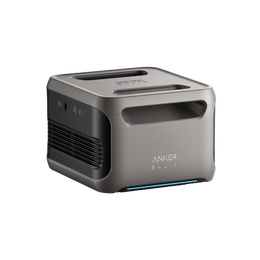
| Anker SOLIX C1000 Gen 2 | 1,024 Wh | 11-28V or 29-60V | 8.2 A low band, 14.5 A high band | 600 W | XT-60 |
| Anker SOLIX C2000X Gen 2 | 2,048 Wh | 11-60V | 17 A | 800 W | XT-60 |
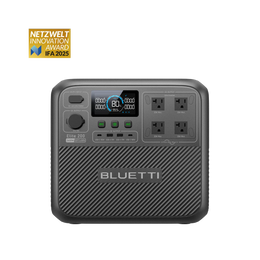
| BLUETTI Elite 200 V2 | 2,074 Wh | 12-60V | 20 A | 1,000 W | Solar cable included |
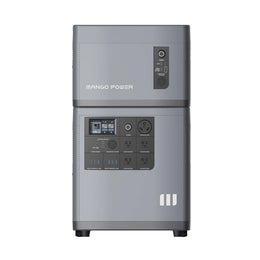
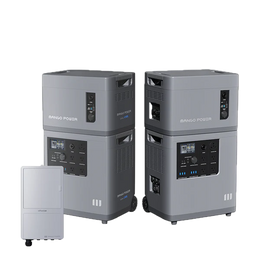
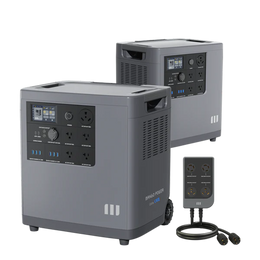
| Mango Power E | 3,530 Wh | 60-150V | see manual | 2,000 W | MC4 |
The Anker C1000 Gen 2 is a good example of why the voltage band matters: below 28V it takes only 8.2 A (about 230 W at best), so a single 12V-class panel can never reach its 600 W limit. Two panels in series move it into the 29-60V band, where it accepts 14.5 A.
The panel specs that matter
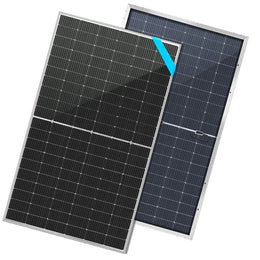
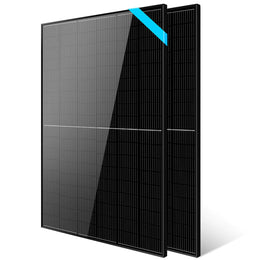
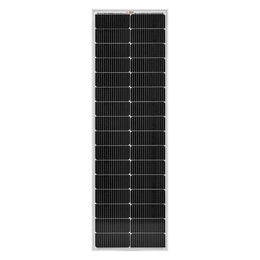
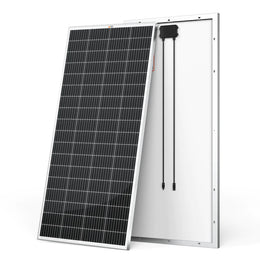
Ignore efficiency and cell type for matching. Read the label on the back of the panel for four values: Pmax (watts), Voc, Vmp and Isc. Here are the portable panels we stock that fit the stations above:
| Panel | Watts | Voc | Vmp / Imp | Isc | Plug | Weight | Price |
|---|---|---|---|---|---|---|---|
| Jackery SolarSaga 200W | 200 W | 22V | 18V / 11.5 A | 12.5 A | DC8020 | - | $429 |
| Jackery SolarSaga 100 Prime | 100 W | 22V | 18V | - | Anderson (DC8020 adapter incl.) | - | $199 |
| Anker SOLIX PS100 Bifacial | 100 W | not listed | 21.6V / 4.63 A | - | XT-60 | 6.2 lb | $249.99 |
| BLUETTI PV200 | 200 W | 26.1V | 20.5V / 9.7 A | 10.3 A | MC4 | 16.1 lb | $384.99 |
| BLUETTI PV350 | 350 W | 46.5V | 37.5V / 9.2 A | 10.8 A | MC4 | 30.6 lb | $629.99 |
| Mango Power Solar Move 400W | 400 W | 40.8V | 32.4V / 11.7 A | 12.36 A | MC4 | 17.2 lb | $599 |
The pattern to notice: "12V-class" panels (Voc around 22-26V) can go two in series on a 60V input. "24V-class" panels (Voc around 40-47V) can only go one per 60V input, but suit high-voltage stations like the Mango Power E perfectly.
Matching math, step by step
Use this five-step check for any panel and any station. We will run it for two BLUETTI PV200 panels on an Elite 200 V2.
- String Voc. Series adds voltage: 2 x 26.1V = 52.2V. Parallel keeps it at 26.1V.
- Cold-weather margin. Panel voltage rises as temperature drops, by about 0.3% per °C below 77°F (25°C). At 14°F (-10°C) that is roughly +10%: 52.2V x 1.1 = 57.4V. Under the 60V limit, so it passes, but only just. A third panel in series (86V cold) would fail.
- Minimum voltage. String Vmp (2 x 20.5V = 41V) is above the 12V start voltage. Pass.
- Current. Series keeps current at one panel's value: 9.7 A working, 10.3 A short-circuit, under the 20 A limit. Pass. Two series pairs wired in parallel (2S2P) would give 19.4 A working, still under 20 A.
- Watts. 400 W of panels on a 1,000 W input: safe, just slower. In good sun expect about 300 W into the battery after heat, angle and wiring losses (we use a 0.75 factor).

The chart shows the three most common failures we see in questions about pairing: a third Jackery panel in series, two 24V-class panels in series on a 60V input, and a fourth panel on the Mango Power E. All three look fine on a warm afternoon and exceed the limit on a frosty morning, when Voc peaks before the station starts drawing current. The full wiring math, including mixed strings, is in our series vs parallel wiring guide.
Series or parallel for a power station
Series raises voltage and keeps current low; parallel keeps voltage and adds current. For power stations the choice follows the input:
- Low-voltage inputs (12-60V), such as Jackery, Anker C-series and the Elite 200 V2: two 12V-class panels in series is the sweet spot. Add more in parallel pairs (2S2P) only if the current limit allows.
- High-voltage inputs (60-150V), such as the Mango Power E: series is required. Two Solar Move 400W panels make 65V working voltage; three give more headroom on hot days, when panel voltage sags.
- Jackery dual ports: each DC8020 port is its own input. Two SolarSaga 200W panels can run one per port, or two in series per port on the HomePower 3000, which takes 12 A per port and 1,000 W total.
Series is also better for long cable runs: higher voltage means lower current and smaller voltage loss in a 30-50 ft extension. Parallel is better when panels are partly shaded at different times, because one shaded panel does not drag the whole string down.
Connectors and adapters
Brands use four main solar plugs. Here is what each looks like in practice and what you need to mix them:
| Plug | Used by | Notes |
|---|---|---|
| MC4 | Mango Power, BLUETTI panels, most rigid panels | Industry standard, weatherproof, locks. Series and parallel with standard MC4 Y-branches. |
| XT-60 / XT-60i | Anker SOLIX stations and panels | Compact DC plug. MC4-to-XT-60 cables connect third-party panels. |
| DC8020 (8 mm) | Jackery Explorer v2, HomePower | Jackery panels include a DC8020 to DC7909 adapter for older stations. |
| Anderson | Jackery SolarSaga 100 Prime and 500 X | Ships with an Anderson to DC8020 adapter; Jackery sells Anderson series and parallel Y-connectors. |
An adapter changes the plug, not the electrical match. A 46.5V BLUETTI PV350 on an MC4-to-DC8020 cable is fine on one Jackery port (51V cold), but two in series would still destroy the input. Some manufacturers only support their own panels for warranty claims, so check the station's warranty terms before mixing brands.
Can you use more panel watts than the input?
Yes, as long as voltage stays inside the window. The controller pulls only what it can convert, so a 1,000 W input with 1,200 W of panels simply caps at 1,000 W at midday. Mild over-paneling (10-30%) makes sense because portable panels rarely deliver their rated watts: heat, angle and haze cut output to 70-80% of the label. Under-paneling is the bigger, more common waste. It turns a three-hour refill into a two-day one:

Read the chart against the sun you actually get: 4-5 peak sun hours on a clear summer day in most of the US, 2-3 in winter. Any setup above about 5 hours will not refill from empty in one winter day. That is why a bundle with one starter panel is a beginning, not a finished system.
6 matched station and panel setups
Each setup below passes all three checks with the panels listed. Prices are our live prices on November 17, 2026. ECO100 takes $100 off $1,500+ on eligible items; codes do not stack.
1. Mango Power E Solar Generator Kit Pro (2 x Solar Move 400W)

$2,499 (list $2,759) - 3,000 W, 3,530 Wh, 2,000 W solar input at 60-150V, 800 W of panels included
The two 400 W panels wire in series straight into the E's MC4 input: 81.6V Voc (about 90V cold) inside a 150V ceiling, and 65V working voltage above the 60V start point. Add a third panel in series for 1,200 W and better hot-day headroom, or a second pair in parallel (2S2P, 1,600 W) with Mango's parallel cable. Never four in series. The station uses CATL LFP cells rated for 6,000 cycles with a 10-year battery warranty and expands to 14,120 Wh. With four panels it refills from empty in about 3 hours of good sun.
- 2,000 W input, room to grow
- High-voltage input suits long cables
- Panels pre-matched, MC4 cable included
- Needs at least two panels in series
- Station alone is 92.6 lb
- Panels have an 18-month warranty
2. Jackery Solar Generator 2000 v2 + 2 x SolarSaga 200W

$1,399 (list $1,539) - 2,200 W, 2,042 Wh, 400 W solar input, 400 W of panels included
This kit is already maxed out: two 200 W panels, one per DC8020 port, exactly fill the 400 W input. There is nothing to calculate and nothing to buy later, which makes it the simplest answer to "which panels for a 2000W power station". The trade-off is the ceiling: a full refill takes about 7 hours of good sun, so plan on topping up daily rather than recovering from empty in winter.
- Fully matched out of the box
- Two inputs, no Y-cables needed
- Bifacial panels with USB ports
- 400 W cap, no upgrade path
- About 7 h refill
- No code applies
3. Jackery Explorer 1000 v2 + SolarSaga 200W

$879 (list $967) - 1,500 W, 1,070 Wh, 400 W solar input, 200 W panel included
One SolarSaga 200W uses half the input and refills the station in about 7 hours. Add a second SolarSaga 200W ($429) on the other DC8020 port and refill time halves to about 3.5 hours: the full 400 W match. Good for camping, an RV weekend or a fridge through a short outage.
- Lowest price for a matched kit here
- 38 lb kit total
- Clear upgrade to 400 W
- Half-paneled as sold
- 10.5 A per port limit
- 1 kWh is light for home backup
4. Jackery Solar Generator HomePower 3000 + 2 x SolarSaga 200W

$2,149 (list $2,364; $2,049 with ECO100) - 3,600 W, 3,072 Wh, 1,000 W solar input, 400 W of panels included
Here the starter panels fill only 40% of the input, which is why the refill takes about 10 hours. The fix is two more SolarSaga 200W panels: wire two in series on each port with a DC8020 series adapter cable (44V, 11.5 A per port, inside the 12 A limit) for 800 W and about a 5-hour refill. The last 200 W of input needs higher-voltage panels than the SolarSaga 200W. The 30 A RV outlet and 3,600 W output make this the home-backup choice in the Jackery group.
- 1,000 W input, room for 4 panels
- ECO100 applies
- 3,600 W runs most 120V appliances
- Under-paneled as sold
- 88 lb kit, wheeled station
- Series pairs need a series adapter cable
5. BLUETTI Elite 200 V2 + 2 x BLUETTI PV200

$899 + 2 x $384.99 = $1,668.98 - 2,600 W, 2,074 Wh, 1,000 W solar input at 12-60V
The worked example from the math section. Two PV200 panels in series reach 52.2V (57V cold) on a 60V input and deliver about 300 W in good sun. Double it to four panels as two series pairs in parallel for 800 W and a 3.5-hour refill. What does not work: two PV350 panels in series (93V). Two PV350s in parallel do fit (46.5V, 21.6 A short-circuit, clipped at 20 A), giving about 700 W. The station has a 5-year warranty and expands to 5,122 Wh.
- 1,000 W input at a low station price
- 2,600 W continuous output
- Two clean upgrade paths
- Bought separately, not a bundle
- 60V ceiling limits series strings
- PV200 panels have IP65, not IP67
6. Anker SOLIX C1000 Gen 2 + PS100 Bifacial

$549.99 (list $799.99) + $249.99 (list $399.99) = $799.98 - 2,000 W, 1,024 Wh, 600 W solar input
The PS100 Bifacial weighs 6.2 lb, is IP68 rated and plugs straight into the C1000 Gen 2's XT-60 input. One panel at about 21.6V sits in the low band (8.2 A), which is fine for 100 W. Two in series run at about 43V in the 29-60V band; before wiring two, confirm on the panel label that 2 x Voc x 1.1 stays under 60V. For the full 600 W you need larger panels. The C1000 Gen 2 itself recharges from the wall in 49 minutes, so solar is the top-up, not the main source.
- Under 32 lb for station and panel
- IP68 panel, 5-year warranties
- Very fast wall charging
- 100 W is a small share of 600 W
- Bundle version currently sold out
- Not expandable
More bundles are in our solar power generator kits, Jackery solar generator kits and Mango Power kits collections; loose panels are under portable solar panels.
5 matching mistakes to avoid
- Checking Voc at room temperature only. The cold-morning value is the one that counts. Multiply by 1.1, or 1.15 in a hard winter.
- Too few volts for a high-voltage input. One 400 W panel cannot start a 60-150V input like the Mango Power E. Two in series is the minimum.
- Paying for watts the station cannot use. 800 W of panels on a 400 W input mostly buys spare capacity for cloudy days.
- Ignoring the low-voltage band. Stations like the Anker C1000 Gen 2 accept far less current below about 28V, so one 12V-class panel never reaches the rated input.
- Treating an adapter as permission. A plug adapter fixes the connector, never the voltage. Do the math first.
What buyers ask before pairing panels
These come from the searches that bring people to our solar generator kit pages and from the questions Google shows for this topic.
Can I use any solar panel with my power station?
Any panel works electrically if its string voltage stays inside the station's window, cold Voc included, and you have the right plug or adapter. Same-brand panels save you the math and the adapter, and some makers only support their own panels under warranty.
Which solar panels do I need for a 2000W power station?
The 2000 W is output, not solar input. Check the input instead: the Jackery Explorer 2000 v2 takes 400 W (two SolarSaga 200W), the BLUETTI Elite 200 V2 takes 1,000 W and the Anker C2000X Gen 2 takes 800 W. Match panels to that number.
What about a 3000W power station?
Same rule. The Jackery HomePower 3000 accepts 1,000 W at up to 60V, while the Mango Power E (3,000 W) accepts 2,000 W at 60-150V. The second needs completely different, higher-voltage strings.
Are portable solar panels waterproof?
Water resistant, not waterproof in the everyday sense. Ratings on our panels run from IP65 (BLUETTI PV200 and PV350, splash and rain resistant) to IP67 (Solar Move 400W) and IP68 (SolarSaga 200W, PS100 Bifacial). Keep the station and the connections dry: power stations are not rain rated.
Can I mix different panels?
Only with care. In series, the string runs at the lowest panel's current; in parallel, at the lowest panel's voltage. Mixing a 200 W and a 400 W panel wastes much of the larger one. Use identical panels in each string.
FAQ
How do I know if a solar panel is compatible with my power station?
Compare four numbers: the panel string's Voc times 1.1 must be below the station's maximum input voltage, the working voltage must be above its minimum, the watts should be near its solar input limit and the plug must fit, directly or with an adapter.
What happens if the solar panel voltage is too high?
The station may shut the input off to protect itself, or the charge controller can be damaged. Over-voltage damage is usually not covered by warranty. Too little voltage is harmless: the station just will not charge.
Should I connect solar panels in series or parallel to a power station?
On 12-60V inputs, two 12V-class panels in series is usually best; larger arrays add parallel pairs. On 60-150V inputs such as the Mango Power E, series is required. Always check cold Voc against the limit.
Can I use a 400W solar panel on a power station with a 200W input?
Yes, if the voltage fits. The station caps intake at 200 W, so you lose the extra at midday but gain charging in clouds, shade or low winter sun.
Do I need a charge controller for a power station?
No. Every modern power station has a built-in MPPT solar charge controller. Plug the panels into its solar input, never into an AC outlet or the car port.
How many solar panels do I need to charge a power station in one day?
Divide capacity by peak sun hours and 0.75. A 2,000 Wh station in 5 sun hours needs about 530 W of panels; in 3 winter hours, about 890 W, if its input allows that much.

Serhii Dovzhenko, Solar & Energy Storage Specialist at Eco Solar Kits · LinkedIn
Serhii is based in Vancouver, BC, and works on product data, system sizing and buyer guides for Eco Solar Kits. He attends solar and energy storage industry conferences and is involved in the community of electricians in Vancouver, BC. Credit for the data verification in this guide goes to Adsec.ca.


