

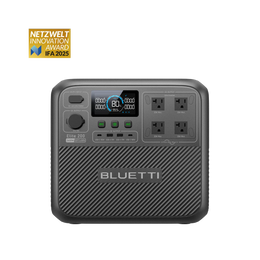
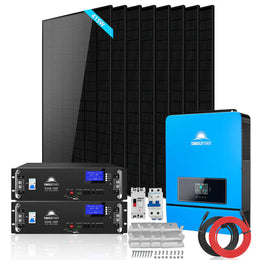
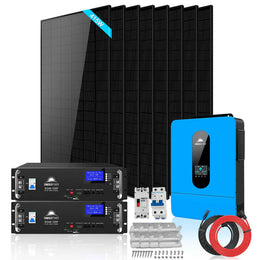
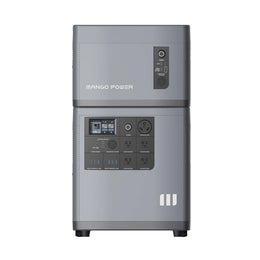


Every power station box quotes a solar charge time, and almost nobody gets it. The quoted figure assumes the station's maximum solar input, perfect sun and no load. This guide shows the math we use when we size kits for customers, applies it to eight setups we sell today, and explains what you can change - panels, wiring, angle, timing - to get closer to the box number. If you are still choosing panels, read how to match solar panels to a power station first; this guide assumes the panels already fit.
The solar charge-time formula (and why 0.8)
Three numbers decide how long a solar charge takes: the battery's usable capacity in watt-hours (Wh), the watts your panels actually deliver, and the station's maximum solar input. The station takes whichever is lower - your panels or its input limit.
Days of real sun = those hours / your peak sun hours per day
Why 0.8? A panel's rated watts are measured at 25 C cell temperature and 1,000 W of sunlight per square meter. On a real day the cells run 20-30 C hotter, the sun is rarely square to the panel, cables and the MPPT controller lose a few percent, and charging the battery has its own losses. Across portable setups we see 65-85% of the label; 0.8 is a fair planning number for a well-aimed panel in clear weather. Use 0.7 for flat-on-the-ground panels or hot afternoons.
Worked example: a 1,536 Wh station with two 200 W panels. 400 W x 0.8 = 320 W of real charge. 1,536 / 320 = 4.8 hours of full sun. With 4.5 peak sun hours a day (a typical US average), that is about 1.1 days. Plug in your own station and the answer is rarely more than 30 minutes off on a clear day.
Solar charge times for real setups
We applied the formula to setups built from products in stock on November 17, 2026. Capacity and maximum solar input come from each listing; hours assume full sun from empty to full with no load.
| Setup | Capacity | Max solar input | Panels | Hours of full sun (x0.8) | Days at 4.5 sun hours | Price |
|---|---|---|---|---|---|---|
| Jackery Solar Generator 300 v2 + SolarSaga 40 Air | 288 Wh | 100 W (listed max input) | 40 W included | 9.0 h | 2.0 | $379 |
| Jackery Solar Generator 1500 v2 + 2 x SolarSaga 100 Air | 1,536 Wh | 400 W | 200 W included | 9.6 h | 2.1 | $1,279 |
| Jackery Solar Generator 1500 Ultra + 2 x SolarSaga 200W | 1,536 Wh | 800 W | 400 W included | 4.8 h | 1.1 | $1,659 |
| Same 1500 Ultra with 800 W of panels | 1,536 Wh | 800 W | 800 W (max) | 2.4 h | 0.5 | +2 panels |
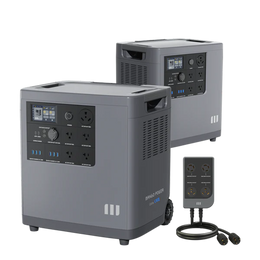
| Mango Power E (station only) | 3,530 Wh | 2,000 W (60-150V) | 1,200 W (3 x 400 W in series) | 3.7 h | 0.8 | $1,499 + panels |
| Mango Power E at its full input | 3,530 Wh | 2,000 W | 2,000 W | 2.2 h | 0.5 | - |
| Mango Power E 7 kWh Home Backup | 7,060 Wh | 2,000 W | 2,000 W | 4.4 h | 1.0 | $2,299 + panels |
| Anker SOLIX F3800 Plus x 2 + Home Power Panel | 3,840 Wh per unit (7,680 total) | 3,200 W per unit | 3,200 W per unit | 1.5 h | 0.3 | $6,199.99 + panels |

The pattern is clear: the 1500 v2 and the 1500 Ultra hold the same 1,536 Wh, but the Ultra kit ships with twice the panel watts and accepts twice the input, so it refills in half the time. Capacity sets how long you can run; input watts set how fast you get it back. Two 1,536 Wh stations can differ by a full day of sun.
Days, not hours: what your location changes
Peak sun hours are the number of hours per day that equal full 1,000 W per square meter sun. They change a lot by location and season: roughly 2.5-3.5 in a northern winter, 4-5 as a US yearly average and 6-7 in a Southwest summer. NREL's PVWatts calculator gives the figure for any US address.

Use this table to size panels for the station you own or plan to buy. Values are hours of full sun from empty (watts x 0.8), before the station's input limit:
| Battery | 100 W panel | 200 W | 400 W | 800 W | 1,200 W |
|---|---|---|---|---|---|
| 288 Wh (300 class) | 3.6 h | 1.8 h* | - | - | - |
| 1,024 Wh (1 kWh) | 12.8 h | 6.4 h | 3.2 h | 1.6 h* | - |
| 1,536 Wh | 19.2 h | 9.6 h | 4.8 h | 2.4 h* | - |
| 2,048 Wh (2 kWh) | 25.6 h | 12.8 h | 6.4 h | 3.2 h* | 2.1 h* |
| 3,530 Wh (Mango Power E) | 44.1 h | 22.1 h | 11.0 h | 5.5 h | 3.7 h |
* Only if the station accepts that many watts - check its solar input limit. A 1 kWh station with a 400 W input gains nothing from 800 W of panels except better output on cloudy days. A good rule of thumb: buy enough panels to refill your daily use in one day of your local winter sun, then check the result stays inside the station's input range.
Six things that slow solar charging
- Panel angle. A panel lying flat in November can lose a third of its output versus one tilted toward the sun. Use the kickstands and re-aim every two or three hours.
- Heat. Crystalline panels lose about 0.3-0.4% per degree C above 25 C cell temperature. A panel on hot asphalt can run 65 C, costing 12-16%.
- Partial shade. A shadow across one cell row can cut a folding panel's output by half or more. Keep the whole surface in sun, including at 3 PM when shadows stretch.
- Hitting the input limit. Panels above the station's limit are clipped. That is safe within the voltage range but wastes money on sunny days.
- Cold battery. LiFePO4 stations stop or slow charging near freezing to protect the cells. The Jackery 1500 Ultra charges from 32 F; the Mango Power E is rated to charge from -4 F (-20 C). Our winter power outage guide covers cold charging.
- The last few percent. Most stations taper the final 5-10% while the battery management system balances cells, so 90% to 100% can take noticeably longer than 80% to 90%.

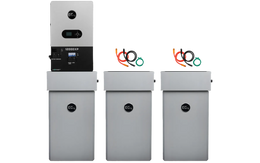
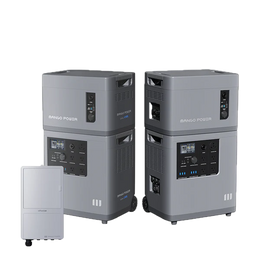
Two Mango Power E units on a home panel (manufacturer photo). Bigger banks need bigger arrays to refill in one day.
How to charge faster with the same station
Before buying a new station, try these. They are listed from cheapest to most expensive:
- Start early and aim. Set up by 9 AM and tilt panels square to the sun. Re-aiming at noon and 2 PM is often worth 15-25% more energy per day than a fixed flat panel.
- Charge with no load. Every watt your fridge or laptop draws during the day is a watt not stored. Run heavy loads in the evening if you need a fast refill.
- Use both solar ports. The 1500 Ultra has two PV inputs (16-60V, 12 A each); one panel per port keeps the wiring simple and each port inside its limits. See solar panels in series vs parallel for the wiring math.
- Add panels up to the input limit. On a station with headroom, more panel watts is the single biggest lever. Two more SolarSaga 200W panels take the 1500 Ultra from 400 W to its full 800 W.
- Use shorter or thicker cables. Long thin extensions lose voltage, and low-voltage portable panels lose proportionally more.
- Combine sources. Many stations accept AC and solar, or car and solar, at the same time. Check the listing or manual for your model.
If the station is already at its input limit and the refill is still too slow, the answer is a higher-input station. Our best portable solar panels for power stations guide ranks the panels themselves.
Solar vs wall vs car charging times
Solar is free but slow; the wall is fast but needs the grid. Here is how the same stations compare across sources, from the listings:
| Station | Wall (120V AC) | Solar at max input | Car (12V) |
|---|---|---|---|
| Jackery Explorer 300 v2 | About 1 h to 80% | Limited by the 40 W kit panel: ~9 h of sun | - |
| Jackery Explorer 1500 v2 | 81 min | ~4.8 h at 400 W | 12V 8 A max: ~16 h+ |
| Jackery Explorer 1500 Ultra | 1.5 h | 2.5 h claimed at 800 W (2.4 h by our math) | 12-16V 8 A: ~16 h+ |
| Mango Power E | 80% in 1 h, 100% in 1.5 h (3,000 W AC) | ~2.2 h at 2,000 W | - |
| Anker SOLIX F3800 Plus (each unit) | 1,800 W max: about 2-2.5 h | 1.5 h claimed at 3,200 W | - |
For outage prep that means a simple routine: keep the station full from the wall, and treat solar as the way to stay topped up during a multi-day outage. For camping and off-grid use, size the array for your daily use, not for a full refill from empty. Not sure what capacity you need? Start with what size solar generator do I need.
Fast-charging picks in stock now
Each pick was ACTIVE and in stock when we checked on November 17, 2026. Codes never stack; we show the best single code that applies to each product.
1. Mango Power E 3,000W 3.5kWh (station)

$1,499 (list $1,599), $1,399 with code ECO100 - 3,530 Wh, 3,000 W, 2,000 W solar input at 60-150V
The E takes 2,000 W of solar through one MPPT input, the highest of any single 120V portable station we stock. Three 400 W panels in series (about 122V open-circuit, about 135V on a cold morning) give 1,200 W and a refill in about 3.7 hours of full sun; a second string in parallel gets you toward 2,000 W and about 2.2 hours. It also takes 3,000 W from the wall (80% in about an hour). CATL LFP cells are rated for 6,000 cycles with a 5-year warranty. The listing notes limited inventory before a planned discontinuation, so do not wait if you want this one. Panels are not included - see portable solar panels.
- 2,000 W solar input
- 80% from the wall in 1 hour
- Charges down to -4 F
- Panels sold separately
- 100 lb station
- Needs series strings (60V minimum)
2. Jackery Solar Generator 1500 Ultra + 2 x SolarSaga 200W

$1,659 (list $1,799), $1,559 with code ECO100 - 1,536 Wh, 1,800 W, 800 W solar input, 400 W of panels included
Plug-and-play and fast: each 200 W panel (22V open-circuit) goes into its own 16-60V port, so there is no series wiring to get wrong. With the included 400 W, plan on about 4.8 hours of full sun, roughly one sunny day; add two more panels for the full 800 W and Jackery's 2.5-hour solar figure. Wall charging takes 1.5 hours. It is the pick for campers and RV owners who want a full refill between afternoon and dinner.
- Two independent PV ports
- Panels and cables included
- Room to double the panels
- Charges only above 32 F
- Two-port limit of 12 A each
- Pricier per Wh than the 1500 v2
3. Mango Power E 3,000W 7kWh Home Backup

$2,299 (list $2,525) - 7,060 Wh, 3,000 W, 2,000 W solar input; no active code applies today
The E plus its expansion battery doubles the storage on the same 2,000 W input. That means a full refill takes about 4.4 hours of strong sun at full input - still one good day - while giving two days of runtime for a fridge, lights and internet in an outage. This is the setup we suggest when people want home backup that a modest rooftop-style array can keep up with. Pair it with Mango Power stations and accessories if you plan to grow further.
- 7 kWh on one solar input
- Same fast 3,000 W AC charging
- 6,000-cycle LFP cells
- Panels sold separately
- Two heavy units to move
- No code this week
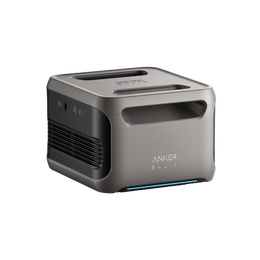
4. Anker SOLIX F3800 Plus x 2 + Home Power Panel and Sub Panel

$6,199.99 (list $7,299), $5,949.99 with code SAVE250 - 7,680 Wh, 12,000 W 120/240V, 3,200 W solar per unit; 5 in stock
Two F3800 Plus stations, each with two 11-165V solar inputs (1,600 W max each). With 3,200 W of panels on each unit, each 3,840 Wh station refills in about 1.5 hours of full sun, which matches Anker's claim. Realistically most owners run 1,600-2,400 W per unit, so plan on 2-3 hours. The Home Power Panel handles 240V loads like well pumps and switches over automatically. Installation of the panel needs a licensed electrician. More in the F3800 series collection.
- 6,400 W total solar input
- 120/240V whole-home backup
- High-voltage inputs suit long cable runs
- Large array needed for full speed
- Electrician required for the panel
- Only 5 kits left
5. Jackery Solar Generator 1500 v2 + 2 x SolarSaga 100 Air

$1,279 (list $1,299) - 1,536 Wh, 2,000 W, 400 W solar input, 200 W of panels included; 9 left
Same capacity as the Ultra for $380 less, but half the input (400 W) and half the included panels (200 W). With the kit panels expect about 9.6 hours of full sun - two days for most buyers. Add two more SolarSaga 100 Air panels to reach 400 W and cut that to 4.8 hours. Wall charging takes just 81 minutes, so it suits outage prep where solar is the backup source. No code applies (below the ECO100 minimum).
- Lowest price per Wh here
- 81-minute wall charge
- Light bifacial panels
- 400 W input ceiling
- Slow with the included 200 W
- Low stock
6. Jackery Solar Generator 300 v2 + SolarSaga 40 Air

$379 (list $389) - 288 Wh, 300 W, 40 W panel included
The 40 W panel is a trickle source: about 9 hours of full sun from empty, so two sunny days. That is fine for phones, a CPAP on battery mode or camp lights where the station rarely runs flat, and the wall gets it to 80% in about an hour. If you want a same-day solar refill, a bigger panel helps, but check the station's input limit first.
- Light and cheap
- 1-hour wall charge to 80%
- LiFePO4, 4,000 cycles
- 40 W panel is slow
- 288 Wh only
- No code applies
Want to compare more bundles? Browse all Jackery solar generator kits or 400-watt solar panel kits.
What buyers ask before relying on solar charging
These questions come from Google searches that reach our store and from the questions Google shows for this topic. Answers use the specs above.
Will my station charge from solar while I run a fridge?
Yes on most current models, but only the surplus is stored. A 400 W array (about 320 W real) running a fridge that averages 60 W stores about 260 W. Over 4.5 sun hours that is roughly 1,170 Wh, enough to cover the fridge's night use and still gain.
Is a bigger panel always faster?
Only up to the station's solar input limit and inside its voltage window. A 500 W panel on a 400 W input charges at 400 W at best. On a 2,000 W Mango Power E, adding panels keeps paying off until you reach about 2,000 W.
Why does the box say 2.5 hours but I get a full day?
Box figures use the maximum input in ideal sun. The 1500 Ultra's 2.5-hour figure needs 800 W of panels; with the included 400 W, about 4.8 hours of full sun is the honest number, which most buyers spread across a day.
How many panels do I need to refill in one day?
Divide the Wh you use per day by (your sun hours x 0.8). Using 1,200 Wh a day with 4 sun hours: 1,200 / 3.2 = 375 W of panels, so 400 W.
Do I need a charge controller?
No. Every station here has a built-in MPPT controller. You only need panels whose voltage fits the input range and the right cable.
FAQ
How long does it take to charge a power station with a 200W solar panel?
Divide the battery's watt-hours by 160 (200 W x 0.8). A 1,024 Wh station needs about 6.4 hours of full sun, a 1,536 Wh station about 9.6 hours and a 2,048 Wh station about 12.8 hours - usually one to three days of real sun.
How long does it take to charge a power station with a 100W solar panel?
Divide the watt-hours by 80. A 288 Wh station takes about 3.6 hours of full sun; a 1,024 Wh station takes about 12.8 hours, which is three or more days in most places. A 100 W panel is a top-up panel for anything over 500 Wh.
Can I charge a power station while using it?
Most current LiFePO4 stations support pass-through charging: they run your devices while the panels charge them. The battery only gains energy when the solar watts are higher than the load, so a 400 W array feeding a 150 W load adds about 170 W of net charge (400 x 0.8 - 150).
Do power stations charge on cloudy days?
Yes, but slowly. Thin overcast often cuts output to 25-50% of normal and heavy cloud or rain to 10-25%. Plan on clear-sky math for good days and on an extra day or two of capacity, or a wall or generator top-up, for storms.
Why is my power station charging slower than my panel rating?
Panel ratings are lab numbers at 25 C cells and 1,000 W per square meter. Heat, a low sun angle, dust, shade, cable losses and the station's own conversion losses usually leave 65-85% of the label, and many stations slow down for the last few percent while the battery balances its cells.
Is it faster to charge a power station from the wall or from solar?
The wall is usually faster: most current stations refill in 1-2.5 hours from one 120 V outlet. Solar matches that only when your array is close to the station's maximum solar input in full sun, for example 2,000 W on a Mango Power E.

Serhii Dovzhenko, Solar & Energy Storage Specialist at Eco Solar Kits · LinkedIn
Serhii is based in Vancouver, BC, and works on product data, system sizing and buyer guides for Eco Solar Kits. He attends solar and energy storage industry conferences and is involved in the community of electricians in Vancouver, BC. Credit for the data verification in this guide goes to Adsec.ca.


