

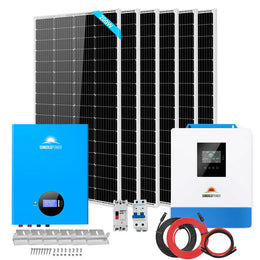
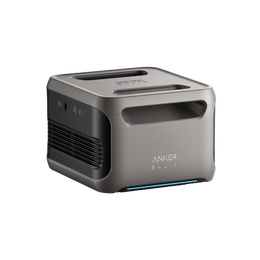
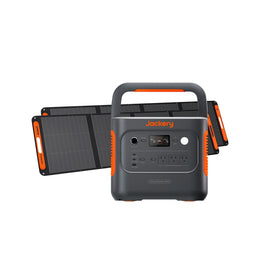
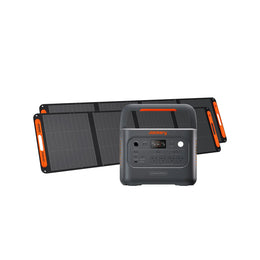
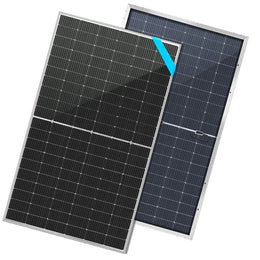
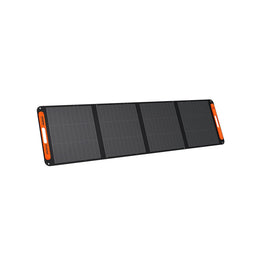
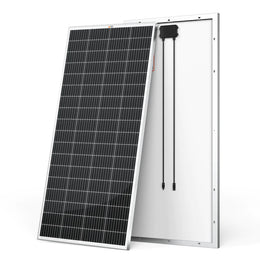

Bluetti vs Jackery vs Anker SOLIX at a glance
All three brands sell the same basic product: a LiFePO4 battery, a pure sine wave inverter, outlets and a solar charge input in one case. The differences are in the details buyers actually feel after a year - how much output you get for the money, how far the station can grow, how fast it refills, and what the warranty covers. The table below compares the brands on the models we have in stock today, not on their full global catalogs, because a brand advantage you cannot buy does not help you.
| Bluetti | Jackery | Anker SOLIX | |
|---|---|---|---|
| In-stock stations (Nov 10) | Elite 200 V2, Apex 300 (plus RV5 hub) | 14 stations from 99 Wh to 3,072 Wh, plus solar kits | C1000 Gen 2, F3800 PLUS home-panel bundles (5 left each) |
| Price per kWh (our picks) | $433-$615 | $465-$731 | $537-$885 (incl. home panel) |
| Max output, single unit | 3,840W (Apex 300) | 3,600W (HomePower 3000) | 6,000W 120/240V (F3800 PLUS) |
| Rated cycles | 6,000 (Apex 300); Elite not listed | 4,000 (Explorer) / 6,000 (HomePower 1000 Plus v2) | 4,000 (C1000 Gen 2) / 3,000+ (F3800 PLUS) |
| Warranty (listing) | 5 years | 3+2 years | 5 years |
| Expansion | Elite: +806-3,072 Wh; Apex: to 58 kWh | HomePower 1000 Plus v2: to ~11 kWh; HP2000 Plus v2: to 12 kWh | C1000 Gen 2: none; F3800 PLUS: to 26.9 kWh |
| Solar input | 1,000W (Elite); Apex needs SolarX 4K | 400W (Explorer 2000 v2) to 1,000W (HomePower 3000) | 600W (C1000 Gen 2) to 3,200W (F3800 PLUS) |
| Fastest wall recharge | 80% in ~1.1 h (Elite) | ~1.75 h full (Explorer 2000 v2) | 100% in ~49 min (C1000 Gen 2) |
Two caveats before you read too much into the brand column. First, stock moves fast before Black Friday: on November 9 we marked the Anker C2000 Gen 2, S2000 and F3000 sold out, which is why Anker's side of this guide is thin. Second, the right comparison is always model against model in the same size class - a $549 Anker and a $1,699 Bluetti are not competitors.
Where each brand wins
Jackery: the widest lineup and the simplest setup
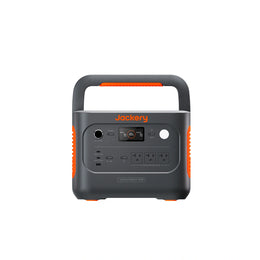
Jackery is the brand most buyers start with, and the in-stock range explains why: 14 stations from the 99 Wh Explorer 100 Plus to the 3,072 Wh HomePower 3000, plus ready-made solar generator kits with matched SolarSaga panels. The HomePower line uses 6,000-cycle cells on the HomePower 1000 Plus v2 and grows with add-on packs, while the Explorer line (4,000 cycles) is the lighter travel range. The trade-offs: Jackery lists a "3+2 year" warranty rather than a flat 5, and solar input is modest on the Explorer models (400W on the Explorer 2000 v2). Jackery prices also rose $60-$300 on November 9 when the October promotion ended, so check today's price rather than a screenshot from last month. Browse the full range in our Jackery portable power stations collection.
Bluetti: the most output and capacity per dollar
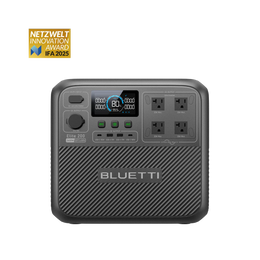
BLUETTI wins on raw numbers. The Elite 200 V2 puts 2,074 Wh and 2,600W (3,900W lifting mode for resistive loads) in a $899 box - $433 per kWh, the lowest of any station in this guide. The Apex 300 is the expandable home-backup platform: 3,840W continuous, 7,680W lifting, 0 ms UPS switchover and room for B300K/B500K packs up to 58 kWh. Both carry a 5-year warranty. The catch is the accessory ecosystem: the Apex 300 has no built-in solar charge controller (solar needs the SolarX 4K module, which we do not stock), and the Elite's B230/B300 packs are not in stock right now. See our Bluetti portable power stations collection.
Anker SOLIX: fastest charging and the best home-panel kit
Anker SOLIX is the engineering-first brand. The C1000 Gen 2 refills from 0 to 100% in about 49 minutes on a wall outlet (1,600W UltraFast mode), puts out 2,000W, weighs 24.9 lb and carries a 5-year warranty - but it cannot take an expansion battery. At the other end, the F3800 PLUS with Home Power Panel is the most complete home-backup package of the three brands: 6,000W at 120/240V, 3,200W of solar input and a 10-circuit sub panel that switches over automatically. Between those two, Anker's mid-range stations are sold out today. See the Anker SOLIX collection for current stock.

Head-to-head by size class
Brand comparisons only make sense inside a size class. Here is how the in-stock models line up in the three classes most buyers shop. Where a brand has no in-stock model in a class, we say so instead of padding the table with a sold-out unit.
| Class | Bluetti | Jackery | Anker SOLIX | Our call |
|---|---|---|---|---|
| ~1 kWh (camping, CPAP, desk backup) | No in-stock model | HomePower 1000 Plus v2 $749 (1,800W, 6,000 cycles, expandable); Explorer 1000 v2 $559 | C1000 Gen 2 $549.99 (2,000W, 49-min recharge) | Anker for speed and weight; Jackery if you will add a pack later |
| ~2 kWh (fridge for a day, RV weekends) | Elite 200 V2 $899 (2,600W, 5 yr) | Explorer 2000 v2 $999 ($949 with ECO50); HomePower 2000 Plus v2 $1,199 | C2000 Gen 2 sold out | Bluetti on value; Jackery HP2000 Plus v2 for expansion to 12 kWh |
| 3 kWh+ (home essentials, 240V) | Apex 300 $1,699 (3,840W, to 58 kWh) | HomePower 3000 $1,499 (3,600W, 30A outlet) | F3800 PLUS + Home Power Panel $3,399.99 (6,000W 120/240V) | Jackery for 120V essentials; Anker for 240V circuits; Bluetti to scale big |
For a deeper look at a single class, see our guides to the best 2000W portable power stations and the best 3000-watt solar generators; this guide stays at the brand level.
Sizing math: pick the class before the brand
Most buyers who regret a power station bought the right brand in the wrong size. Do the sizing first, then let the brand break the tie. Three numbers decide it:
- Daily watt-hours. Add up what you will run: a modern fridge averages 60-150W over a day as the compressor cycles (1,400-3,600 Wh/day), a router 10-15W, LED lights 20-40W, a CPAP 40-90W per night. Usable energy is about 85% of the rated Wh after inverter losses.
- Largest single load. The inverter must clear the biggest appliance with margin: a microwave or kettle draws 1,000-1,500W, a well pump or window AC can start at 2-3 times its running watts.
- Recharge. Solar delivers about array watts x sun hours x 0.77 per day: 400W of panels at 4.5 sun hours gives about 1,386 Wh, enough to refill a 1 kWh station but not a 3 kWh one.
| Example load | Average W | Wh per day | Class that covers one day |
|---|---|---|---|
| Router + phone charging + LED lights | 45 | 1,080 | ~1 kWh |
| CPAP (40W, 8 h) + router + lights | ~60 | 1,400 | ~2 kWh |
| Fridge + router + lights | 150 | 3,600 | 3 kWh+ (or 2 kWh + solar) |
| Fridge + chest freezer + router + lights + TV | 260 | 6,240 | 3-4 kWh + expansion or solar |
Price per kWh is the quickest value check across brands: the Elite 200 V2, the Explorer 2000 v2 with code ECO50 and the HomePower 3000 all come in under $500 per kWh. The F3800 PLUS looks expensive on this chart only because its price includes the Home Power Panel and sub panel - hardware the other stations would need an extra transfer switch for.
At a 150W average (a fridge, a router and a few lights), a 1 kWh station covers an evening, a 2 kWh station covers about half a day, and you need 3 kWh+ or daily solar to get through a full 24-hour outage. If your outage plan is longer than a day, solar input matters as much as capacity: at 4.5 sun hours the HomePower 3000 and Elite 200 V2 can each take up to about 3.5 kWh a day from a 1,000W array, the C1000 Gen 2 about 2.1 kWh from 600W, the Explorer 2000 v2 about 1.4 kWh from 400W, and the F3800 PLUS up to about 11 kWh from 3,200W. Our solar generator sizing guide walks through the full load worksheet.
Our 7 picks across the three brands
Picks are limited to active products in stock on November 10, 2026. Prices are list prices on our store that day; we name a discount code only where the product is actually eligible.
Bluetti Elite 200 V2 - $899

The Elite 200 V2 is the station we would point most buyers to first because it gives the most for the money across all three brands: 2,073.6 Wh of LiFePO4 and 2,600W continuous output (3,900W lifting mode for resistive loads like kettles and hair dryers) for $899, or $433 per kWh. TurboBoost AC charging reaches 80% in about 1.1 hours using up to 1,800W, and it accepts up to 1,000W of solar at 12-60V, so two BLUETTI 350W panels ($629.99 each) fit inside the voltage window when wired in parallel. It weighs 53.4 lb, lists about 16 dB at light load and carries a 5-year warranty. BLUETTI also sells it with panels: $1,499 with one 200W panel up to $2,248 with two 350W panels. The listing does not state a cycle rating or UPS switchover time, so we do not quote either.
- Lowest price per kWh in this guide
- 2,600W runs most kitchen appliances
- 5-year warranty, 1,000W solar input
- 53.4 lb - not a one-hand carry
- B80/B230/B300 expansion packs not in stock now
- No cycle rating or UPS time on the listing
Anker SOLIX C1000 Gen 2 - $549.99

The C1000 Gen 2 is the reason to pick Anker in the 1 kWh class. It goes from empty to full in about 49 minutes on a wall outlet (1,600W UltraFast; 1,200W standard mode is gentler for daily use), outputs 2,000W with a 3,000W peak, and takes 600W of solar or up to 800W through Anker's alternator charger. It has 10 outlets and ports, a 10 ms UPS, 20 dB or less under 200W, 4,000 cycles to 80% and a 5-year warranty, in a 24.9 lb case. The trade-off is clear in the listing: no expansion port. If you know you will want more storage later, look at the Jackery HomePower 1000 Plus v2 below. For a solar setup, two Anker SOLIX PS100 panels ($249.99 each) are a light, matched start.
- Full recharge in about 49 minutes
- 2,000W output from 1 kWh, 24.9 lb
- 5-year warranty, 10 ms UPS
- Not expandable
- UltraFast speed drops below 68F
- Price is $250 under list today - may change
Jackery Explorer 2000 v2 - $999 ($949 with ECO50)

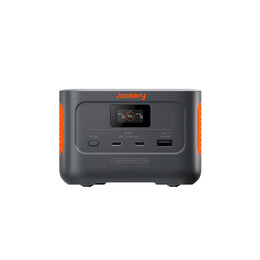
The Explorer 2000 v2 is Jackery's compact 2 kWh station: 2,042 Wh, 2,200W rated with a 4,400W surge, three AC outlets, UPS under 20 ms and under 30 dB, at 39.5 lb - about 14 lb lighter than the Elite 200 V2. It recharges from the wall in about 1.75 hours and accepts up to 400W of solar, which is enough for two SolarSaga 200W panels ($429 each). The cells are rated for 4,000 cycles to 70%+ and the warranty is listed as 3+2 years. It is in our promo-eco50 collection, so code ECO50 takes $50 off: $949, or $465 per kWh. Choose it over the Bluetti if weight and the Jackery ecosystem matter more to you than the extra 400W of output.
- 39.5 lb for 2 kWh
- ECO50 brings it to $949
- UPS under 20 ms, under 30 dB
- 400W solar input limits off-grid recharge
- No expansion port listed
- 3+2 year warranty vs 5 years elsewhere
Jackery HomePower 1000 Plus v2 - $749

The HomePower 1000 Plus v2 is the 1 kWh station to buy if you want to grow it. It has 1,024 Wh, 1,800W rated (3,600W surge) from four AC outlets, a 140W USB-C port, silent mode under 30 dB and 6,000 cycles to 70%+ - the highest cycle rating of any station in this guide. Add up to five Battery Pack 2000 Plus v2 units ($799 each) and it reaches about 11 kWh; the HomePower 1000 Plus v2 + Battery Pack 2000 Plus v2 bundle ($1,269) gives 3,072 Wh to start. It weighs 23.8 lb and charges between 14F and 113F. The listing does not give a solar input figure, so ask us before you size panels. Warranty is 3+2 years.
- 6,000-cycle cells
- Expands to about 11 kWh
- 23.8 lb, four AC outlets
- $731 per kWh as a bare unit
- Solar input not stated on the listing
- 1,800W, below the C1000 Gen 2
Bluetti Apex 300 - $1,699

The Apex 300 is the brand-level answer to "which one can grow into a whole-home system". It has 2,764.8 Wh, 3,840W continuous and 7,680W lifting power, switches to battery in 0 ms (up to 20 ms depending on mode), passes up to 12 kW through in bypass, and accepts generator input up to 11.5 kW. Storage scales with B300K packs ($1,249, 2,764.8 Wh each) and B500K packs toward a 58 kWh ceiling; we stock the Apex 300 + B300K bundle at $2,799 (5,529.6 Wh) and Apex 300 + 2 x B300K at $3,899. Cells are rated 6,000+ cycles at 80% retention, warranty is 5 years, weight 83.78 lb. Two things to plan for: its six outlets are 120V (BLUETTI lists 120V + 240V output through its home-integration hardware - ask us before planning 240V loads), and solar needs the separate SolarX 4K module because there is no built-in MPPT.
- 0 ms UPS, 3,840W continuous
- Scales toward 58 kWh
- 6,000+ cycles, 5-year warranty
- No built-in solar controller
- 83.78 lb
- No discount code applies
Jackery HomePower 3000 - $1,499

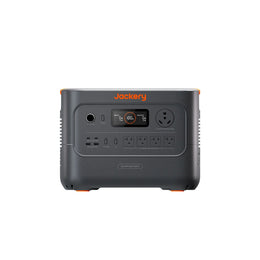
The HomePower 3000 is the simplest way to cover a 120V essentials list. It holds 3,072 Wh, outputs 3,600W with a 7,200W surge, and has four 20A outlets plus one 30A outlet; Jackery says it pairs with a manual transfer switch to back up as many as six circuits (installed by a licensed electrician). It refills from the wall in about 2.2 hours and takes up to 1,000W of solar, which is the strongest built-in solar input of the Jackery models here. At $488 per kWh it is the best-value 3 kWh unit in this guide. Cells are rated 4,000 cycles to 70%+, warranty 3+2 years, weight 59.52 lb on wheels. It sits in promo-eco100, but ECO100 needs a $1,500 cart, so it only applies with an add-on such as the HomePower 3000 + 2 x SolarSaga 200W kit ($2,149, or $2,049 with ECO100).
- $488 per kWh for 3 kWh
- 1,000W solar, 2.2 h wall recharge
- 30A outlet, transfer-switch ready
- 120V only
- 4,000-cycle rating
- 59.5 lb
Anker SOLIX F3800 PLUS + Home Power Panel - $3,399.99

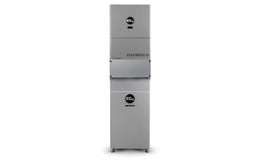
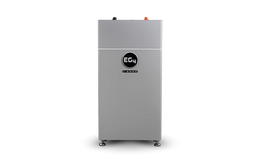
The F3800 PLUS bundle is the only kit in this guide that puts 120/240V whole-circuit backup in one box: a 3,840 Wh station with 6,000W continuous (9,000W surge), a NEMA L14-30R 240V outlet, and the Home Power Panel with a 10-circuit sub panel that switches automatically on grid loss. Solar input is 3,200W across two 11-165V inputs, generator/panel input 6,000W, UPS under 20 ms. Add BP3800 batteries ($1,799.99, 3,840 Wh each) to reach 26.9 kWh per unit, or pair two F3800 PLUS units for 12,000W. Cells are rated 3,000+ cycles, warranty 5 years, weight 136.7 lb. The Home Power Panel must be installed by a licensed electrician. We have 5 bundles left; no discount code applies to this bundle.
- Only 240V home-panel kit here
- 3,200W solar input
- Expands to 26.9 kWh per unit
- 136.7 lb
- 3,000+ cycle rating
- Electrician install required; 5 in stock
Which brand for which buyer
| If you... | Choose | Why |
|---|---|---|
| Want the most station for under $1,000 | Bluetti Elite 200 V2 | 2 kWh and 2,600W at $433/kWh |
| Need the lightest, fastest-charging 1 kWh unit | Anker SOLIX C1000 Gen 2 | 24.9 lb, 49-minute recharge |
| Want a 1 kWh station that can grow | Jackery HomePower 1000 Plus v2 | 6,000 cycles, packs to about 11 kWh |
| Carry the station between car and campsite | Jackery Explorer 2000 v2 | 2 kWh at 39.5 lb |
| Back up 120V essentials on a budget | Jackery HomePower 3000 | 3 kWh, 30A outlet, 1,000W solar |
| Plan to scale toward a whole-home battery | Bluetti Apex 300 | 0 ms UPS, packs toward 58 kWh |
| Need 240V circuits (well pump, dryer) switched automatically | Anker F3800 PLUS + Home Power Panel | 6,000W 120/240V with a 10-circuit panel |
For camping-specific picks, see our guide to the best portable power station for camping and CPAP; for growth paths across all brands, see expandable power stations compared. You can also browse every in-stock unit in portable power stations or the home backup solar generators collection.
What buyers ask before choosing a brand
These questions come from the searches that bring people to our store and from the questions Google shows for this topic. Each answer uses the specs on our listings.
Anker or Jackery for a first station?
In the 1 kWh class it comes down to charging speed versus expansion. The Anker C1000 Gen 2 refills in about 49 minutes and has a 5-year warranty but no expansion port; the Jackery HomePower 1000 Plus v2 is $199 more, slightly lower in output (1,800W vs 2,000W), and adds 6,000-cycle cells and a path to about 11 kWh.
What Bluetti power stations are expandable?
Both in-stock models: the Elite 200 V2 (B80, B230 or B300 packs, up to 3,072 Wh more) and the Apex 300 (B300K/B500K packs toward 58 kWh). The Elite's packs are not in stock right now; the B300K for the Apex is.
Bluetti Apex 300 vs Anker SOLIX F3000?
The F3000 is sold out as of November 9, so the realistic Anker alternative is the F3800 PLUS bundle (6,000W 120/240V with a home panel, $3,399.99). Against the Apex 300 ($1,699), you pay about twice as much for 240V circuit backup and 3,200W of built-in solar input; the Apex wins on price, UPS speed (0 ms) and expansion ceiling.
Anker F3800 vs F3800 PLUS - what changed?
On our listings the PLUS takes 3,200W of solar (two 1,600W inputs) versus 2,400W on the standard F3800, and supports up to 6 BP3800 packs for 26.9 kWh per unit. Both deliver 6,000W at 120/240V. Only the PLUS bundles are in stock today.
Anker C1000 Gen 2 vs C2000 Gen 2?
The C2000 Gen 2 adds a BP2000/BP3000 expansion port and twice the capacity, but it is sold out in every bundle as of November 9. If you need 2 kWh now, the Bluetti Elite 200 V2 or Jackery Explorer 2000 v2 cover that class.
FAQ
Which is better, Bluetti, Jackery or Anker SOLIX?
None wins every category. Jackery has the widest in-stock lineup and the simplest solar pairing, Bluetti gives the most inverter output and capacity per dollar with a 5-year warranty, and Anker SOLIX charges fastest and has the most complete home-panel kit (F3800 PLUS + Home Power Panel). Pick the brand whose model fits your size class and use, not the logo.
Is Bluetti or Jackery better for home backup?
For a 120V essentials setup, the Jackery HomePower 3000 ($1,499) has more storage per dollar and a built-in 1,000W solar input. For a system you want to grow, the Bluetti Apex 300 ($1,699) scales to 58 kWh with B300K/B500K packs and switches in 0 ms, but solar charging needs BLUETTI's separate SolarX 4K module.
Is Anker or Jackery better?
At 1 kWh, the Anker SOLIX C1000 Gen 2 ($549.99) recharges from the wall in about 49 minutes, outputs 2,000W and has a 5-year warranty, but cannot be expanded. The Jackery HomePower 1000 Plus v2 ($749) outputs 1,800W, has 6,000-cycle cells and grows to about 11 kWh with Battery Pack 2000 Plus v2 units. Anker for speed and portability, Jackery for a station you will expand.
Which brand has the best warranty?
On the models we stock, Bluetti (Elite 200 V2, Apex 300) and Anker SOLIX (C1000 Gen 2, F3800 PLUS) list 5 years. Jackery lists "3+2 years" on the Explorer 2000 v2, HomePower 1000 Plus v2 and HomePower 3000 - check the listing for how the extra 2 years apply.
What Bluetti power stations are expandable?
Of the in-stock models, the Elite 200 V2 accepts B80, B230 or B300 packs (up to 3,072Wh more), and the Apex 300 accepts B300K and B500K packs up to 58 kWh. We stock the B300K ($1,249) and an Apex 300 + B300K bundle ($2,799); the B230/B300 packs for the Elite are not in stock - ask us.
Can I mix brands - for example a Jackery panel on a Bluetti station?
Often yes, if the panel's open-circuit voltage and wattage stay inside the station's solar input window and you have the right connector. Expansion batteries never mix: Jackery packs only fit Jackery stations, BLUETTI B-series only BLUETTI, and Anker BP packs only their own platform.
Which brand is quietest and best for CPAP?
All three make LiFePO4 stations with pure sine wave output. The Anker C1000 Gen 2 lists 10 ms UPS and 20 dB or less under 200W, the Bluetti Elite 200 V2 about 16 dB at light load, and the Jackery Explorer 2000 v2 under 30 dB with UPS under 20 ms. A 40W CPAP runs about 21 hours on any 1 kWh unit.

Serhii Dovzhenko, Solar & Energy Storage Specialist at Eco Solar Kits · LinkedIn
Serhii is based in Vancouver, BC, and works on product data, system sizing and buyer guides for Eco Solar Kits. He attends solar and energy storage industry conferences and is involved in the community of electricians in Vancouver, BC. Credit for the data verification in this guide goes to Adsec.ca.