



An air conditioner is the appliance people most want to run in a summer outage or at a campsite without hookups, and the one that most often trips a power station. The culprit is rarely running watts. It is the split-second compressor surge, and the fact that hours of cooling drain a battery faster than almost anything else. This guide does the math for window, portable, mini-split and RV rooftop units on 2, 3.5 and 7 kWh stations, then lists the in-stock stations that handle the job.
Can a solar generator run an air conditioner?
Yes, with the right match. A solar generator (a portable power station plus panels) can run a window AC, a portable AC, a 115V mini-split and most RV rooftop units. Check three things before you buy:
- Running watts. The station's continuous AC output must exceed what the air conditioner draws while the compressor runs, plus anything else plugged in at the same time.
- Start-up surge. A fixed-speed compressor pulls two to three times its running watts for a fraction of a second. If the station's surge rating is lower, it shuts off with an overload error.
- Watt-hours. Capacity decides how many hours of cooling you get. Air conditioners cycle on and off, so the useful figure is average draw, not the label.
Central air is the exception (see below). If you are still choosing a station size for the whole house rather than one appliance, start with what size solar generator you need.
How many watts each type of AC uses
Typical figures for common air conditioners. The nameplate on your unit lists its running amps; multiply by 115-120 V for running watts. Starting figures are for fixed-speed compressors; inverter models start gently.
| Air conditioner | Running watts | Starting watts (fixed-speed) | Average draw (cycling) | Voltage |
|---|---|---|---|---|
| 5,000-6,000 BTU window | 450-550 W | 1,200-1,600 W | ~350 W | 115V |
| 8,000 BTU window | 650-750 W | 1,500-2,200 W | ~490 W | 115V |
| 10,000-12,000 BTU window | 900-1,200 W | 2,200-3,200 W | ~770 W | 115V |
| Portable AC (10,000-14,000 BTU) | 1,000-1,400 W | 2,500-3,500 W | ~850 W | 115V |
| 12,000 BTU inverter mini-split | 200-1,100 W (variable) | Little or no surge | ~500 W | 115V or 230V |
| 13,500 BTU RV rooftop | 1,200-1,500 W | 2,800-3,500 W (1,500-1,800 W with soft start) | ~910 W | 120V |
| 15,000 BTU RV rooftop | 1,500-1,800 W | 3,200-4,000 W | ~1,120 W | 120V |
| 3-ton central AC | 3,000-3,500 W | 10,000+ W | ~2,400 W | 240V |
BTU drives watts almost linearly: a 12,000 BTU window unit uses about twice the power of a 6,000 BTU one. Inverter-driven units change the picture: they ramp the compressor up slowly and throttle down once the room is cool, so they start on a small station and average far less than their maximum. If you are buying an AC for outage or camping use, an inverter model is the biggest single thing you can do to stretch a power station.
Average draw assumes the compressor runs about 70% of the time, typical for a correctly sized unit in a closed room. In a heat wave it can run nearly nonstop; plan for that in very hot climates.
Start-up surge: the number that trips most stations
A compressor at rest needs a burst of current to start turning, listed on the nameplate as LRA (locked rotor amps). On a 13,500 BTU RV unit, LRA is often 25-30 A at 120 V: 3,000-3,600 W for a fraction of a second. A station with a 4,000 W peak catches that; one with a 3,000 W peak may not, even though it handles the 1,300 W running load easily.
Example: an 8,000 BTU window AC running at 700 W needs about 2,100 W of surge. A 13,500 BTU RV unit at 1,300 W needs about 3,900 W, or about half that with a soft start kit.
Three ways to get past the surge:
- Buy more surge. Stations list a peak or surge rating. The Jackery HomePower 3600 Plus lists 7,200 W and the Anker SOLIX C2000X Gen 2 4,000 W, both well above a 13,500 BTU rooftop unit's start.
- Add a soft start kit. A soft starter wired into the AC ramps the compressor up over about a second, cutting inrush by roughly half or more. RV owners use them to start rooftop units on 2,000-3,000 W stations.
- Choose an inverter AC. Inverter window units and mini-splits have almost no start-up surge, so the station's continuous rating is all that matters.
One more rule: start the AC first, then plug in other loads. A fridge compressor and an AC compressor starting at the same moment is what trips a station that handles either one alone.
Runtime chart: hours of cooling by station size
We ran each AC's average draw against three common station sizes. Hours = station Wh x 0.85 / average draw, where 0.85 covers inverter losses and the small reserve most stations keep.
| Air conditioner | Average draw | 2 kWh (2,048 Wh) | 3.5 kWh (3,530-3,584 Wh) | 7 kWh (7,060 Wh) |
|---|---|---|---|---|
| 6,000 BTU window | ~350 W | 5 h | 8.6 h | 17 h |
| 8,000 BTU window | ~490 W | 3.6 h | 6.1 h | 12 h |
| 12,000 BTU window | ~770 W | 2.3 h | 3.9 h | 7.8 h |
| 12,000 BTU inverter mini-split | ~500 W | 3.5 h | 6 h | 12 h |
| 13,500 BTU RV rooftop | ~910 W | 1.9 h | 3.3 h | 6.6 h |
| 15,000 BTU RV rooftop | ~1,120 W | 1.6 h | 2.7 h | 5.4 h |

Hours of cooling by AC size and station capacity, compressor on about 70% of the time.
A 2 kWh station is an evening solution for a window AC, 3.5 kWh gets most of a night with a small unit, and overnight RV rooftop cooling starts at about 7 kWh. A fridge uses only 1-2 kWh a day, so one night of AC can equal several days of fridge; our refrigerator runtime guide shows how much room that leaves for everything else.
Three setups, worked out
Setup A: a bedroom window AC through a summer outage night
A 6,000 BTU window unit cooling one bedroom from 10 pm to 7 am runs about 9 hours at roughly 350 W average: 3.2 kWh. Add a fridge (about 0.6 kWh overnight), a router and phones (0.3 kWh) and you need about 4.1 kWh delivered, or 4.8 kWh of station capacity. A 3.5 kWh station covers most of the night; the Mango Power E 7 kWh Home Backup covers the full night with half the battery left for the next day.
Setup B: a 13,500 BTU RV rooftop AC at a campsite with no hookups
Running watts are about 1,300 W and the start 3,000-3,500 W. A TT-30 outlet takes the RV's 30 A shore cord directly. A 4-hour afternoon at 70% duty uses about 3.6 kWh - the limit of a 3.5 kWh station. The Jackery HomePower 3600 Plus has the surge and the TT-30 outlet; with a soft start kit, the Anker SOLIX C2000X Gen 2 is the lighter, cheaper option for shorter cooling sessions. See our best RV solar kits guide if you want panels on the roof as well.
Setup C: a 230V ductless mini-split in a home office
Many 12,000-18,000 BTU mini-splits run on 230V. A 120V-only station cannot power them, even if its watts are high enough. The Mango Power E 240V kit with mSocket Pro pairs two units for 120/240V split-phase output and 7,060 Wh. An 18,000 BTU inverter mini-split averaging around 1,000 W on a hot day runs about 6 hours on it, and a 12,000 BTU model closer to 10-12 hours. Our split-phase guide explains 120/240V output.
Can solar keep up during the day?
Partly, and on sunny summer days that is when you need the AC most. The math is the same as for any solar charging:
1,000 W of panels in 5.5 summer sun hours: 1,000 x 5.5 x 0.8 = 4.4 kWh. An 8,000 BTU window AC running 8 daytime hours uses about 3.9 kWh.

Daily solar harvest vs daytime AC use. Summer, 5.5 peak sun hours.
About 1,000 W of panels offsets a small window AC by day, and 1,600-2,000 W covers an RV rooftop unit. That is why solar input limits matter: with 400-800 W the battery drains even in full sun. The Mango Power E accepts up to 2,000 W of solar (60-150 V), the Jackery HomePower 3600 Plus and Bluetti Elite 200 V2 up to 1,000 W, and the Anker SOLIX C2000X Gen 2 up to 800 W. For panel choices, see the best portable solar panels for power stations, and for refill times our solar charging time guide.
Central air: when a power station is the wrong tool
A 3-ton central AC draws 3,000-3,500 W on 240V, can surge past 10,000 W without a soft starter and uses 15-30 kWh on a hot day. A two-unit 240V portable kit would empty 7 kWh in 2-3 hours of compressor time.
Whole-house cooling needs a whole-house system: a 10-12 kW split-phase hybrid inverter, 15 kWh+ of battery, a soft starter and an electrician-installed transfer switch. Our best whole-house solar generators guide compares 240V systems from 6 kW to 14 kW, and whole-home battery backup cost prices them. For most outage plans, one bedroom window AC or mini-split is the practical middle ground.
Power stations in stock that run an AC
Each station below was ACTIVE and in stock when we checked on November 18, 2026. Codes never stack; we show the best single code that applies to each product today. Surge figures are from the product listings; where a listing gives no motor surge figure, we say so.
| Station | Capacity | Continuous / surge | Solar input | Best AC match | Price (Nov 18) |
|---|---|---|---|---|---|
| Jackery HomePower 3600 Plus (Red Cross) | 3,584 Wh | 3,600 W / 7,200 W | 1,000 W | RV rooftop, window up to 12,000 BTU | $1,609 ($1,509 with ECO100) |
| Mango Power E 3.5 kWh | 3,530 Wh | 3,000 W / not listed | 2,000 W | Window, inverter mini-split (115V) | $1,499 |
| Anker SOLIX C2000X Gen 2 | 2,048 Wh | 2,400 W / 4,000 W | 800 W | Window AC, RV rooftop with soft start | $999.99 |
| Bluetti Elite 200 V2 | 2,073.6 Wh | 2,600 W / not listed for motors | 1,000 W | Inverter window AC, small window units | $899 |
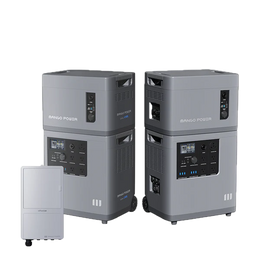
| Mango Power E 7 kWh Home Backup | 7,060 Wh | 3,000 W / not listed | 2,000 W | All-night window or mini-split cooling | $2,299 |
| Mango Power E 240V kit + mSocket Pro | 7,060 Wh | 6,000 W, 120/240V / not listed | 2 x 2,000 W | 230V mini-splits | $2,999 ($2,899 with ECO100) |
1. Jackery HomePower 3600 Plus Red Cross Edition

$1,609 (list $1,770), $1,509 with code ECO100 - 3,584 Wh, 3,600 W, 7,200 W surge, TT-30 outlet
The station to buy if you want to run an AC without surge math. Its 7,200 W surge clears any window unit and a 15,000 BTU RV rooftop AC without a soft starter, and 3,600 W continuous leaves room for a fridge and lights. A TT-30 outlet (L5-30R to TT-30P cord included) takes an RV shore cord. Expect about 6 hours of an 8,000 BTU window AC or 3.3 hours of a 13,500 BTU rooftop unit; Battery Pack 3600 Plus units expand it toward 21 kWh. Solar input 1,000 W (two 16-60 V ports), about 77 lb, 6,000 cycles, 3+2 year warranty. Same platform as the standard 3600 Plus.
- 7,200 W surge, no soft start needed
- TT-30 RV outlet
- Expands to about 21 kWh
- About 77 lb
- Solar input capped at 1,000 W
- One unit is 120V only
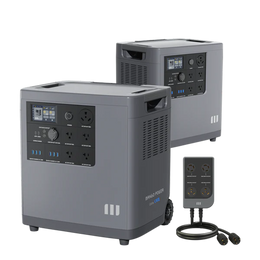
2. Mango Power E 3,000W 3.5kWh 120V Portable Power Station

$1,499 (list $1,599) - 3,530 Wh, 3,000 W, 2,000 W solar input, 30 A RV port, 5-year warranty
The Mango Power E takes up to 2,000 W of solar (60-150 V), twice most stations in its class, so panels can carry a window AC through a sunny afternoon and still refill the battery. Its 3,530 Wh of CATL LFP cells give about 6 hours of an 8,000 BTU window unit or a 115V inverter mini-split, with 16 outputs including a 30 A RV port. The listing states no surge figure, so pair fixed-speed RV units with a soft start kit. 100 lb, 80% recharge in about an hour, expands to 7 kWh. The listing notes limited inventory before a planned discontinuation. ECO100 needs a $1,500 order, $1 more than this station.
- 2,000 W solar input
- Expands to 7 kWh
- 5-year warranty, 6,000 cycles
- 100 lb
- Surge not stated on the listing
- Limited inventory
3. Anker SOLIX C2000X Gen 2 Portable Power Station

$999.99 (list $1,599.99) - 2,048 Wh, 2,400 W, 4,000 W peak, TT-30 port, 41.7 lb
The lightest station here that still handles an AC. A 4,000 W peak covers window units and, with a soft start kit, a 13,500 BTU rooftop AC; the TT-30R port feeds an RV at up to 2,400 W. Capacity is the limit: about 3.6 hours of an 8,000 BTU window AC or 2 hours of RV rooftop cooling, or 4,096 Wh with one BP2000 Gen 2 battery. Full recharge in 58 minutes (2,600 W AC + solar), 800 W solar or alternator input, 9 W idle draw, 30 dB under 1,000 W. Five-year warranty, 4,000 cycles to 80%.
- Light for a 2 kWh station
- TT-30 and alternator charging
- 58-minute full recharge
- Solar input 800 W
- Short runtime for RV AC
- Soft start needed for rooftop units
4. Bluetti Elite 200 V2 Portable Power Station

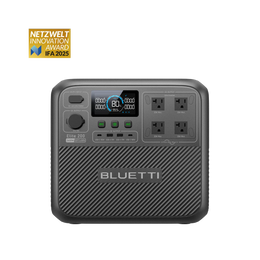
$899 - 2,073.6 Wh, 2,600 W continuous, 1,000 W solar input, 53.4 lb
The cheapest AC-capable output here: 2,600 W continuous and 2,073.6 Wh, enough for the running load of any window AC up to 12,000 BTU. Its 3,900 W Power Lifting mode is for resistive loads like kettles, not compressor starts, and the listing gives no motor surge figure, so it suits inverter window units and small 5,000-8,000 BTU units best. 1,000 W solar input (12-60 V), 1,800 W wall charging, expandable by up to 3,072 Wh with a B80, B230 or B300 battery. Five-year warranty. No code applies.
- Lowest price here
- 2,600 W continuous
- 1,000 W solar, expandable
- No motor surge rating listed
- No TT-30 outlet listed
- About 3.5 hours of an 8,000 BTU AC
5. Mango Power E 3,000W 7kWh 120V Home Backup

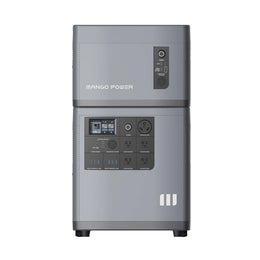
$2,299 (list $2,525) - 7,060 Wh, 3,000 W, 2,000 W solar input, 5-year warranty
The station plus one expansion battery doubles capacity to 7,060 Wh at the same 3,000 W: about 12 hours of an 8,000 BTU window unit or inverter mini-split, or 17 hours of a 6,000 BTU bedroom unit, with 2,000 W of solar to refill the next day. It is the pick for Setup A above. The pieces weigh 100 lb and 73 lb. Use an inverter AC or a soft start kit for fixed-speed compressors. No code applies today.
- 7 kWh for all-night cooling
- 2,000 W solar input
- Two pieces, easier to move
- 173 lb combined
- 3,000 W output, 120V only
- Surge not stated on the listing
6. Mango Power E 6,000W 7,060Wh 240V Kit with mSocket Pro

$2,999 (list $3,149), $2,899 with code ECO100 - 7,060 Wh, 6,000 W, 120/240V split phase
Two Mango Power E units joined by the mSocket Pro give a portable 120/240V split-phase receptacle, 6,000 W combined and 7,060 Wh - enough for a 230V mini-split, well pump or dryer without rewiring. An 18,000 BTU inverter mini-split runs about 6 hours on it, a 12,000 BTU model 10-12 hours, and each unit takes 2,000 W of solar. Feeding a home circuit instead of plugging in directly needs an electrician-installed transfer switch or inlet. Not a central-air solution.
- Real 120/240V output
- 6,000 W combined
- Up to 4,000 W of solar
- Two 100 lb units
- Surge not stated on the listing
- Not enough for central air
Want more choice? Browse 3000W power stations, 2000W power stations, solar generators for RVs and the Mango Power E range. Our best 3000-watt solar generators guide compares the bigger stations head to head.
What buyers ask before cooling with a power station
These come from the searches that bring people to our power station pages and the questions Google shows for this topic. Answers use the store data above.
Can a Bluetti run an air conditioner?
Yes, for the running load. The Elite 200 V2 supplies 2,600 W continuous, enough for any window AC up to 12,000 BTU. Its listing gives no motor surge figure, so it is the safest match for inverter window units and small fixed-speed units; use a soft start kit or a higher-surge station for RV rooftop ACs.
How big a lithium battery do I need to run an air conditioner overnight?
Multiply the AC's average draw by the hours and divide by 0.85. An 8,000 BTU window AC at about 490 W for 9 hours needs about 5.2 kWh of capacity; a 6,000 BTU unit about 3.7 kWh. That is why 7 kWh is the comfortable size for all-night cooling.
How many solar panels do I need for a mini-split?
A 12,000 BTU inverter mini-split averaging about 500 W uses about 4 kWh over 8 daytime hours, which 900-1,000 W of panels covers on a sunny summer day. Running it at night as well needs a battery large enough for the evening hours and about twice the panels to refill it.
FAQ
Can a 2000W solar generator run an air conditioner?
Yes, for window units up to about 10,000 BTU and most inverter mini-splits, if the station's surge rating covers the compressor start (2,000-3,000 W for a fixed-speed 8,000 BTU unit). A 2 kWh station runs an 8,000 BTU window AC for about 3.5 hours. A 13,500 BTU RV rooftop unit usually needs a soft start kit on a 2,000-2,400 W station.
How long will a power station run a window air conditioner?
Hours = station Wh x 0.85 / average draw. An 8,000 BTU window AC averages about 490 W with the compressor cycling, so a 2,048 Wh station gives about 3.6 hours, a 3,584 Wh station about 6 hours and a 7,060 Wh station about 12 hours. A 6,000 BTU unit runs roughly 40% longer.
What size solar generator do I need to run an RV air conditioner?
For a 13,500 BTU rooftop unit, look for at least 3,000 W continuous and a surge rating above 3,000 W, or add a soft start kit. Capacity sets the hours: a 3.5 kWh station gives about 3.3 hours of cooling and a 7 kWh station about 6.6 hours at a 70% compressor duty cycle.
Can solar panels run an air conditioner directly?
Not without a battery and inverter in between. Panels produce DC that rises and falls with clouds, while a compressor needs steady AC and a start-up surge. Connected to a power station, about 1,000 W of panels covers an 8,000 BTU window AC's daytime use on a sunny summer day.
Can a solar generator run central air?
Rarely. A 3-ton central AC draws 3,000-3,500 W while running and needs 240V plus a start-up surge many times that. Portable stations are not built for it; a whole-house system with a 10-12 kW hybrid inverter, 15 kWh or more of battery and a soft starter is the realistic minimum.
Does a soft start help a power station run an AC?
Yes. A soft start kit ramps the compressor up over about a second instead of slamming it on, cutting the start-up surge by roughly half or more. That is often the difference between a 2,000-2,400 W station tripping and running a 13,500 BTU RV air conditioner.

Serhii Dovzhenko, Solar & Energy Storage Specialist at Eco Solar Kits · LinkedIn
Serhii is based in Vancouver, BC, and works on product data, system sizing and buyer guides for Eco Solar Kits. He attends solar and energy storage industry conferences and is involved in the community of electricians in Vancouver, BC. Credit for the data verification in this guide goes to Adsec.ca.


