


Every solar system needs an inverter to turn the panels' direct current into the alternating current your home uses. The choice of inverter type decides more than efficiency: it decides whether shade on one panel costs you 3% or 30% of a string's output, whether the system can keep the lights on in a blackout, and what you will replace in year 12. This guide compares the three types homeowners actually choose between in 2026 - string, micro and hybrid - with prices from our store checked today and the sizing math for each. If your question is grid-tie vs off-grid rather than inverter type, start with our hybrid vs off-grid vs grid-tie inverter guide.
How string, micro and hybrid inverters work
String inverter. Panels are wired in series into one or more strings, and each string feeds a maximum power point tracker (MPPT) inside one wall-mounted inverter. A string of ten 450W panels might run at 350-450 volts DC. The inverter tracks the best operating point for the whole string at once, so the string behaves like a single big panel. Grid-only string inverters stop producing when the grid goes down.
Microinverter. A small inverter mounts under each panel (or each pair) and converts that panel's 30-50 volts DC straight to 240V AC on the roof. Each panel has its own MPPT, so the array is really many small systems on one trunk cable. The Mango Power S Pro, for example, is a 500W single-stage microinverter with a 16-60V MPPT window, sold as a 10-unit, 5,000W set.
Hybrid inverter. A hybrid takes panel strings exactly like a string inverter, but adds a battery port, a charger and a transfer relay. When the grid fails it disconnects from the utility and runs your backed-up circuits from panels plus battery. Many hybrids also accept AC coupling, so an existing grid-tie or microinverter array can feed them. All the inverters in our hybrid solar inverters collection work this way.

Roofs broken up by skylights, vents and dormers are where module-level electronics earn their cost.
Side-by-side comparison
| Factor | String inverter | Microinverters | Hybrid inverter |
|---|---|---|---|
| Where it mounts | Wall, garage or outside wall | Under each panel on the roof | Wall, garage or outside wall |
| MPPT | 1-3 per inverter (per string) | One per panel | 2-3 per inverter (per string) |
| Shade on one panel | Can drag down the whole string | Only that panel loses output | Same as string (per MPPT) |
| Battery / outage backup | No (grid-only) | No on its own - needs an AC-coupled battery system | Yes - built-in battery port and transfer |
| Rooftop rapid shutdown | Needs add-on devices under panels | Built in | Needs compatible devices under panels |
| Typical warranty | 10-12 years | 25 years (Mango Power S Pro) | 10 years (5 on SGN-11K15PRO) |
| Monitoring | Whole system or per string | Per panel | Per string + battery + loads |
| Expansion | Limited by string voltage and inverter size | Add panels one at a time | Add strings, batteries, parallel units |
| Price per kW (store, today) | Not stocked as grid-only units | About $492/kW (5 kW set, after BF $150) | $224-$439/kW AC |
| Best for | Simple, unshaded roofs, lowest cost, no backup | Shade, many roof planes, small arrays | Battery backup, off-grid, whole-home systems |
We do not currently stock grid-only string inverters; the hybrids below do everything a string inverter does and add battery support, usually for a similar price per kW.
Shade, roof layout and rapid shutdown
In a series string, current is limited by the weakest panel. A chimney shadow across one panel in a ten-panel string does not just cost that panel's output - bypass diodes help, but the string's operating point shifts and the whole string can lose a large share of its power until the shadow moves. With microinverters, the shaded panel produces less and the other nine carry on at full output. Mango Power rates the S Pro at 5-15% more yield than a string inverter on complex roofs; on a clean south-facing roof with no shade the difference shrinks to a few percent.
Roof layout matters as much as shade. A string's panels should share one orientation and tilt. If you have six panels facing east and six facing west, a string inverter needs two MPPT inputs (one per face); with three faces you need three MPPTs or microinverters. That is why the 3-MPPT hybrids - the EG4 FlexBOSS21 and Sungold SGN-11K15PRO - handle split roofs better than 2-MPPT models.
Rooftop rapid shutdown is the other factor. Since the 2017 National Electrical Code (NEC 690.12), conductors inside the array on a building must drop to 80 volts or less within 30 seconds of shutdown so firefighters can work on the roof. Microinverters meet this by design because no high-voltage DC leaves the panel. String and hybrid inverters need a module-level rapid shutdown device under each panel that is listed as compatible with the inverter; ground-mounted arrays away from the house usually do not. Check your local code edition with your installer or permit office (rapid shutdown overview).
Batteries and power outages
This is the biggest practical difference. A grid-only string inverter and a microinverter array both shut off within seconds of an outage under UL 1741 and IEEE 1547 anti-islanding rules - even in full sun. We explain why in do solar panels work in a power outage.
A hybrid inverter keeps working because it opens a relay to isolate your home and then forms its own 120/240V supply from the battery, with the panels topping it up. Transfer is fast: the Sungold SGS-12K18MAX lists about 10 ms and the FlexBOSS21 20 ms by default (10 ms configurable). Microinverter owners who want backup add an AC-coupled battery system: a hybrid that supports AC coupling sits between the micros and the grid, acts as the "grid" during an outage so the micros keep producing, and throttles them when the battery is full. The full retrofit process is in how to add a battery to an existing solar system.
What each type costs
The fair way to compare inverter prices is dollars per kW of continuous AC output. Using today's store prices, hybrids land between about $224 and $439 per kW, while the Mango Power S Pro microinverter set works out to about $492 per kW after the automatic Black Friday $150. The chart leaves out panels and batteries so the inverters can be compared directly.
Three things the chart does not show. First, a string or hybrid system on a roof also needs a rapid shutdown device per panel, which narrows the gap with microinverters. Second, a hybrid's price already includes the battery charger and transfer hardware you would otherwise buy separately for backup. Third, a microinverter set has no single box to fail: if one unit dies you lose one panel, not the array. For complete system pricing by size, see our whole-home battery backup cost guide.
Sizing math for each type
String or hybrid: fit the string voltage
Each string must stay inside the inverter's voltage window on the coldest morning and the hottest afternoon. Panel open-circuit voltage (Voc) rises about 0.3% per degree C below 25 C.
- Cold limit: example panel Voc 49.5 V x 1.12 (about -15 C) = 55.4 V. The FlexBOSS21 accepts up to 600 V DC, so 600 / 55.4 = 10 panels per string maximum.
- Hot limit: example panel Vmp 41.5 V x 0.88 (hot roof) = 36.5 V. The FlexBOSS21 MPPT range starts at 120 V, so you need at least 120 / 36.5 = 4 panels; aim for 8-10 so the string sits in the middle of the 120-440 V MPPT range.
- Power: 3 strings x 10 x 450W = 13.5 kW of panels, well inside the FlexBOSS21's 21 kW maximum utilized PV input.
Use your panel's datasheet values, not these examples. More wiring detail is in our series vs parallel wiring guide.
Microinverters: match the panel to the micro
Mango Power recommends a DC/AC ratio of 1.2-1.5 for the S Pro, so a 500W microinverter pairs with a panel of about 600-750W, and the panel's voltage must sit inside the 16-60V MPPT window. Ten 550W panels on the 10-unit set give 5.5 kW DC on a 5 kW AC system (ratio 1.1) - a little clipping-free headroom on hot days.
Hybrid: size the inverter to the load and the battery
Add up the loads you want to run at the same time during an outage. A fridge (150 W running), furnace blower (500 W), lights and internet (200 W), a well pump (1,000-1,500 W running, 3-5x that to start) and a microwave (1,200 W) peak around 4-5 kW, so any of the hybrids below covers essentials; whole-home backup with central air needs 9-12 kW. The battery must keep up too: the FlexBOSS21 can charge and discharge at up to 12 kW and EG4 recommends more than 300 Ah of 48V battery per inverter. Our battery runtime guide covers the kWh side.
Best inverters in stock by type
Every pick below was active and in stock on November 26, 2026. Prices are store prices; where an automatic Black Friday tier ($150 off $1,500+, $400 off $4,000+ on eligible items, through December 1) applies to the item on its own, we show the after-discount price. Discounts do not combine with codes.
1. EG4 FlexBOSS21 21kW Split-Phase Hybrid Inverter

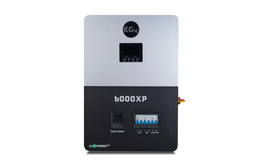
The FlexBOSS21 is the hybrid that most fully replaces a string inverter: three MPPT trackers across five strings, up to 21,000 W of usable PV and a 100-600 V DC input, so split east/west/south roofs are easy to wire. It is rated 12,000 W continuous on its own and up to 16,000 W when solar is assisting, with 12 kW of battery charge/discharge power, a 90 A grid pass-through and a NEMA 4X enclosure for outdoor walls. It works grid-tied or off-grid and pairs with the EG4 GridBOSS hub for AC coupling an existing array.
Price checked Nov 26, 2026: $3,599.99 (compare at $4,199.99). No code or automatic tier applies.
See the FlexBOSS212. Sungold Power SGS-12K18MAX 12kW Hybrid Inverter

At about $224 per kW it is the lowest-cost hybrid per kW we stock, and it accepts up to 18,000 W of solar on two MPPTs. The 200A pass-through lets it sit between the meter and the main panel for whole-home backup, and it is UL 1741 SB, IEEE 1547 and Rule 21 listed for grid-tied use. If you already have panels on a grid-tie or microinverter system, it can AC couple to them.
Price checked Nov 26, 2026: $2,691 (compare at $2,960). No code or automatic tier applies.
See the SGS-12K18MAX3. Mango Power S Pro 5,000W Microinverter Set (10 x 500W)

Ten 500W single-stage microinverters, a 10-in-1 trunk cable and the Smart Gateway Lite meter - the inverter side of a 5 kW, 240V grid-tie array with per-panel MPPT. The IP68 / NEMA 6P housings are fanless and need no grounding, rapid shutdown is built in, and the gateway gives whole-home monitoring and zero-export control. Panels are not included; use any panels whose voltage fits the 16-60V window.
Price checked Nov 26, 2026: $2,608 (compare at $3,108); $2,458 with the automatic Black Friday $150 off (eligible on its own, through Dec 1).
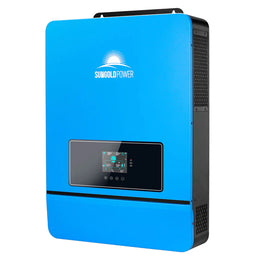
See the S Pro set4. Sungold Power SGN-11K15PRO 11.4kW Hybrid Inverter

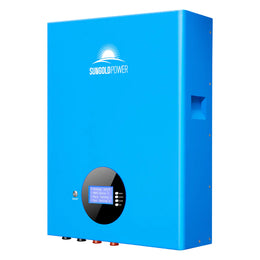
If your roof has three faces and the budget is tight, the SGN-11K15PRO gives three MPPT inputs and 15,000 W of PV for $2,790 - about $245 per kW. It is an 11.4 kW split-phase hybrid with a 200A rating, generator input and parallel capability, in an IP65 wall-mount enclosure.
Price checked Nov 26, 2026: $2,790 (compare at $3,069). No code or automatic tier applies.
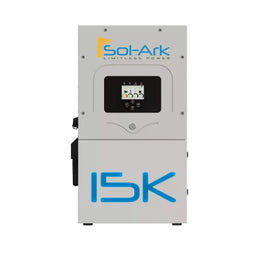
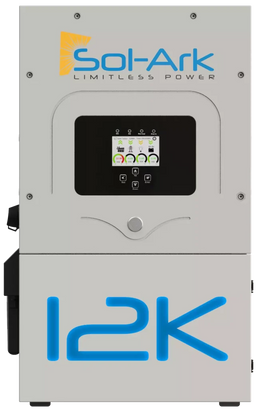
See the SGN-11K15PRO5. Sol-Ark 12K Hybrid Inverter

The Sol-Ark 12K is the hybrid many US installers already know, which helps when you want a local pro to commission and service it. It is rated 9 kW continuous with up to 13 kW of PV on two MPPTs, runs grid-tie, off-grid or hybrid, and carries a 10-year warranty. It is eligible for the automatic $400 tier on its own.
Price checked Nov 26, 2026: $4,350 (compare at $5,699); $3,950 with the automatic Black Friday $400 off (through Dec 1).
See the Sol-Ark 12K6. Mango Power S PIPV 1200W Plug-In Solar Kit

A complete small microinverter system: four 300W N-type TOPCon panels with stands, four Mango Power S microinverters (firmware-limited to 280W each at 120V) and the Smart Gateway Lite for zero-export. Mango Power estimates about 6 kWh a day at 5 peak sun hours. It shows the microinverter idea at its simplest - each panel works on its own - but plug-in rules vary by state and utility, so confirm yours first.
Price checked Nov 26, 2026: $2,698 (compare at $3,224); $2,548 with the automatic Black Friday $150 off (through Dec 1).
See the PIPV kitAlso in stock: the EG4 12kPV ($2,999.99, 8 kW, all-weather) and EG4 FlexBOSS18 ($3,199.99). Browse every model in our grid-tie power inverter collection, or compare the two biggest hybrid brands in EG4 vs Sol-Ark.
Which inverter type fits your home
| Your situation | Best type | Why |
|---|---|---|
| Want backup in outages, now or later | Hybrid | Battery port and transfer relay built in |
| Off-grid cabin or home | Hybrid (off-grid capable) | Runs without a grid; micros cannot |
| Shaded roof, several faces, no battery plans | Microinverters | Per-panel MPPT and built-in rapid shutdown |
| Small array (under 2 kW) or plug-in solar | Microinverters | No oversized central inverter to pay for |
| Big unshaded roof, export only, lowest cost | String (or a hybrid run grid-tied) | Fewest parts and lowest cost per kW |
| Existing microinverter system, adding backup | AC-coupled hybrid + battery | Keeps the micros and adds outage power |
What buyers ask before choosing an inverter
These questions come from searches that lead to our inverter pages and from the questions Google shows for this topic. Answers use the specs of products in our store.
"Do I lose a lot of power with a string inverter if one panel is shaded?"
It depends on how long and how much. A tree that shades one corner for an hour a day costs little; a chimney that shades two panels all afternoon can cost a meaningful share of that string. If shade is daily and unavoidable, put the shaded panels on their own MPPT input (3-MPPT hybrids make this easy) or use microinverters.
"Can I add batteries to microinverters later?"
Yes, by AC coupling. You keep the microinverters and add a hybrid inverter plus a 48V battery; in an outage the hybrid forms the grid and the micros keep producing. Check that the hybrid lists AC coupling and that your utility allows the combined export.
"Is a hybrid inverter less efficient than a string inverter?"
Not meaningfully when exporting solar - the FlexBOSS21 lists 97% PV-to-grid efficiency and the S Pro micros 97% CEC. Hybrids do draw some idle power (under 65 W on the FlexBOSS21), which matters more on small off-grid systems than on grid-tied homes.
"What size inverter do I need for a 10 kW array?"
For string and hybrid inverters, a DC/AC ratio of 1.1-1.3 is common, so a 10 kW array pairs with an 8-9 kW inverter or larger; most hybrids above also accept far more PV than their AC rating. For microinverters, size per panel instead: one 500W micro per 600-750W panel on the S Pro.
FAQ
What is the difference between a string inverter and a microinverter?
A string inverter is one box that converts the DC from a whole series string of panels to AC, so the weakest panel in the string limits the rest. A microinverter sits under each panel and converts that panel alone, so shade or a fault on one panel does not pull down the others.
Is a hybrid inverter a string inverter?
Yes, in how it connects to panels. A hybrid inverter takes panel strings into its own MPPT inputs like a string inverter, but it also has a battery port and can run your home from the battery when the grid is down. Models like the EG4 FlexBOSS21 and Sungold SGS-12K18MAX work this way.
Do microinverters work during a power outage?
Not on their own. Microinverters are grid-tied and shut down within a fraction of a second when the grid fails, as anti-islanding rules require. To keep power you need a battery system that forms a local grid, such as a hybrid inverter that supports AC coupling.
Which inverter type lasts the longest?
Microinverters usually carry the longest warranties - 25 years on the Mango Power S Pro - while string and hybrid inverters typically carry 10 years (5 years on the Sungold SGN-11K15PRO). Plan on replacing a central inverter once during a 25-year panel life.
Can I mix microinverters and a hybrid inverter?
Yes. A hybrid inverter that supports AC coupling, such as the EG4 FlexBOSS21 with EG4 GridBOSS or the Sungold SGS-12K18MAX, can sit next to an existing microinverter array, charge a battery from it and keep it running during an outage by acting as the grid.
Are microinverters worth the extra cost?
They are worth it on roofs with shade, several orientations or many small sections, and on small systems where a central inverter would be oversized. On an unshaded, single-plane roof a string or hybrid inverter usually costs less per kW and leaves room for a battery.

Serhii Dovzhenko, Solar & Energy Storage Specialist at Eco Solar Kits · LinkedIn
Serhii is based in Vancouver, BC, and works on product data, system sizing and buyer guides for Eco Solar Kits. He attends solar and energy storage industry conferences and is involved in the community of electricians in Vancouver, BC. Credit for the data verification in this guide goes to Adsec.ca.


