

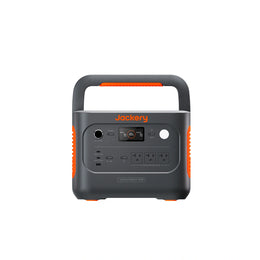
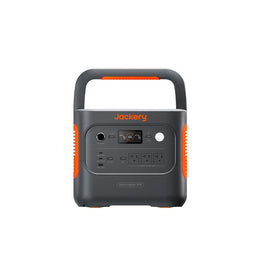
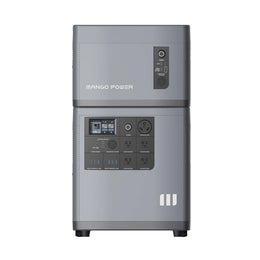
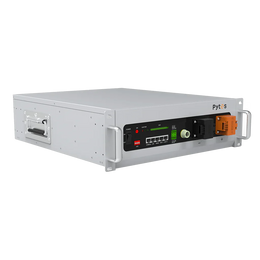

PECRON is new at Eco Solar Kits as of November 2026, and it fills a gap in our lineup: big LiFePO4 batteries at prices closer to a lead-acid setup than to a premium power station. The catch with any new brand is the naming - E1500LFP, F1000LFP, EP3800-48V, DV Hub-30A - so this guide sorts the range, explains which model fits which job and does the runtime math with our live prices.
If you are still choosing between brands, our Bluetti vs Jackery vs Anker SOLIX comparison covers the big three; if you are unsure how big to go, start with what size solar generator you need.
The PECRON lineup at a glance
Every PECRON model we list uses LiFePO4 cells, a pure sine wave inverter, UPS switchover and app control. They differ in size, output and whether you can add batteries.
| Model | Battery | AC output | Expandable | Max solar | Weight | Price | Status |
|---|---|---|---|---|---|---|---|
| F1000LFP | 960Wh | 1,500W (3,000W surge) | No | 600W | 23.9 lb | $399 | In stock |
| E1500LFP | 1,536Wh | 2,200W (4,400W peak) | Up to 9,216Wh | 1,000W | 38.4 lb | $549 | In stock |
| E3600LFP | 3,072Wh | 3,600W (7,000W surge) | Up to 18,432Wh | 2,400W | 79 lb | $999 | In stock |
| E2400LFP | 2,048Wh | 2,400W | Up to 9,728Wh | - | - | $649 | Restocking |
| E3800LFP | 3,840Wh | 4,200W | Up to 26,880Wh | - | - | $1,399 | Restocking |
| F3000LFP | 3,072Wh | 3,600W | Up to 10,752Wh | - | - | $899 | Restocking |
| F5000LFP | 5,120Wh | 7,200W, 120/240V | Up to 35,840Wh | - | - | $2,399 | Restocking |
Who makes PECRON
PECRON is a Shenzhen-based manufacturer founded in 2012. It launched its first portable AC/DC power station in 2014, registered the PECRON brand in 2015 and now runs its own factory and R&D center, with a US warehouse in Los Angeles that ships American orders. That factory-direct model is why the price per watt-hour is low: there is no separate brand owner marking up an OEM product.
We sell PECRON as a US retailer: your order ships from PECRON's US warehouse, warranty claims go through us to PECRON, and our pricing follows PECRON's official US prices.
PECRON E1500LFP: the expandable mid-size unit
The PECRON E1500LFP is the middle of the range: a 1,536Wh battery behind a 2,200W inverter (4,400W peak), with a built-in 1,400W charger that refills it from a wall outlet in about 1.8 hours. Solar comes in through an XT60 port at 11-60V and up to 1,000W.
What sets it apart from other 1.5 kWh stations is expandability. Add one EP3800-48V battery for 5,376Wh, or two for 9,216Wh, which takes it from a weekend unit to a multi-day outage system without replacing the station. At 38.4 lb it still lifts into a truck bed, and the Wi-Fi/Bluetooth app shows input and output in real time.
PECRON E3600LFP: home backup on wheels
The PECRON E3600LFP is the one we expect most home-backup buyers to pick. It holds 3,072Wh (51.2V, 60Ah), runs 3,600W continuously with 7,000W surge and has a 30A RV outlet - enough for a well pump, a window AC unit or a microwave and fridge at the same time.
Charging is fast for its size: up to 3,200W with the 30A AC cable (about 1.3 hours to full) or 1,800W from a regular 15A outlet (about 2 hours). Two XT60 solar inputs take 1,200W each, 2,400W total. It weighs about 79 lb, so most buyers add the T2 trolley once it is back in stock. At $999 that is about $0.33 per watt-hour - one of the lowest prices for a 3 kWh LiFePO4 station we carry.
PECRON F1000LFP: the light one
The PECRON F1000LFP is the grab-and-go model: 960Wh, 1,500W (3,000W surge) and 23.9 lb in a 15 x 8.5 x 8.4 in case. It charges 0-80% in about 50 minutes and full in about 1.1 hours from the wall, takes up to 600W of solar and runs at about 25dB under 500W loads, which matters in a tent or bedroom.
It is not expandable, so think of it as a camping, CPAP and short-outage unit. For a single fridge through a long outage, step up to the E1500LFP.
Expansion batteries, solar and 240V
- EP3800-48V expansion battery - 3,840Wh LiFePO4, works with the E1500LFP, E2400LFP, E3600LFP and F3000LFP ($799, restocking).
- DV Hub-30A 240V connect box - links two E3600LFP or E3800LFP units for 7,200W or 8,400W of 120/240V split-phase power ($99, restocking).
- PV200 / PV300 foldable panels - 200W and 300W IP67 panels with MC4 leads that match the XT60 inputs ($199 / $299, restocking).
Until PECRON panels are back, any panel set inside the station's voltage window works. Our guide on matching solar panels to a power station walks through the voltage and current limits.
Sizing math: runtime and recharge
Runtime = battery Wh x 0.85 (inverter and conversion losses) / load in watts. Real-world numbers move with temperature and how often a compressor cycles, so treat these as planning figures.
| Load | F1000LFP (960Wh) | E1500LFP (1,536Wh) | E3600LFP (3,072Wh) |
|---|---|---|---|
| Full-size fridge (150W avg) | 5.4 h | 8.7 h | 17 h |
| CPAP without humidifier (40W) | 20 h | 33 h | 65 h |
| Wi-Fi router + modem (20W) | 41 h | 65 h | 131 h |
| Laptop + monitor (90W) | 9.1 h | 15 h | 29 h |
| Window AC unit (700W) | 1.2 h | 1.9 h | 3.7 h |
Solar recharge: with 600W of panels and about 4.5 peak sun hours, expect roughly 2,000-2,300Wh a day after losses - a full refill of the E1500LFP, or two-thirds of the E3600LFP. Our guide on how long a power station takes to charge with solar has the full method.
Best PECRON picks for 2026
PECRON E3600LFP - best for home backup

3,072Wh and 3,600W for $999, with a 30A RV outlet, 3,200W fast charging and room for four expansion batteries. This is the one to buy if the goal is keeping a fridge, internet, lights and a well pump going through a multi-day outage.
PECRON E1500LFP - best mid-size starter

A 1,536Wh, 2,200W station at $549 that you can grow to 9,216Wh later. Good for RV weekends, job sites and apartment backup where you want to start small.
PECRON F1000LFP - best for camping and CPAP

960Wh and 1,500W in a 23.9 lb case for $399. Quiet, fast to charge and enough for a CPAP for several nights or a fridge for about five hours.
What buyers ask before buying PECRON
These are the questions that come up most in searches and Google's question results for PECRON, answered with our product data.
Is PECRON as good as Jackery or EcoFlow?
On hardware - LiFePO4 cells, pure sine wave output, UPS - the specs are comparable. PECRON gives you more capacity per dollar; the bigger brands have more polished apps and wider accessory ecosystems. If price per watt-hour matters most, PECRON wins.
Where is PECRON made?
In PECRON's own factory in Shenzhen, China. US orders ship from its Los Angeles warehouse.
Does PECRON have an app?
Yes. The E1500LFP connects over Wi-Fi and Bluetooth, the E3600LFP over Wi-Fi and the F1000LFP over Bluetooth.
FAQ
Is PECRON a good brand?
PECRON is a Shenzhen manufacturer that has built portable power stations since 2014 and runs its own factory. Its current US lineup uses LiFePO4 cells rated for 3,500+ cycles to 80% capacity and carries a 2+3-year warranty (the extra 3 years with registration). It sits in the value tier: fewer app features than the biggest brands, but more watts and watt-hours per dollar.
Which PECRON power station should I buy?
For most homes the E3600LFP ($999) is the best value - 3,072Wh, 3,600W and a 30A RV outlet. Pick the E1500LFP ($549) if you want a mid-size unit you can expand later, and the F1000LFP ($399) for camping, CPAP and short outages.
Can PECRON power stations be expanded?
The E1500LFP takes up to two EP3800-48V batteries (9,216Wh total) and the E3600LFP up to four (18,432Wh). The F1000LFP is a fixed 960Wh unit.
Can a PECRON E3600LFP run 240V appliances?
One unit is 120V only. Two E3600LFP units linked with the PECRON DV Hub-30A 240V connect box give 7,200W of 120/240V split-phase power. Any connection to home wiring should go through a transfer switch installed by a licensed electrician.
How long does a PECRON battery last?
PECRON rates its LiFePO4 packs for 3,500+ full cycles to 80% capacity. At one full cycle a day that is close to 10 years; used for weekend trips and outages, the battery will usually outlast the electronics.
Do you charge sales tax or shipping on PECRON?
No. Eco Solar Kits ships PECRON free to mainland US addresses (not Hawaii or Alaska) on orders over $69 and adds $0 sales tax at checkout. Orders ship in 1-4 business days and most arrive within 4-10 business days.
Browse the full range in our PECRON collection or compare against other brands in portable power stations.

Serhii Dovzhenko, Solar & Energy Storage Specialist at Eco Solar Kits · LinkedIn
Serhii is based in Vancouver, BC, and works on product data, system sizing and buyer guides for Eco Solar Kits. He attends solar and energy storage industry conferences and is involved in the community of electricians in Vancouver, BC. Credit for the data verification in this guide goes to Adsec.ca.


