

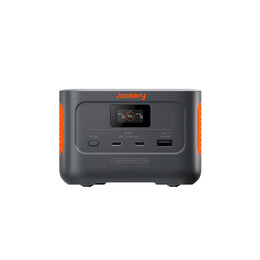

A portable power station is great until the outage lasts longer than a phone charge. Running extension cords to the fridge, the furnace and the router works for one night, but it is messy, and it cannot reach hard-wired loads like a furnace blower, a well pump or ceiling lights. The fix is to connect the station to your home's electrical panel, so your essential circuits run from the battery.
This guide explains the three safe connection methods, what each costs, which station ports work with which hardware, and how to size the system so it does not trip on the first well-pump start. Every product named is in stock or open for pre-order on our store as of November 24, 2026.
Why you can't just plug a power station into an outlet
A "backfeed" cord (male plug on both ends) pushes power from the station into a wall outlet and from there into the whole panel. Three things go wrong:
- Utility workers get hurt. With the main breaker on, your 120V is stepped up by the pole transformer to thousands of volts on a line crews believe is dead.
- The exposed plug is live. The second male end carries full voltage the moment it is plugged in.
- Wiring can overheat. A 15A or 20A outlet circuit was never meant to carry the whole house load, and there is no breaker protecting the cord itself.
Every safe method below does the same job in a different way: it makes it physically impossible for the grid and the battery to be connected to your house wiring at the same time.
The 3 safe ways to connect a power station to your house
1. Power inlet box + interlock kit
An electrician mounts a weatherproof inlet box (30A or 50A) on the outside wall and runs it to a new two-pole backfeed breaker in your main panel. A sliding metal interlock plate sits over the main breaker and the backfeed breaker, so only one can be on at a time. During an outage you switch off the main, slide the plate, plug the station into the inlet with a generator cord, and turn on the backfeed breaker. You then choose which circuits to run by switching branch breakers on or off.
Best for: lowest cost and full flexibility. Watch for: the interlock must be listed for your exact panel model, and it is manual, so someone has to be home.
2. Manual transfer switch
A small sub-panel with 6-10 circuit switches is installed next to the main panel. The electrician moves your essential circuits (fridge, furnace, sump pump, lights) into it. Each circuit has a LINE / OFF / GEN switch, and the switch itself prevents backfeeding. You plug the station into the switch's inlet and flip the circuits you want to GEN. Many switches have wattmeters, which help you avoid overloading the station.
Best for: people who want a clear, labeled setup with only the essentials. Watch for: you can only power the circuits wired into the switch.
3. Automatic smart panel or transfer switch
A smart panel such as the Mango Power mPanel Pro sits between the main panel and an essential-loads sub-panel. When the grid fails, it moves those circuits to the battery on its own, and it recharges the stations from the grid when power returns. No cords to run, no switches to flip.
Best for: homes where nobody is always around, medical devices, sump pumps, and anyone who wants backup to feel like it was never off. Watch for: higher cost, and the panel only works with its own brand of station.
Cost comparison: interlock vs transfer switch vs smart panel
The installed ranges below come from national cost surveys (HomeGuide), plus our product prices for the kits that include their own panel. Your electrician's quote depends on panel distance, panel model and local permit fees.
| Method | Hardware | Installed cost (typical) | Switching | 240V loads | Picks circuits by |
|---|---|---|---|---|---|
| Inlet box + interlock | Kit $50-$150, inlet $20-$100, breaker + cord | $400-$850 | Manual (main off, backfeed on) | Yes, with a 240V station or cord | Branch breakers in the main panel |
| Manual transfer switch (6-10 circuits) | Switch $230-$670 | $400-$1,300 | Manual, per circuit | Yes, if the switch is 240V rated | The circuits wired into the switch |
| Automatic transfer switch (generic) | Switch $400-$2,000 | $600-$2,500 | Automatic | Depends on model | Essential-loads sub-panel |
| Mango Power mPanel Pro kit | Panel included with the 7,060Wh kit | Kit price + electrician labor | Automatic, recharges from grid | Yes, 120/240V split phase | Essential-loads sub-panel |
| Backfeed cord into an outlet | - | Never | Unsafe and illegal - do not use | ||
Add $50-$350 for the electrical permit where required. If your panel is full or too old for a listed interlock, a subpanel ($500-$1,700) or a panel swap may be needed, so get the panel model checked before buying hardware.
Which station port works with which connection
The outlet on the station decides what your electrician can connect to. Here is how the stations we sell line up:
| Station / kit | House-connection port | Voltage | Max output | Works with | Price (Nov 24) |
|---|---|---|---|---|---|
| Mango E 240V Home Backup Kit (mPanel Pro) | Hard-wired via mPanel Pro | 120/240V | 6,000W | Included automatic smart panel | $3,499 ($3,349 with BF $150 tier) |
| Mango E 14,120Wh 240V Kit (mPanel Pro) | Hard-wired via mPanel Pro | 120/240V | 6,000W | Included automatic smart panel | $4,899 ($4,749 with BF $150 tier) |
| Mango E 240V Kit (mSocket Pro) | mSocket Pro 240V receptacle, 30A | 120/240V | 6,000W | 240V inlet + interlock or 240V manual switch | $2,999 ($2,849 with BF $150 tier) |
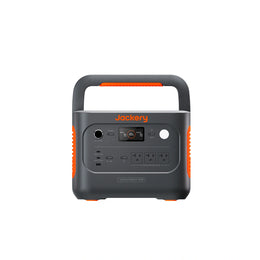
| Jackery Explorer 5000 Plus | NEMA L14-30R / 14-50, 30A | 120/240V | 7,200W | 240V inlet + interlock or 240V manual switch | $3,499 ($3,399 with ECO100) - pre-order, ships from Dec 30 |
| Mango Power E 7kWh 120V Home Backup | TT-30R RV port, 30A | 120V | 3,000W | 120V inlet + interlock or 120V manual switch | $2,299 ($2,149 with BF $150 tier) |
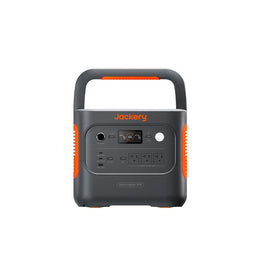
| Jackery HomePower 3600 Plus | TT-30R, 30A | 120V (240V with two linked) | 3,600W | 120V inlet + interlock or 120V manual switch | $1,899 ($1,799 with ECO100) - pre-order, ships from Jan 6 |
| Anker SOLIX C2000X Gen 2 | TT-30R (20A max) | 120V | 2,400W | 120V inlet + interlock or small manual switch | $999.99 (sale from $1,599.99) |
The 120V-only catch: most US panels are 120/240V split phase. A TT-30 station only supplies one 120V leg. Some adapter cords tie both panel legs together so every 120V breaker gets power, but 240V appliances will not run, and on a shared-neutral (multi-wire) circuit this can overload the neutral wire. Ask your electrician how they will handle it, or pick a 240V-capable station from the top of the table.
Black Friday tiers (automatic, $150 off $1,500+, $400 off $4,000+, $800 off $8,000+ on eligible items) run until December 1, 2026. Codes such as ECO100 ($100 off orders of $1,500+) do not stack with the tiers or with each other.
Sizing math: how much station do your circuits need?
Two numbers matter: output (watts), so the station can start and run your loads, and capacity (watt-hours), so it lasts long enough. Here is a typical essential-loads list:
| Circuit | Running watts | Start-up (surge) watts | Voltage | Daily energy (outage use) |
|---|---|---|---|---|
| Refrigerator | 150-200W | 1,000-1,200W | 120V | 1.2-1.8 kWh |
| Gas furnace blower | 400-800W | 1,200-1,600W | 120V | 2-5 kWh (winter) |
| Sump pump, 1/2 hp | 800-1,000W | 2,000-2,500W | 120V | 0.5-2 kWh |
| Well pump, 1 hp | 1,000-1,500W | 3,000-4,500W | 240V (most) | 1-2 kWh |
| Lights (LED, 2 circuits) | 100-200W | - | 120V | 0.5-1 kWh |
| Internet router + modem | 20-30W | - | 120V | 0.5-0.7 kWh |
| Microwave (short use) | 1,000-1,200W | - | 120V | 0.2-0.4 kWh |
Worked example (gas-heated home with a sump pump): fridge 200W + furnace blower 600W + lights 150W + router 30W = 980W running. Add the sump pump starting (2,500W) while the rest runs and the peak is about 3,500W. That rules out a 2,400W station if the pump and furnace may start together, and points to a 3,000W+ unit or a 6,000W kit.
Runtime: runtime (hours) = usable Wh x 0.85 inverter efficiency / average load in watts. Fridges and pumps cycle, so a home like the one above averages about 600W over a day, not 980W.
A 7 kWh system covers about 10 hours at a 600W average, or about 20 hours if you keep the average near 300W. Two days without solar needs about 14 kWh. Add solar panels to the station and a sunny day can refill most of the bank, which is how a 7 kWh system rides through a multi-day outage. For more runtime detail, see how long a 5, 10 or 15 kWh battery runs a house.

Your electrician moves the circuits you want backed up to a transfer switch or an essential-loads sub-panel.
Best power stations and kits for house connection
1. Mango Power E 6,000W 7,060Wh 240V Home Backup Kit with mPanel Pro

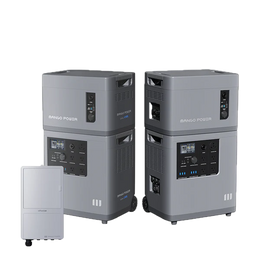
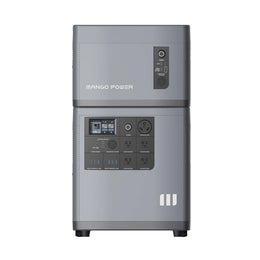
Two Mango Power E stations and the mPanel Pro smart panel in one box. The electrician wires the mPanel Pro to your essential-loads sub-panel; when the grid drops, those circuits switch to 6,000W of 120/240V on their own, and the stations recharge from the grid when it returns. Each station takes up to 2,000W of solar, and the CATL LiFePO4 cells are rated for 6,000 cycles. It is the simplest way to get automatic backup with a 240V well pump on the list.
Price checked Nov 24, 2026: $3,499 (compare at $3,719) - $3,349 with the automatic Black Friday $150 tier
See the mPanel Pro kit2. Mango Power E 6,000W 14,120Wh 240V Kit with mPanel Pro

The same automatic setup with two expansion batteries added, for 14.12 kWh. At a 600W average that is close to a full day of essentials on battery alone, and two days if you trim loads or add solar. Choose it if you are on a well, heat with gas (furnace blower) and see multi-day storm outages.
Price checked Nov 24, 2026: $4,899 (compare at $5,599) - $4,749 with the Black Friday $150 tier
See the 14 kWh kit3. Mango Power E 6,000W 7,060Wh 240V Kit with mSocket Pro

The mSocket Pro links two Mango Power E stations into one 120/240V, 30A receptacle. On its own it is portable 240V power for tools, RVs and appliances; paired with a 240V inlet box and interlock (or a 240V manual transfer switch) installed by your electrician, it feeds both legs of your panel. It costs $500 less than the mPanel Pro kit, and you choose circuits by hand.
Price checked Nov 24, 2026: $2,999 (compare at $3,149) - $2,849 with the Black Friday $150 tier
See the mSocket Pro kit4. Jackery Explorer 5000 Plus

One unit with native 120/240V: an L14-30R / 14-50 outlet rated 30A and 7,200W (14,400W surge), 5,040Wh of LiFePO4 and a 0 ms online UPS mode. That single 240V outlet is exactly what a 30A 240V inlet and interlock expect, so the house connection is simple. It is a pre-order item right now, shipping from December 30.
Price checked Nov 24, 2026: $3,499 (compare at $3,849) - $3,399 with code ECO100
See the Explorer 5000 Plus5. Mango Power E 3,000W 7kWh 120V Home Backup

A Mango Power E station plus an expansion battery for about 7 kWh at 120V, with a 30A TT-30 RV port that matches a 120V inlet box. Good for gas-heated homes without 240V loads: fridge, furnace blower, sump pump, lights and internet. Later you can add a second station with the mSocket Pro or mPanel to step up to 240V.
Price checked Nov 24, 2026: $2,299 (compare at $2,525) - $2,149 with the Black Friday $150 tier
See the Mango E 7kWh6. Anker SOLIX C2000X Gen 2

2,048Wh of LiFePO4, 2,400W output (4,000W peak), a TT-30R port (20A) and a 10 ms UPS. On a small 120V inlet with an interlock or a 6-circuit manual switch it runs a fridge, lights, router and a furnace blower for a few hours. It expands to 4 kWh with the BP2000 Gen 2 battery.
Price checked Nov 24, 2026: $999.99 (compare at $1,599.99)
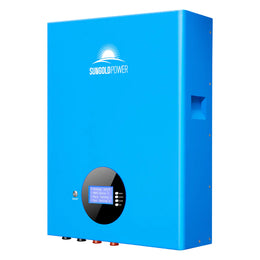
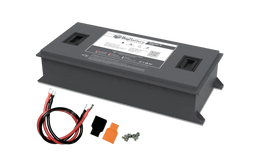
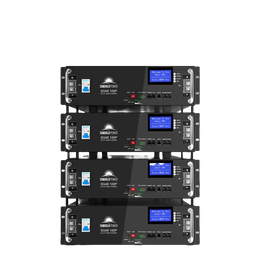
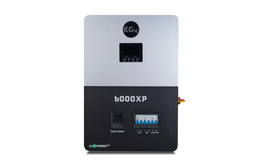
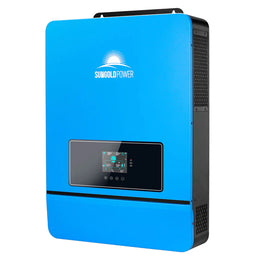
See the C2000X Gen 2Need more than 6-7 kW, or want a permanent system with roof solar? Look at a hybrid inverter and wall or rack battery instead, such as the Sungold 12kW all-in-one hybrid inverter (200A whole-home pass-through) or a BigBattery NEXUS 2 16 kWh + EG4 6000XP kit. The trade-offs are covered in portable power station vs home battery system. Browse every station with a switch option in solar backup generators with transfer switch and the bigger units in solar power generators for a whole home.
Step by step: what the install looks like
- List your essential circuits and their running and start-up watts (use the table above). Mark any 240V loads.
- Pick the method: interlock (cheapest), manual switch (labeled essentials) or smart panel (automatic).
- Match the station port to the inlet: TT-30 for 120V, L14-30 or the mSocket Pro receptacle for 240V.
- Get a licensed electrician's quote with the panel model, inlet location, breaker size and permit included.
- Pull the permit and schedule the inspection where your city requires it.
- Install: inlet box on the outside wall, wire to the backfeed breaker or switch, interlock plate or sub-panel, labels.
- Test before the storm: switch off the main, connect the station, bring circuits on one at a time and watch the station's watt reading.
- Keep the station charged at 80-100% during storm season and set a reminder to top it up monthly.
What buyers ask before connecting a station to the panel
These come from the searches that bring people to our store and from Google's question results for this topic, answered with our product data.
"How do I connect a solar generator to my house?"
Through a listed inlet box + interlock, a manual transfer switch or a brand smart panel, installed by an electrician. The solar panels charge the station; the station feeds the house through that hardware. The solar side never connects to your panel directly.
"How much does it cost to install a transfer switch?"
Plan on $400-$1,300 for a manual switch installed and $600-$2,500 for an automatic one, plus permit fees. An interlock is usually the cheapest legal route at $400-$850.
"Is there a battery backup with an automatic transfer switch built in?"
Yes. The Mango Power E kits with mPanel Pro include the automatic panel, so you buy the battery and the switch together. Many stations also have a UPS mode (10-20 ms), but that only switches devices plugged into the station itself, not house circuits.
"Will it run my well pump?"
Only with 240V output and enough surge. A 1 hp 240V pump can pull 3,000-4,500W for a second at start-up. The 6,000W Mango 240V kits and the 7,200W Explorer 5000 Plus are sized for it; a 120V station is not. More in solar generator for a well pump.
FAQ
Can I plug a power station into a wall outlet to power my house?
No. Feeding power back through an outlet with a male-to-male cord (a "suicide cord") energizes the utility line and exposed plug pins, can electrocute line workers and can start a fire. It also violates electrical code. Use an inlet box with an interlock, a transfer switch or a smart home panel installed by a licensed electrician.
What is the cheapest safe way to connect a power station to a house?
An interlock kit plus a power inlet box, usually $400-$850 installed according to national cost surveys. The interlock is a sliding plate that makes it impossible to turn on the main breaker and the backup breaker at the same time. Many panels need a kit made for that exact model, and most areas require a permit.
Do I need a 240V power station to connect to my panel?
Only if you want to run 240V loads such as a well pump, dryer or central AC. A 120V station with a 30A TT-30 port can feed 120V circuits through an inlet and interlock or a 120V manual transfer switch. For 240V loads you need a station with an L14-30 or 14-50 outlet, two linked stations, or a kit like Mango Power E with mSocket Pro or mPanel Pro.
Is an automatic transfer switch worth it for a power station?
If someone is not always home, or you run medical equipment, yes. An automatic switch or smart panel moves your essential circuits to battery within milliseconds, so the fridge and sump pump keep running while you sleep or travel. A manual switch or interlock is cheaper but needs someone to flip it and plug in the cord.
How many circuits can a power station back up?
It depends on the station's output, not the number of switch positions. A 2,400W station handles a fridge, lights, Wi-Fi and a furnace blower, about 4-6 light circuits. A 6,000-7,200W 120/240V system can add a well pump or a microwave. Add the running watts of each circuit and keep the total under about 80% of the station's continuous rating.
Do I need a permit to install a transfer switch or interlock?
In most US areas, yes. Any change to your electrical panel usually needs a permit and inspection, and many cities require a licensed electrician. Permit fees typically run about $50-$350. Your homeowner's insurance may also ask for proof of a code-compliant install.
Still deciding on size? Start with the best whole-house solar generators with 240V or browse Mango Power kits.

Serhii Dovzhenko, Solar & Energy Storage Specialist at Eco Solar Kits · LinkedIn
Serhii is based in Vancouver, BC, and works on product data, system sizing and buyer guides for Eco Solar Kits. He attends solar and energy storage industry conferences and is involved in the community of electricians in Vancouver, BC. Credit for the data verification in this guide goes to Adsec.ca.


