

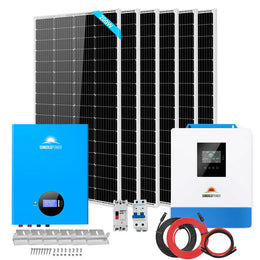
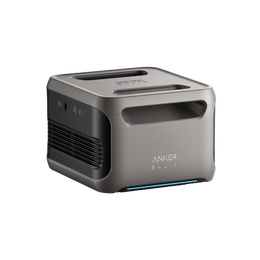
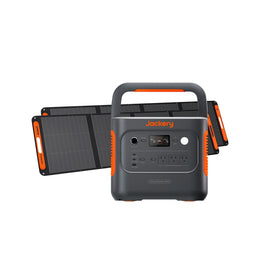
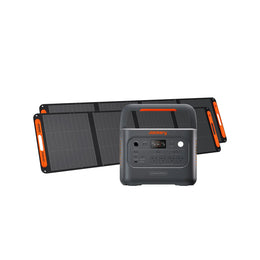
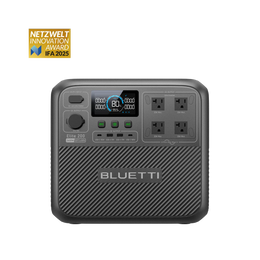
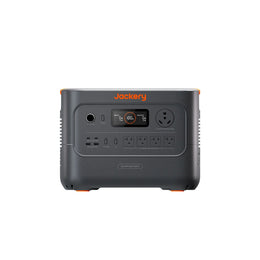
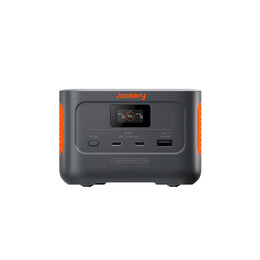
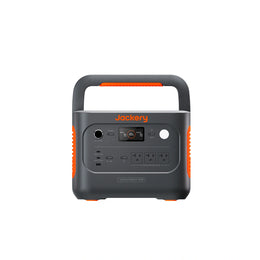

One kilowatt-hour is the size most people should start with. It is light enough to carry with one hand (23 to 25 lb), strong enough to run a microwave or a coffee maker, and it costs $500 to $650. It is also the size where small differences matter: one model recharges in 49 minutes, another lasts 6,000 cycles, a third can grow to 11 kWh later.
This guide does the runtime math first and then compares seven models we have in stock today, five at about 1 kWh and two step-ups at 1.5 kWh. If you are not sure 1 kWh is enough, start with what size solar generator do I need. If you already know you need more, see the best 2000W portable power stations. You can also browse all portable power stations we carry.
What 1000Wh really means
Two numbers describe every power station, and they answer different questions.
- Watt-hours (Wh) are the fuel tank. 1,000 Wh can supply 100 W for about 10 hours or 1,000 W for about one hour, before losses.
- Watts (W) are the engine. The inverter rating sets what you can plug in at the same moment. The 1 kWh models here have 1,500 to 2,000 W inverters with 3,000 to 3,600 W of surge for motor start-up.
You never get the full label capacity out of the AC outlets, because the inverter uses some energy itself. We use 85% as a planning number:
Runtime in hours = battery Wh x 0.85 / appliance watts
So a 1,024 Wh station has about 870 Wh of usable AC energy, and a 1,536 Wh station has about 1,306 Wh. USB and 12 V outputs skip the inverter and do slightly better.
What a 1000Wh power station can run
Almost anything with a normal 120 V plug that stays under the inverter rating. The real question is for how long.

| Appliance | Typical draw | 1,024 Wh station | 1,536 Wh station |
|---|---|---|---|
| Wi-Fi router + modem | 15 W | 58 h | 87 h |
| CPAP, humidifier off | 40 W | 21.8 h (2 to 3 nights) | 32.6 h (4 nights) |
| Full-size fridge | 55 W average over the day | 15.8 h | 23.7 h |
| Laptop | 60 W | 14.5 h | 21.8 h |
| 55 in TV | 80 W | 10.9 h | 16.3 h |
| Window air conditioner | 500 W | 1.7 h | 2.6 h |
| Microwave | 1,100 W | 47 min | 71 min |
| Space heater | 1,500 W | 35 min | 52 min |
The pattern is clear. A 1 kWh station is excellent for electronics, medical devices, lighting and a fridge overnight. It is a poor match for anything that makes heat or cold for hours.
A worked outage example. A fridge (about 1,300 Wh a day), a router (360 Wh), LED lights for five hours (150 Wh) and two phone charges (30 Wh) add up to 1,840 Wh a day. A 1,024 Wh station carries that for about 11 hours and a 1,536 Wh station for about 17 hours. To keep going for days you need either a bigger battery or solar: 400 W of panels bring in about 1,386 Wh on an average day, which nearly covers the list. Our fridge runtime guide has the full chart by fridge type.
7 in-stock 1 kWh class stations compared
Every model below uses LiFePO4 cells and was in stock on November 12, 2026. Price per kWh uses the best code that applies today. Jackery prices are sale prices that are scheduled to end on November 16, 2026.
| Model | Capacity | Output / surge | Weight | Cycle rating | Wall charge | Solar input | Price | Per kWh |
|---|---|---|---|---|---|---|---|---|
| Anker SOLIX C1000 Gen 2 | 1,024 Wh | 2,000 / 3,000 W | 24.9 lb | 4,000 to 80% | 49 min | 600 W | $549.99 | $537 |
| Jackery HomePower 1000 Plus v2 | 1,024 Wh (to about 11 kWh) | 1,800 / 3,600 W | 23.8 lb | 6,000 to 70% | Not listed | Not listed | $639 | $624 |
| Jackery Explorer 1000 v2 | 1,070 Wh | 1,500 / 3,000 W | 23.8 lb | 4,000 to 70% | 1.58 h (about 1 h in emergency mode) | 400 W | $499 | $466 |
| Jackery HomePower 1000 v2 | 1,024 Wh | 1,500 / 3,000 W | 23.4 lb | 6,000 to 70% | About 50 min | Not listed | $549 | $536 |
| Jackery Explorer 1500 v2 | 1,536 Wh | 2,000 / 4,000 W | 32 lb | 6,000 to 70% | 81 min | 400 W | $849 ($799 with ECO50) | $520 |
| Jackery Explorer 1500 Ultra | 1,536 Wh | 1,800 / 3,600 W | 38.6 lb | 4,000 to 70% | 1.5 h | 800 W | $1,079 | $703 |
| Jackery HomePower 1000 v2 + SolarSaga 200W | 1,024 Wh + 200 W panel | 1,500 / 3,000 W | 23.4 lb + 14.3 lb panel | 6,000 to 70% | About 50 min | 200 W panel included | $749 ($699 with ECO50) | $683 with panel |

The 7 picks
1. Anker SOLIX C1000 Gen 2: 1,024 Wh, 2,000 W

$549.99 (list $799.99, no code)
The C1000 Gen 2 has the strongest inverter of the 1 kWh models here: 2,000 W continuous and 3,000 W peak, so a kettle or a microwave is not a problem. UltraFast charging at 1,600 W fills it in 49 minutes from a wall outlet, and the solar input takes up to 600 W (11 to 60 V), the highest of the 1 kWh picks.
It also has a 10 ms UPS mode, a 140 W USB-C port, noise of 20 dB or less under 200 W and a 5-year warranty. The battery is rated for 4,000 cycles to 80% capacity. Two limits: it cannot take an expansion battery, and the listing says full-speed charging needs cells above 68F.
- 2,000 W output in a 24.9 lb body
- 49-minute wall recharge, 600 W solar
- 5-year warranty
- Not expandable
- 4,000 cycles, not 6,000
- Charges only above 32F
2. Jackery HomePower 1000 Plus v2: 1,024 Wh, grows to about 11 kWh

$639 in black, $659 in white (no code)
This is the one to buy if 1 kWh is a starting point. The expansion port accepts Jackery Battery Pack 2000 Plus v2 units, taking the system from 1 kWh to about 11 kWh, and the station with one pack (3,072 Wh) is $1,269. See Jackery expansion batteries for the packs.
On its own it gives 1,800 W continuous and 3,600 W surge from four AC outlets, a 140 W USB-C port, a silent mode under 30 dB and a 6,000-cycle battery. It charges down to 14F. The listing does not state a maximum solar input or a wall charge time, so ask us before pairing panels.
- Expands to about 11 kWh
- 6,000 cycles, four AC outlets
- 23.8 lb
- Highest price of the 1 kWh picks
- Solar input not on the listing
- No 12 V car socket in the spec table
3. Jackery Explorer 1000 v2: 1,070 Wh, 1,500 W

$499 in black (no code)
At $466 per kWh this is the cheapest way into the class, and it has a little more capacity than the others (1,070 Wh). Three AC outlets deliver 1,500 W with a 3,000 W surge, there is a 100 W USB-C port and a 12 V car socket, and two DC inputs take up to 400 W of solar.
Standard wall charging takes 1.58 hours, and an emergency mode does it in about an hour. The battery is rated for 4,000 cycles to 70% capacity. It is the lead pick in our camping and CPAP guide for the same reason: the most watt-hours per dollar at 23.8 lb.
- $499 for 1,070 Wh
- 12 V car socket and 400 W solar input
- 23.8 lb
- 1,500 W inverter
- 4,000 cycles to 70%
- Not expandable
4. Jackery HomePower 1000 v2: 1,024 Wh, 6,000 cycles

$549 (no code)
The HomePower 1000 v2 is built to sit plugged in behind a desk or next to a fridge. Switchover is under 10 ms, so a PC, a NAS or a router keeps running when the grid drops. It adds 3 kV surge protection, and it can shed less important loads automatically when the battery falls to a level you set.
A full charge takes about 50 minutes, noise stays under 30 dB, and the battery is rated for 6,000 cycles, which matters for a unit that stays in service every day. Output is 1,500 W with a 3,000 W surge. The spec table lists no 12 V car socket and no maximum solar input.
- Under 10 ms UPS switchover
- 6,000 cycles for $549
- About 50-minute recharge
- 1,500 W inverter
- Solar input not on the listing
- Not expandable
5. Jackery Explorer 1500 v2: 1,536 Wh, 2,000 W

$849 ($799 with ECO50) · 9 in stock
For $300 more than a 1 kWh model you get 50% more energy, a 2,000 W inverter with a 4,000 W surge and a 6,000-cycle battery, in a body that still weighs 32 lb. With code ECO50 it works out to $520 per kWh, the second-lowest figure in this guide.
It recharges from the wall in 81 minutes and takes up to 400 W of solar. It is also the cold-weather pick: the listing shows charging from -4F to 113F, with output limited to 1,200 W below 14F. Stock is limited, so check the page.
- 1,536 Wh and 2,000 W at 32 lb
- 6,000 cycles
- Charges down to -4F
- Solar input capped at 400 W
- Limited stock
- Not expandable
6. Jackery Explorer 1500 Ultra: 1,536 Wh, IP65

$1,079 (no code applies at this price)
The Ultra is the only station here with an IP65 rating, which means it is sealed against dust and water jets. That makes it the choice for job sites, boats, beaches and truck beds. The inverter gives 1,800 W and holds a 3,600 W peak for up to five seconds to start compressors.
Solar input is 800 W, double the other Jackery models, and the listing gives about 2.5 hours for a solar refill and 1.5 hours from the wall. It has Bluetooth and Wi-Fi for app control. The trade-offs are price, weight (38.6 lb) and a 4,000-cycle rating.
- IP65 dust and water protection
- 800 W solar input
- 5-second 3,600 W peak
- $703 per kWh
- 38.6 lb
- 4,000 cycles to 70%
7. Jackery Solar Generator HomePower 1000 v2 + SolarSaga 200W

$749 ($699 with ECO50)
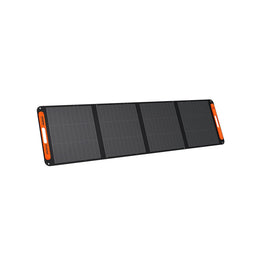
This kit pairs pick 4 with a SolarSaga 200W folding panel, so it works when the outage outlasts the battery. The panel is bifacial, rated IP68, weighs 14.3 lb and folds to about 24 by 24 inches. On an average 4.5 sun-hour day it brings in about 690 Wh, roughly two thirds of the battery.
Prefer a 12 V car socket and a listed 400 W solar limit? The Explorer 1000 v2 with the same 200W panel is $699 with no code. More panel options are in portable solar panels.
- Station and panel matched in one box
- 6,000-cycle battery, 10 ms UPS
- IP68 folding panel
- One panel needs about 1.5 days per full charge
- Station solar limit not on the listing
- Panel must be set up and aimed
How fast solar refills 1 kWh
Panels rarely deliver their label watts. We plan with 77% of nameplate and count peak sun hours, about 4.5 a day as a US average:
Sun hours to refill = battery Wh / (panel watts x 0.77)

Away from an outlet, panel size decides whether a 1 kWh station lasts a weekend or a whole week.
| Panel array | Energy on a 4.5 sun-hour day | Sun hours to refill 1,024 Wh | Sun hours to refill 1,536 Wh | Stations here that accept it |
|---|---|---|---|---|
| 100 W | 347 Wh | 13.3 | 19.9 | All with a listed solar input |
| 200 W | 693 Wh | 6.6 | 10.0 | All with a listed solar input |
| 400 W | 1,386 Wh | 3.3 | 5.0 | Explorer 1000 v2, Explorer 1500 v2, C1000 Gen 2, 1500 Ultra |
| 600 W | 2,079 Wh | 2.2 | 3.3 | C1000 Gen 2, 1500 Ultra |
| 800 W | 2,772 Wh | - | 2.5 | 1500 Ultra |
A single 200 W panel is enough for a camping weekend with a 12 V fridge, lights and phones (about 800 Wh a day). For outage use with a full-size fridge, plan on 400 W. Check the voltage window before mixing brands: the C1000 Gen 2 accepts 11 to 60 V and the Jackery inputs accept 16 to 60 V for solar.
Which station fits your situation
| Your situation | Pick | Why |
|---|---|---|
| One station for outages, trips and tools | Anker SOLIX C1000 Gen 2 | 2,000 W, fastest recharge, 5-year warranty |
| Tight budget | Jackery Explorer 1000 v2 | $499, most Wh per dollar |
| Might need days of backup later | Jackery HomePower 1000 Plus v2 | Expands to about 11 kWh |
| Desk, router or fridge on standby all year | Jackery HomePower 1000 v2 | Under 10 ms UPS, 6,000 cycles |
| Fridge through a full day, cold garage | Jackery Explorer 1500 v2 | 1,536 Wh, charges down to -4F |
| Job site, boat or beach | Jackery Explorer 1500 Ultra | IP65, 800 W solar |
| No outlet for days | HomePower 1000 v2 + SolarSaga 200W | Panel included |
If your list includes a space heater, a window air conditioner for a whole night or a well pump, 1 kWh is the wrong class. Look at the 2 kWh models, such as the Bluetti Elite 200 V2 ($899), or read expandable power stations compared. For brand differences see Bluetti vs Jackery vs Anker SOLIX. More models in this size are in 1500W portable power stations, Jackery power stations and Anker SOLIX.
Safe use and storage
- Keep the station dry unless it has an IP rating for water, and leave space around the vents.
- Do not charge below the listed temperature (32F for the C1000 Gen 2 and Explorer 1000 v2).
- For storage, charge to about 50 to 80% and top up every three months.
- Medical devices: test your own CPAP or concentrator on the station before you depend on it, and ask your equipment provider about backup.
What buyers ask before buying a 1000Wh power station
These questions come from searches that bring people to our store and from the questions Google shows for this topic.
Which Jackery 1000 is which?
Three current models share the name. The Explorer 1000 v2 (1,070 Wh, 4,000 cycles, $499) is the outdoor value model with a car socket. The HomePower 1000 v2 (1,024 Wh, 6,000 cycles, $549) adds a faster UPS and surge protection for home use. The HomePower 1000 Plus v2 (1,800 W, $639) is the only one that takes expansion batteries.
Is a 1 kWh battery backup enough for a home?
For essentials, for part of a day. It covers a fridge, internet, lights and phones for about 11 hours, or electronics alone for two days. It will not run central heating, a well pump or an electric range. For that, see 2 kWh stations and up.
How much does a 1 kWh power station weigh?
The five 1 kWh models here weigh 23.4 to 24.9 lb. The 1.5 kWh step-ups weigh 32 and 38.6 lb.
Can the Anker SOLIX C1000 Gen 2 take an expansion battery?
No. The listing states it is not expandable. If you want to add capacity later, choose the HomePower 1000 Plus v2.
FAQ
What can a 1000Wh power station run?
Almost any 120V appliance under the inverter rating, for a limited time. A 1,024 Wh station delivers about 870 Wh through its AC outlets: roughly 58 hours of Wi-Fi, 22 hours of CPAP, 14 to 16 hours of a full-size fridge, 11 hours of TV or 47 minutes of microwave time. Heaters and air conditioners drain it in 35 minutes to 2 hours.
How long will a 1000Wh power station run a refrigerator?
About 14 to 16 hours for a modern full-size fridge that averages 55 to 60 W over the day, and close to 24 hours on a 1,536 Wh model. Older fridges and hot garages shorten that. Add 400 W of solar and an average day brings in about 1,386 Wh, enough to keep a fridge going day after day.
How long does it take to charge a 1000Wh power station with solar?
Divide the battery by panel watts times 0.77. A 200 W panel needs about 6.6 peak sun hours, so a day and a half in average weather. 400 W takes about 3.3 sun hours and 600 W about 2.2. From a wall outlet the stations here take 49 minutes to about 1.6 hours.
Is 1000Wh enough for camping with a CPAP?
Yes. A CPAP at 40 W with the humidifier off uses about 376 Wh of battery per 8-hour night, so a 1,024 Wh station covers two to three nights. With a heated humidifier at about 90 W it covers one night, so add a 200 W panel or step up to 1,536 Wh.
What is the difference between 1000W and 1000Wh?
Watts are power: how much the station can deliver at one moment. Watt-hours are energy: how long it can keep going. The 1 kWh stations here have 1,500 to 2,000 W inverters, so they can start a microwave or a kettle, but the 1,024 to 1,070 Wh battery sets the runtime.
How many years does a 1000Wh LiFePO4 power station last?
The stations here are rated for 4,000 to 6,000 full cycles before capacity falls to 70 or 80 percent. One full cycle every day works out to about 11 to 16 years, and occasional outage or camping use puts far fewer cycles on the battery. Warranties run 5 years on the Anker and 3+2 years on the Jackery models as listed.
Not sure which one fits? Send us your appliance list and we will do the runtime math with you before you order. More reading: how long do solar batteries last.

Serhii Dovzhenko, Solar & Energy Storage Specialist at Eco Solar Kits · LinkedIn
Serhii is based in Vancouver, BC, and works on product data, system sizing and buyer guides for Eco Solar Kits. He attends solar and energy storage industry conferences and is involved in the community of electricians in Vancouver, BC. Credit for the data verification in this guide goes to Adsec.ca.